
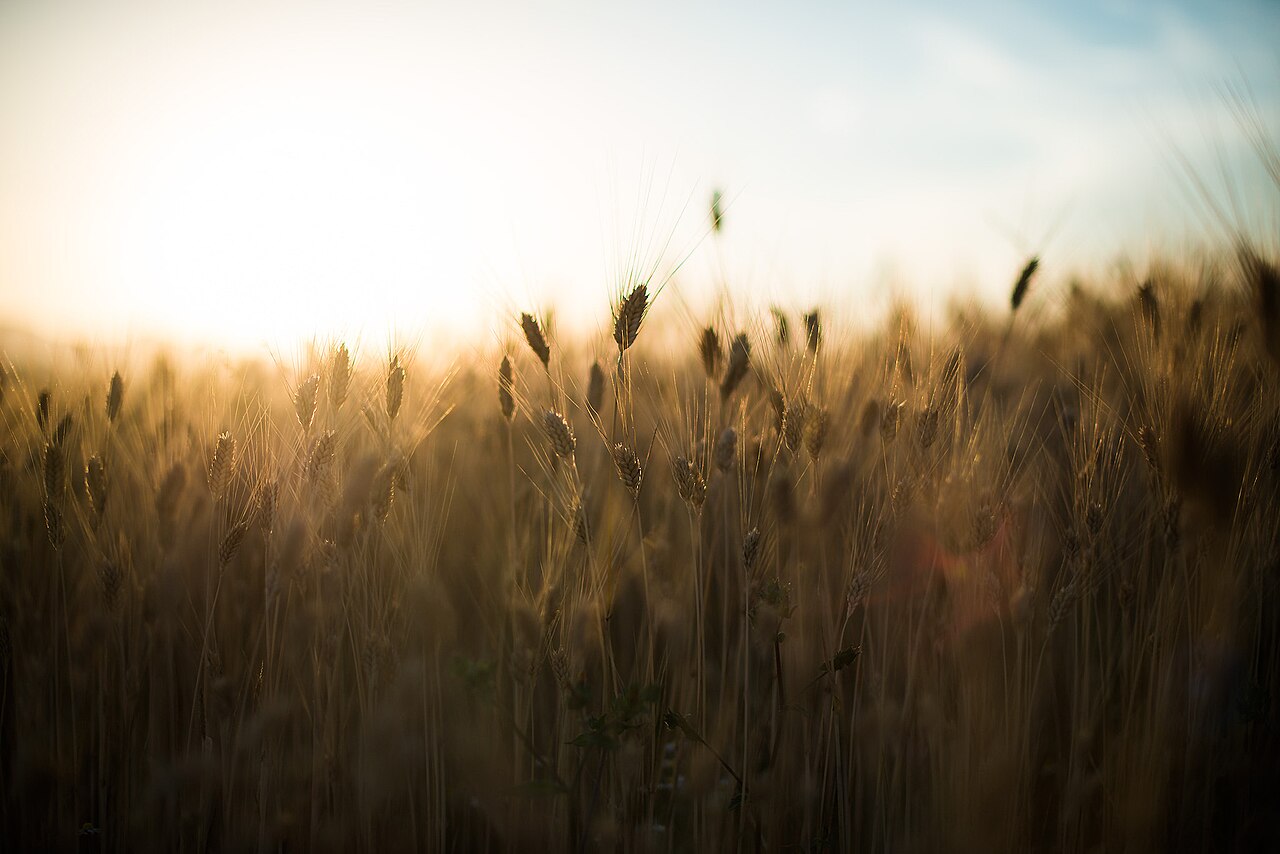
Wheat loses more yield to a heat wave that arrives before flowering than to one that comes after, but plants that have already been through early heat appear to cope better with a second bout later in the season, according to field research published on 18 September in the Journal of Experimental Botany. The study, by Breno Bicego, Gustavo Slafer and Roxana Savin of the University of Lleida in Catalonia, Spain, looked at how the timing, intensity and frequency of heat waves affect wheat under field conditions rather than in growth chambers.
"Most studies have examined heat stress as a single event, and have done so under controlled conditions rather than under field conditions," Slafer said. "We investigated whether an earlier heat wave could alter how wheat responds to a later one during reproductive development." The team ran trials over two growing seasons with two modern varieties that build yield in different ways, warming plots inside transparent tents that raised daytime temperatures through a greenhouse effect, and applied the heat before flowering, after flowering, or at both stages. Both varieties responded alike.
Timing changed not only how much yield was lost but how. Heat before flowering reduced the number of grains the plants set; heat after flowering mainly reduced the weight of each grain. Plants hit by heat at both stages did better in the second bout than plants that met heat only after flowering, a priming effect in which the first stress switches on protective responses that stay partly active. "To our knowledge, this is the first evidence of this type of antagonistic interaction between successive heat waves in field-grown crops," Slafer said.
The researchers stress that early heat is not good news: it still cut yield, mostly through grain number. But accounting for repeated heat waves rather than single events should improve yield models and show where adaptation pays most. "This study reinforces the importance of protecting wheat during the stages when grain number is determined, particularly around flowering," Slafer said, adding that the most effective measures are likely to be those that reduce exposure at the most sensitive reproductive stages.
The findings may carry over to barley, oats and rye, though thresholds will differ by crop. As heat waves grow more frequent, intense and prolonged, they increasingly overlap several stages of crop development. "As a crop of temperate origin, wheat is generally less adapted to high-temperature episodes than crops with tropical origins, such as maize or rice," Slafer said. For wheat growers in Bangladesh and northern India, where terminal heat around flowering and grain-filling is already the main yield constraint, the finding that the pre-flowering window is the more damaging one points to where sowing dates and varieties matter most.
Photo: Marco Montagna / Wikimedia Commons (CC BY-SA 3.0)
Source: AGDAILY
Comments
(0)