
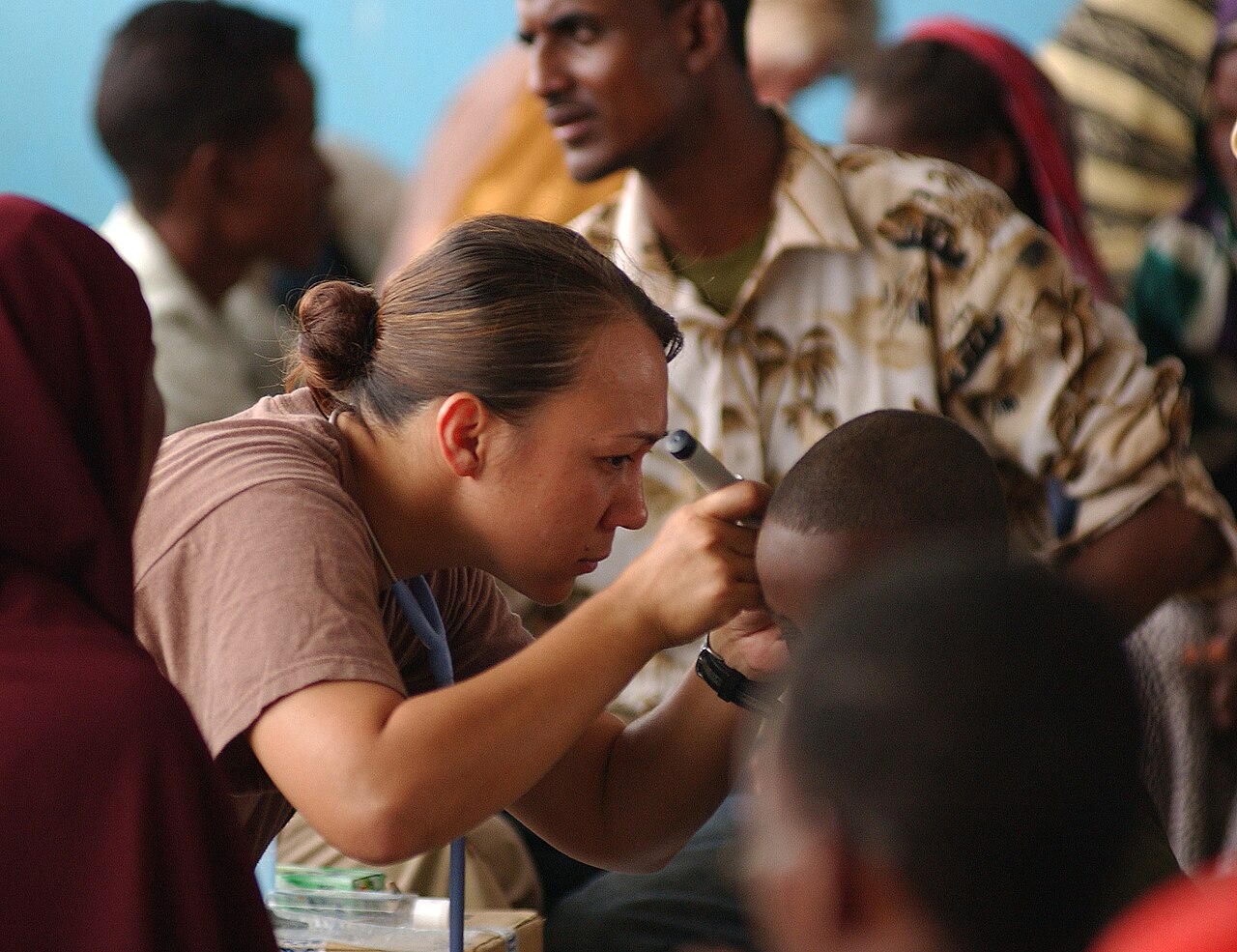
Ear infection is a common health problem in children, especially between six months and two years of age, and caught early and handled properly it is easily brought under control, says Dr Manik Majumder, a child and newborn specialist at Popular Diagnostic Centre in Mymensingh.
Repeatedly touching or pulling at the ear is an important sign in young children who cannot say they are in pain. Unusual irritability or crying, especially when lying down, is a key symptom because pressure inside the ear rises in that position. Fever, disturbed sleep, refusing food and fluid or pus from the ear are also common signs.
Children's anatomy is the main reason. The Eustachian tube linking the ear and throat is short, narrow and almost horizontal in children, so throat and nose infections reach the ear easily. Ear infections often follow colds; bottle-feeding lying down, cigarette smoke, day care and family history raise the risk.
The first aim is pain relief: a painkiller suited to age and weight on a doctor's advice, and a warm compress outside the ear for temporary comfort. Give plenty of fluids and nourishing food and feed the child sitting upright. Do not poke the ear with cotton or cotton buds, and do not use oil or drops without a doctor's advice.
See a doctor for high fever or no improvement within 48 to 72 hours, pus or blood-stained discharge, unusual drowsiness or refusal to eat, swelling or redness around the ear, or hearing or balance problems. A baby under three months with fever should see a paediatrician without delay. Repeated infections can affect hearing and language development.
Photo: U.S. Navy / Wikimedia Commons (public domain)
Source: Prothom Alo



Comments
(0)