
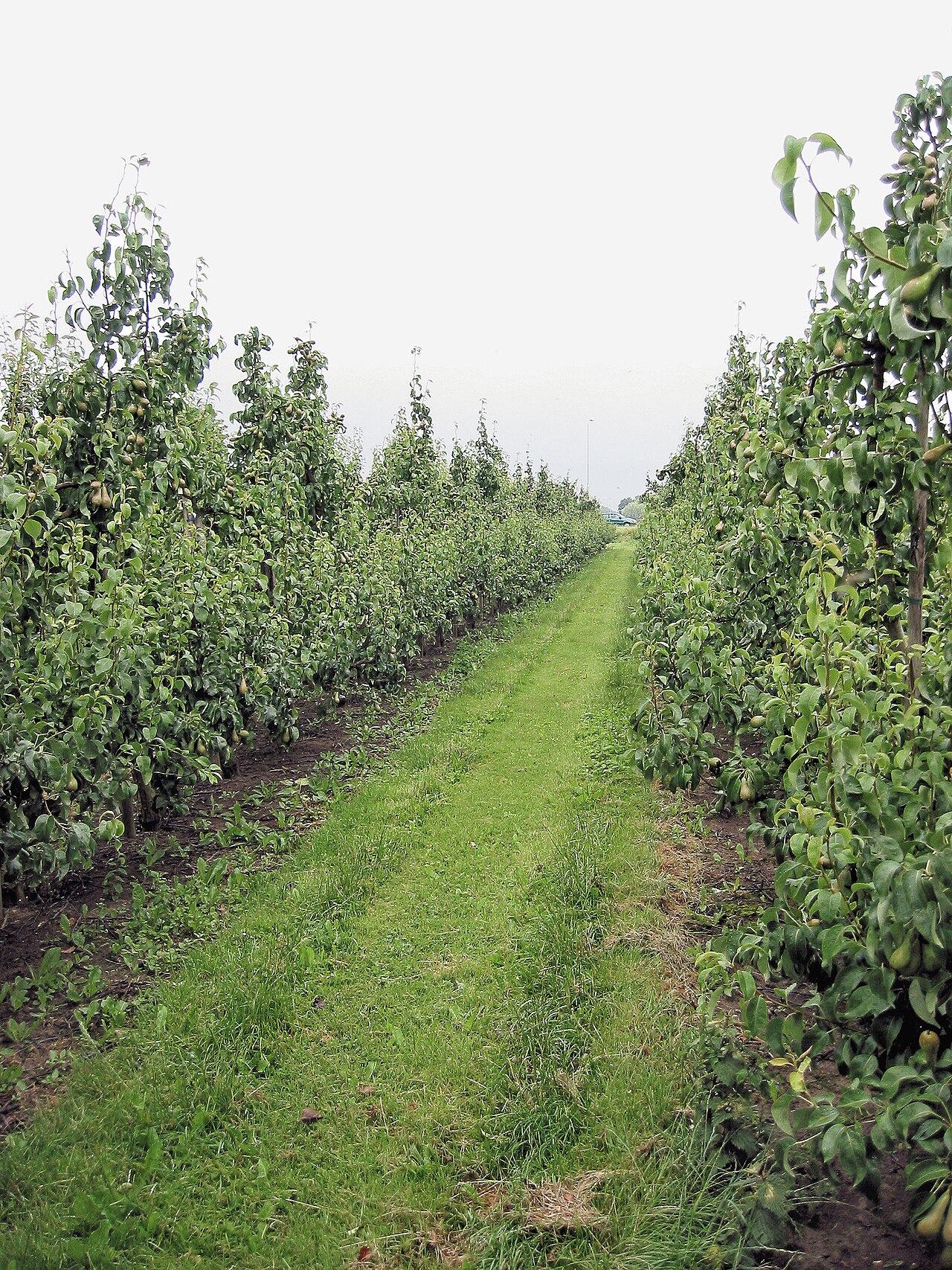
Peter Baars, who grows apples and pears in the Netherlands, has used an autonomous tractor in his orchards for three years and is pleased with it. But he says driverless work will only be trusted fully once the tractor and the implement behind it communicate and can stop or correct themselves when something goes wrong, Future Farming reports.
His Fendt 211 Vario runs on the iQuus autonomy system from GPX-Solutions, which had used the tractor as a demonstrator before Baars bought it. It mows the alleys between tree rows, with or without a driver. At maximum mowing width there is little clearance to the trees, and Baars wants a mower that halts at once if it catches an obstacle or if the tractor drifts off course, a level of certainty that is not yet standard in most tractor-implement combinations.
The same tractor carries a Treescout camera from Aurea Imaging on its roof, which counts blossom clusters and maps the growth of every tree in apples and pears. Baars had first mapped blossom with a drone, but a drone sees only the top of the canopy and cannot be used under hail nets. The counts become a prescription map for a BBLeap precision sprayer that varies the thinning rate tree by tree and even nozzle by nozzle; the vigour data adjust the rate further, since stronger trees can carry more fruit.
He says the result is more uniform trees and better fruit, but adds two caveats: the camera shows trends rather than an exact flower count, so some trees must still be counted by hand, and the cost of the camera and software subscriptions has to stay proportionate. The vigour maps are also used to guide root pruning of over-vigorous trees and, reversed, to feed weaker ones with extra fertiliser.
What he wants next is an implement that knows where it is. Hail-net anchors on one orchard force the mowing width down from 3.10 metres to 2.60 metres; Baars would mark each anchor by GPS so that the tractor slows to about 1 km/h and the mower retracts, with a sensor that stops everything if the retraction fails. He also wants obstacle recognition rather than simple detection, so that a person in the alley means a stop and a branch means carry on slowly. Work on such a set-up is under way with an NPPL+R specialist.
Baarsfruit in Eck en Wiel grows 9.5 hectares of apples (Elstar, Sprank, Delbare and Kick) and 14.7 hectares of pears (Conference, Xenia and Doyenné du Comice), marketed through Vogelaar-Vredehof. Baars hopes to run far more hours autonomously within a few years, but says one autonomous tractor should be enough for his farm.
Photo: Rasbak / Wikimedia Commons (CC BY-SA 3.0)
Source: Future Farming
Comments
(0)