
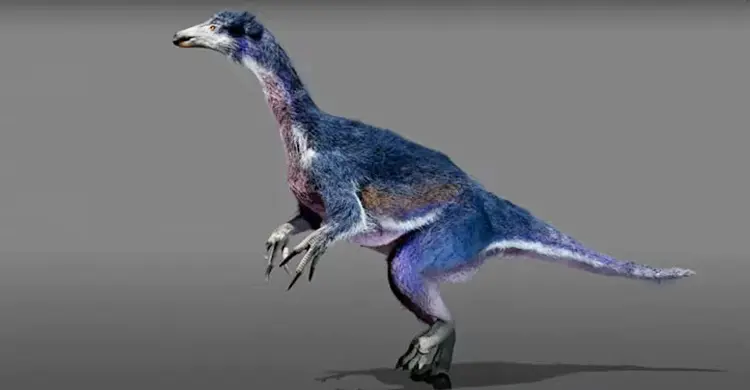
Two legs, and two small forelimbs that look exactly like sharp knives: dinosaurs like this roamed various coasts of Asia 154 million years ago. According to a recent Live Science report on the study, researchers at Hokkaido University in Japan have found the fossil of such a dinosaur. American and Japanese researchers claim it is the first such fossil found on an Asian coast.
The study says the fossil is a new dinosaur species, which the researchers have named Paralitherizinosaurus japonicus. According to the study, the dinosaur belonged to a group known as therizinosaurs: two-legged herbivorous dinosaurs with, initially, three fingers. Their claws were like sharp knives, and they used them to cut plants and hunt animals.
Claws for foraging
Roy M Huffington, described as a Live Science researcher, said: "Paralitherizinosaurus japonicus used these sharp claws as foraging tools, not as a means of aggression. It also pulled bushes and trees to its mouth for food."
The fossil was originally discovered in Hokkaido, Japan, in 2008 by another team of researchers. At the time of discovery it was encased in a concretion, like hardened mineral. It was previously believed to belong to a therizinosaur.
Fresh study
When no proof of that was found, research began again and scientists decided to re-examine the fossil. Based on their analysis, the authors of the new study concluded that the fossil does belong to a therizinosaur.
From the specimen alone, it is impossible to know for certain how big the therizinosaur was. The researchers said the dinosaur was large, able to grow to about 30 feet and weigh up to 3 tonnes.
Citing NDTV.
Source: Jagonews24. First published in Bengali on The Agro News.
Comments
(0)