
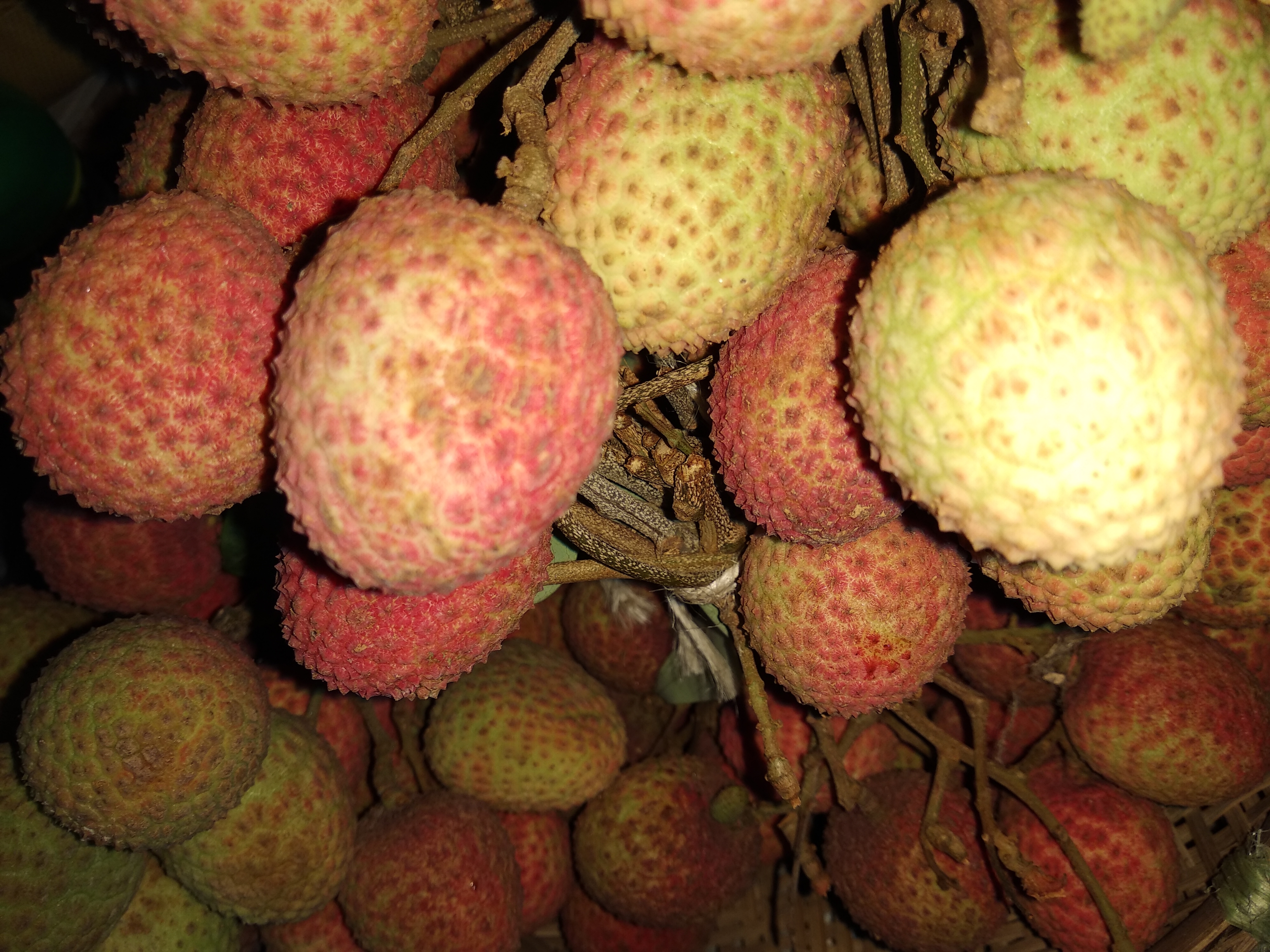
Lychee trading began to pick up in Dinajpur, the north-western district best known in Bangladesh for the fruit, at the start of June 2026. Jagonews24 reported on Monday, 1 June, that Madrazi, Bedana, Bombai and China-3 lychees had reached New Market, the biggest lychee market in the district town. Depending on variety and size, 100 lychees were selling for between Tk 250 and Tk 800. At the same time a year earlier, the range had been Tk 400 to Tk 1,000.
The report put the lower prices down to the Eid-ul-Azha holiday: people had left the towns for their villages, and goods vehicles had stopped running. Under the Ministry of Public Administration's notification, government, semi-government, autonomous and private offices were closed for seven days, from 25 to 31 May. From 1 June, Jagonews24 said, goods transport and courier bookings had resumed and wholesale buyers had begun arriving from Dhaka, Chattogram and other parts of the country, so traders expected prices to rise within a day or two.
Views on prices differed across the market. Farmers said they were getting good prices. Wholesale traders said prices were much lower than in other years, and buyers too said prices were so far well below the previous year's.
Calls, bargaining and too little room at New Market
New Market, near Kotwali police station in Dinajpur town, is the district's largest lychee market. Jagonews24 said it is crowded with buyers and sellers every day from dawn until 10pm. The state news agency BSS refers to the same place as Kalitala New Market and describes it as the town's biggest fruit market.
On the morning of 1 June, traders were calling out to buyers on one side while bargaining went on on the other. Madrazi, Bedana and Bombai lychees dominated the wholesale trade, while only small quantities of Bedana and China-3 were on sale at retail. With not enough room in the market, farmers and orchard owners stood waiting with their lychees on vans and battery-run easy-bikes.
According to the buyers and sellers Jagonews24 spoke to, wholesale prices per thousand lychees that day were:
- Madrazi: Tk 1,800 to Tk 2,000
- Bedana: Tk 3,500 to Tk 6,000
- China-3: Tk 7,000 to Tk 8,000
- Bombai: Tk 2,200 to Tk 2,500
Md Rana, proprietor of the lychee trading business Dorodi Fol Bhandar, said the mix of rain and sun had given the fruit much better size and colour that season. He quoted the same rates: Madrazi at Tk 1,800 to Tk 2,000 a thousand, China-3 at Tk 7,000 to Tk 8,000 and Bombai at Tk 2,200 to Tk 2,500.
Md Mamun, proprietor of Mamun Fol Bhandar and a commission agent (arotdar) in the market, said traders were struggling because the market was so cramped, and asked the municipality for help.
Trader Aminul Islam said prices were low because so many lychees had arrived. He had bought Bombai lychees from an orchard at Tk 2,400 a thousand and had to sell them in the market at Tk 2,200, a loss of Tk 200 on every thousand. Prices had been good the day before, he said.
Long waits for sellers, relief for buyers
In the crush, many sellers waited for hours. Mizanur Rahman, who had brought Madrazi lychees from Kamdebpur in Biral upazila, said he had been waiting at New Market for nearly two hours and did not know when he would reach a wholesaler and sell.
Sajib Hasan, from Ghughudanga in Sadar upazila, said he had been standing in a queue on the road for about three hours. It was hard to say how much longer it would take, he said, and he was unsure whether he would get a fair price.
For buyers, the low prices were welcome. Mushfiqur Rahman, a Dinajpur town resident who works in Dhaka, was buying lychees to take back on the 2pm vehicle. He paid Tk 500 per hundred for Bedana and Tk 800 per hundred for China-3, and said he was pleased with the prices.
Md Afzal Hossain, deputy director of the Department of Agricultural Extension (DAE) in Dinajpur, told Jagonews24 that the yield was somewhat lower that season but the fruit's size and colour were good. The market had only just started, he said, and he hoped farmers would get good prices.
What other reports found the same day
Other outlets covered the market the same day. A report by Dinajpur TV, published early on 1 June, said small farmers and orchard owners from all 13 upazilas of the district were arriving at New Market with lychees from dawn, and that wholesalers were crowding the depots to send fruit to Dhaka and other regions. Mainly early Madrazi and Bedana lychees were coming in, selling for Tk 3,000 to Tk 8,000 a thousand depending on quality. DAE deputy director Afzal Hossain told the outlet that officials were giving regular technical help so that lychees were picked, stored and marketed properly without harming the trees. People involved in the trade expected lychees worth about Tk 500 crore to change hands at the market that season.
A special report from Bangladesh Sangbad Sangstha (BSS), published around midday on 1 June, gave prices seen at Kalitala New Market on the afternoon of Sunday, 31 May: Tk 300 to Tk 350 per hundred for Madrazi, Tk 600 to Tk 700 for Bedana and Tk 800 to Tk 900 for China-3. BSS reported that 20 percent of Dinajpur's lychees meet local demand and the other 80 percent go to other districts. Md Dabirul Islam, who holds the market's lease, told BSS that lychees worth Tk 3 crore to Tk 4 crore are sold there every day.
BSS also described a temporary wholesale market for lychees and mangoes in the Pulhat area of the town, where orchard owners were bringing fruit to the depots and buyers from many districts were bargaining for it. Madrazi, Bedana and China-3 were already on sale, but Bombai, Haria, China-2, Muzaffari and Kathali lychees were expected to take a few more days. Wary of the weather, farmers had started picking a little early. One retailer told BSS that buyers from Dhaka were pushing prices up, and one shopper said lychees cost a little more than the year before, so the picture of prices varied between reports, markets and days.
Orchard area and output in the district
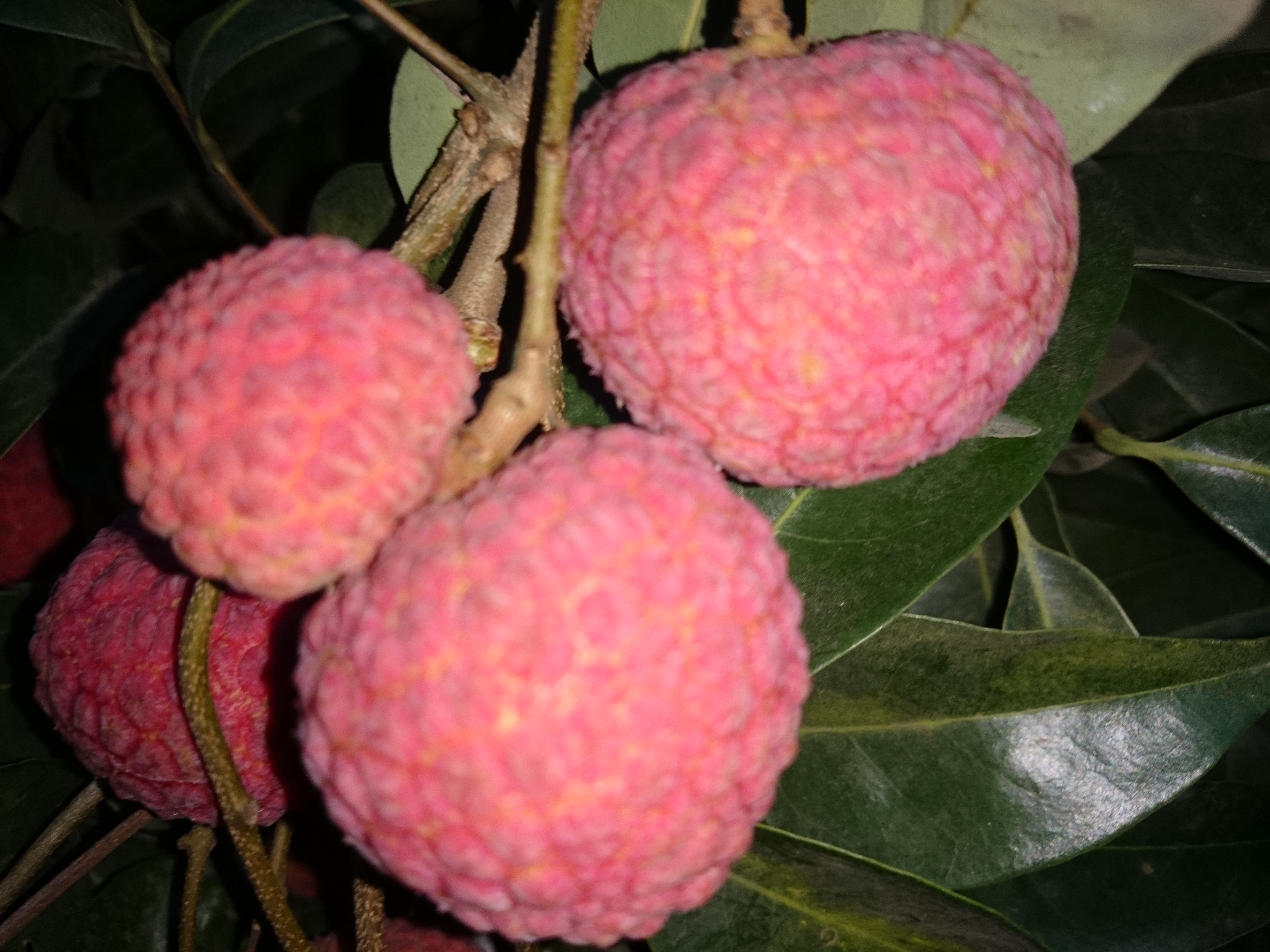
The agriculture department told Jagonews24 that the district had 5,418 lychee orchards on 5,490 hectares. By variety, the area under cultivation was:
- Bombai: 3,170 hectares
- Madrazi: 1,166 hectares
- China-3: 802 hectares
- Bedana: 295.5 hectares
- Kathali: 56 hectares
- Muzaffarpuri: 1 hectare
In addition, there were about seven lakh (700,000) lychee trees in homestead yards and gardens. The production target for the season was 31,790 tonnes. According to the department, the previous year's output had been 30,000 tonnes, worth about Tk 750 crore. The yield was somewhat lower this time, it said.
Figures given by different offices at different times did not always match. On 8 May 2026 the district DAE office told Jagonews24 that lychees were grown on 5,484 hectares in 5,418 orchards that year, with expected output of 37,593 tonnes. On 1 June, Md Ejamul Haque, deputy director of the horticulture wing in Dinajpur, told BSS that the district had 7,370 hectares of lychee orchards and a target of 39,550 tonnes, and said he expected farmers to earn more than Tk 800 crore to Tk 900 crore from lychee sales.
On Dinajpur's place nationally, Prothom Alo reported on 22 May 2026, citing DAE data, that Dinajpur was the country's top lychee-producing district, with output of 39,593 tonnes in the 2024-25 fiscal year. Pabna was second with 35,000 tonnes and Rangamati third with 17,000 tonnes, while Gazipur and Khagrachhari each produced 11,000 tonnes. National lychee output that year was 232,729 tonnes.
Reports also showed where in the district lychees are concentrated. The Ajker Patrika reported on 24 May 2026 that although all 13 upazilas grow some lychees, output is highest in Sadar, Biral and Chirirbandar. In Chirirbandar, about 565 hectares were under lychee that year, with a production target of 6,680 tonnes; the varieties grown there included Madrazi, Bedana, Haria Bedana, Bombai, China-3, China-2, Kathali and Muzaffari. Prothom Alo reported that Biral upazila produces the most lychees in the district.
A season of hostile weather
The lower yield the officials described followed a season of difficult weather. In a Jagonews24 report of 8 May 2026, Advocate Zakir Hossain, a grower in Mohobbopur village of Sadar upazila, said temperatures had reached 35 to 39 degrees Celsius early in the season, with fog in the mornings, scorching the blossoms. Storms and hail had followed.
Growers told the paper that drought at the start of the season, a fuel shortage that made it hard to irrigate orchards, and nor'westers and hailstorms from the last week of April into May had cracked fruit and knocked it from the trees. Fruit drop from hail was reported in parts of Sadar, Biral, Chirirbandar, Khansama, Kaharole and Bochaganj upazilas. One grower in Ghughudanga said his orchard's output had fallen to half of the previous year's, and called on the government to act because, with no cold storage, large quantities of lychees went to waste every year.
The agriculture department played down the damage at the time. Md Anisuzzaman, additional deputy director (crops) at the district DAE office, told Jagonews24 that storms and hail had destroyed the crop on only about one to one and a half hectares, which he called negligible. Deputy director Nuruzzaman said the heat had caused some damage but, because owners were tending their orchards intensively, losses would not be large. On 24 May, Chirirbandar upazila agriculture officer Zohara Sultana told the Ajker Patrika that output there could fall about 20 percent short of the target because of the weather.
The Bangladesh Today reported on 13 May that although heat, storms and hail had shed young fruit from many trees, growers following the agriculture office's advice had watered the base of their trees regularly and sprayed the trees with water. On 1 June, deputy director Afzal Hossain told BSS there had been rain in the Bengali months of Chaitra and Baishakh and some in Jaishtha, and that field staff had advised orchard owners on protecting the fruit still on the trees.
Officials warn against early, unripe lychees
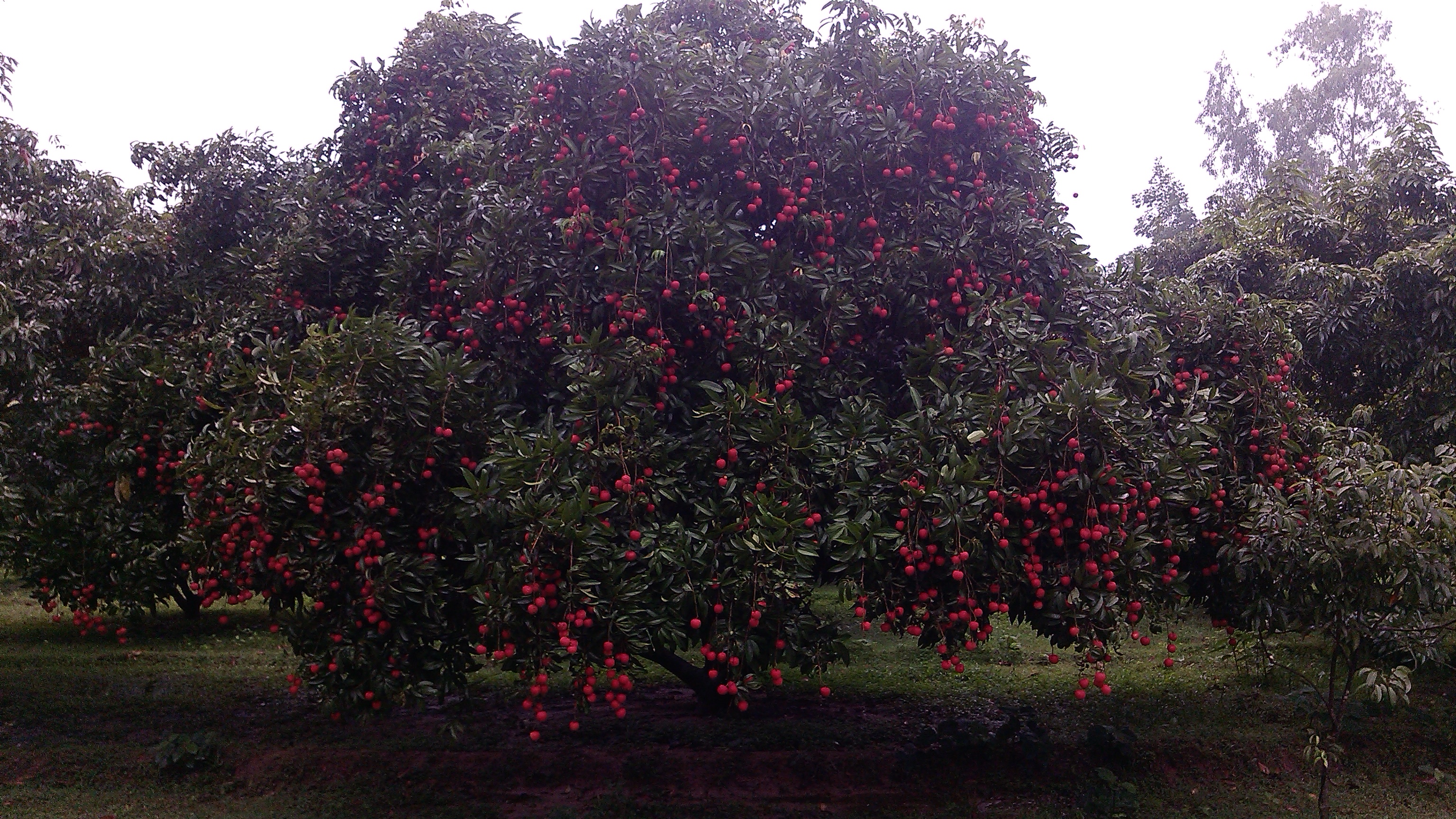
Lychees had appeared in Dinajpur's markets about three weeks before the main season. Jagonews24 reported on 11 May 2026 that Madrazi lychees were selling that morning for Tk 300 to Tk 320 per hundred at New Market, Thana Mor, Bahadur Bazar, Pulhat and other spots. Although they were half-ripe in colour and sour in taste, curious buyers were paying high prices for the first fruit of the year.
Anisuzzaman, then quoted as assistant deputy director (crops) at the DAE in Dinajpur, said the lychees on sale were in no way mature and should not be eaten, and that ripe, sweet fruit would take another 10 to 12 days to arrive. People needed to be aware of the problem of eating unripe fruit, he said. He told The Bangladesh Today on 13 May that the early Madrazi and Bombai varieties would come first, followed in turn by Bedana, China-3 and Kathali.
From orchard to market: several changes of hands
Prothom Alo looked at how lychees travel from orchard to buyer in a report published on 22 May. The paper found that the fruit changes hands several times on the way to market, sometimes more than once while it is still on the tree, and that the price rises at each step. It gave the example of an orchard of more than 45 trees at Madhabbati in Biral, which was sold for Tk 310,000 after flowering and resold within about two weeks for Tk 330,000.
Shishir Shah, owner of one of Biral's largest orchards, told the paper that agents are often paid a 1 percent commission on the sale price and that an orchard may change hands three to five times from the first lease onwards. In his view this has little effect on prices, and the main role in raising them lies with the commission agents in the depots. Citing local traders, Prothom Alo said that lychees are sold by the thousand at the orchard, where a thousand Bombai fetched Tk 3,000 to Tk 3,500 and a thousand Madrazi Tk 1,800 to Tk 2,000 at the time. Because growers hand over 1,100 lychees for every thousand sold, the extra fruit covers the wholesalers' transport costs, the paper reported.
Agricultural economist M Asaduzzaman, a former research director at the Bangladesh Institute of Development Studies (BIDS), told Prothom Alo that every change of hands adds to the price, driven by uncertainty. Farmers abroad can insure crops against natural disasters, he said, but with no such crop insurance in Bangladesh there is little scope to cut out the middle steps.
Geographical indication and exports for the Bedana lychee
Of all Dinajpur's lychees, the Bedana is the most sought after. Bangla Tribune reported that the Dinajpur Bedana lychee was entered on the list of geographical indication (GI) products on 30 April 2025, and that Masimpur in Sadar upazila and Madhabbati in Biral upazila are regarded as its main growing areas. At the time, Imrul Ahsan, a horticulturist at the Dinajpur Horticulture Centre, said that through the agriculture department's PARTNER project, export-grade lychees were being grown under good agricultural practice (GAP) protocols with limited pesticide use.
On 1 June 2026, Md Motahar Hossain, additional director of the DAE's Dinajpur region, told BSS that Bedana lychees had been exported for the previous two years and had been sent to France, Canada and Australia the year before. Deputy director Afzal Hossain said several countries had again shown early interest in Bedana lychees that year and preparations were under way to ship them.
How the season compared with 2025
In 2025 too, Dinajpur's lychee market got going ahead of Eid-ul-Azha. BSS reported on 27 May 2025 that Madrazi lychees were then selling at Kalitala New Market for Tk 300 to Tk 400 per hundred, Bedana for Tk 500 to Tk 700 and China-3 for Tk 800 to Tk 900. According to lease holders, lychees worth Tk 2.5 crore to Tk 3 crore were traded there each day. Md Anisuzzaman, the DAE's additional deputy director (crops), said then that the district had 5,520 hectares of lychee orchards and a production target of 34,628 tonnes.
Bangla Tribune reported on 6 June 2025 that 100 Bombai lychees were then selling for Tk 250 to Tk 350, Madrazi for Tk 200 to Tk 250, Bedana for Tk 600 to Tk 800 and China-3 for Tk 1,300 to Tk 1,500. Prices that year were also below the year before, but the weather had been kind, yields were good, and the agriculture department expected lychee sales in the district to reach Tk 700 crore. In Jagonews24's 8 May 2026 report, traders recalled losses in earlier seasons from hailstorms, the Covid-19 pandemic, and severe heat that left lychees scorched and scarred.
The fruit and the district
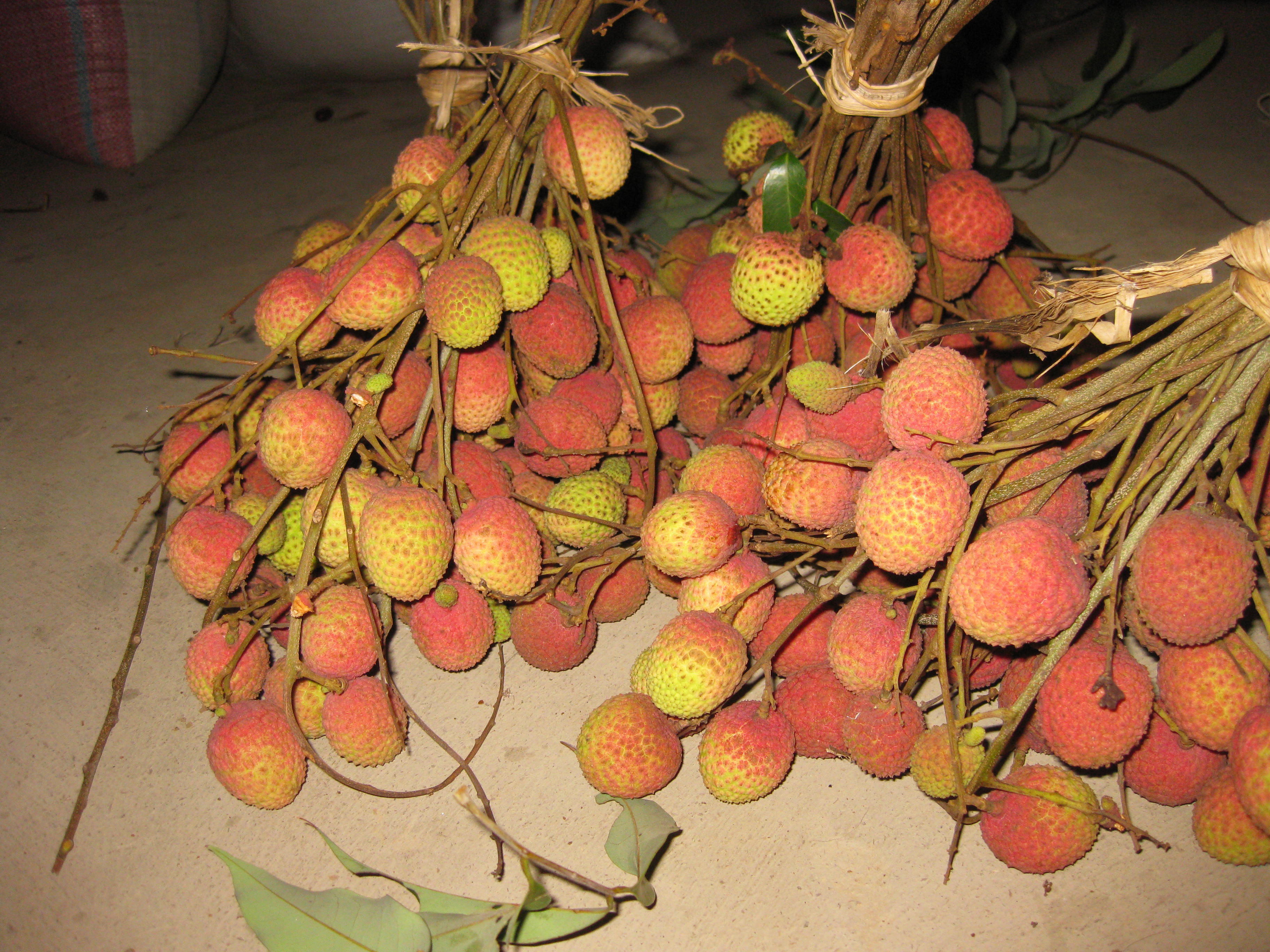
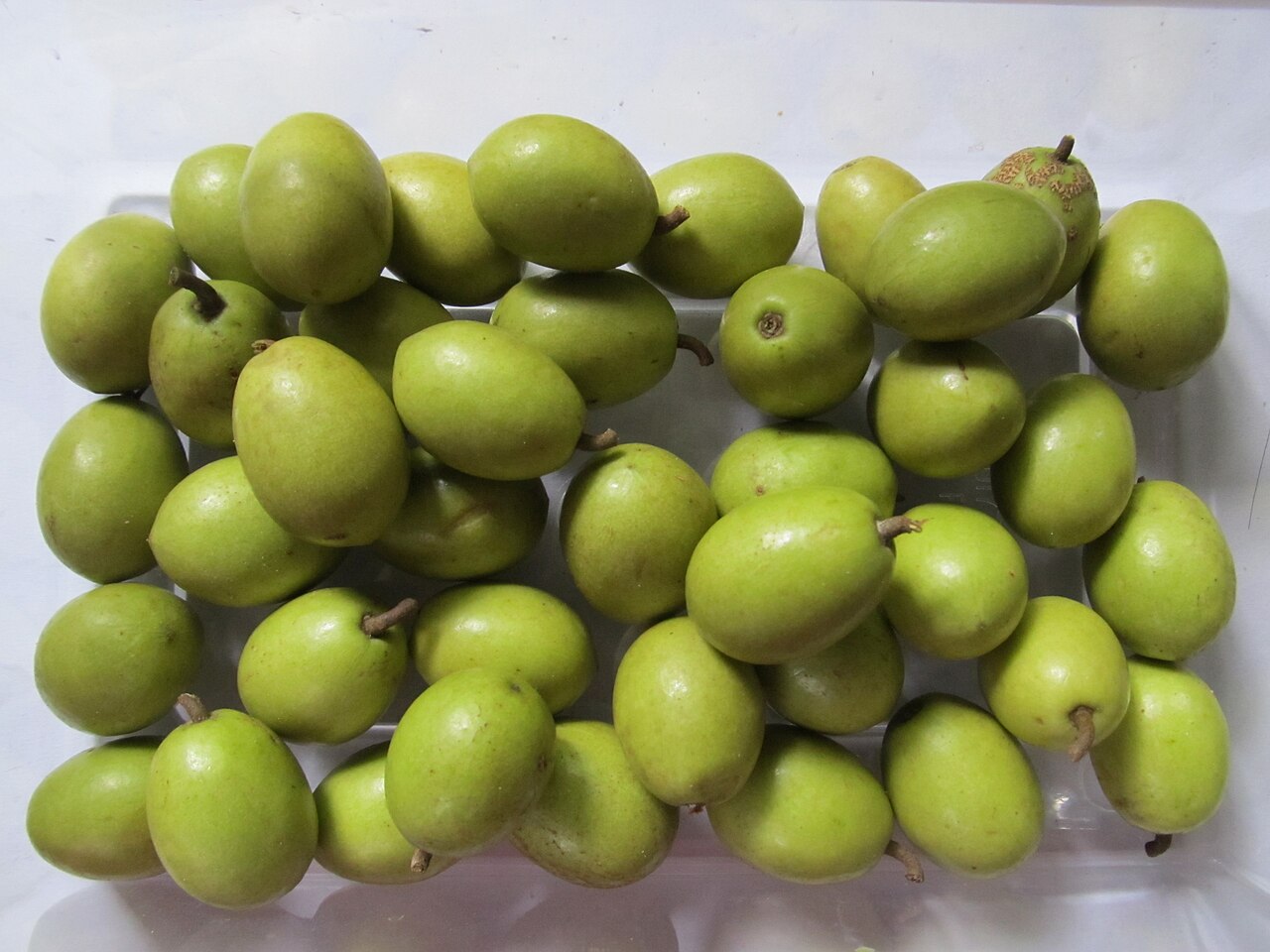
The lychee (Litchi chinensis) is the fruit of an evergreen tree in the soapberry family, Sapindaceae. It was first cultivated in southern China, Malaysia and northern Vietnam and later spread across South and Southeast Asia. Depending on climate, location and cultivar, the fruit takes 80 to 112 days to mature. The thin skin is green when unripe and turns red or pinkish-red as it ripens; the edible part is the juicy, translucent white flesh around a single brown seed, and a fruit typically weighs about 20 grams. Some 200 cultivars exist, and the most common way to propagate the tree is air layering.
Dinajpur district lies in Rangpur Division and is the largest of the 16 northern districts of Bangladesh. It covers 3,437.98 square kilometres and borders the Indian state of West Bengal to the west; its main rivers are the Dhepa, the Punarbhaba and the Atrai. The 2022 census counted 3,315,236 people in the district. The district town stands on the eastern bank of the Punarbhaba. Biral upazila, named in the report, covers 353.98 square kilometres and borders the Dakshin Dinajpur and Uttar Dinajpur districts of West Bengal. In the words of the Ajker Patrika, Dinajpur is known across the country for its rice and its lychees.
Photo: Sd Raihan / Wikimedia Commons (CC BY-SA 4.0)
Sources: Jagonews24, Bangladesh Sangbad Sangstha (BSS), Dinajpur TV, Prothom Alo, Ajker Patrika, The Bangladesh Today, Bangla Tribune, Prothom Alo English, Wikipedia
Comments
(0)