
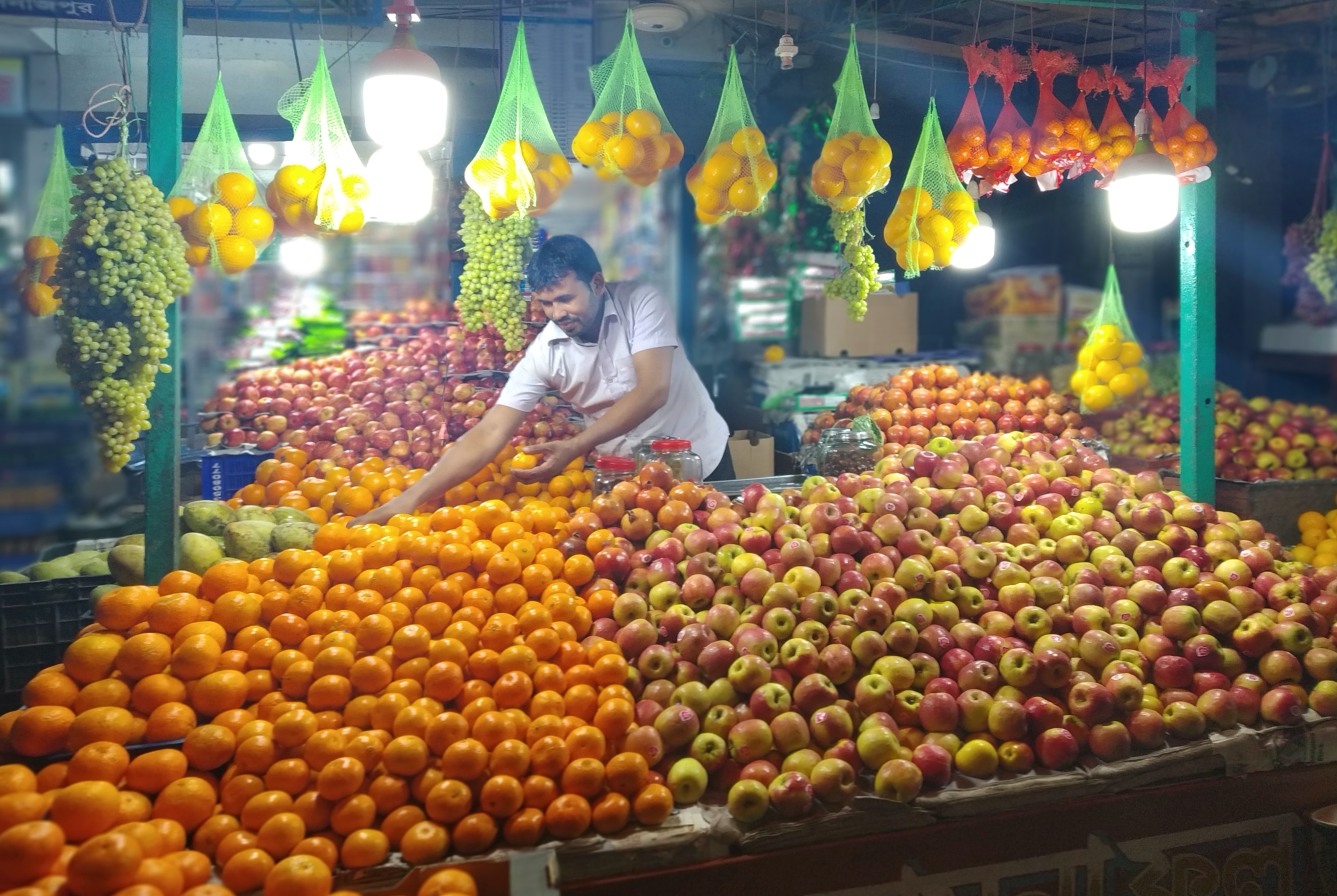
Fruit prices in the markets of Dinajpur town had moved beyond buyers' reach in the second week of Ramadan, Jago News reported on 1 March 2026, with everything except papaya expensive. Supply was ample, but high prices had cut date sales, and many traders feared their dates would spoil. One shopper told the reporter that most people had dropped fruit from their iftar list that year.
Fasting in Bangladesh began that year on Thursday 19 February, as the National Moon Sighting Committee announced at Baitul Mukarram in Dhaka the day before. Banglapedia describes Ramadan as the ninth month of the Hijri calendar. Iftar is the meal that ends the fast at sunset, when the maghrib call to prayer sounds, and it traditionally begins with dates and a cold drink such as water or sherbet. In Bangladesh roadside shops spring up to sell iftar food during the month and most restaurants prepare special iftar menus.
The Dinajpur markets in the report
The picture came from wholesale and retail markets at Bahadur Bazar, Zilla School Mor, Station Road, Chawk Bazar, Guduri Bazar, Pulhat and Rail Bazar in the town. Banglapedia puts Dinajpur Sadar upazila at 354.73 square kilometres, with 20 hats and bazars, among which it names Railbazar and Bahadur Bazar as noted ones. The Punarbhaba and Atrai are its rivers.
The district dates from 1786. It covers 3,444.30 square kilometres, with 13 upazilas and eight municipalities, and had 2,990,128 people at the 2011 census. Banglapedia lists mango, banana and litchi as the main fruits of the sadar upazila, and rice, litchi and mango as its main exports. Mango and litchi are summer fruit. The same source says about 54 per cent of the country's fruit is harvested in the mango season, roughly mid-April to mid-September. Ramadan in 2026 fell in February and March, ahead of that season.
What imported fruit cost
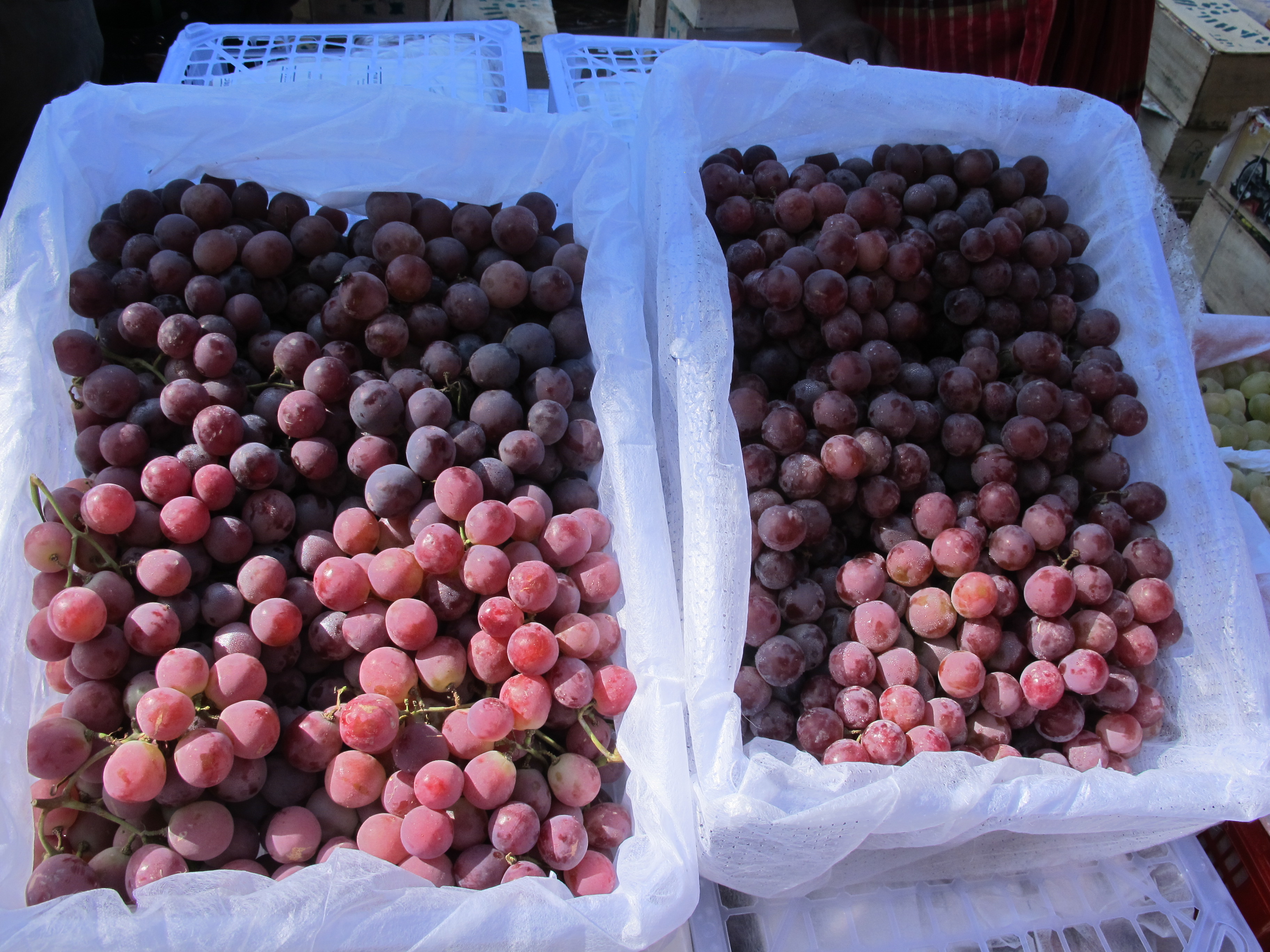
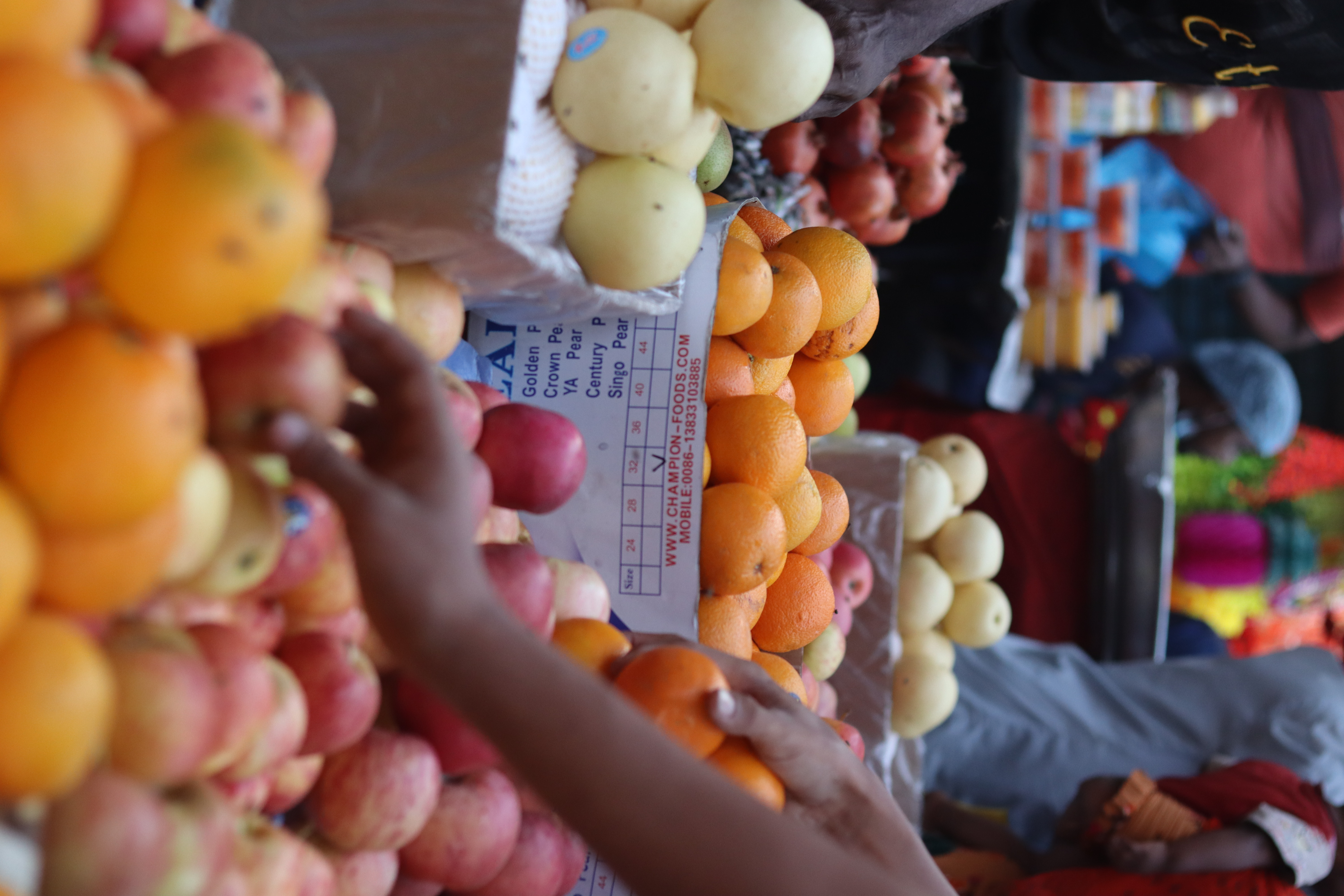
According to the report, apples in Dinajpur sold at Tk 260 to Tk 450 a kilogram depending on type, pears at Tk 500, oranges at Tk 360 to Tk 400, malta at Tk 350, pomegranates at Tk 550 to Tk 600, red grapes at Tk 500 to Tk 550 and green grapes at Tk 450.
Other cities showed much the same picture. Prothom Alo reported on 21 February that retail prices in Chattogram were Tk 360 a kilogram for oranges, Tk 380 for apples, Tk 650 for black grapes, Tk 500 for red grapes and Tk 330 to Tk 380 for malta. At the Station Road Fruitmandi wholesale market, South African apples had risen from Tk 240 to Tk 270 in a week and Chinese oranges from Tk 250 to Tk 280. The paper found a gap of Tk 100 to Tk 200 between wholesale and retail prices. On 17 February it had reported apples at Tk 330 to Tk 400 and malta at Tk 310 to Tk 340 in Dhaka.
Just before Ramadan two years earlier, at the start of March 2024, Prothom Alo had reported imported malta at Tk 270 a kilogram in Dhaka, green apples at Tk 300 to Tk 320, red apples at Tk 280, imported oranges at Tk 300 to Tk 320 and pomegranates at Tk 400 to Tk 450.
Local fruit, and the papaya exception
Among local fruit, jujube (boroi) sold at Tk 100 to Tk 120 a kilogram and guava at Tk 80 to Tk 100. Mobile stalls charged Tk 90 a kilogram for watermelon. Sabri bananas cost Tk 40 to Tk 50 a hali (four), pineapples Tk 100 a pair, green coconuts Tk 120 to Tk 150, and bael (wood apple) Tk 50 to Tk 100 depending on size. Papaya was the one exception in the report: for Tk 50 to Tk 60, said the hawker Shahjahan Ali, a buyer could take one home.
Banglapedia says papaya (Carica papaya) came from Central America and reached South Asia in the late sixteenth century, and that over 60 per cent of the country's crop is eaten as a vegetable. Papaya, banana and coconut are available all year, so they do not wait on the summer fruit season. Jujube (Zizyphus mauritiana) is eaten fresh and made into jam, jelly, chutney, pickle and juice. Guava (Psidium guajava) came from tropical America, and Banglapedia gives it 260 milligrams of vitamin C per 100 grams of edible portion. Sabri is a familiar local banana variety. Pineapple fruits from June to September, so the pineapple of early March was outside its main season. Much the same was true of watermelon: Prothom Alo wrote on 17 February that Dhaka sellers were asking Tk 70 to Tk 90 a kilogram even though the season had not fully begun.
Local fruit had gone up as well. The same 17 February report had guava in Dhaka at Tk 100 to Tk 150 a kilogram depending on size, bananas up by Tk 40 to Tk 60 a dozen and local papaya up by Tk 10 to Tk 20 a kilogram. At Karwan Bazar, Sabri bananas were Tk 160 to Tk 180 a dozen.
About 26 kinds of dates on sale
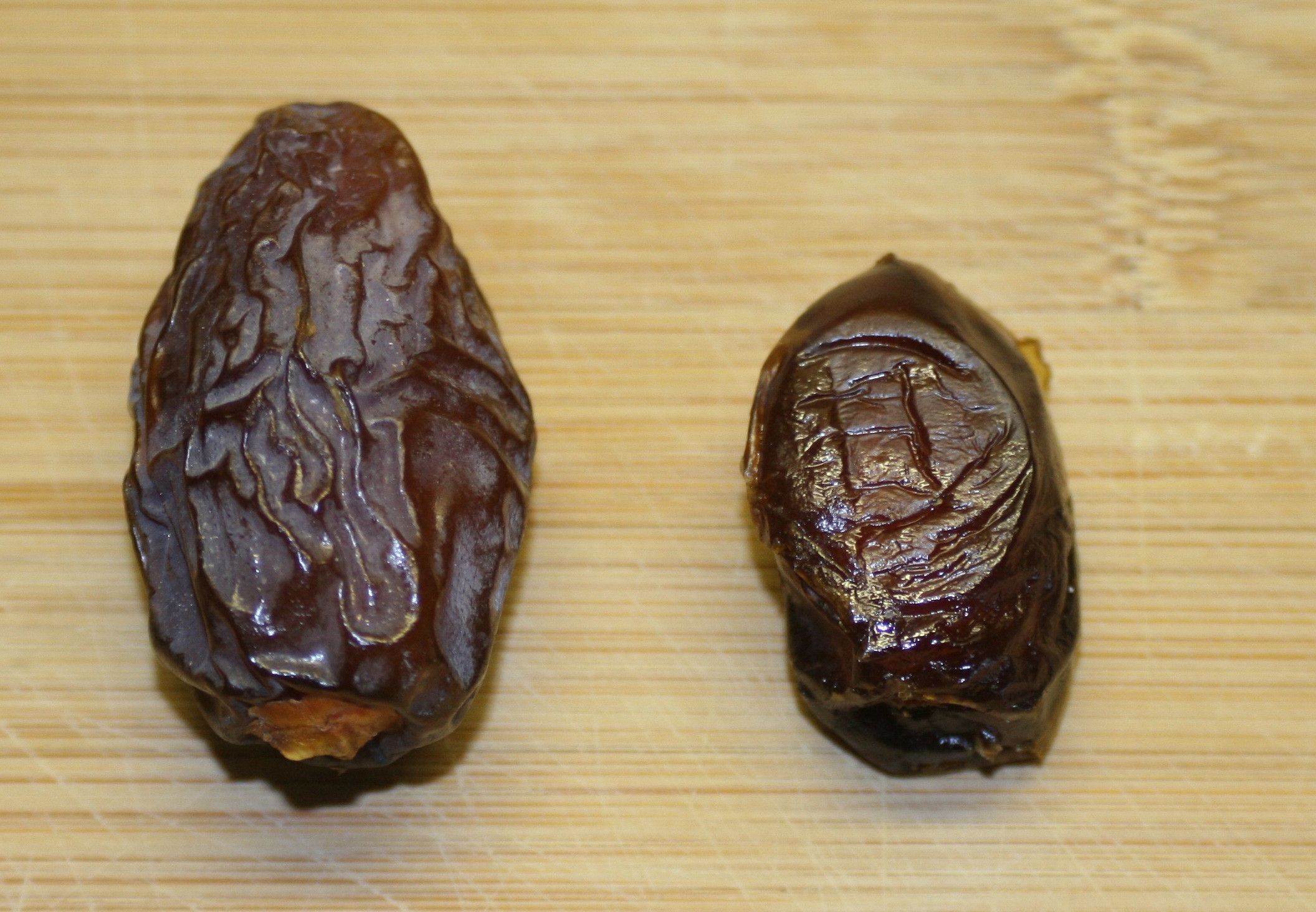
About 26 kinds of dates were on sale in Dinajpur. Dabas cost Tk 550 to Tk 600 a kilogram, sticky dates Tk 200 to Tk 250, Sukkari Tk 800, dried grape dates Tk 700 to Tk 800, Mariam Tk 1,200 to Tk 1,250, Minifi Tk 600 to Tk 650, Ajwa Tk 900 to Tk 1,000 and Medjool Tk 1,400 to Tk 1,600. For well-off buyers there were premium dates at Tk 2,000 to Tk 3,000 a kilogram.
The shopper Imrul Kayes Rupom said the 'bosta' (sack) dates sold at Tk 220 to Tk 250 a kilogram were not fit to eat, so a buyer had to take dates costing over Tk 600. Prothom Alo reported on 22 February that the variety imported most is Zahidi, which many call the 'poor man's date' because it is cheap. It comes mainly from Iraq by way of Dubai to Chattogram port and is sold both in cartons and by the sack. In Chattogram, sack Zahidi was Tk 190 a kilogram wholesale and Tk 250 to Tk 280 retail, and carton Zahidi Tk 280 wholesale and Tk 350 retail.
The same report put Dabbas at Tk 500 at the Chattogram Fruitmandi, against Tk 400 the year before, while Ajwa, Medjool and Mariam were comparatively stable. On 6 February the paper had reported Sukkari at Tk 700 to Tk 800 a kilogram in Dhaka, Mariam at Tk 1,100 to Tk 1,400 and Medjool at Tk 1,200 to Tk 1,500. At the start of March 2024, Medjool in Dhaka had been Tk 1,300 to Tk 1,400 and Dabas Tk 400 to Tk 450.
Traders' account: thin sales and a fear for the dates
Fruit traders told Jago News that buyers had fallen away and sales had dropped as imported fruit became dearer. Sales in Ramadan were below expectations, and customers turned away on hearing the price. Date prices had eased slightly since the first day of Ramadan, the traders said, but buyers still could not afford them, so many traders' dates might spoil in their godowns.
Amir Hossain, a fruit trader at Pourashava Mor, said buyers did not like the Tk 240 'haddi' apples and all other apples were expensive. He had to pay Tk 360 a kilogram wholesale for good apples, and unless he could sell them for at least Tk 400 it was hard to pay the shop rent, the electricity bill and staff wages. Rotten apples, oranges and grapes came out of the cartons and could not be sold. Dates, he said, had become a thorn in traders' throats. Traders also said prices of various fruits had risen because of the election and Ramadan; pears, for example, were up by Tk 200. They bought at retail and sold on, they said, and it was hard to make even Tk 1,000 profit in a day, with shop rent and other costs still to pay.
Retailers in Chattogram gave a similar account on 21 February: wholesale prices were high, and transport, shop rent, wages and the risk of perishable stock came on top. How dates spoil is set out in the Food and Agriculture Organization's 2002 manual Date Palm Cultivation. It says the risk rises once moisture in dates passes about 20 per cent: yeasts cause fermentation first, then lactobacilli sour the fruit, and high sugar with high humidity makes matters worse. Partly ripe rutab dates are highly perishable, while tamar dates, with moisture below 25 per cent, keep for longer if protected from insects. Medjool and several other varieties are commonly held at minus 18 degrees Celsius for long storage.
By way of Benapole, not Hili: the wholesaler's account
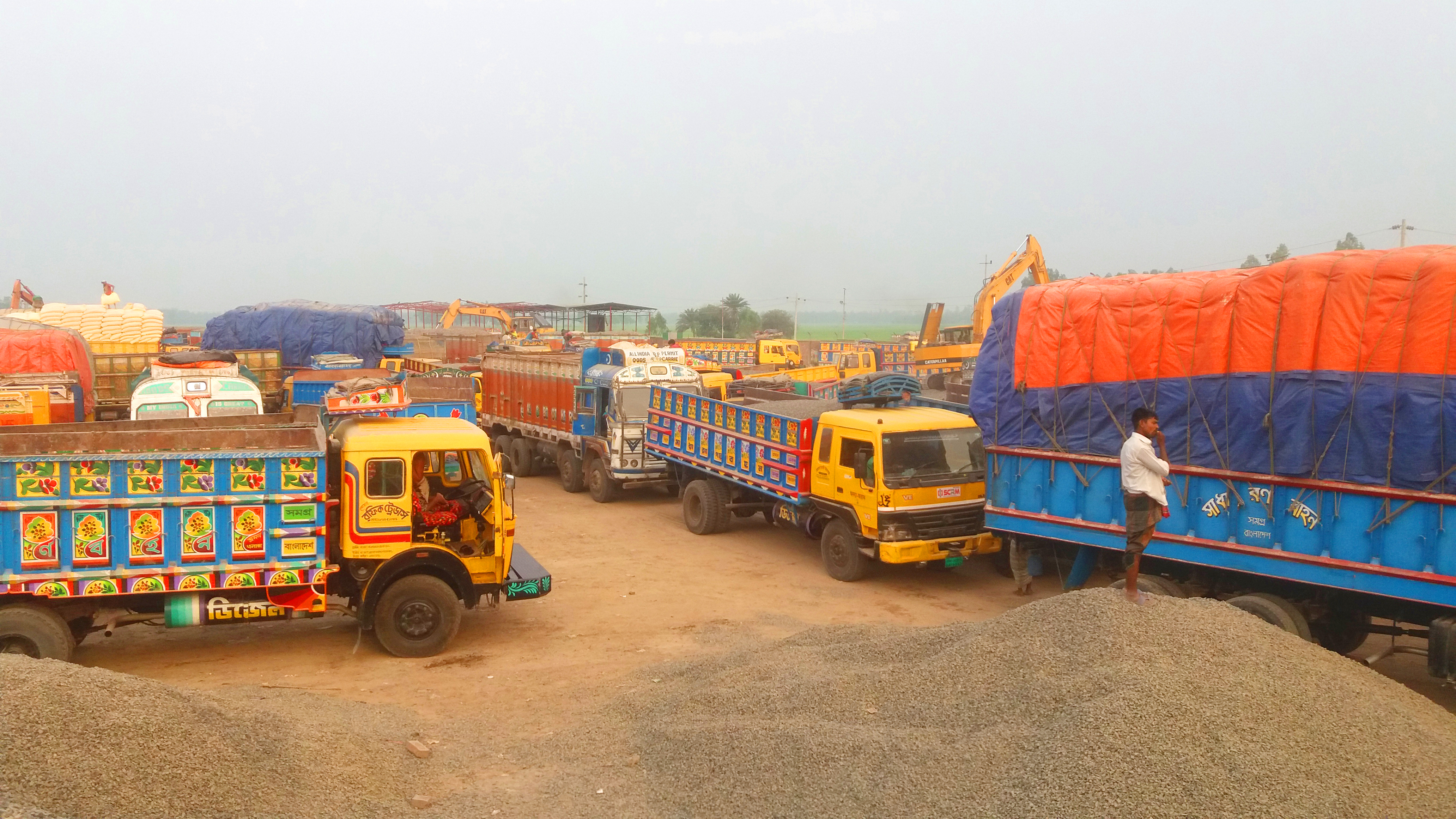
Wholesaler Helal Hossain said fruit prices had risen sharply because import duties had gone up. By his account no fruit was imported through Dinajpur's Hili port, so it had to be brought from Benapole at high transport cost. He said they were therefore importing on a small scale, because if fruit spoiled the whole outlay was lost. Mukul Hossain, a fruit trader in front of Dinajpur Zilla School, said various fruits used to sell as iftar items but there was no such demand now, and at the rate buyers were falling away it was becoming hard to keep the business going.
Hili land port lies in Hakimpur upazila of Dinajpur, about 285 kilometres from Dhaka, facing the Hili land customs station in South Dinajpur district of West Bengal, India. According to the Bangladesh Land Port Authority, the Hili customs station was declared a land port on 12 January 2002. A concession agreement with Panama-Hili Port Link Limited was signed on 9 October 2005, and the company began operating on 1 January 2010. Benapole lies in Sharsha upazila of Jashore, facing Petrapole in India. It is the country's largest land port, and Kolkata is about 80 kilometres from the border there.
What the hawker and the shoppers said
Hawker Shahjahan Ali said he carried fruit on a shoulder pole and walked all day selling it. Ordinary people could not buy because prices were high, and it had become hard for him to earn Tk 500 to Tk 600 after a full day's walking.
Buying fruit had become a dream, said the shopper Imrul Kayes Rupom. By his reckoning there was no good fruit under Tk 400 to Tk 500 a kilogram; a kilogram of apples could not be found under Tk 400, and malta that used to cost Tk 200 was Tk 400. The middle class could not even mention foreign fruit, he said, prices were sky-high, and this time most people had dropped fruit from their iftar list. Another buyer, Liton Hossain Akash, said he worked as a computer operator at a private company and found it hard to run his household on his salary. Even so, looking at his children's faces, he bought one or two pieces of fruit at a time; if he bought grapes it was 250 or 500 grams. Fruit prices were high this Ramadan, he said.
A private-sector employee in Chattogram told Prothom Alo much the same on 21 February: children want fruit in Ramadan, but not every fruit could be bought at once, so he was buying less. Prices in general were pressing too. The Bangladesh Bureau of Statistics put overall inflation at 8.58 per cent in January 2026 and food inflation at 8.29 per cent, with national wage growth at 8.08 per cent, below inflation.
Banglapedia gives average fruit availability in Bangladesh as about 35 grams a person a day, well below the recommended 85 grams and unevenly shared. The World Health Organization's fact sheet of January 2026 advises at least 400 grams of fruit and vegetables a day for people over 10.
The duties on imported fruit
The duty the Dinajpur wholesaler spoke of had a history of several years. Prothom Alo reported that Bangladesh imports 38 kinds of fruit, about 95 per cent of them apples, oranges, malta, grapes and pomegranates, with pears, kiwi, avocado and rambutan among the rest. Imported fruit began to climb, the paper said, in June and July 2022, when duties were raised to discourage imports during the dollar shortage and the exchange rate rose as well.
The Business Standard reported on 13 February 2025 that total tax on fresh fruit was 89.32 per cent in fiscal 2021-22 and 113.80 per cent in 2022-23, and that it reached 136.20 per cent on 9 January 2025, when supplementary duty went from 20 to 30 per cent. On the night of 17 March 2025 the National Board of Revenue (NBR) cut that duty to 25 per cent on apples, grapes, pears, oranges, malta and other fresh fruit and waived the 5 per cent advance tax, until 30 June. In February 2026 the president of the Bangladesh Fresh Fruits Importers Association told Prothom Alo that duties and taxes on fruit came to about 123 per cent, or about Tk 120 on a kilogram of apples. In the paper's 6 February report he had put the figure at Tk 125 to Tk 160 a kilogram on foreign fruit.
The association's president added that world prices, the dollar rate and the duty structure all bear directly on the price of imported fruit. By The Business Standard's figures, fruit imports through Chattogram port were 480,213 tonnes in fiscal 2021-22, 386,410 tonnes in 2022-23 and 339,894 tonnes in 2023-24. New Age wrote on 5 March 2025 that local production met only 40 per cent of the country's fruit demand.
Consumer campaigners raised questions too. A vice-president of the central committee of the Consumers Association of Bangladesh (CAB) told Prothom Alo on 21 February that the wide gap between wholesale and retail prices needed looking into and that effective monitoring was required to keep the market normal. Traders in Dhaka had said on 17 February that the election had somewhat disrupted supply and raised transport costs.
Date duty had been cut, yet five kinds cost more
Dates had a duty cut ahead of Ramadan. Prothom Alo reported that on 24 December 2025 the import duty was lowered from 25 to 15 per cent and advance income tax from 10 to 5 per cent, in force until 31 March. NBR data showed 49,807 tonnes imported from 1 November to 17 February, against 44,716 tonnes in the same period a year earlier, a rise of 11.4 per cent. The Tariff Commission put Ramadan demand at about 60,000 tonnes. The importers' association put yearly demand at about 90,000 to 95,000 tonnes, 70 per cent of it sold during Ramadan.
Even so, the 22 February report found five kinds of date dearer at retail than a year earlier. The paper gave several reasons: about 4,000 tonnes of dates aboard a ship from Thailand, some 90 per cent of them Zahidi, had sunk at sea, and a work stoppage by staff at Chattogram port had halted unloading for some days. Importers said at the time that prices would fall within a week. A marketing professor at the University of Chittagong told the paper that year-round demand for dates more than doubles in Ramadan, when even a small shortfall pushes prices up.
The state-run Trading Corporation of Bangladesh (TCB) began selling dates from trucks nationwide from 17 February, alongside other goods, at Tk 160 a kilogram, with a limit of 500 grams a buyer. The fruit itself is ancient: the FAO records its cultivation at Ur in southern Iraq by about 4000 BC, and its 2002 manual lists Iraq, Iran and Saudi Arabia as the leading countries by number of palms. A kilogram of dates holds more than 3,000 calories, and the fruit is about 70 per cent carbohydrate.
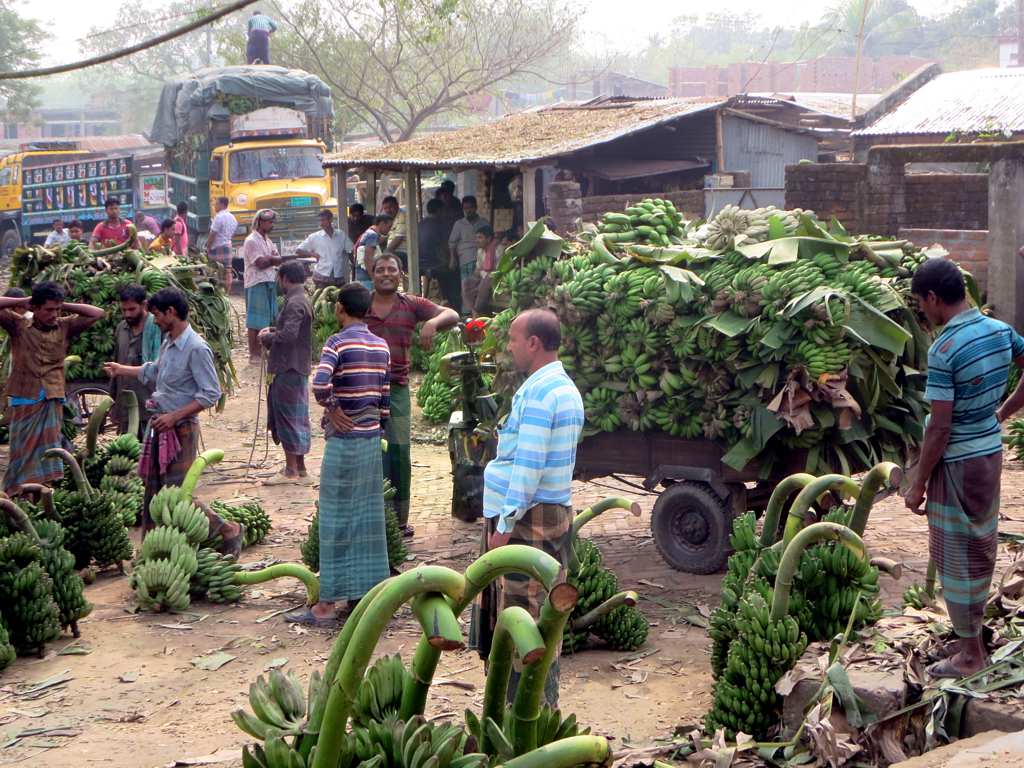
Photo: Wiki Ruhan / Wikimedia Commons (CC BY-SA 4.0). The top picture shows a seasonal fruit seller in Birampur upazila of Dinajpur, taken in 2019, as background.
Sources: Jagonews24 (1 March 2026), Prothom Alo (4 March 2024; 18 March 2025; 6, 8, 16, 17, 18, 21 and 22 February 2026), The Business Standard (13 February 2025), New Age (5 March 2025), Bangladesh Land Port Authority, Food and Agriculture Organization (Date Palm Cultivation, 2002), World Health Organization (26 January 2026), Banglapedia, Wikipedia
Comments
(0)