
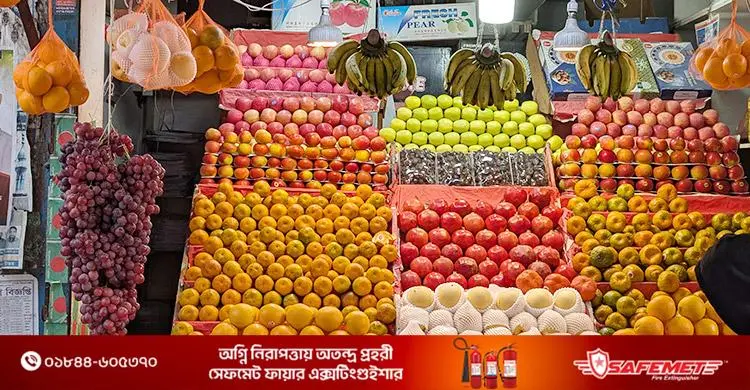
Although kul and other seasonal fruits have reached the market this winter, high prices have left buyers uneasy. In Dhaka markets, medium-sized boroi (jujube) sells for Tk 150–200 a kg and kul for Tk 250–300, while small boroi can be had for Tk 100–130. Thai guava sells for Tk 100–120, and chalta (elephant apple) and kodbel (wood apple) for Tk 40–60.
Beyond these four fruits, the rest are also out of buyers' reach. Faces are glum and people are buying in small quantities. A visit to markets in Mirpur, Tolarbag, Pallabi, Kalshi and Rupnagar on Friday (26 December) found plenty of local fruit as well as most imported fruits, including apples, grapes, oranges and pomegranates, on sale.
Prices up before Ramadan
Buyers in these markets said that although holy Ramadan is still about two months away, the prices of imported fruit in the capital have already gone up. Most fruits cannot now be found for under Tk 300–350.
Sellers say retail prices are high because wholesale prices are high. Imported fruit has become dearer because of lower imports and high duties. Against this backdrop, there are fears that fruit prices could rise again before Ramadan.
Raihan Mahmud, a fruit seller in Pallabi, said prices of all kinds of imported fruit have risen in the wholesale market. Malta is somewhat cheaper, but fruit prices are rising every week. Prices may rise further before Ramadan, because demand will increase then and supply will be short.
Shamsuddoha, a fruit seller at Rupnagar market, said fruit sales have fallen sharply. At present it is mainly sick people who buy fruit. Ordinary customers buy very little for themselves: half a kilo, or one or two oranges or apples. That is how trade is going now.
Current prices
Malta now sells for Tk 250–300 a kg. Oranges cost Tk 350–380, small oranges Tk 300–320 and China oranges Tk 300–320. Pears sell for Tk 300–350. Pomegranates cost Tk 600–650, grapes Tk 500–600 and persimmons Tk 1,200 a kg. Fuji apples sell for Tk 300–350 and green apples for Tk 400–450.
Among locally grown fruits, dragon fruit costs Tk 200–250 a kg, sapodilla Tk 150, amra (hog plum) Tk 120–150 and olives Tk 80–100.
Buyers complain that, for lack of market monitoring, sellers are setting fruit prices as they please.
Nahid Islam, a salaried worker who was going from one fruit stall to another on the pavement in central Pallabi, said that not long ago malta and oranges cost Tk 200–250 a kg, but now they are above Tk 300. There is no shortage of fruit in the market and imports are adequate, so there is no reasonable cause for prices to rise. If prices keep climbing like this, fruit will go beyond the reach of ordinary people.
Housewife Sabiha Mahmud said Ramadan is still some way off, yet fruit prices have already risen. The government needs to take strong steps to control the fruit market.
Source: Jagonews24. First published in Bengali on The Agro News.

Comments
(0)