
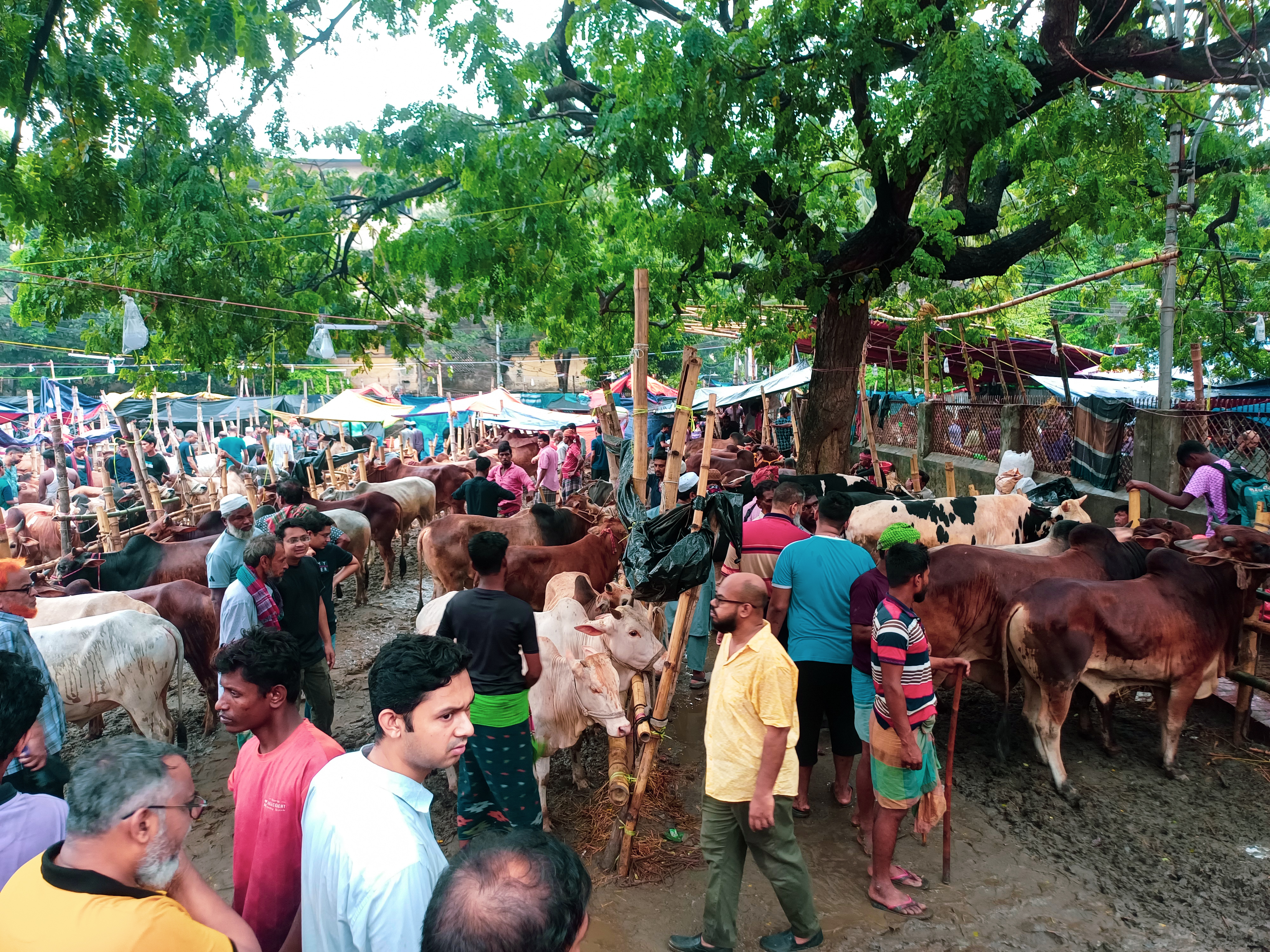
Dhaka's two city corporations planned 24 temporary cattle markets in the capital for Eid-ul-Azha in 2026, Jagonews24 reported on 12 April 2026. Dhaka North City Corporation (DNCC) had invited tenders on 9 April for leasing markets at 12 sites, and Dhaka South City Corporation (DSCC) was preparing to announce tenders for another 12 temporary markets. Sacrificial animals would also be sold at the DNCC's permanent market at Gabtoli and the DSCC's permanent market at Sarulia. According to the report, the markets would run for five days in all, including Eid day.
Whether a market would be held at Aftabnagar in east Dhaka was still uncertain. The DSCC was weighing boundary complications, the environment of the residential area and the risk of hardship for residents. The report said that the year before, the leasing process for a cattle market at Aftabnagar had been suspended because of resistance from local people and a High Court injunction.
Ahead of the Eid of sacrifice, farmers bring cattle, goats and other animals to Dhaka from across the country, and city residents buy their sacrificial animals at these markets. The markets take on a festive air every year, and many people go with their families to look at and buy animals. Leasing the markets earns both city corporations significant revenue. The report said that Eid-ul-Azha was expected on 27 or 28 May, subject to the sighting of the moon.
The DNCC's 12 markets and their government prices
The DNCC's tender notice of 9 April named 12 markets and gave each a government price, the minimum figure a bid has to exceed for the bidder to win the lease. The list, as Jagonews24 published it:
- Vacant space under the elevated expressway next to Khilkhet Bazar: government price Tk 1.51 crore.
- Vacant space at Eastern Housing, Mirpur Section-6: Tk 1,76,47,858.
- Vacant space of the Mirpur Kalshi Balur Math (16 bighas): Tk 30 lakh.
- Vacant space next to Dhaka Polytechnic Institute: Tk 1,13,05,900.
- Vacant space next to the Merul Badda kitchen market: Tk 14 lakh.
- Vacant space beside Iqra Madrasa in East Hajipara, Ward 23: Tk 13.5 lakh.
- Vacant space next to the 40-foot road at Bosila, Mohammadpur: Tk 1,96,20,456.
- Vacant space in the Bou Bazar area next to Sectors 16 and 18, Uttara Diabari: Tk 8,30,33,334.
- Vacant space from Bhatulia Saheb Ali Madrasa to the Uttara Ranabhola sluice gate next to Ranabhola Avenue, Sector 10: Tk 88,20,750.
- Vacant space in the Rahmannagar residential area next to Kanchkura Bazar, Ward 44: Tk 15,05,500.
- Vacant space in Paschim Para next to the Mastul checkpost, Khilkhet: Tk 93,22,334.
- Vacant space next to the Sutibhola canal, Bhatara: Tk 3,12,76,667.
Most of these sites had been on the DNCC's list the year before. A Prothom Alo report of 3 June 2025 named the north city's temporary markets for 2025 as the Mastul checkpost in Khilkhet, the Dhaka Polytechnic Institute area in Tejgaon, Bou Bazar at Uttara Diabari, Eastern Housing at Mirpur-6, Bosila in Mohammadpur, Ranabhola Avenue in Uttara Sector 10, the Sutibhola canal at Bhatara, the space under the elevated expressway at Khilkhet, Kanchkura Bazar at Rahmannagar, the Merul Badda kitchen market and the Iqra Madrasa area in East Hajipara, Rampura.
The Kalshi Balur Math market in Mirpur ran into trouble in 2025. Prothom Alo reported that its government price that year was Tk 80 lakh; tenders were called three times, the second round drew a single bid of Tk 30 lakh, and the third drew no bid at all. In the 2026 notice the same ground carried a government price of Tk 30 lakh.
How the tenders were to be bought, submitted and opened
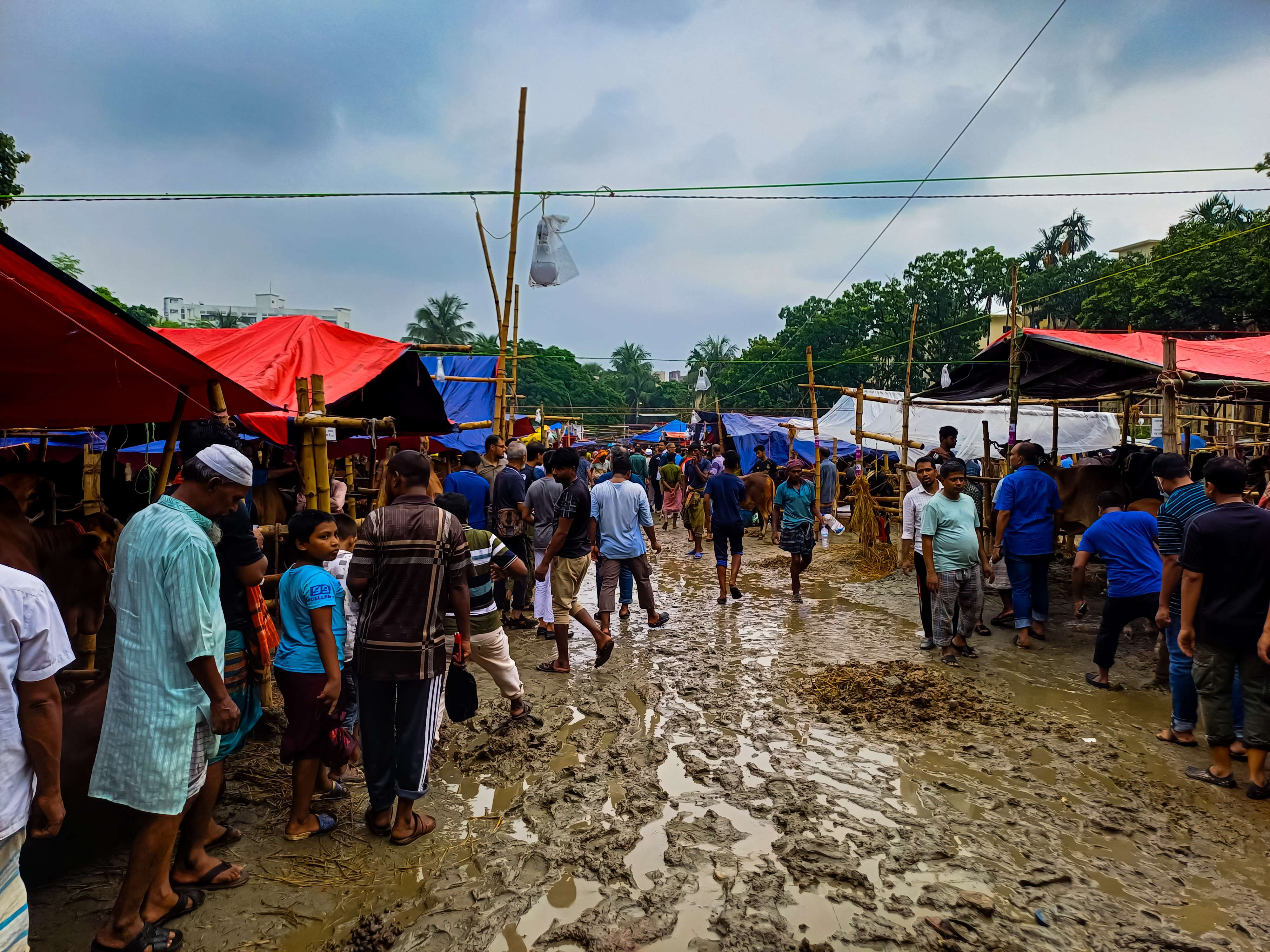
According to the DNCC's estate department, any individual or organisation wishing to bid for the 12 markets had to buy tender documents. They were on sale at the DNCC's headquarters, Nagar Bhaban, and all its zonal offices, the Dhaka divisional commissioner's office, the Dhaka district superintendent of police's office and the Dhaka deputy commissioner's office. Anyone could buy them by paying the fixed amount at a designated bank.
The last day for buying schedules in the first phase was 26 April. Completed bids had to be submitted between 9am and 1pm on 27 April at Nagar Bhaban and the other designated offices, and the tender boxes were to be opened at 2.30pm the same day at Nagar Bhaban in the presence of bidders or their representatives. If bids could not be received and opened on that day because of a public holiday or unavoidable reasons, this would be done at the same time on the next working day.
The notice said that whoever bid above the government price would win each lease. A cleaning fee of 10 percent of the lease value would be charged to the lessee and deposited in the corporation's account by bank challan. The tender was signed by the DNCC's chief estate officer, Mohammad Shawkat Osman.
Its special instructions also set cleaning conditions. Waste inside each market had to be collected and kept at a set place, from where the corporation's garbage trucks would remove it. From noon on the day after Eid, the corporation would start cleaning the sites, including removing the markets' bamboo poles.
The DSCC's draft list
The DSCC's estate department told Jagonews24 that the corporation planned temporary markets at 12 sites to meet city residents' demand for sacrificial animals, and that tenders would be invited by notice within that week. The leases would go to the highest bidders, and those given work orders could hold markets at the set sites for five days including Eid day.
The sites on the DSCC's draft list were:
- Vacant space at the Moitree Sangha Club, North Shahjahanpur.
- Vacant land on the riverbank west of the Postogola cremation ghat.
- Vacant space east of Donia College and east and west of Chhontek Mohila Madrasa.
- Vacant space south of the Sadeque Hossain Khoka field at Dholaikhal, and the Dholaikhal truck terminal.
- Vacant space at Rahmatganj Club.
- Vacant space east of the Institute of Leather Technology college, Hazaribagh.
- Vacant space on the canal bank east of Meradia Bazar.
- Vacant space east of the Sadeque Hossain Khoka Community Centre, Kamalapur.
- Vacant space north of Amulia Aligarh Model College.
- Vacant space at the Shyampur Kadamtali truck stand.
- Vacant space next to Rahmatganj Club, Lalbagh.
- The Kamrangirchar embankment.
Jagonews24 said the list had not been finalised as of Sunday, 12 April, and that sites could be added or dropped. The DSCC's chief estate officer, Mohammad Mobassher Hasan, told the paper that tenders for the south city's temporary cattle markets would be invited within two or three days. "We will give as many markets as we can, based on public demand," he said. He did not say exactly how many sites had been finalised.
One site on the draft list, Meradia, had been the subject of a court order the year before. According to The Daily Star's Bangla edition of 29 April 2025, a resident of Banasree filed a writ petition challenging a lease notice the DSCC had issued on 21 April for a cattle market at Meradia. A High Court bench of Justice Kazi Zinat Haque and Justice Ainun Nahar Siddiqua stayed the decision for three months and issued a rule asking why the decision to set up a market at Meradia should not be declared illegal. The petitioner's lawyer argued that Banasree is a residential area and that a market at Meradia would spill into the surrounding neighbourhoods and cause residents severe hardship.
Why Aftabnagar was uncertain
Aftabnagar is a residential area in east Dhaka, part of which falls under the north city and part under the south city. Cattle markets there had gone to court in several years, and that history lay behind the boundary and public-hardship concerns the DSCC was weighing in 2026.
The Daily Star's Bangla edition reported on 14 June 2023 that on 18 May that year the High Court, on a writ petition by Supreme Court lawyer Md Yunus Ali Akand, had stayed the DNCC's plan for a temporary cattle market at Aftabnagar for eight weeks. The Appellate Division then stayed the High Court order for four weeks. The DNCC's lawyer told the paper that there was then no legal obstacle to running a temporary market there for Eid-ul-Azha, and that it would operate on vacant land for the convenience of local people.
In 2025 the outcome was different. The Business Standard's Bangla edition reported that on 4 May 2025 the High Court stayed, with a rule, the leasing notice published on 25 April for a temporary cattle market in the Aftabnagar residential area; the petition was filed by lawyer Md Yunus Ali Akand. According to bdnews24.com on 21 May 2025, he had sent a legal notice on 24 April, filed the writ on 30 April after receiving no reply, and the 4 May order concerned the market in the DSCC's part of Aftabnagar.
bdnews24.com reported on 5 May 2025 that, the next day, the same bench acting on another writ also stayed for three months the DNCC's leasing notice of 29 April for a market on three blocks of Aftabnagar (Eastern Housing) and part of the Sanvalley area. The petitioner in that case, a local resident, argued that the area is fully residential, has several educational institutions and would suffer if a cattle market were set up there.
Both city corporations applied to the Appellate Division's chamber court for a stay of the High Court's order. According to bdnews24.com on 21 May 2025, the chamber judge passed a "no order" on the application, leaving the High Court's order in force. The Daily Star's Bangla edition reported on 26 May 2025 that DSCC officials said the Aftabnagar market, one of their 11 designated markets, had been cancelled because of a boundary dispute, and that the Meradia market was not being set up because of legal complications.
How many markets Dhaka held the year before
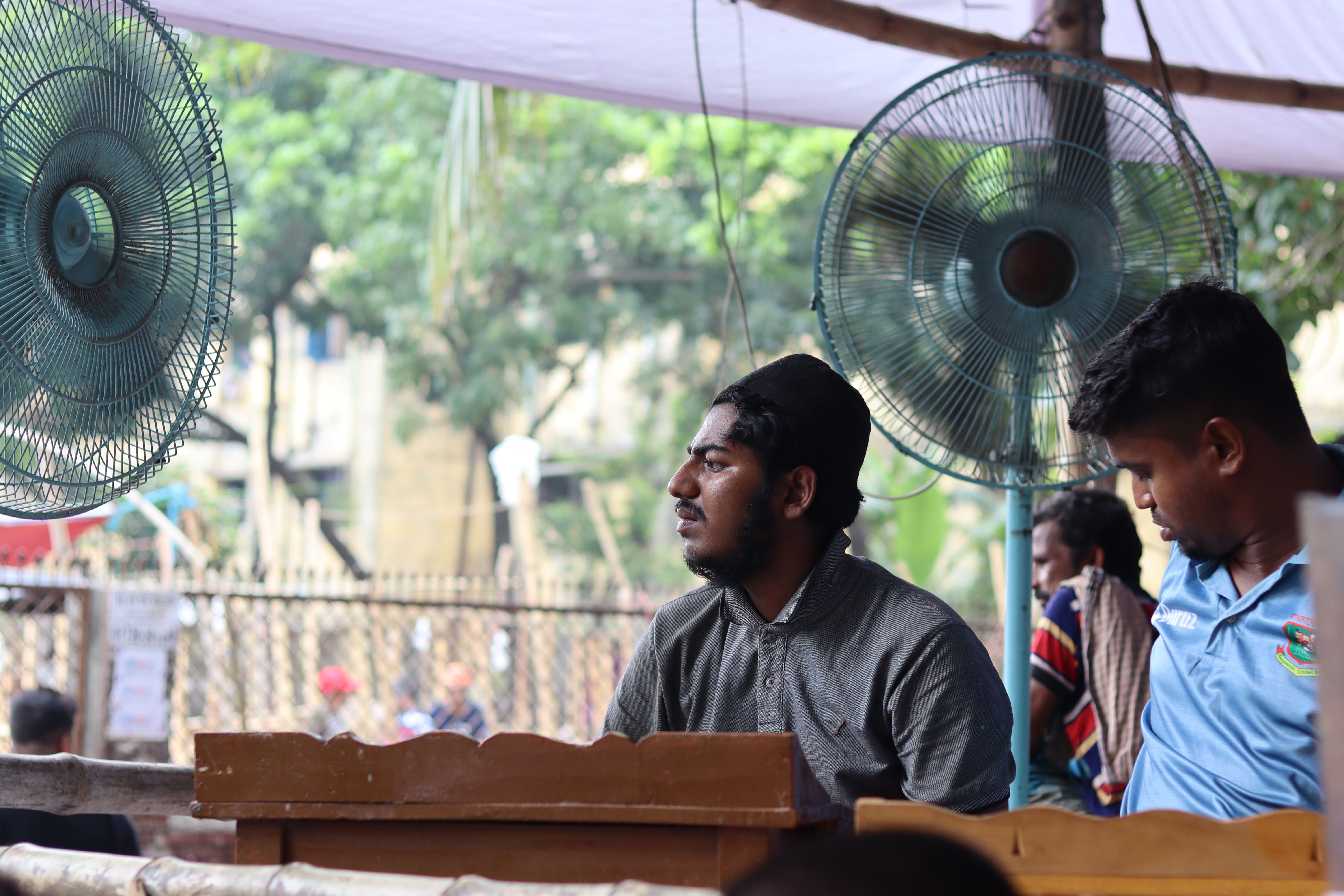
In 2025 Eid-ul-Azha fell on 7 June, and trading at the markets began four days before Eid. Prothom Alo reported on 3 June 2025 that 19 permanent and temporary markets had been finalised across the two city corporations that year: 12 in the north city and 7 in the south city. Gabtoli was the north city's only permanent cattle market, and Sarulia the south city's permanent market.
Prothom Alo listed the south city's temporary markets that year as north of the Moitree Sangha Club in North Shahjahanpur, north of Aligarh Model College at Amulia in Demra, on the riverbank west of the Postogola cremation ground, east of Donia Club and west of Chhontek Mohila Madrasa, at Rahmatganj Club in Posta, Lalbagh, and east of the Institute of Leather Technology college in Hazaribagh. The leases for two more south city markets, one on the vacant space south of the Sadeque Hossain Khoka field at Narinda and the Dholaikhal truck terminal, the other beside Brothers Union Club, were awaiting a ministry decision. The two corporations had written to the Local Government Division seeking decisions on the three pending markets.
The Daily Star's Bangla edition reported on 26 May 2025 that no market lease in the south city had yet been finalised, because a protest at Nagar Bhaban had halted the DSCC's administrative work; the DSCC administrator said the blockade had prevented the corporation from finalising leases or issuing work orders. The same report said several of the north city's 11 markets had to be re-tendered.
On managing the markets, the DNCC's administrator at the time told Prothom Alo that the home, commerce, livestock and local government ministries had taken decisions on security, traffic, preventing illegal markets and the health of animals brought to the markets, and that these would be strictly monitored in the field. He said mobile courts would operate at the markets, and that arrangements would be made for the safety of buyers and sellers and for detecting counterfeit notes.
The national supply of sacrificial animals
The animals in Dhaka's markets come from farms and households across the country. Citing Department of Livestock Services (DLS) data, The Business Standard reported on 4 May 2025 that 1,24,47,337 animals were ready for sacrifice that year: 56,02,905 cattle and buffaloes, 68,38,920 goats and sheep, and 5,512 other animals. A surplus of about 20,68,135 animals was expected after demand was met. The fisheries and livestock adviser said then that there was "absolutely no need to import sacrificial animals".
After Eid, Prothom Alo reported on 10 June 2025, citing the DLS, that 91,36,734 animals had been sacrificed in Bangladesh at Eid-ul-Azha 2025: 47,05,106 cattle and buffaloes, 44,30,668 goats and sheep, and 960 other animals. Another 33,10,603 animals went unsold. By division, Dhaka recorded 21,85,040 sacrifices, the second highest after Rajshahi's 23,24,971.
The same report gave earlier years for comparison: 1,04,08,918 animals were sacrificed in 2024, 90,93,000 in 2021, when COVID-19 was still affecting the country, and more than 1,06,00,000 in 2019. In the year before the 2026 market plans, in other words, supply had run ahead of demand, and Dhaka division, which surrounds the capital, was one of the largest centres of sacrifice.
Animal health, transport and waste at the markets
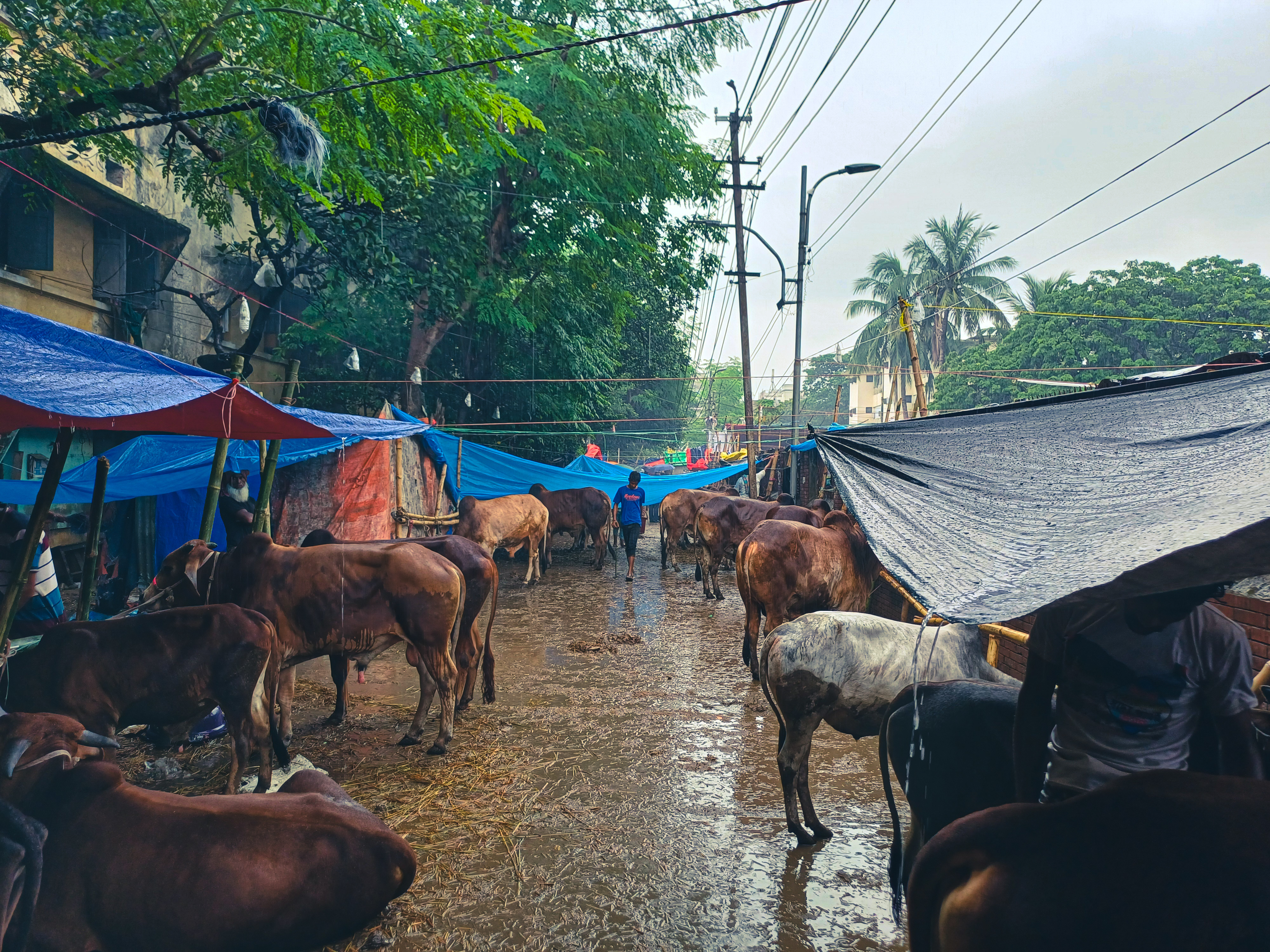
The cattle markets are not only a city corporation matter: several other agencies handle animal health, transport and waste. The Business Standard reported on 4 May 2025 that 20 DLS medical teams were to be deployed across the capital's 19 cattle markets that year, with 2 specialist teams on standby. To promote scientific slaughter and skinning, 36,577 butchers had been trained: 15,369 professionals and 21,208 non-professionals.
The same report said special livestock trains would run from the northern regions to Dhaka and Chattogram, and that transport of animals by rail and waterway had to comply with the Animal Welfare Act, 2019. Bringing cattle across the border illegally was prohibited, with the Border Guard Bangladesh, police, Coast Guard, district administrations and district livestock offices to coordinate against smuggling. The Local Government Division and the city corporations were responsible for market waste, and guidelines were to be issued to encourage hygienic, mechanised slaughter.
Waste after Eid is a large task for the corporations. The Business Standard reported on 9 June 2025 that 4,66,080 animals, nearly 3,60,000 of them cows, were sacrificed in the DNCC area at Eid that year. Over the three days of Eid, 20,889 tonnes of sacrificial waste were removed in 3,948 vehicle trips: 10,614 tonnes on the first day, 7,353 tonnes on the second and 2,922 tonnes on the third. The report said cleaning of the cattle market sites began on the day of the press conference. The 2026 tender conditions on keeping market waste at set points and removing bamboo poles from noon on the day after Eid were part of the same clean-up work.
Eid-ul-Azha and the public holidays
According to Banglapedia, Eid-ul-Azha is observed on the 10th of Zilhajj, and animals may be sacrificed from after the Eid prayer until sunset on the following two or three days. The festival commemorates the sacrifice of Hazrat Ibrahim. In Bangladesh cattle, goats and buffaloes are usually sacrificed; up to seven people can share a camel, cow or buffalo, while a goat or sheep is sacrificed on behalf of one person. Banglapedia adds that by custom one third of the meat is kept by the owner, one third goes to relatives and the rest to the poor.
On the 2026 holiday list, The Daily Star's Bangla edition reported on 10 November 2025 that six days had been set aside for Eid-ul-Azha: a public holiday on 28 May, and by executive order 26 and 27 May before Eid and 29 to 31 May after it. The notification said the dates of holidays that depend on the sighting of the moon would change as needed. That is why the April report gave 27 or 28 May as the likely date of Eid, and the two corporations set their tender timetables on that basis.
Two city corporations, two sets of leases
According to Banglapedia, the Dhaka Municipality was created in 1864 and became the Dhaka Municipal Corporation in 1983. Under the Local Government (City Corporation) Amendment Act 2011, the Dhaka City Corporation was dissolved on 29 November 2011, and from 4 December 2011 the city was divided into Dhaka South City Corporation and Dhaka North City Corporation. Each is self-governing, which is why the leasing, cleaning and supervision of the capital's cattle markets are handled separately by the two corporations.
Each corporation's estate department chooses the market sites, sets the government prices, calls tenders and issues work orders to the highest bidders. In April 2026 the north city had begun the first stage of that process, while the south city was still finalising its list; the fate of sites such as Aftabnagar and Meradia, which had been the subject of court orders in earlier years, had not yet been decided.
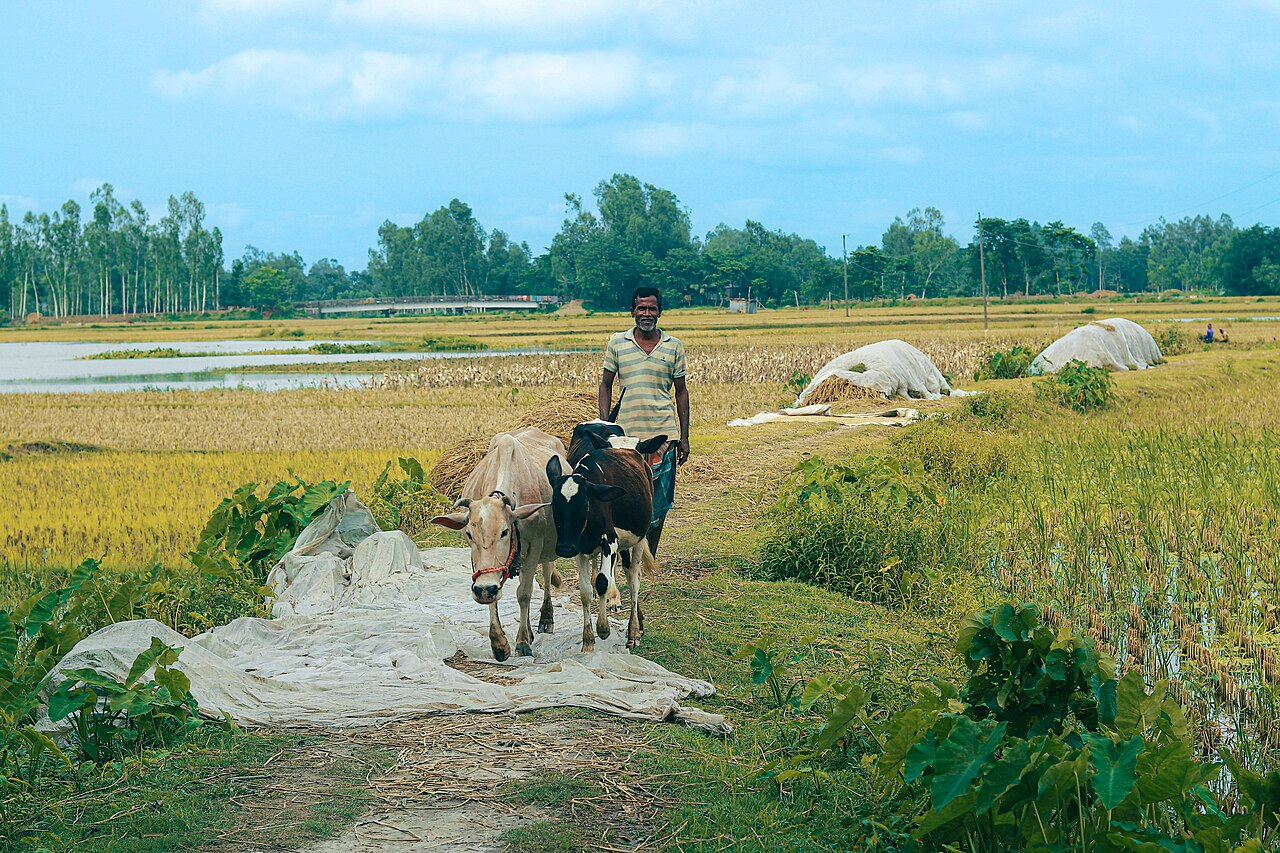
Photo: S.M.M.Musabbir Uddin / Wikimedia Commons (CC BY-SA 4.0)
Sources: Jagonews24 (12 April 2026), Prothom Alo (3 and 10 June 2025), The Daily Star Bangla (14 June 2023; 29 April, 26 May and 10 November 2025), bdnews24.com (5 and 21 May 2025), The Business Standard (4 May and 9 June 2025; Bangla edition, 4 May 2025), Banglapedia
Comments
(0)