
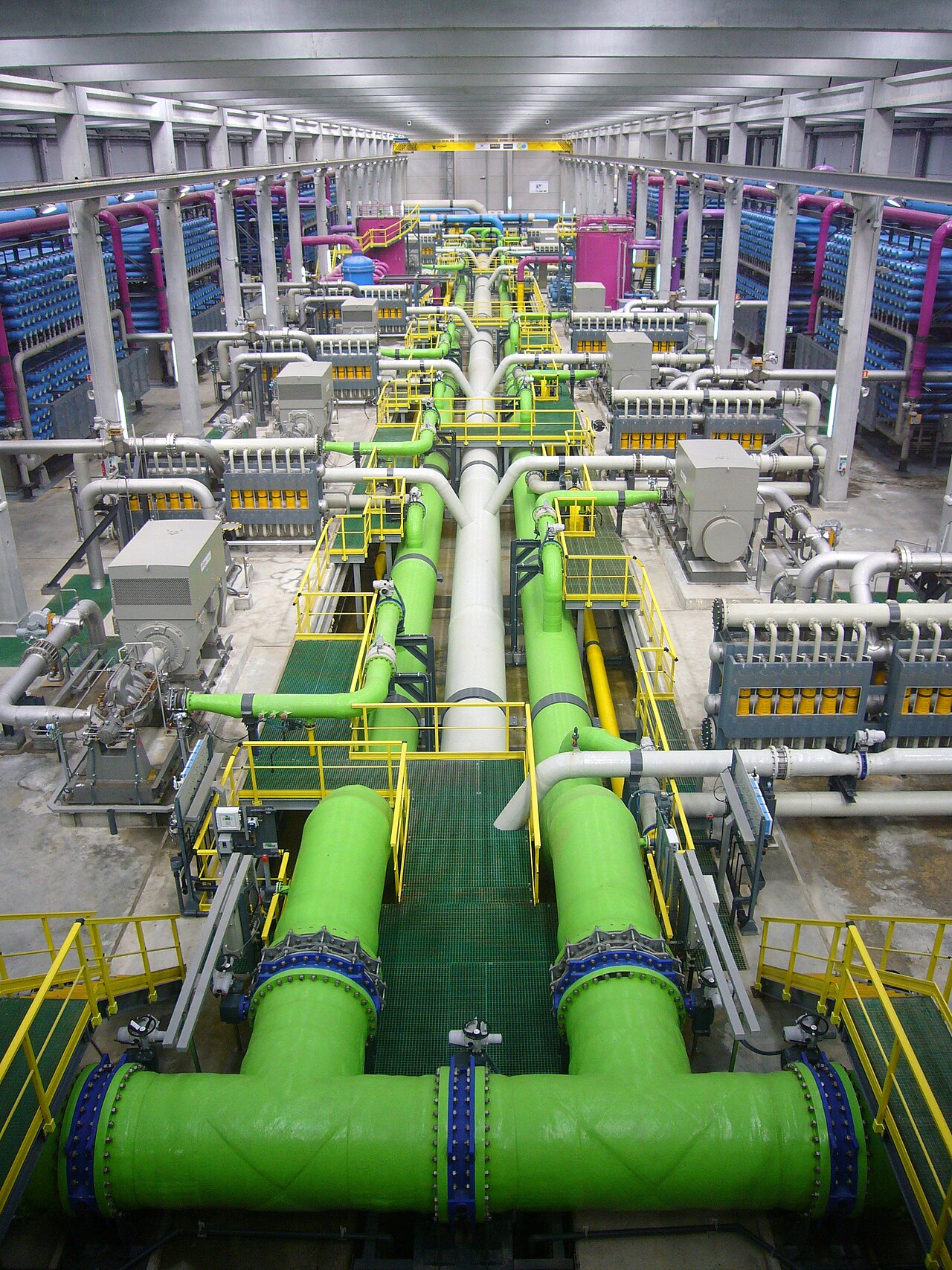
Ocean desalination cannot replace irrigation supplies for large-scale farming in the American West because the water costs far more than farms earn from it, an analysis by the American Farm Bureau Federation has found, as the Colorado River basin faces a long-term gap between the water available and the demands on it.
New seawater desalination in California is estimated at $3,400 to $3,700 per acre-foot, figures cited by the California State Water Resources Control Board for 2025. The Pacific Institute put large California projects at roughly $2,100 and smaller ones at $2,800, and water from the Carlsbad Desalination Plant at about $2,500 to $2,800 once electricity prices are adjusted. California agriculture generated about $1,444 in gross farm revenue per acre-foot of applied water in 2020, so desalinated water would cost more than twice that before any labour, land or fertiliser is paid for.
Crop budgets show the gap. Using University of California cost studies, Farm Bureau estimated that under 2025 conditions lettuce growers lose about $2,533 an acre, strawberry growers about $4,525 and almond growers about $2,658. At $3,000 per acre-foot, below the state board's estimate, desalinated water would cost roughly $11,100 an acre for lettuce, $6,900 for strawberries and $11,250 for almonds.
The cost is built into the process. Seawater reverse osmosis needs roughly 4,000 kilowatt-hours of electricity per acre-foot, about twice the energy used to move Colorado River water through the Colorado River Aqueduct to Southern California. The Carlsbad plant draws about 38 megawatts continuously, cost roughly $1 billion and produces about 56,000 acre-feet a year. Plants must also protect marine life at the intake and dispose of concentrated brine; in 2022 the California Coastal Commission rejected a Huntington Beach plant of similar size, citing marine-life impacts among its concerns.
Cheaper water is reported abroad, near $505 per acre-foot at Israel's Sorek B and about $450 at Dubai's Hassyan project, but the analysis says differences in energy, scale, financing and regulation make those prices hard to repeat in the West. Worldwide, desalination still supplies only about 1% of freshwater needs.
The stakes are the food supply. Yuma, Arizona, and California's Imperial Valley produce roughly 90% of the leafy vegetables eaten in the US from November through March, and irrigation in the basin supports more than $10 billion of farm output a year. A 2024 study estimated Colorado River irrigation supports 28% of US milk, 15.5% of beef and 8.6% of egg production. The analysis, by Daniel Munch, says desalination may still suit cities and industry, but water at several thousand dollars per acre-foot is not a realistic substitute for irrigation.
Photo: James Grellier / Wikimedia Commons (CC BY-SA 3.0)
Source: American Farm Bureau Federation


Comments
(0)