
Rabeya Yasmin, who lives in Middle Badda, has suffered from a lung disease for two and a half years. She needs medicine worth an average of Tk 170 a day, and her hard-pressed household struggles to pay for it. Then her husband and six-year-old daughter both fell ill with dengue at the same time. After they tested positive, it was not medicine but the cost of their food that the housewife struggled to meet.
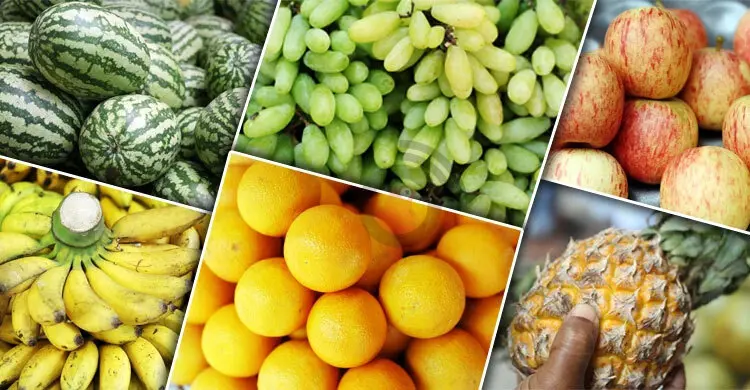
"The doctor said there is not much medicine for this disease for now," she said. "He told us to give them plenty of fruit – papaya, lemon, malta, green coconut, saline. Then they would get better by themselves. But with fruit at these prices, it would have been better if the doctor had just written a prescription."
Rabeya is not alone. Most dengue patients from lower-middle-class and low-income families are struggling to meet the cost of food. They have to spend large sums on extra food to recover fully, and even middle-class patients are finding it hard to cope.
Doctors say many people, without understanding, take "fruit" to mean expensive imported fruit such as apples, grapes, malta and dragon fruit, and fluids to mean green coconuts and juice, and so spend too much. They say patients will benefit just as well from local fruit instead of costly imported fruit, and from saline instead of green coconut water.
The cost of testing
During the dengue season, doctors advise testing as soon as fever and body aches appear, so the first step for anyone is a test, for which the government has set a fee that is somewhat lower in public hospitals and higher in private ones. Visits to public and private hospitals found that anyone arriving with dengue symptoms is first given two tests, NS1 and CBC. NS1 shows whether a person is dengue positive; it costs Tk 100 in public hospitals, while the government has set a fee of Tk 300 in private hospitals. The CBC, a complete blood test, costs Tk 400 in private hospitals, and Tk 150 or in some cases Tk 100 in public hospitals.
Sirajul Islam of Middle Badda, a salesman at a private company, contracted dengue last October. After two days of fever he went to the nearby Ibn Sina Diagnostic and Consultation Centre and paid Tk 700 for NS1 and CBC tests. He tested positive, with a platelet count of 1.35 lakh.
"Seeing that my platelets were fine I stayed at home, but two days later I became weak and it was unbearable," Sirajul told Jagonews. "Then I went to a doctor who charged Tk 800 for the visit but prescribed no medicine. He just handed me a list of foods and told me to get tested every other day."
On the doctor's advice he was tested every other day, five times in all, and on the fifth test he was negative. "Because the doctor told me to eat lots of fruit and fluids, I ate a lot of oranges, malta and various juices, and drank two green coconuts a day," he said. "Two coconuts cost Tk 230, and fruit and juice together came to more than Tk 1,000 a day. The only medicine I took was two Napa tablets, which cost Tk 5."
By his account, in about 15 days of illness he spent more than Tk 3,500 on tests and medicine and Tk 20,000 to 22,000 on extra food. "It is a very painful, unbearable illness, but judging by the food, it seems like a disease of luxury," he said.
'No doctor says you must buy expensive food'
Dr Afsana Begum, senior consultant in the internal medicine department of United Hospital, told Jagonews: "By fruit we understand only apples and grapes, oranges and malta. Papaya must be eaten whatever it costs in the market, green coconuts must be drunk whatever they cost! That is not the case at all. No doctor is telling patients they must buy and eat these expensive foods."
"If you have dengue, eat what you can afford," she said. "If necessary, consult the doctor about that too. If you cannot afford green coconut water, what should you do? Ask the doctor. Surely they will not say you must have it. I think you can make a drink from the ordinary lemons available in the market, and there can be an emphasis on oral saline."
Many people are dying of dengue, and the media report it prominently every day, which puts patients under mental strain. Fear and anxiety bring on heart problems for some, and patients with existing serious illnesses become sicker between the second and fourth day after testing positive. Many suffer lower abdominal pain, red eyes, bleeding and stiffness. A patient in this condition urgently needs to be admitted to hospital under constant medical observation, and in private hospitals the cost of treatment for such patients multiplies.
Hospital bills
Businessman Selim Uddin, who became seriously ill, was admitted to the private AMZ Hospital in Badda. He left after four days of treatment on 29 November and spoke to Jagonews outside the hospital as he was leaving. "I was admitted around noon on the 25th (November) and stayed four days. I am leaving today (the morning of 29 November)," he said. "They charged four days' rent plus treatment: Tk 23,000 in hospital bills alone. We had to buy medicine, injections and saline from the pharmacy, and food ourselves. Altogether it has cost Tk 40,000."
Aminur Rahman, coordinator of the dengue ward at AMZ Hospital, told Jagonews: "By any calculation, our costs are very low. Doctors and nurses work 24 hours in three shifts to ensure care; you could say we have one nurse for every four patients. For the quality, the bed rent is very low, only Tk 2,000 a day. Good care will cost a little more."
Costs are lower in public hospitals. Ashraful Alam of Moghbazar admitted his son, a third-grade pupil, to Mugda Medical College Hospital, where there is no seat rent, test costs are very limited and doctors see patients free. "Almost everything here is free," he said in the hospital's dengue ward on 26 November. "We only have to pay for saline and buy food. That is the big expense."
Tanushree Haldar, a senior staff nurse in the Mugda dengue ward, said: "There are a great many patients here, and we staff try to give the best care we can. There is no cost here, and saline is often given free. But when there is a saline shortage, patients are asked to buy it urgently."
Cheaper food, same benefit
Prof Dr ABM Abdullah, an Ekushey Padak-winning medicine specialist and emeritus professor at Bangabandhu Sheikh Mujib Medical University (BSMMU), believes eating food that is effective for recovery rather than expensive would cut costs. "If everyone starts drinking green coconuts, their price will rise. And where would you find so many green coconuts in Dhaka?" he told Jagonews. "Instead of coconuts, drinking cheap oral saline gives almost the same benefit. Why drink processed juice from the market? Drink lemon juice. Eating foods that are easily available and have the same nutritional value will bring this cost down."
But he said dengue "must not be taken lightly". "It is very important to be careful and aware. If you are infected anyway, get tested quickly. If your condition worsens or any particular symptoms appear, you must see a doctor, and if necessary be admitted to hospital quickly."
Source: Jagonews24. First published in Bengali on The Agro News.
Comments
(0)