
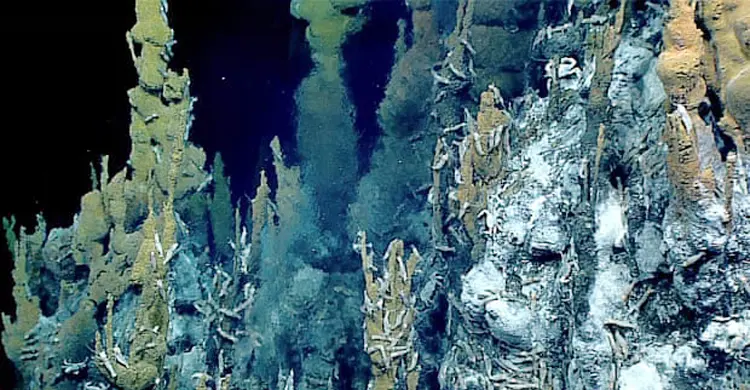
Molluscs are among the largest groups of marine invertebrate species. Researchers have warned that nearly two-thirds of hundreds of mollusc species living in the deep sea are at risk of extinction. A new study says seabed mining is sounding another alarm bell because of its harm to biodiversity.
As a result of the study, led by Queen's University Belfast, 184 mollusc species living around hydrothermal vents have been added to the global Red List of threatened species compiled by the International Union for Conservation of Nature (IUCN).
Although the researchers studied only molluscs, mining over the wider vent areas (hot springs on the sea floor) could also bring a risk of extinction to crustaceans or other species that depend on the vents.
An ocean still unexplored
Eighty per cent of the ocean is still unmapped, unseen and unexplored, yet authorities in various countries are carrying out deep-sea mining. Civil society and scientists say loss of biodiversity is inevitable and, if it continues, the damage could be permanent.
Lead researcher Elin Thomas said: "The species we studied are highly dependent on the unique ecosystems of hydrothermal vents for their survival. If deep-sea mining companies want all the metals formed at the vents, they will remove all the habitat these species come from, and these species have nowhere else to go."
The UN's International Seabed Authority (ISA), at a meeting in Kingston, Jamaica, approved a route for mining the sea for cobalt, nickel and other metals in July 2023.
There are at least 600 unknown vents around the world, at depths of 2,000 to 4,000 metres, each about a third of the size of a football pitch. They work as natural systems carrying heat and chemicals from the Earth's interior in huge geysers and help regulate the chemistry of the ocean. As a result, large and valuable mineral deposits build up, much like coral reefs.
Indian Ocean most at risk
The researchers say 62 per cent of the 184 species are threatened, and they live in the territorial waters of countries such as Japan and Papua New Guinea that hold licences for deep-sea mining.
The threat is rising most in the Indian Ocean region, where every species has moved onto the list of endangered species at 60 per cent, and where the ISA has approved deep-sea mining. The paper on the harm of seabed mining and the extinction of mollusc species was published in Frontiers in Marine Science and is also supported by Ireland's Marine Institute.
Citing The Guardian.
Source: Jagonews24. First published in Bengali on The Agro News.
Comments
(0)