

From a distance, it looks like garlands of colourful fruit hanging in the shade of green leaves. Up close, they turn out to be off-season watermelons. Below, fish swim in an enclosure of mixed fresh and saline water; above, on trellises, hang Supreme Honey, Tripti, Black Baby, Sugar Queen and Bangla Link watermelons. The sight has become the talk of the farming fields of Debhata in Satkhira.
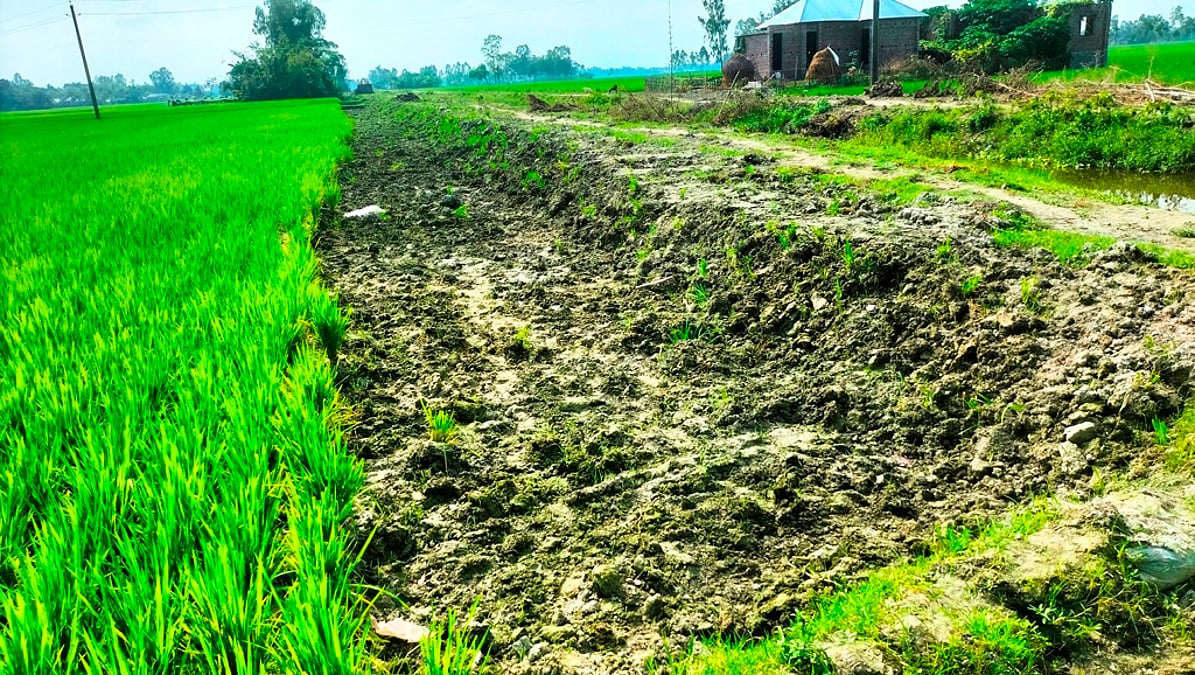
A few years ago, the dykes of Debhata's fish enclosures (ghers) lay unused or overgrown with weeds. Experimental watermelon farming began on them at the agriculture department's initiative. At first many doubted that watermelon would grow with saline water around, but the very first crop succeeded, and the success spread to nearby villages.
Low cost, good returns
According to the Debhata upazila agriculture office, about 50 farmers have taken up the practice this year. No separate land is needed: the gher dykes and a little land are enough, so investment and risk are low and profits high.
Watermelon is now selling at Tk 70 to Tk 80 a kg, and such prices out of season have delighted farmers. The upazila's three demonstration plots have already produced bumper yields. The agriculture department supplied improved seed, including Supreme Honey, Tripti, Black Baby, Sugar Queen and Bangla Link, along with fertiliser.
"In this saline area I carry tube-well water in buckets and water the plants every day, and I control pests and diseases. It is hard work, but the fruit is sweet. I sold Tk 40,000 worth of watermelon from the first picking, and two more pickings are left," said Biswanath Tapali, a farmer in Ticket village.
Farmer Abul Kashem has done even better. "The watermelons look beautiful and taste wonderfully sweet. Demand in the market is huge. I hope to sell about Tk 2 lakh worth," he said.
Officials' view
"We are looking for gold in saline land. At first farmers showed little interest. Now they come and ask for seed themselves," said sub-assistant agriculture officer Mostafa Mostak Ahmed.
"Where the dykes used to lie fallow, crops are now growing. The land is being used to the full, farmers' incomes are rising and the local economy is getting stronger," said Debhata upazila agriculture officer Shawkat Osman.
Off-season watermelon farming in Debhata is not only changing farmers' fortunes but opening new possibilities for farming on fallow land and with saline water. Within a few years, the model may spread beyond Satkhira to other coastal areas of the country.
Source: Jagonews24. First published in Bengali on The Agro News.

Comments
(0)