
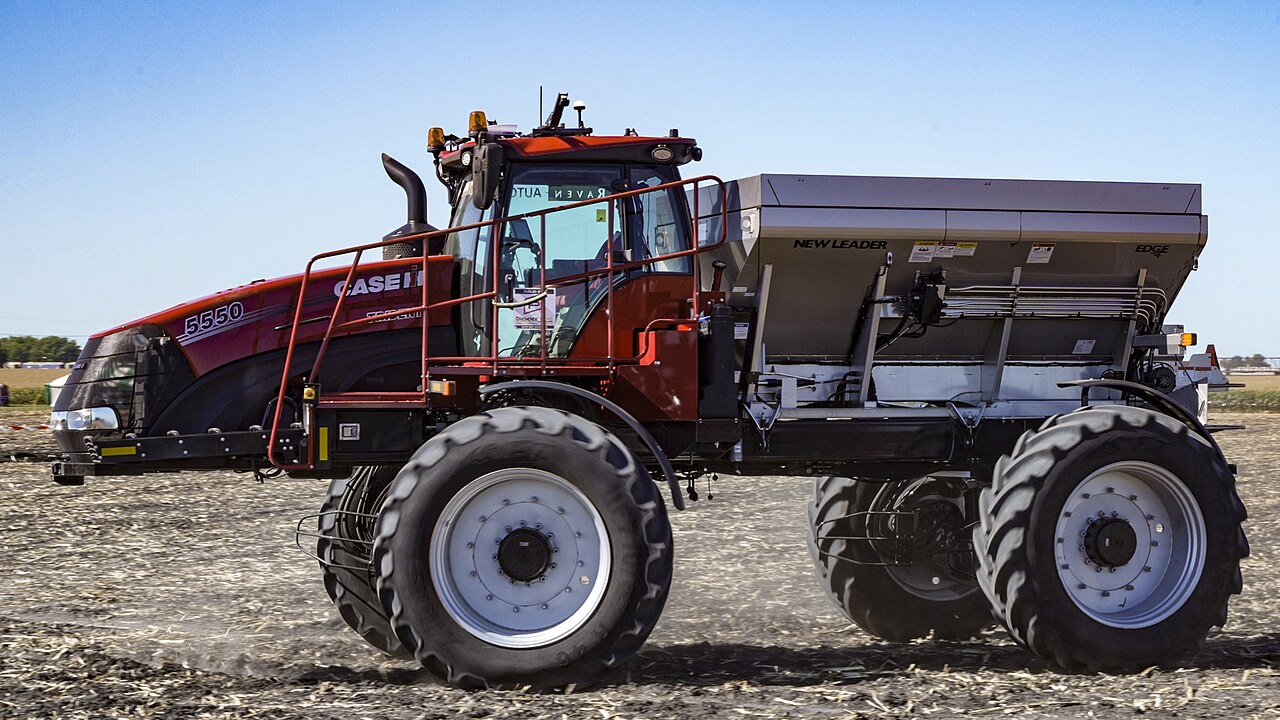
The hardest question about autonomous farm machinery is not whether the economics work or which technology wins, but how it reaches farmers at commercial scale, Graham Gleed argues in a column for Precision Farming Dealer, the third in his Ag Autonomy Economics series. Gleed is a principal advisor at abcg, working with farm and construction equipment makers and dealer groups in North America and Europe. The views are the writer's own.
Gleed writes that when an equipment maker concludes its dealer network cannot deliver autonomous technology and looks at going direct, selling robots as a service or copying Tesla, it has misdiagnosed the problem. In his experience, the capability gap in a dealer network is an investment problem of the manufacturer, which should be closed by building dealer skills over years, with the dealer made a stakeholder in the strategy from the start.
The Tesla comparison misleads, he argues, because a car is a self-contained product while a farmer buying an autonomous platform is buying a power unit, implements, knowledge, service, warranty and consumables that must work together, with someone capable and local when things go wrong. A robot from one company, implements from another and software from a third, none integrated, gives the farmer more work rather than more choice.
His example is U.S. Sugar. Autonomous Solutions, Inc., founded in 2000, supplied the autonomy technology, John Deere the tractor platform, and Everglades Equipment Group, a family-owned dealership with 19 locations in Central and South Florida, supplied the tractors, did the integration and provides the support. The commercial deployment followed 18 months of on-farm research and development, which Gleed says was possible because a dealer rooted in large-scale Florida farming backed it.
The opposite case, in his account, is Monarch Tractor, which raised more than $240 million and positioned itself as the Tesla of agriculture but never built a viable channel. Dealers filed federal lawsuits in late 2025 claiming the tractors were defective and could not operate autonomously as represented; production stopped and Caterpillar acquired the technology assets. A dealer that trains technicians for a platform that then fails, he writes, absorbs a cost with no way back, and customers remember who sold them the machine, not the brand on it.
Gleed's conclusion is that the template that has already worked commercially is autonomous technology layered onto a proven platform and delivered through a dealer, and that the makers worth watching are those investing in dealer training, diagnostics and service before the technology arrives on the farm.
Photo: USDA / Wikimedia Commons (Public domain)
Source: Precision Farming Dealer


Comments
(0)