
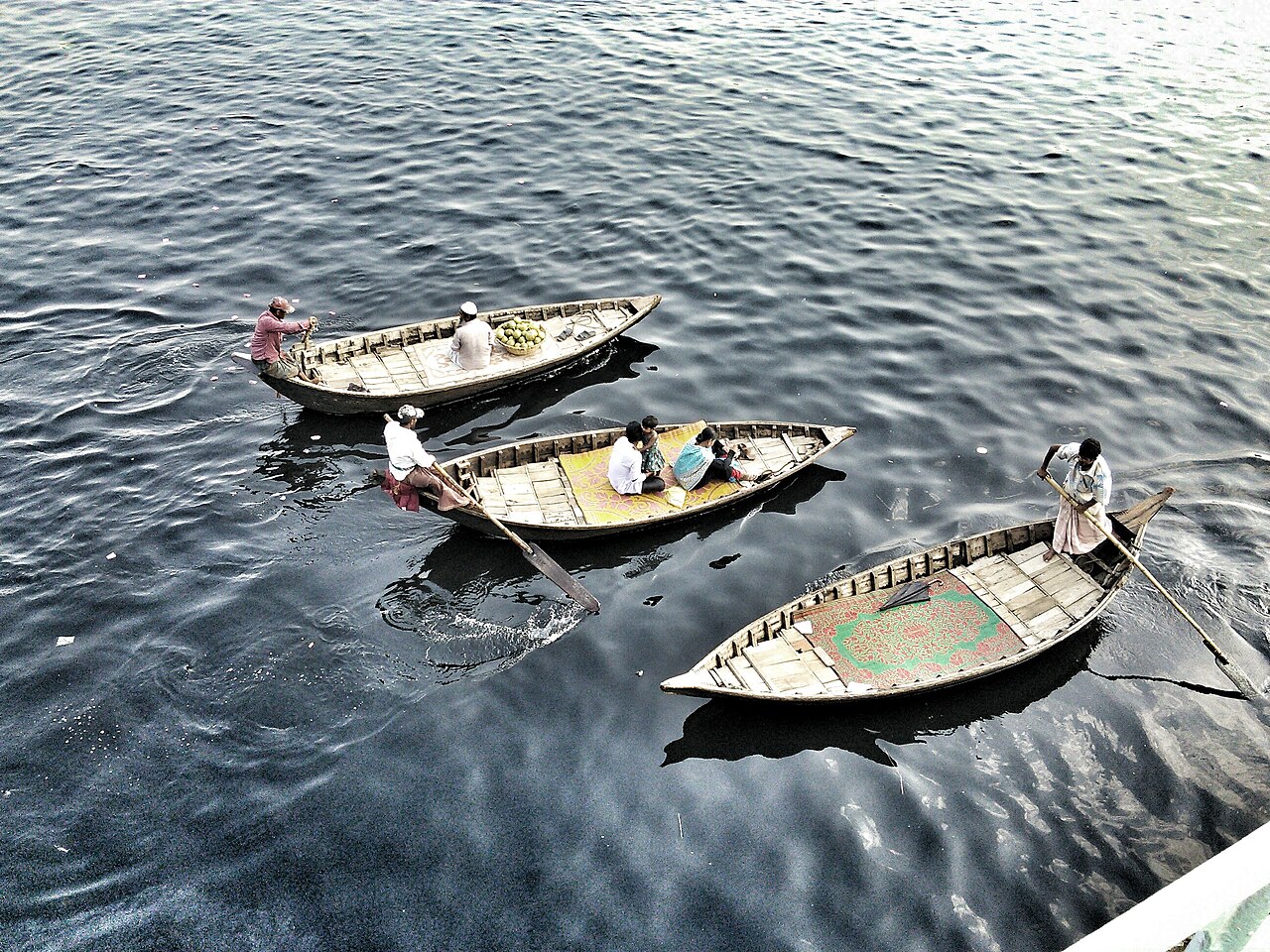
Reading the reports published on World Rivers Day made him feel small and ashamed, Ekram Kabir writes in an opinion piece in Bangla Tribune. We call ourselves a riverine nation, he argues, while filling rivers to build houses, pouring factory chemicals into them and marking a rivers day once a year. The views are the writer's own.
He cites figures from the press: officially Bangladesh has 1,415 rivers, but reports say two-thirds of them barely exist, grabbed or poisoned, or narrowed into canals, drains or farmland. Government documents gave the Buriganga's length as 45 km in 2005 and 29 km in 2011.
Around Dhaka, 424 waste outfalls have been identified on the Buriganga, Turag, Balu and Shitalakkhya, discharging about 330 tonnes of liquid and solid waste a day, some 60 percent of it industrial. The Buriganga carries microplastics as well as cadmium and mercury, and dissolved oxygen is so low in places that fish cannot survive. The Haridhoa river in Narsingdi has turned black and foul, and local people say wading into it brings skin rashes.
His central point is that river pollution is a public health problem, not just an environmental one: the contaminated water is used for irrigation and reaches soil and crops, so the poison poured into rivers returns to the dinner table. He also notes rivers in the Rangpur region dying after their links to distributaries were blocked, and about 40 of the roughly 80 acres of the Girai river in Kurigram passing into private hands.
The blame, he argues, does not lie with grabbers alone but with unplanned industrialisation, factories that ignore the rules, sand and stone extractors, illegal riverside builders and ordinary people who dump rubbish. Although 27 ministries and departments, including the river conservation commission, have a hand in rivers, he says weak and inconsistent government management has deepened the crisis.
The piece appeared in Bangla Tribune's opinion section.
Photo: Sarah.1001022 / Wikimedia Commons (CC BY-SA 4.0)
Source: Bangla Tribune

Comments
(0)