
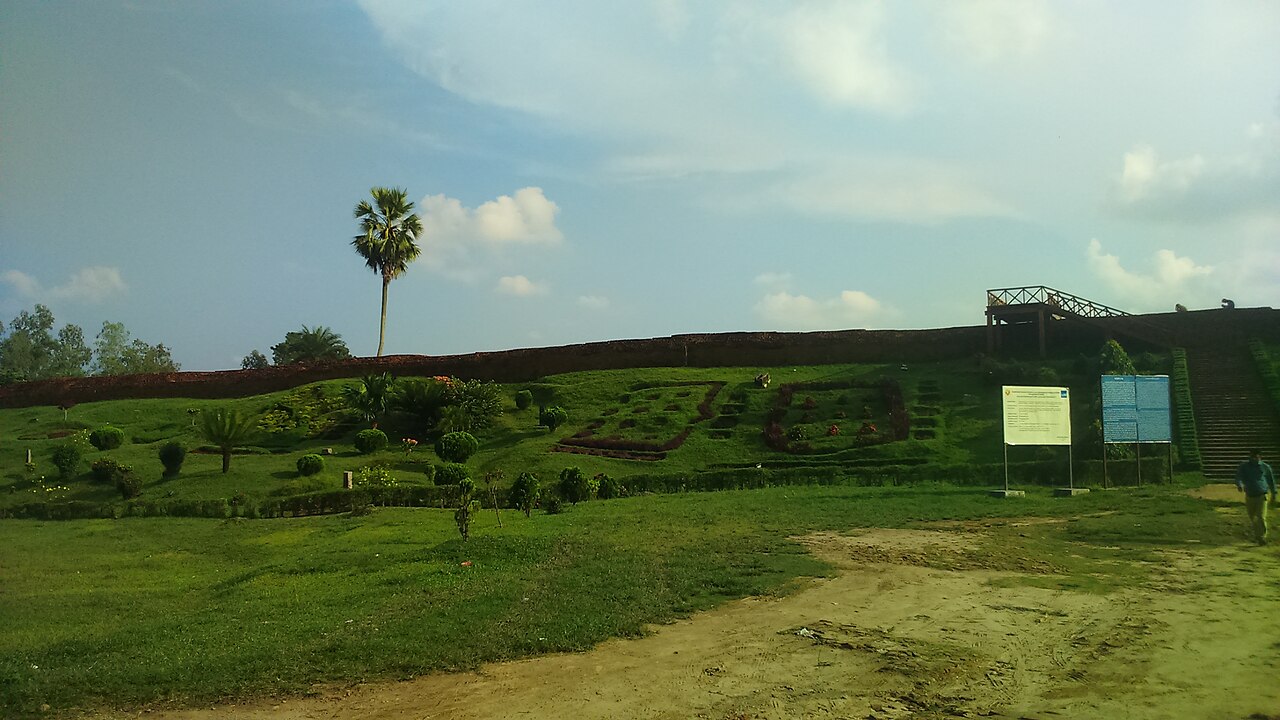
Beneath Mahasthangarh, the ancient city of Pundranagar on the bank of the Karatoya in Bogura, lie chapters of some 2,500 years of civilisation, among them a well-planned system of food security and grain storage. So writes Professor Md Abdus Sabur of Islamic University in a column in the Daily Janakantha. The views are the writer's own.
A joint Bangladesh-France excavation at Bairagir Bhita, north of Mahasthangarh, has found eight wells, he writes. One is lined with 46 courses of brick and is about 1,300 years old, with pottery of several kinds found beneath it. In his view such a cluster of wells and pots points not only to a water supply but to food processing, the storage of grain or liquids and local distribution.
Finds made at Mahasthangarh since 1928 also allow Bairagir Bhita to be seen as a possible food supply or storage centre of ancient Pundranagar, he argues. Feeding townspeople, traders, artisans and officials, and coping with seasonal swings in harvests, required an organised system of stocks and distribution.
He singles out the Mahasthan Brahmi inscription, found in 1931. On this limestone tablet, which archaeological research dates to the Mauryan period, the mahamatra, or administrator, of Mahasthan is instructed to give paddy and financial help to people hit by disaster or food shortage, and to refill the granary and treasury once the crisis has passed.
What today is called food security, disaster management, social protection and public food stocks has, in his view, an important ancient witness in this inscription: some 2,500 years ago the state in this region was already thinking of grain reserves and financial aid to meet famine, flood and crisis.
Photo: Ekela rajkumar / Wikimedia Commons (CC BY-SA 4.0)
Source: Daily Janakantha

Comments
(0)