
The Ganges water-sharing treaty between Bangladesh and India expires on 12 December. Unless another arrangement is made, the two countries' joint measurement of the river's flow at Farakka will stop with it. Ahead of that date Shafiqul Islam, professor of engineering and diplomacy at Tufts University and director of its Water Diplomacy Program, has reviewed three decades of the treaty's data in an analysis for The Daily Star. The views are the writer's own.
His analysis rests on the published records of the Joint Rivers Commission: 450 ten-day periods, 15 in each dry season from 1 January to 31 May over the 30 seasons from 1997 to 2026. Each period records the total flow at Farakka, the releases to India and to Bangladesh, and the flow measured downstream at the Hardinge Bridge, below the confluence with the Mahananda.
By his count the sharing formula has largely been honoured. In 384 of the 450 periods the release to Bangladesh was within 1 cusec of the formula. The treaty's 90 per cent floor in Article 11 was breached only once, from 1 to 10 April 1997, with a shortfall of 4,863 cusecs, and no period after 2003 shows a shortfall above 1 cusec. He cautions, however, that the availability recorded at Farakka always equals the sum of the two releases exactly, so the record shows that the agreed accounts add up, not what happened in the river.
Between Farakka and the Hardinge Bridge the river gains water from the Mahananda, from groundwater and from irrigation water returning to the channel, a median gain of about 11 per cent. Some discussion in India now argues from this that Bangladesh receives more than the treaty allots. Yet in 88 of the 450 periods the flow at the Hardinge Bridge was lower than the release at Farakka, by 3,728 cusecs on average and by as much as 15,098 cusecs.
The treaty's main safeguard guarantees each country 35,000 cusecs in alternating ten-day periods between 11 March and 10 May. In Bangladesh's guaranteed periods, he writes, the flow at Farakka rose by 5,234 cusecs but the flow at the Hardinge Bridge by only 373 cusecs. In 39 of Bangladesh's 90 guaranteed periods the Hardinge Bridge recorded less than the release, against 10 of India's 90. The river's own flow, he explains, largely smooths away the effect of the alternation.
He also questions both sides' claims about trends. Tested four ways, the record shows no statistically significant trend, so it does not support the claim that India is taking ever more water. Nor does it support a claim that the flow is stable: the decade from 2007 to 2016 ran about 8 per cent below the decades before and after it.
In his view Bangladesh's core need is reliable water in the dry season, while India wants protection from promising water that climate change may not deliver. Who bears the risk of a falling flow is a question of principle, he argues, but keeping the measurements going is easy. The Joint Rivers Commission began 24 years before the treaty and its mandate does not expire, so the gauging stations can keep working under that mandate while the governments negotiate. Otherwise the 2027 dry season will be the first since 1996 in which the two countries do not measure the flow together.
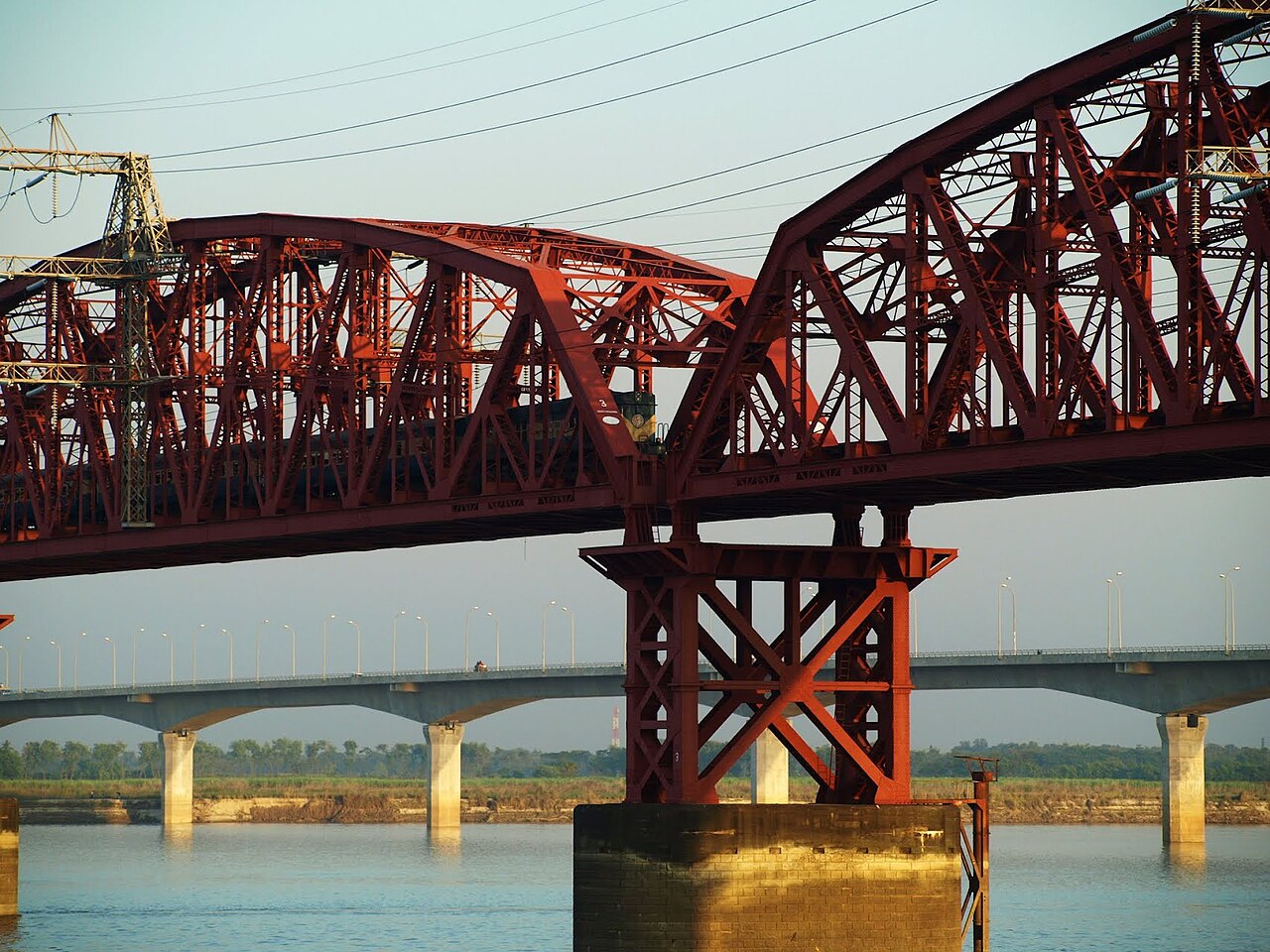
Photo: Shahnoor Habib Munmun / Wikimedia Commons (CC BY-SA 3.0)
Source: The Daily Star

Comments
(0)