
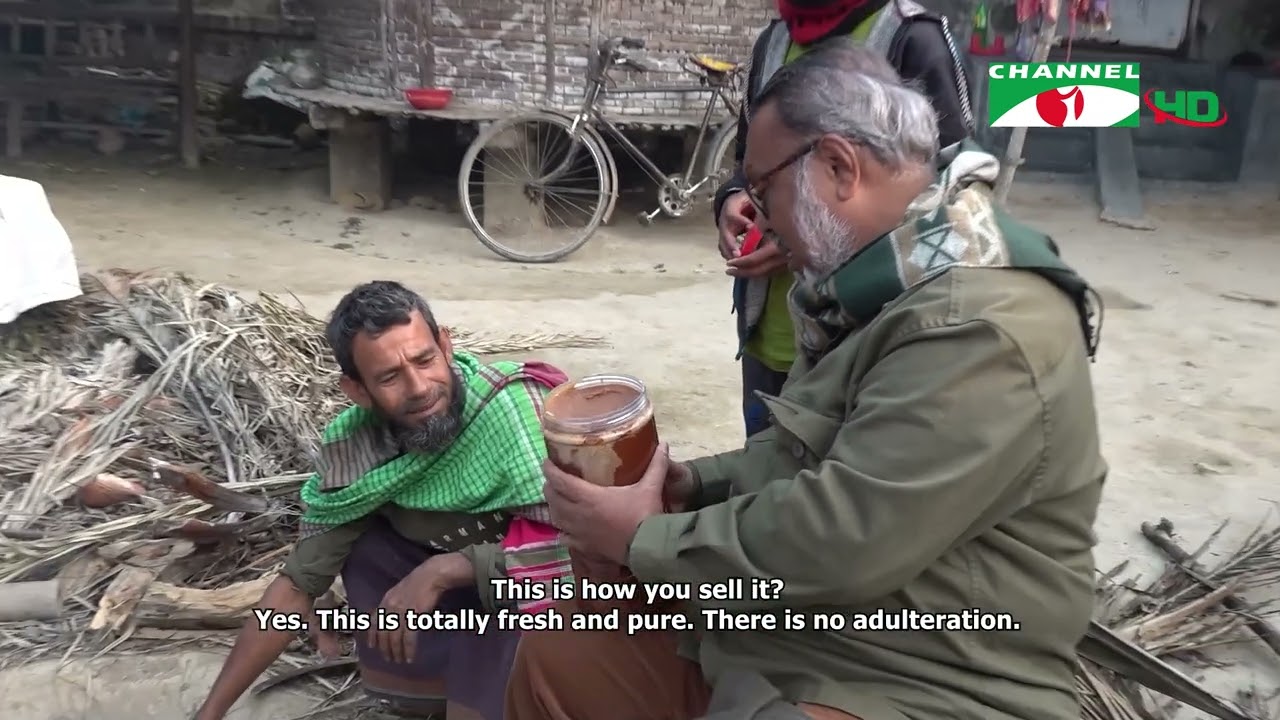
Hridoye Mati O Manush has shown how media campaigns and initiatives by the Chaugachha upazila administration and upazila parishad have spread enthusiasm for date palm jaggery. As a result, many are coming forward to plant date palms, collect sap and make jaggery.
A blessing of nature
The date palm is a unique blessing. Desert date palms give nutritious fruit, while in this region the trees yield sweet sap in winter. The history of date sap is woven into our heritage, from pitha and puli to date jaggery, whose enchanting aroma binds our way of life.
A lost glory
Nothing compares to a bowl of puffed rice with date sap or jaggery while sitting in the winter morning sun. Brown sugar was once made from date jaggery, famous not only in Bangladesh but around the world. That glory has faded with time, but in many villages of Jashore, date sap is still boiled into jaggery in home after home.
Source: Shykh Seraj, Hridoye Mati O Manush. First published in Bengali on The Agro News.

Comments
(0)