
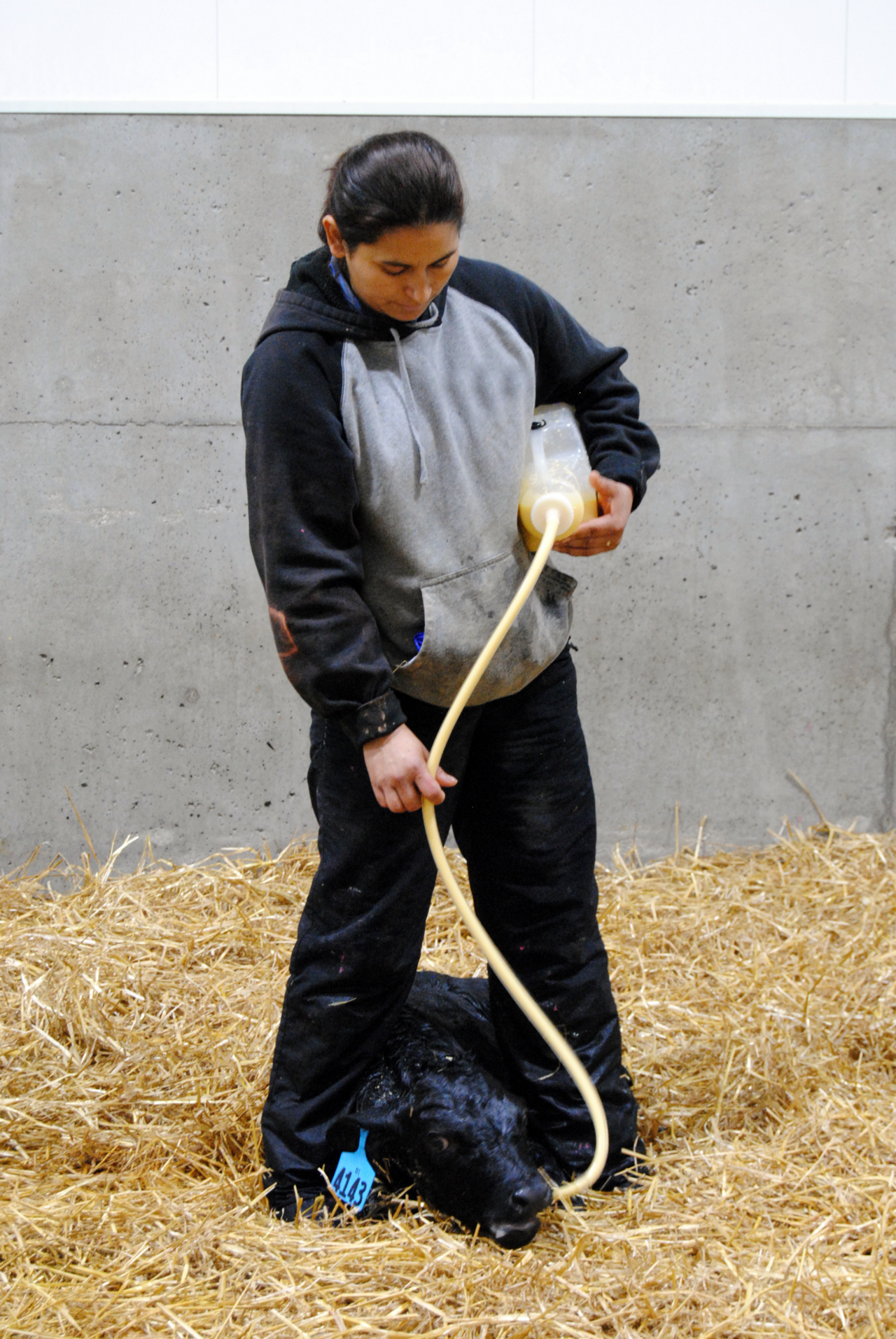
More British dairy farmers are checking the quality of the colostrum they feed calves, but fewer are testing whether the calves actually absorb enough antibodies from it, according to a survey by MSD Animal Health presented at UK Dairy Day.
Of 142 dairy farmers surveyed in 2026, 66.2% test colostrum quality, up from 48.8% in a comparable 2022 survey of 248 farmers. Over the same period, the share testing calves for failure of passive transfer of immunoglobulins fell from 41.1% to 31.7%.
Dr Katie Denholm, a senior university clinician in farm animal clinical sciences at the University of Glasgow who worked on the survey, said the rise in colostrum testing is positive, but farmers also need to know whether calves have received and absorbed enough immunoglobulin. "Poor-quality colostrum, bacterial contamination or delayed feeding can affect absorption, so testing calves for passive transfer can help identify where management protocols may not be working as expected," she said, advising farmers to monitor immunoglobulin levels routinely with their vet.
Dr Kat Baxter-Smith, veterinary adviser at MSD Animal Health, recommended testing calf blood regularly, ideally monthly. "Testing the colostrum tells us about the input, while testing the calf tells us about the outcome," she said.
She said good colostrum management matters most where cows are vaccinated to protect their calves: vaccines against key scour pathogens raise the antibodies in the dam's colostrum, which pass to the calf through colostrum and transition milk. Calves must receive that colostrum quickly and hygienically to benefit from the protection the vaccination is meant to give.
Photo: Aerica Bjurstrom / Wikimedia Commons (CC BY 4.0)
Source: Farmers Weekly



Comments
(0)