
A former textile engineer milling buckwheat, two brothers who turned their parents' pumpkin-seed drying service into an oil business, and a vegetable farm keeping a traditional cabbage alive: three family enterprises in Varaždin County in northern Croatia show how small producers are adding value to old crops, South Africa's Farmer's Weekly reported after visiting them on an International Federation of Agricultural Journalists tour in September 2026.
At the House of Varaždin Buckwheat in Gornji Kućan, Tamara Šabić Pocedulić and her husband, Dario Pocedulić, make buckwheat flour, groats, flakes, pasta, crackers, confectionery and pillows filled with buckwheat husks. The family began farming about 6 hectares in 2006 and now works about 105 hectares, mostly leased. They turned to buckwheat because, in Tamara's words, "everybody was producing the same crops", starting with about 8 hectares and an old mill in the family garage. Work with advisory services and the University of Zagreb's Faculty of Agriculture later led to Varaždin buckwheat being registered as a Croatian variety, and in 2017 the family spent about EUR 100,000 on modern milling equipment.
The business makes only gluten-free products, and in 2025 it won a place on the shelves of the German drugstore chain dm. Supply is the constraint: yields run at about 1 to 1.5 tonnes a hectare, and drought cut the previous season's harvest by about 70%. The family ran out of buckwheat at the end of July 2026 and stopped production until a small harvest of about 2 tonnes came in around September. An EU-supported processing project carried out between 2019 and 2023 involved a total investment of about EUR 205,540, most of it private money, according to the EU's CAP Network.
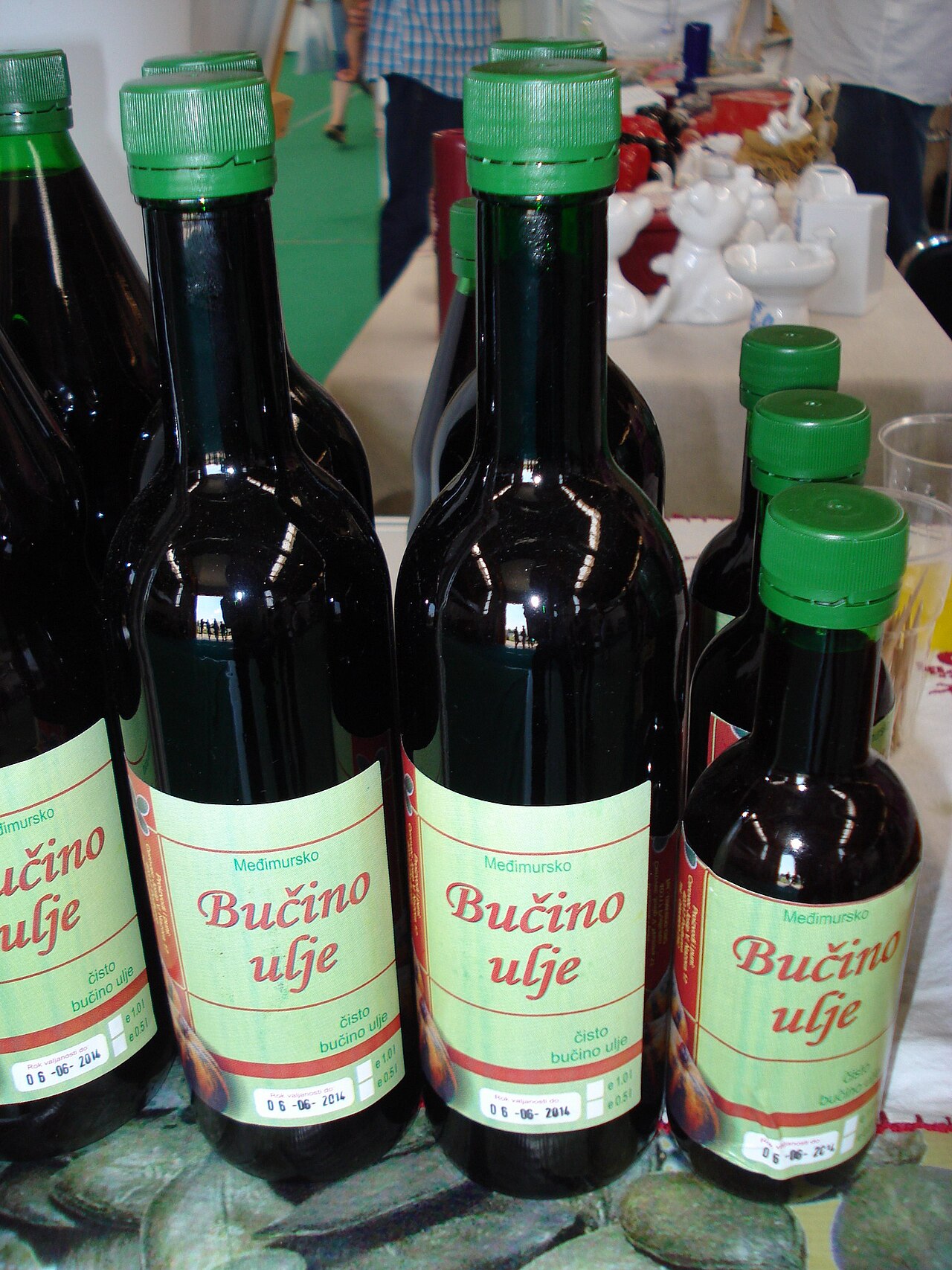
In Strmec Podravski, brothers Matija and Danijel Patrčević run Agroprom Patrčević, which their parents, Ivan and Anica, set up in 1996 as a pumpkin-seed drying service; oil pressing followed in 2002. The family farms about 80 hectares of its own and works with contract growers to bring its pumpkin area to about 220 hectares. Its dryers handle 16-17 tonnes of fresh seed a day, fresh seed yields range from 1,600 to 2,400 kg a hectare, and 2.5 to 2.7 kg of seed make one litre of virgin oil. The seed cake left after pressing goes into livestock feed.
Varaždin pumpkin seed oil gained EU Protected Geographical Indication status in 2023. The brothers' main difficulty is fragmented land: about 40 separate plots, some smaller than half a hectare, which raises fuel use and working time, while crop rotation brings pumpkins back to a field only every three to four years.
At OPG Jurica Cafuk in Domitrovec, Marija Cafuk's family grows Varaždin cabbage (Varaždinsko zelje), a variety with flat, compact heads, thin leaves and pronounced veins that suits traditional dishes and fermentation and holds EU Protected Designation of Origin status. The farm has grown from about 110 hectares in 2017 to about 200 hectares in 2026, with 80-100 hectares of potatoes supplied to Croatian retail chains and about 50 hectares of brassicas, and it has held GlobalG.A.P. certification for about a decade. The family handles the cabbage from seed preservation and seedlings to the finished product. "When I speak about Varaždin cabbage, my heart is full," Marija Cafuk said.
Croatian farmers have had access to EU Common Agricultural Policy support since the country joined the bloc in 2013. The report notes, however, that only the Pocedulić project's funding is documented, and the growth of the other two farms cannot be attributed directly to EU grants. The reporter, Hanlie du Plessis, drew lessons for South African farmers on reviving traditional crops, processing them and building a regional identity for their products.
Photo: Silverije / Wikimedia Commons (CC BY-SA 3.0)
Source: Farmers Weekly South Africa

Comments
(0)