
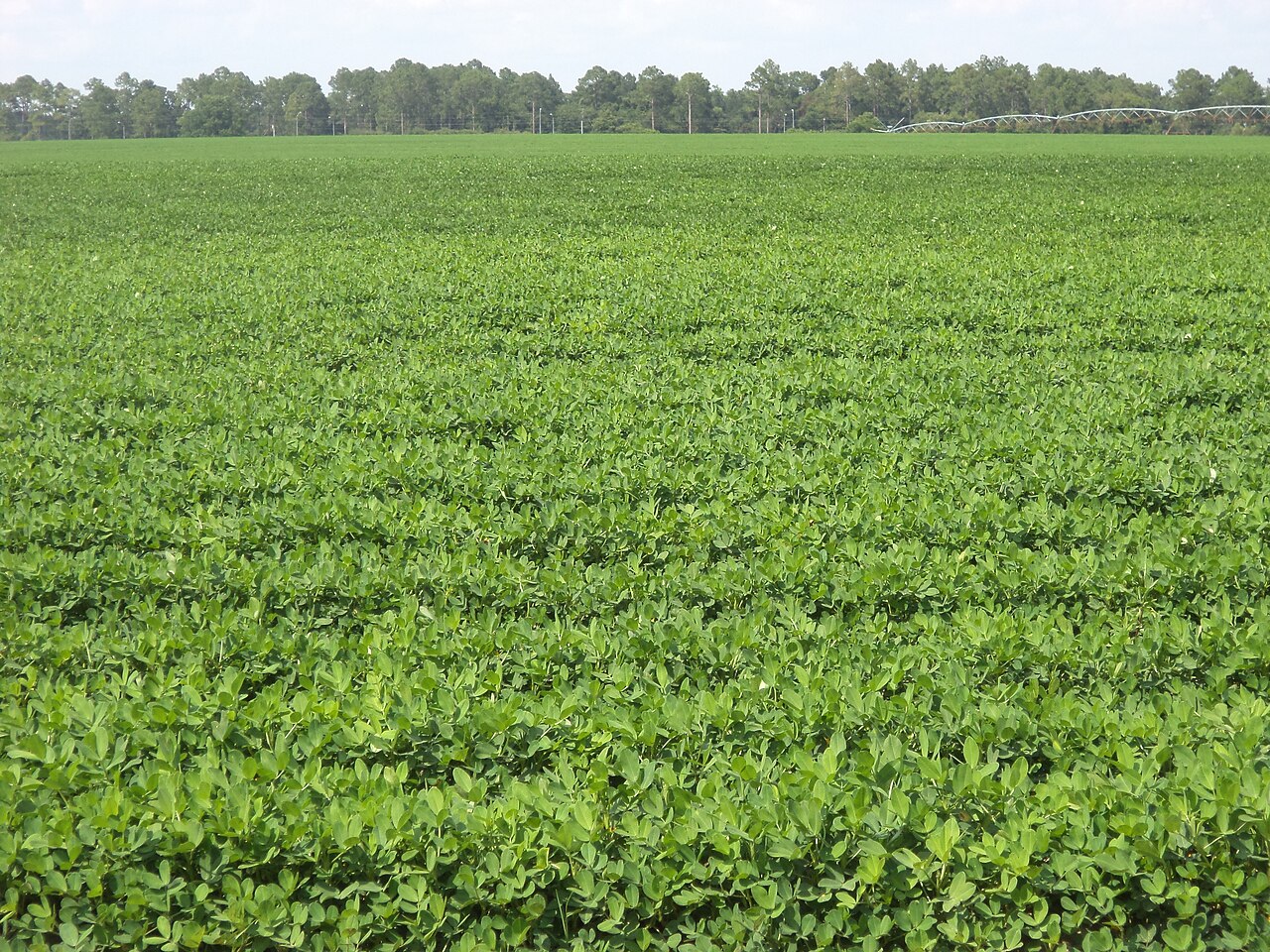
A Minneapolis food-technology startup has grown what it describes as the first outdoor, commercial-scale planting in the United States of peanuts gene-edited to remove three of the proteins most responsible for severe peanut allergy. The crop, planted in Georgia in spring 2026 by Nurtured Nuts Co., was due to be harvested in September and processed into peanut products in October.
The edited lines were supplied by AgriNetica, the US arm of the Israeli agricultural biotechnology company BetterSeeds. Using CRISPR, a tool that lets researchers switch off chosen genes without necessarily adding DNA from another species, the companies knocked out the genes that make the proteins Ara h 2, Ara h 6 and Ara h 7. These are among the peanut allergens most strongly linked to severe and potentially life-threatening reactions.
Peanuts carry more than a dozen allergenic proteins, and conventional breeding has struggled to remove the worst ones because they are tied to traits such as seed storage and germination. Editing the plant's own genes is more targeted, and because no foreign DNA is inserted, such crops may face a lighter regulatory path in some countries than older genetically modified crops.
The claims still need proof. Nurtured Nuts, founded by Bryant Williams, says it has made significant progress in talks with the US Food and Drug Administration, but describes the process as still at an early stage. No allergen-reduction claim has been approved, and the company has not yet released peer-reviewed or independently verified data showing how far the three proteins have actually fallen.
The goal is mainly to cut the risk of severe reactions from accidental contact or trace exposure, the cause of most peanut-allergy emergencies, rather than to make the nuts safe for allergic people to eat on purpose. More than six million Americans are estimated to have a peanut allergy.
The company plans to raise more money this year for processing and is aiming for a product on the market in 2027, subject to regulatory review. Its approach won the grand prize at the Institute of Food Technologists' IFT FIRST innovation competition in July 2026.
Photo: Michael Rivera / Wikimedia Commons (CC BY-SA 3.0)
Source: Global Agriculture

Comments
(0)