
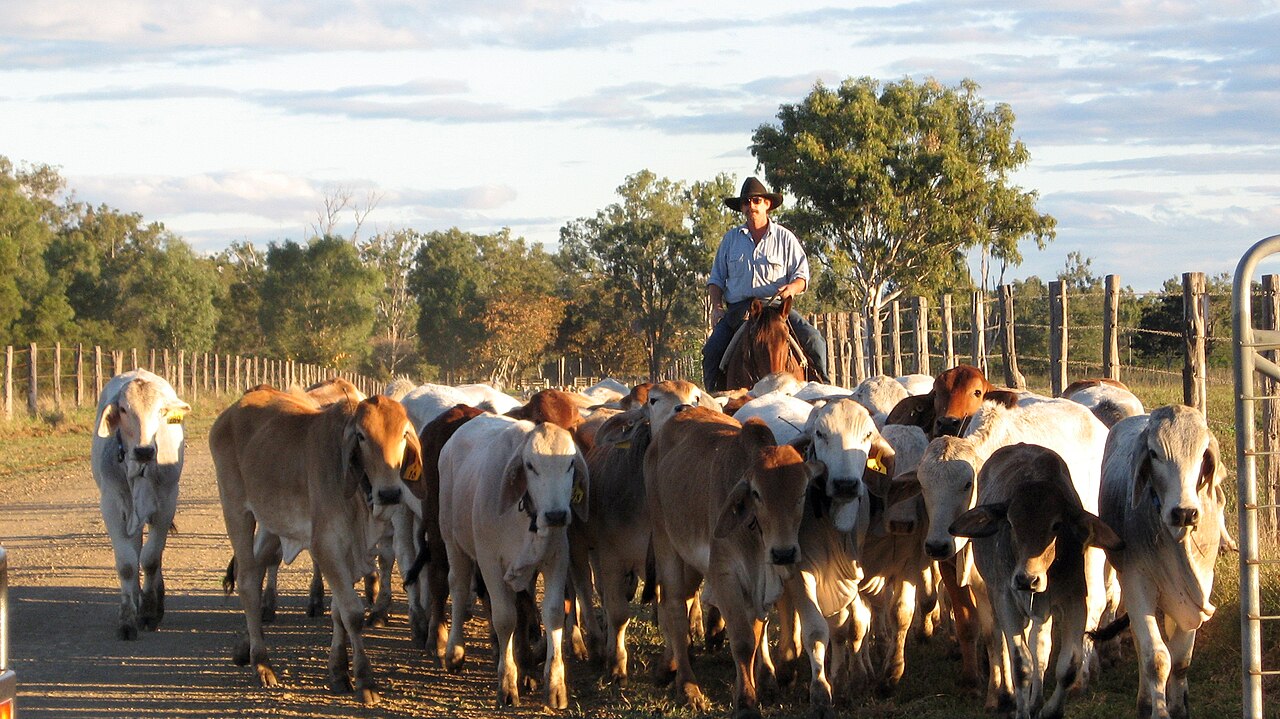
Researchers in Australia are using sensor technology similar to a Fitbit fitness tracker to understand how cows care for their calves and to find new ways to reduce calf losses in the northern beef industry, Beef Central reports.
The five-year Mooternal project, led by CQUniversity senior postdoctoral research fellow Dr Anita Chang with the Northern Territory Department of Agriculture and Fisheries and funded by Meat & Livestock Australia, fits cows and calves with GPS and accelerometer sensors to study how maternal behaviour affects calf survival and productivity. "Calf loss is one of the most significant productivity challenges facing the northern beef industry," Chang said.
"The Fitbit can tell you whether you're walking, running or resting based on your movements," she said. "We're applying the same principle to cows." Their movement patterns are translated into behaviours, giving a picture of what animals do day to day on vast properties where many producers handle their cattle only once or twice a year.
Now in its second year, the project is developing algorithms that can detect when a calf loss happens and identify the behaviour and environmental factors that may lie behind it. The first trials ran in the 2025/26 calving season at CQUniversity's Belmont Research Station near Rockhampton and at Manbulloo Station near Katherine.
One early surprise was how common "cross-mothering" is: cows were seen investing in calves that were not their own, including letting several calves suckle. Chang said this raises questions about whether calf survival depends on wider herd dynamics as well as on each cow and calf.
Early results are promising. More trials will run at both stations in 2026/27 before the technology is tested on commercial properties in 2027/28 and 2028/29, and the project runs to 2030. The long-term aim is to build the algorithms into commercially available livestock monitoring technology, so producers can see when and where calf losses occur and what may be causing them.
Photo: CSIRO / Wikimedia Commons (CC BY 3.0)
Source: Beef Central

Comments
(0)