
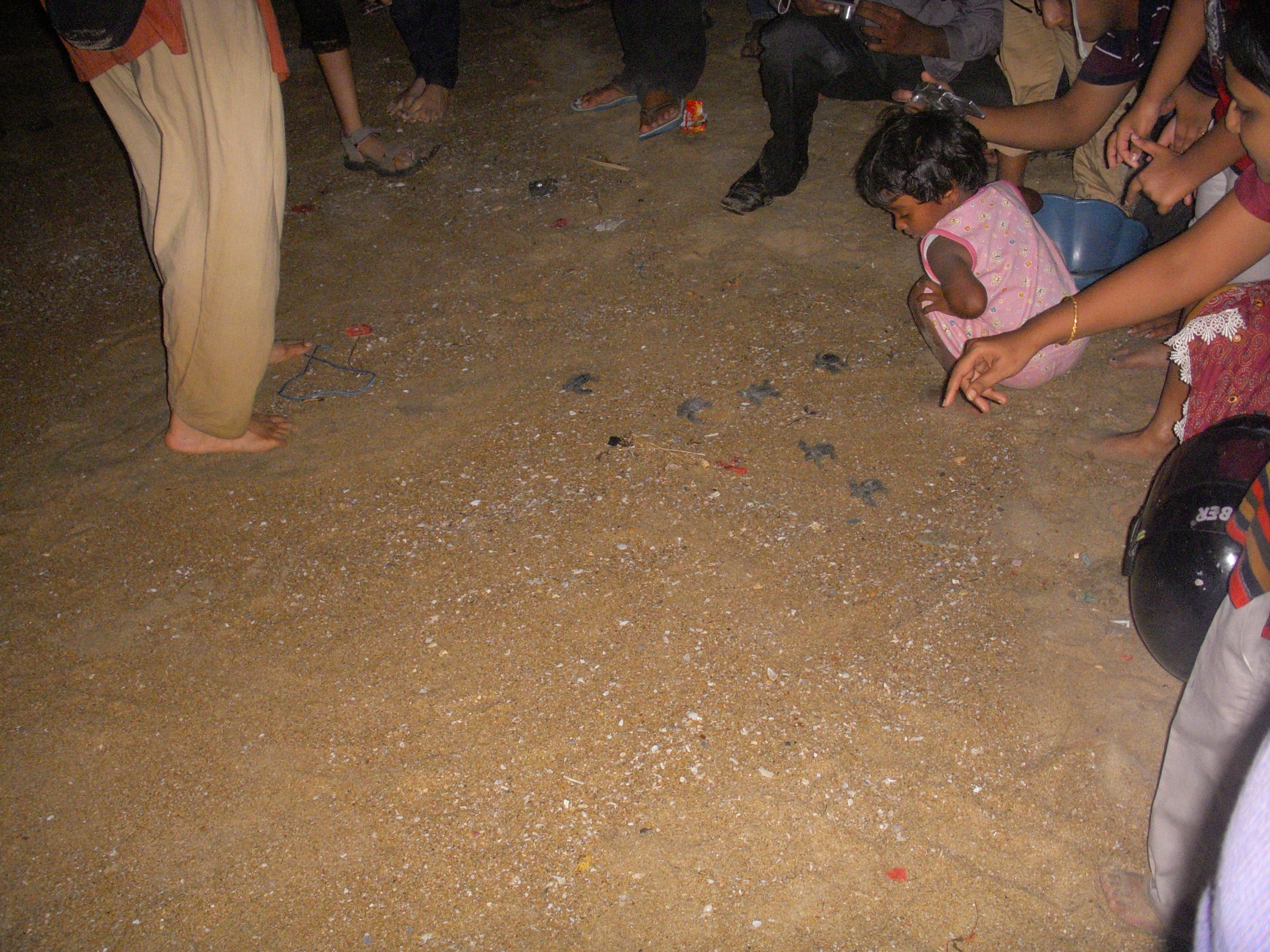
A total of 5,098 sea turtle hatchlings had been released into the Bay of Bengal from 12 points in Ukhiya and Teknaf upazilas of Cox's Bazar by Saturday, 5 April 2025, when the season's latest batch of 550 young turtles was let go into the sea in the afternoon. Jagonews24's Teknaf correspondent reported the figures that evening, citing the conservation organisation Nature Conservation Management (NACOM), which collects turtle eggs from the beaches, incubates them in protected hatcheries and releases the hatchlings.
According to Abdul Kaium, NACOM's manager for natural resource management and climate change, 26,900 eggs were collected during the 2024-25 season from 12 points in different parts of Cox's Bazar, and 5,098 hatchlings from them had been released by 5 April. He also said that NACOM had collected 41,480 eggs over the previous four years, and that 85 per cent of them had been hatched and the young released into the sea. The report did not say how many of the season's eggs were still in the hatcheries on that day.
How the 2024-25 season unfolded
The 5 April release came at the end of a season of steady work along the southern coast of Cox's Bazar. A week earlier, on 29 March 2025, The Business Standard (TBS) reported that about 300 hatchlings had been released at around 1:30 pm at Majherpara beach in Sabrang union of Teknaf upazila. They had hatched in a hatchery near Majherpara beach on Shahparir Dwip. Speaking to TBS, the same NACOM manager said 8,500 eggs had been collected from the Majherpara area alone, and that 2,000 hatchlings had already been released there in several phases before that day.
At that point, he told TBS, 25,700 eggs had been collected that year from 12 locations across the district, including Teknaf, and about 85 per cent of the collected eggs had hatched successfully. By 5 April, the season's count given to Jagonews24 had risen to 26,900 eggs. TBS also reported that NACOM had been working on turtle conservation for 20 years under the supervision of the Forest Department, and that a recent NACOM survey had found sea turtles coming ashore to lay eggs at only 34 nesting sites, down from 52 locations a decade earlier.
Other groups were releasing hatchlings in the same weeks. On 16 March 2025, bdnews24.com reported from Saint Martin's Island, also in Teknaf upazila, that 544 olive ridley hatchlings born in a hatchery there had been released into the Bay of Bengal from the north beach of the island, bringing the number released there in several phases to 1,246. Between 1 November 2024 and 3 March 2025, two egg collectors had gathered and protected 3,184 eggs laid by 26 mother turtles on the island. That work was run by the volunteer group Amar Saint Martin with the support of the United Nations Development Programme (UNDP) and the Department of Environment, which, according to a UNDP official quoted in the report, had been carrying it out for two years.
How a turtle hatchery works
Sea turtles lay their eggs in nests dug in the sand above the high-tide line, usually at night, and then return to the sea without guarding them. On the Cox's Bazar coast, conservation workers watch the beaches during the nesting season, collect each clutch soon after it is laid and rebury the eggs in a fenced hatchery, where dogs, foxes, people and the tide cannot reach them. When the young emerge, they are carried to the water's edge and allowed to crawl into the sea.
The Daily Star's Bengali edition described the routine on 5 January 2023, when a turtle laid 125 eggs at Pechar Dwip on the Cox's Bazar beach, the first nesting of that season there. NACOM staff collected the eggs after the turtle went back to the sea. Md Abdul Kaium of NACOM said the eggs would be kept under care in the hatchery for about two and a half months before hatching, and Dr Shafiqur Rahman of the organisation said sea turtles start coming to the coast each year from October, when the breeding season begins, and lay eggs until April. In April 2024, TBS quoted Abdul Latif of NACOM's EcoLife project as saying that hatchlings take about 65 days to emerge from the sand.
A peer-reviewed study published in the Journal of Threatened Taxa on 26 December 2024 gives the most detailed public picture of this work. Zoologist M. Farid Ahsan of the University of Chittagong and two colleagues from the Community Development Centre (CODEC) surveyed the beaches from Sonadia Island to Saint Martin's Island between January and March 2022. They found 22 hatcheries operating on that stretch of coast: 11 run by the Marine Life Alliance, eight by NACOM, two by CODEC and one by an unnamed operator. Only olive ridley turtles nested during the 2021-22 season.
At CODEC's hatcheries the researchers recorded 26 nests, collected 2,943 eggs and released 1,612 healthy hatchlings into the Bay of Bengal. Clutches held between 21 and 165 eggs, 103 on average, and incubation lasted 45 to 75 days, 53 days on average. Higher air temperatures from March to May made the eggs hatch faster. The authors noted that the organisations mainly collect eggs and release hatchlings, and also publish booklets and posters, hold seminars, rallies and workshops for local people, and that their efforts would be more effective if they were better coordinated.
The olive ridley and other sea turtles of Bangladesh
Seven species of sea turtle live in the world's oceans, and Mongabay reported in April 2024 that five of them occur in Bangladesh's waters: the olive ridley, the green turtle, the hawksbill, the loggerhead and the leatherback. Only the olive ridley, the green turtle and the hawksbill nest on the country's coast, and the green turtle and hawksbill are rare. The Journal of Threatened Taxa study likewise describes the olive ridley as the only common nesting species. Prothom Alo reported on 4 March 2025 that hawksbill and green turtles once nested on the Cox's Bazar coast in large groups ten to twelve years earlier, but had not nested there for several years.
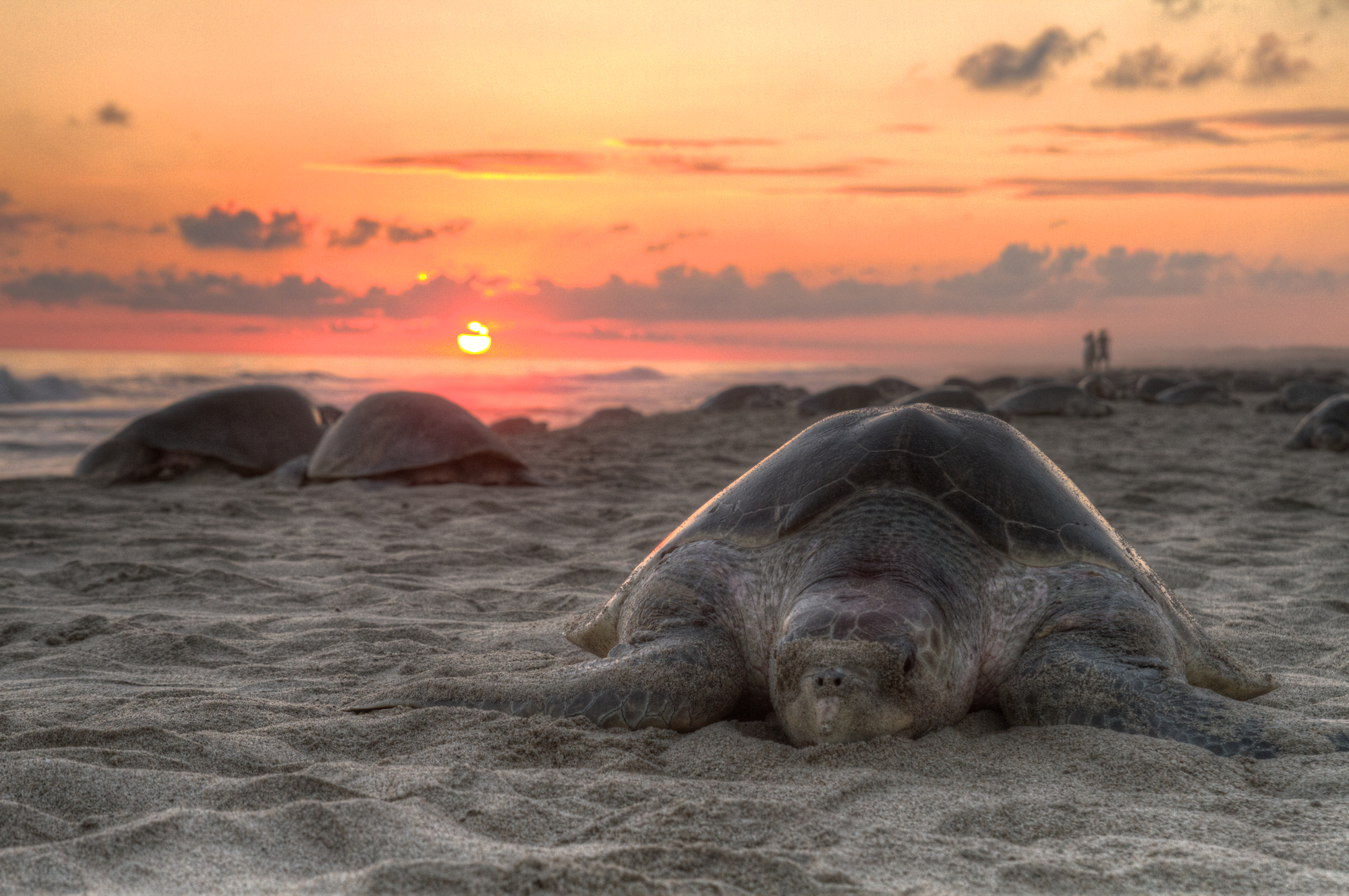
The olive ridley (Lepidochelys olivacea) takes its name from the olive green colour of its heart-shaped shell. According to the United States National Oceanic and Atmospheric Administration (NOAA), it is one of the smallest sea turtles: adults are 2 to 2.5 feet long and weigh up to 100 pounds. It lives mainly in the tropical waters of the Pacific, Indian and Atlantic Oceans, mostly in the open ocean, and eats algae, crustaceans, tunicates and molluscs. It reaches maturity at around 14 years of age.
NOAA says olive ridley females nest every year, one to three times a season, laying about 100 eggs each time. Some nest alone; others take part in an arribada, a synchronised mass nesting in which hundreds to thousands of females come ashore together. One of the world's largest arribada sites is the Gahirmatha coast of Odisha in eastern India, on the same Bay of Bengal. As in other sea turtles, the sex of the hatchlings depends on the temperature of the sand during incubation: warm nests produce mostly females and cooler nests mostly males. Newly hatched turtles find the sea by moving towards the brighter horizon over the water, which is why artificial light on a beach can draw them inland, where many die of dehydration or exhaustion or are run over.
The olive ridley is listed as Vulnerable on the Red List of the International Union for Conservation of Nature (IUCN), based on its 2008 assessment, and NOAA estimates that the global population has fallen by 30 to 36 per cent over the last century. The species is listed in Appendix I of the Convention on International Trade in Endangered Species (CITES), which bars commercial international trade. Mongabay's 2024 report described it as endangered. The green turtle, the other species recorded around Saint Martin's Island, is the only sea turtle that feeds mainly on plants such as seagrasses and algae; NOAA says its females lay about 110 eggs per nest and reach maturity at 25 to 35 years.
Earlier seasons in Cox's Bazar
The numbers from 2025 follow several years of reports from the same coast. In April 2024, Mongabay reported that NACOM had found 12,425 olive ridley eggs in five hatcheries up to 17 April of that season, about 53 per cent more than the 8,096 of the previous season, the highest count in four years. The hatcheries were on Pechar Dwip, Shilkhali, Shahparir Dwip, Madarbunia and Sonadia Island in Cox's Bazar district. Munjurul Hannan Khan, NACOM's executive director, told Mongabay that several organisations care for the hatcheries with volunteers and that awareness among local people and fishers is the key.
In the same report, Sarwar Alam, divisional forest officer of the Cox's Bazar South Forest Division, said the government had five breeding centres in Cox's Bazar where eggs are hatched artificially in nesting ground made in the beach sand, and that people should help control movement at breeding sites and protect eggs from dogs and foxes. Mohammad Russell, a former programme officer of the Bangladesh Marine Life Alliance, told Mongabay that large-net fishing is banned within 10 kilometres of the Saint Martin's beach during the breeding season but that fishers often ignore the rule.
On 20 April 2024, TBS reported that 750 hatchlings were released that day at three places in Cox's Bazar: 350 at Pechar Dwip in Ramu, 250 at Sonadia Island in Maheshkhali and 150 at Madarbunia in Teknaf. Officials said then that about 30,000 eggs had been kept safely along the coast between November and March, and that 5,000 hatchlings had already gone to sea. Dr Shafiqur Rahman, deputy project director of NACOM's EcoLife project, told TBS that 29,450 eggs had been collected over the previous three years and that 85 per cent of them had hatched and been released. TBS said the EcoLife work was funded by USAID and Summit and guided by the Ministry of Environment, Forest and Climate Change.
Dead mother turtles on the beaches
The 2024-25 season was also marked by an unusual number of dead turtles washing ashore. Prothom Alo reported on 4 March 2025 that, according to Dipak Sharma, president of the Cox's Bazar Forest and Environment Conservation Council, more than 240 mother turtles had washed up at over 50 points on the coast in about two and a half months, 135 of them in January and 87 in February. All were olive ridleys, and about 90 per cent showed injuries and still carried eggs. NACOM's own count for 1 December 2024 to 15 February 2025 was more than 130, and a scientific officer of the Bangladesh Oceanographic Research Institute said 68 dead turtles had come ashore on 24 and 25 January alone. The Department of Environment's Cox's Bazar office told the newspaper it had no count of its own.
Those interviewed by Prothom Alo pointed to several causes. Abdul Kaium of NACOM said banned nets were being set across the sea and that many mother turtles died in them; the deputy director of the Department of Environment in Cox's Bazar also said many turtles die in banned nets. The newspaper reported that more than 65,000 trawlers work along the coast, most of them with gill nets, and that propeller strikes, beach lighting, discarded nets, crowds on the beach during the nesting season and the shrinking of nesting grounds through unplanned construction were also cited. The general secretary of the Cox's Bazar fishing boat owners' association said fishers had been told to release trapped turtles unharmed and that the causes needed investigation. Experts quoted in the report said the deaths had not been properly studied.
Such deaths were not new. In April 2024, TBS reported that 103 mother turtle deaths had been recorded on the Cox's Bazar shore in the three preceding months, and named trawlers and fishing nets, in which mother turtles are caught on their way to nest, along with dogs, habitat loss and the growing light from tourism development, as the main threats.
Teknaf, Ukhiya and Saint Martin's Island
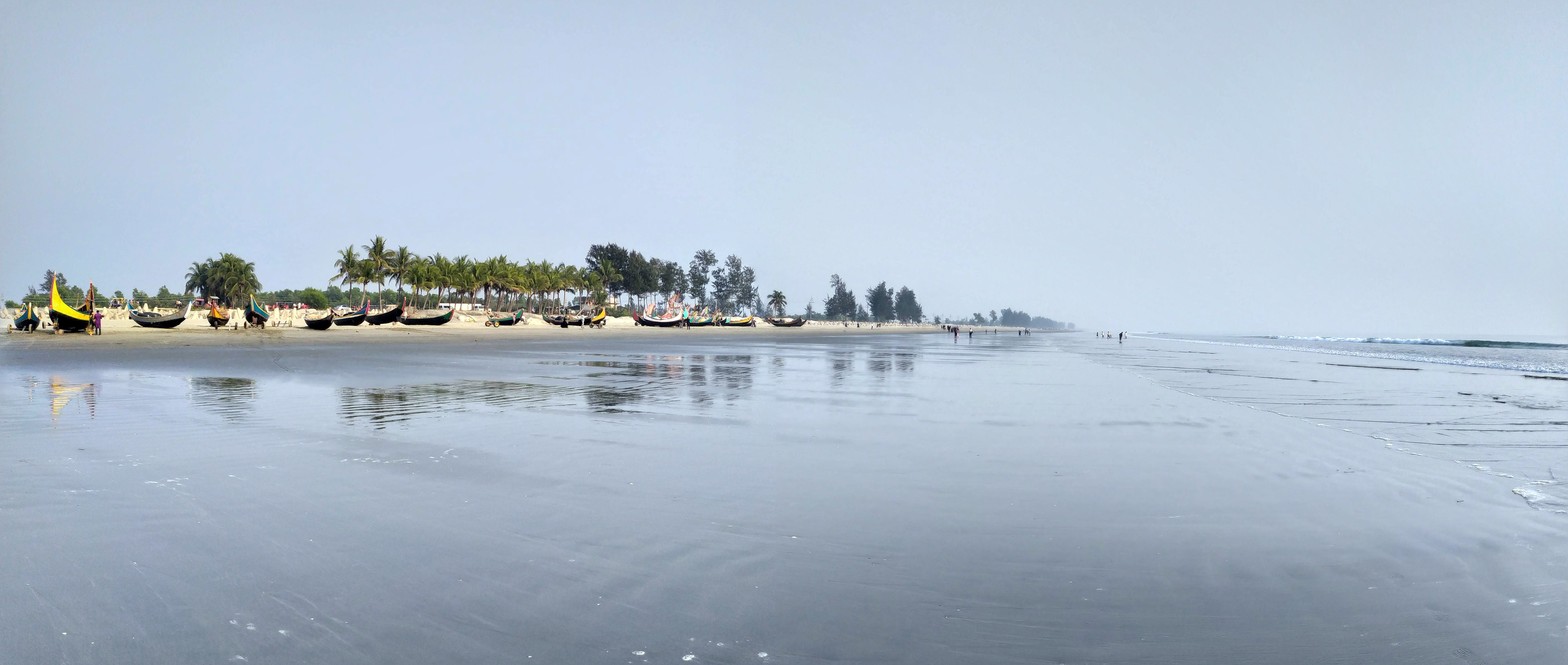
The beaches where the 2025 releases took place lie at the southern tip of Bangladesh. According to Banglapedia, Teknaf upazila covers 388.66 square kilometres on the country's south-eastern tip, 86 kilometres south of Cox's Bazar town, bounded by Ukhiya to the north, the Bay of Bengal to the south and west and Myanmar's Arakan (Rakhine) state across the Naf river to the east. Its six unions include Sabrang, Baharchhara and Saint Martin Dwip. Ukhiya upazila, to its north, covers 261.80 square kilometres and has the Bay of Bengal on its west; its Inani beach runs for about 18 kilometres.
Saint Martin's Island, about 9 kilometres off the southern end of the Cox's Bazar-Teknaf peninsula and described by Banglapedia as the country's only coral island, is one of the most important nesting places on this coast. In January 2022 the government declared 1,743 square kilometres of sea around it, about 1.5 per cent of Bangladesh's exclusive economic zone, as the Saint Martin's Marine Protected Area. The Wildlife Conservation Society (WCS), which supported the work, said in its announcement on 11 January 2022 that the area protects threatened species including olive ridley, green and loggerhead turtles, and named light pollution among the threats to the island.
On 22 October 2024, the interim government's Council of Advisers decided to limit tourism on the island from November to February, Prothom Alo reported: visitors could come for the day but not stay overnight in November, up to 2,000 tourists a day could visit and stay in December and January, and tourism was suspended in February. Single-use plastic was banned on the island. The government cited the protection of the island's environment and its coral.
What the law said in 2025
When the hatchlings were released in April 2025, the law protecting sea turtles in Bangladesh was the Wildlife (Conservation and Security) Act, 2012 (Act No. 30 of 2012). The Act defines hunting broadly: it includes killing, catching or poisoning any wild animal, injuring it, taking any part of it, and collecting or destroying the nests or eggs of wild birds or reptiles. Section 6(1) bars anyone from hunting any wild animal without a licence or permit issued under the Act.
Under section 39 of the 2012 Act, breaching section 6 was punishable with imprisonment of up to one year, a fine of up to 50,000 taka, or both, and a repeat offence with up to two years in prison, a fine of up to one lakh taka, or both. The Act also allowed the authorities, in consultation with co-management committees, to protect freshwater and marine animals such as turtles, crocodiles, dolphins and whales in sanctuaries by controlling or banning fishing and the movement of boats.
- Hunting under the 2012 Act included collecting or destroying the nests or eggs of wild reptiles, which covers turtle nests on the beach.
- Hunting any wild animal without a licence or permit was prohibited under section 6(1).
- The penalty under section 39 was up to one year in prison, a fine of up to 50,000 taka, or both; for a repeat offence, up to two years, up to one lakh taka, or both.
Mongabay reported in 2024 that local people on the Cox's Bazar coast were being told that killing turtles is illegal under wildlife law, and that fishers who did not free turtles caught in their nets could face fines and legal action. The same report recorded the Department of Environment's project for the conservation of biodiversity on Saint Martin's Island, begun in 2016, which included the protection of sea turtles on the island.
Why the hatchlings matter
Conservationists on the coast described the turtles' place in the sea in similar terms. TBS reported in March 2025 that turtles eat jellyfish, which prey on fish fry, and help clean the sea of debris and weeds, playing an important part in keeping the marine environment in balance. Munjurul Hannan Khan of NACOM made the same point to Mongabay in 2024, saying that by feeding on underwater debris turtles help fish to breed.
For olive ridleys, every surviving hatchling counts, because females take around 14 years to mature and then return to nest on the beaches where they were born. The NACOM survey cited by TBS, showing nesting at 34 places instead of 52 a decade earlier, and the hundreds of dead mother turtles counted on the shore in early 2025 gave the hatchery figures their context: the 5,098 young turtles released by 5 April came from eggs that, left where they were laid on an increasingly busy and brightly lit coast, would have faced dogs, foxes, people and the tide.
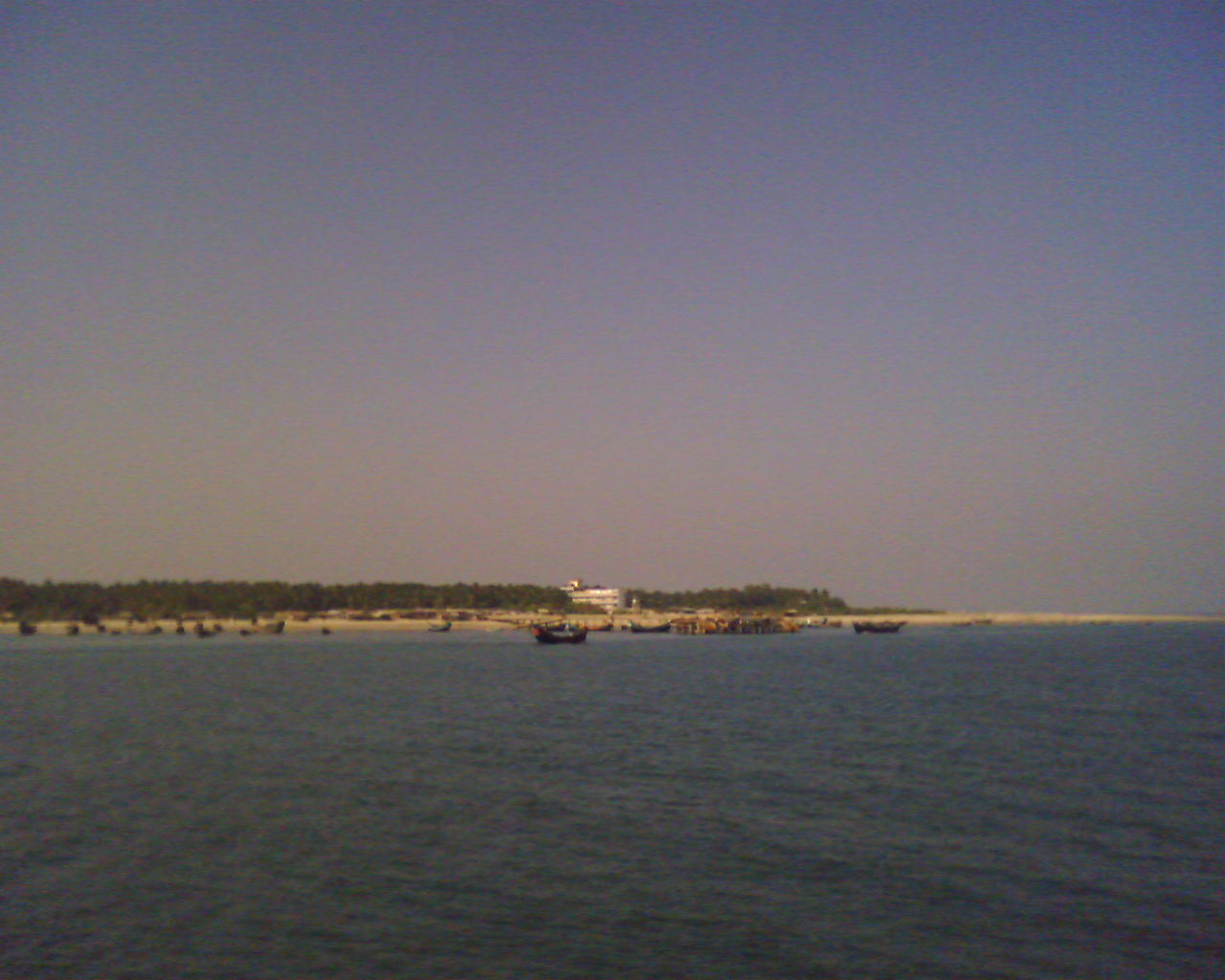
Photo: Sundar / Wikimedia Commons (CC BY-SA 3.0)
Sources: Jagonews24, The Business Standard, bdnews24.com, Prothom Alo, The Daily Star, Mongabay, Journal of Threatened Taxa, NOAA Fisheries, Wikipedia, Banglapedia, Wildlife Conservation Society, Prothom Alo English, Wildlife (Conservation and Security) Act 2012 (Laws of Bangladesh)
Comments
(0)