
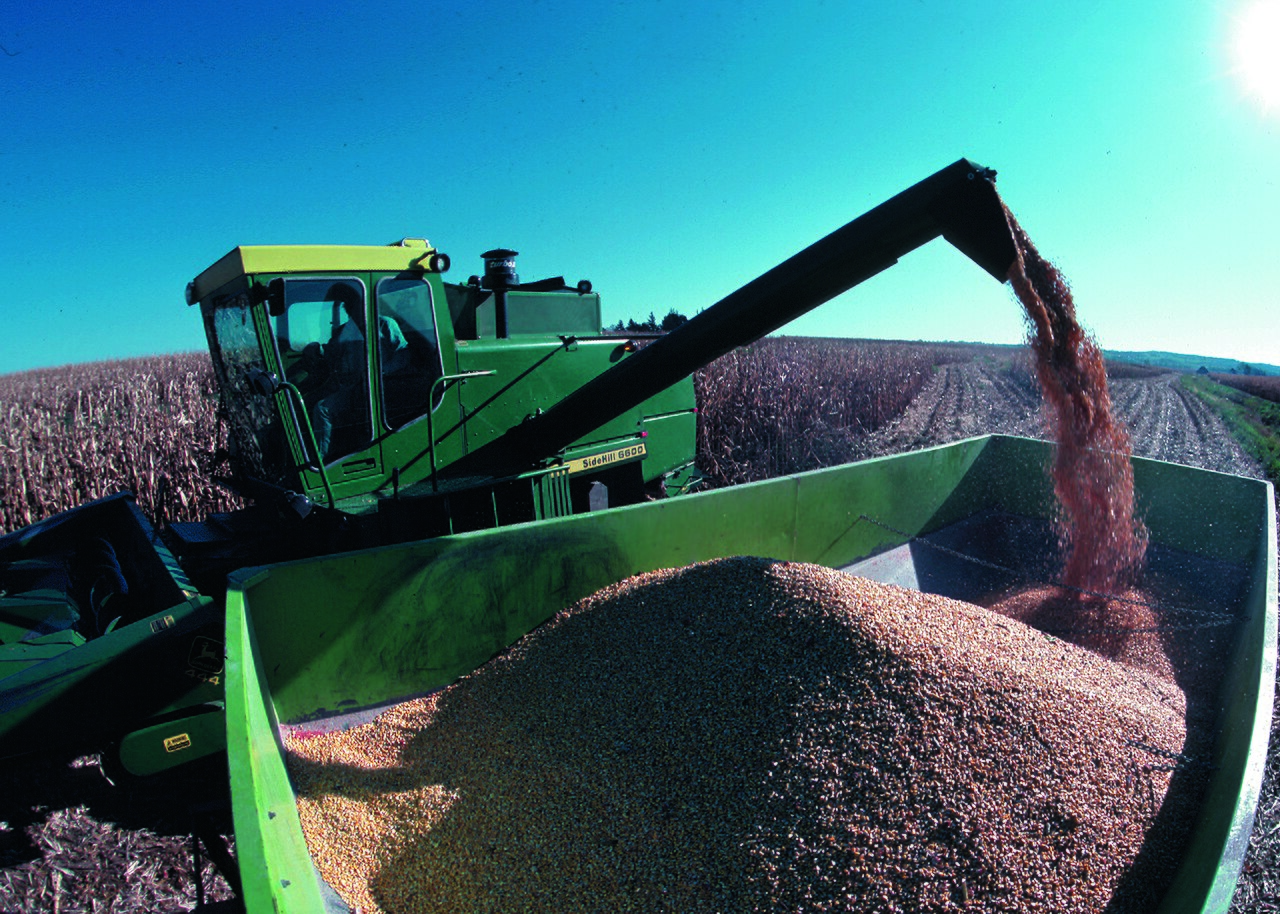
US farmers are harvesting ahead of the usual pace, but the crop coming off the fields is uneven. When Successful Farming asked agronomists from its Crop Crew in the main corn states to sum up the harvest in a single word, five of them chose 'variable'.
The USDA Crop Progress report of 21 September put the corn harvest at 13% complete, 2 percentage points ahead of the five-year average, and soybeans at 12% harvested for the week to 20 September, 4 points ahead of average.
Katie Jorgensen, an independent agronomist in western Iowa and eastern Nebraska, said heat during grain fill took some top-end potential out of earlier-maturing soybeans, with uneven pod fill and some pods aborting, while later beans caught late-season rain and filled better. In Wisconsin, Syngenta's Nick Groth expected strong yields in the south of the state but a major hit in the north-west after a dry second half of the season. Jared Goplen of Wyffels, covering southern Minnesota and eastern South Dakota, said corn could range from 'well below 100 bpa to over 300 bpa', depending on in-season rain: some places received only 7 inches over the season.
Not every word was cautious. Madison Wozniak of FMC called harvest 'solid' across southern Illinois, southern Indiana and eastern Missouri, with work moving quickly under dry conditions and pockets of record yields. Beck's Hybrids agronomists used 'overall solid' in Minnesota and 'favorable' in Kentucky and southern Indiana, where a dry planting window and steady rain through grain fill set up good yields.
Others were gloomier. Robby Meeker of Wyffels called harvest in Illinois 'subpar'; the latest Crop Progress report rated 14% of the state's corn and 13% of its soybeans poor or very poor. In Iowa, Wyffels agronomist Eric Wilson called it 'slow' if wet weather holds, and Stine agronomist Susan McBrady used 'challenging' for western Minnesota, North Dakota and northern South Dakota, where yields are below average, stalks are weakening and recent rain has left soybeans with green stems.
Several agronomists pointed to standability and late-season stalk disease as risks for the rest of harvest. The report was written by Kacey Birchmier.
Photo: Tim McCabe, USDA Natural Resources Conservation Service / Wikimedia Commons (public domain)
Source: Successful Farming
Comments
(0)