
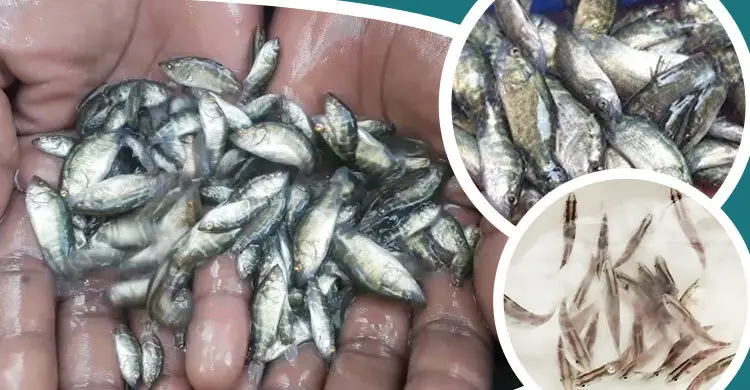
In Bangladesh the coral fish is also known as bhetki. This brackish-water fish is attractive to farmers for its nutrition, taste and high price, and it is currently in great demand. Cage farming of the fish began about 45 years ago in coastal areas and in freshwater ponds, rivers and estuaries. Here is how coral fish breed.
Breeding biology
In fresh water and slightly brackish water the fish grow fast and reach 1.5 to 2.5 kg at one to one and a half years old, when they become able to breed. They travel to the deep sea to breed. There are male and female fish, but the species is hermaphroditic: males can turn into females and females into males. Males are usually smaller, weighing 2 to 3 kg, and a male that reaches 4 kg or more turns into a female. Their main breeding grounds are 5 to 11 metres deep in shallow sea areas.
Coral fish breed in two main ways.
Natural breeding
Coral fish are highly fertile, laying 4 million to 7 million eggs a year. They are fast-moving and tolerate high salinity, and they spawn all year round, with April to August as the main breeding season, when many 1 cm fry are caught. The fish grow in fresh water, slightly brackish water and even in rivers and estuaries, but come to the sea near estuaries to lay eggs.
At the start of the monsoon, males move to the lower reaches of rivers to mate with females. At full moon and the start of the new moon, as the tide comes in, each female weighing 5 to 10 kg lays between 2.1 million and 7.1 million eggs. The eggs and hatchlings then float on the tide into the estuary, and the hatchlings move from the estuary towards the upper reaches of the river. As adults they return towards the sea to spawn.
Artificial breeding
Because the fish are so fertile, a small number of brood fish is enough to run a medium-sized hatchery. Sexually mature males (2 kg) and females (5 to 10 kg) are kept in tanks at 1 cubic metre, or in ponds at 0.5 cubic metre (approximate). About 70 to 75 per cent of the water is changed with brackish water of about 30 ppt. Cheap fish such as tilapia are fed at 5 to 6 per cent of body weight. The fish are kept under close observation, with regular health checks and action taken as needed.
When the eggs of mature females reach 450 mm in diameter (as the text gives it) and milt flows easily from the males, the fish are moved to a spawning tank and given a single intramuscular dose of LHRHa hormone at 60 to 70 grams per kg of body weight (as the text gives it). Females spawn 30 to 35 hours after the hormone is given. The fertilised floating eggs are collected by various methods and moved to incubation tanks at about 600 to 900 eggs per litre. After 16 to 18 hours, hatchlings (larvae) of 1.4 to 1.6 mm emerge.
Rearing the larvae
The larvae are kept in nursing tanks at 10 to 15 per litre. From the third day they are fed rotifers for about 9 to 10 days, at 5 to 6 rotifers per litre. Then, up to day 15, they are fed rotifers and artemia. For the next 20 days they are fed only artemia nauplii, along with some powdered feed (which should have about 50 per cent protein and a high amino acid profile) to get them used to feed. After that, fry of 0.7 to 0.8 cm are weaned onto nursery feed in the hatchery or in hapas in ponds, and some farmers train them to eat fish meat, especially those who will later farm at low density on fish feed, much as in nature.
Source: Jagonews24. First published in Bengali on The Agro News.

Comments
(0)