
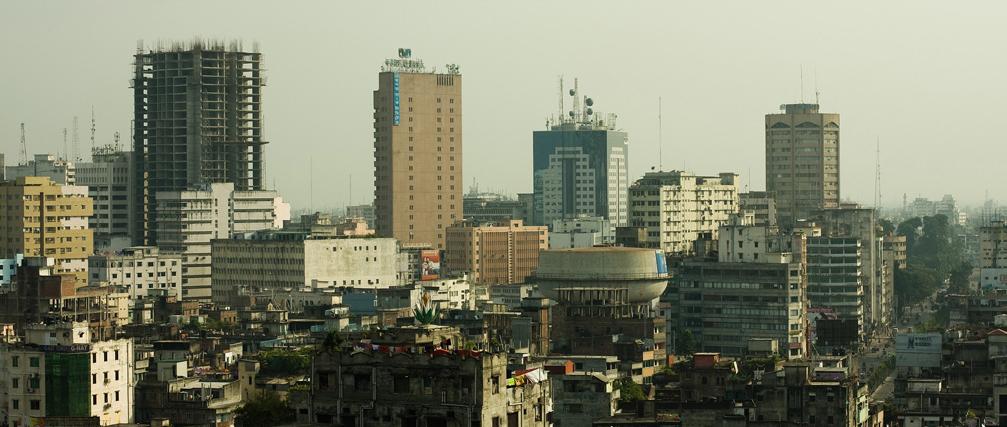
In a column in Ajker Patrika, Tanzim Hossain argues that a city is more than tall buildings and shopping malls: it must let people live, work, move and stay healthy alongside nature. Because Bangladesh's urbanisation has ignored this, he writes, towns large and small are losing their water bodies, playgrounds, farmland and trees.
He cites research by the Bangladesh Institute of Planners (BIP): Dhaka had 53.11 square kilometres of green and open space in 2015 and only 29.85 in 2023. A report by the Centre for Atmospheric Pollution Studies (CAPS) found that over a decade the city's tree cover fell by 31 percent and its water bodies by 47 percent, while built-up area grew by 50 percent.
In his view, encroachment on canals and ponds that once drained the rain, inadequate drainage and poor coordination between agencies lie behind Dhaka's waterlogging. In Chattogram, hill cutting and settlements at the foot of hills raise the risk of flooding and landslides; in Sylhet, building on streams and wetlands complicates flood management. Khulna struggles with salinity and waste, Rajshahi with heatwaves, Barishal with pressure on its wetlands.
He also sets out the cost of congestion: according to a BSS report, traffic jams in Dhaka waste about 8.2 million working hours a day, worth about Tk 139 crore daily and more than Tk 50,000 crore a year, and average vehicle speed has fallen from 21 km an hour in 2007 to 4.8 km.
His remedies: enforce master plans and detailed area plans in every city, apply tough laws against the seizure of water bodies, canals, rivers, farmland and green space, put public transport, footpaths and cycle lanes first, coordinate the agencies, and build waste management, rainwater harvesting and climate-resilient infrastructure into every town.
The views expressed are the writer's own.
Photo: the Dhaka skyline, Zubuyer Kaolin / Wikimedia Commons (CC BY 2.0)
Source: Ajker Patrika



Comments
(0)