
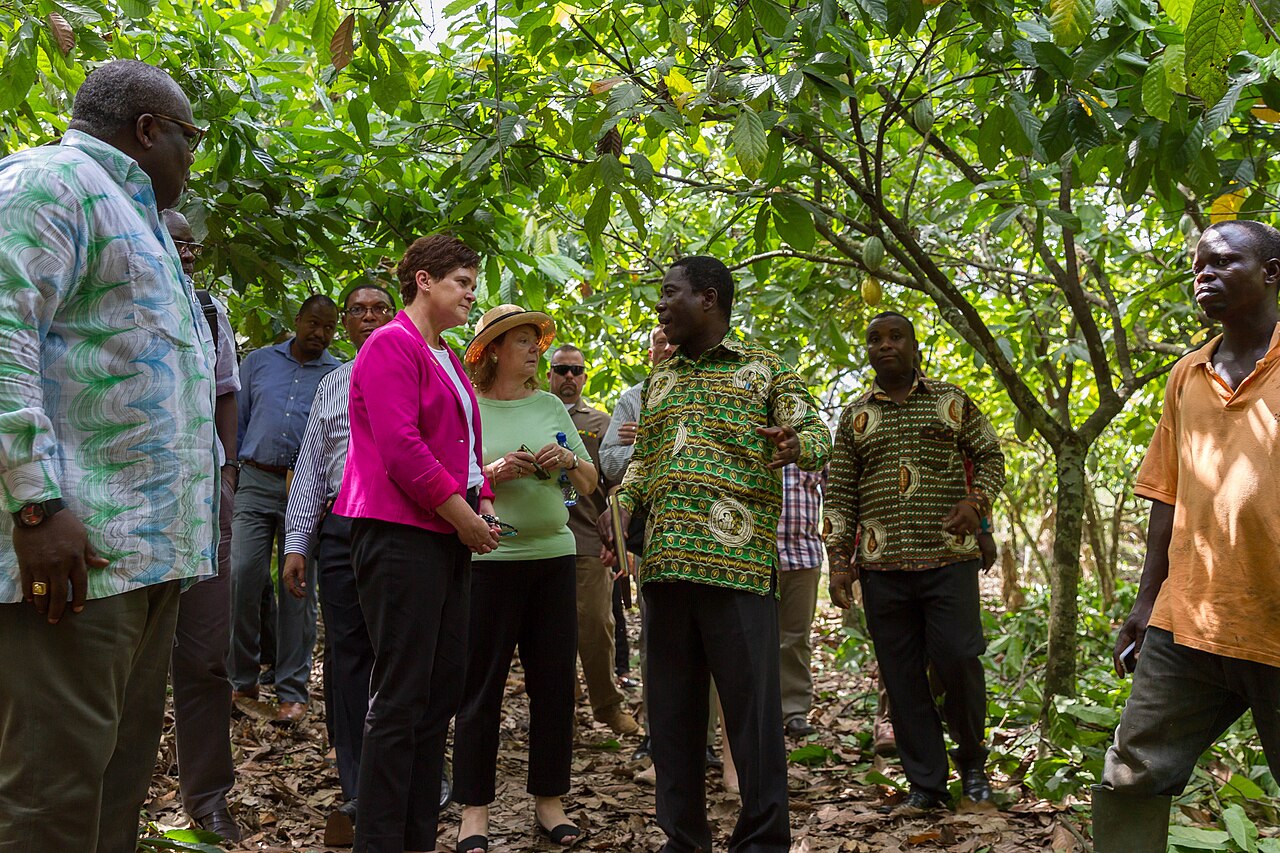
The two countries that grow more than half the world's cocoa have set sharply different farmgate prices for the 2026/27 season, with Cote d'Ivoire's rate now well below Ghana's, Global Agriculture reports from figures confirmed by both regulators.
Cote d'Ivoire's Coffee-Cocoa Council set the main-crop producer price at 1,200 CFA francs per kilogram, roughly $2.07. Ghana's COCOBOD set 42,400 cedis per tonne, roughly $3.65 per kilogram. The Ivorian price is also a 57 percent cut from the 2,800 CFA francs per kilogram farmers received for the 2025/26 main crop.
More than 1.1 million registered cocoa producers in Cote d'Ivoire are affected. Research cited with the announcement estimates that cocoa-farming households there earn an average of 67 percent of their income from bean sales, leaving little room to absorb the cut.
The gap comes from the two pricing formulas. Ghana's law guarantees farmers at least 70 percent of the realised free-on-board value of cocoa exports; for 2026/27 COCOBOD set the share at 71.18 percent. Cote d'Ivoire bases its minimum on 60 percent of a cost-insurance-freight benchmark, with a floor of 50 percent allowed in volatile markets.
The Ivorian government blamed volatile world markets and earlier forward sales. The Coffee-Cocoa Council sold more than 1.1 million tonnes forward between March and June, when prices had already fallen well below the record highs of December 2024. Agriculture minister Bruno Nabagne Kone said the government's duty was to set as high a price as the sales already made allowed.
The result is that neighbours supplying the same chocolate market have produced very different outcomes for their farmers: Ghana's model ties income to what buyers finally pay, while Cote d'Ivoire's, combined with early forward selling, left its farmers exposed when the market moved against the timing of sales.
Photo: USDA / Wikimedia Commons (public domain)
Source: Global Agriculture

Comments
(0)