
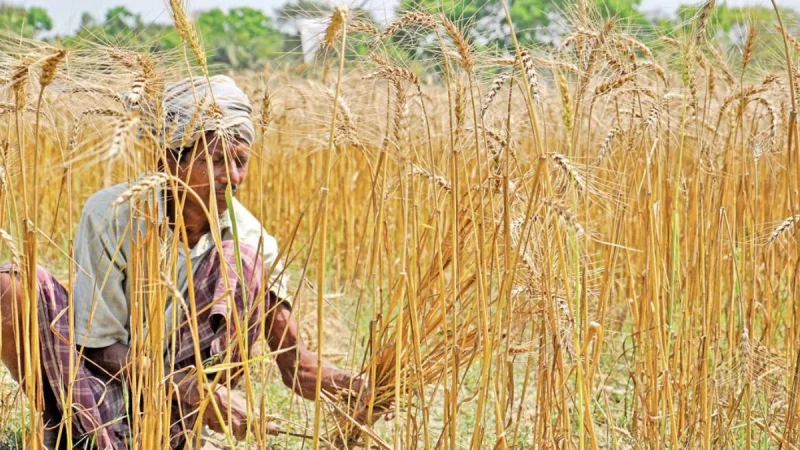
Bangladesh's smallholder farmers face rising climate risk but still have limited access to the finance and services they need to adapt, according to Technical Note 7 of the Asian Development Bank's Community Resilience Partnership Program. Gaps in extension services, credit and insurance, and the difficulty of getting climate finance down to the local level, are making adaptation harder, the note says.
The note draws on Heifer International's work in Bangladesh, Cambodia and Nepal. In Bangladesh, 101 cooperatives serve 133,034 smallholders; across the three countries 490 cooperatives reach more than 351,000, and over 95 per cent of the members are women. These women-led cooperatives connect farmers to finance, technology, insurance, markets and agricultural information at the local level.
Smallholders are exposed to rising temperatures, erratic rainfall, prolonged drought, flash floods and soil degradation, the report says, while fragmented land, limited finance, weak infrastructure and poor access to insurance and credit stand in the way of adaptation. Less than 10 per cent of climate finance worldwide reaches the local level, leaving farmers and local institutions most at risk without the money they need.
As men migrate out of farming, more of the work falls to women, yet women do not get equal access to land ownership, credit, extension services or climate information. Only about 5 per cent of conventional extension services effectively reach women, the note finds, and weak coordination among institutions, top-down planning and reliance on short-term projects — whose gains are hard to sustain or scale once they end — also hold back local adaptation.
Professor Dr Sharmin Neelormi of Jahangirnagar University's economics department, who has long worked on climate and agriculture, told Ittefaq that most of Bangladesh's farmers are smallholders and that changing temperatures are pushing up costs and adaptation challenges. She called for concessional finance and wider farm credit, warned that confining adaptation to short projects will not deliver long-term results, and said agriculture's roughly 12 per cent share of GDP has not been matched by investment in farmers themselves, although the present government has taken initiatives such as farm loans and farmer cards.
Based on reporting by Ittefaq's Md Hamidur Rahman. Source: Ittefaq

Comments
(0)