
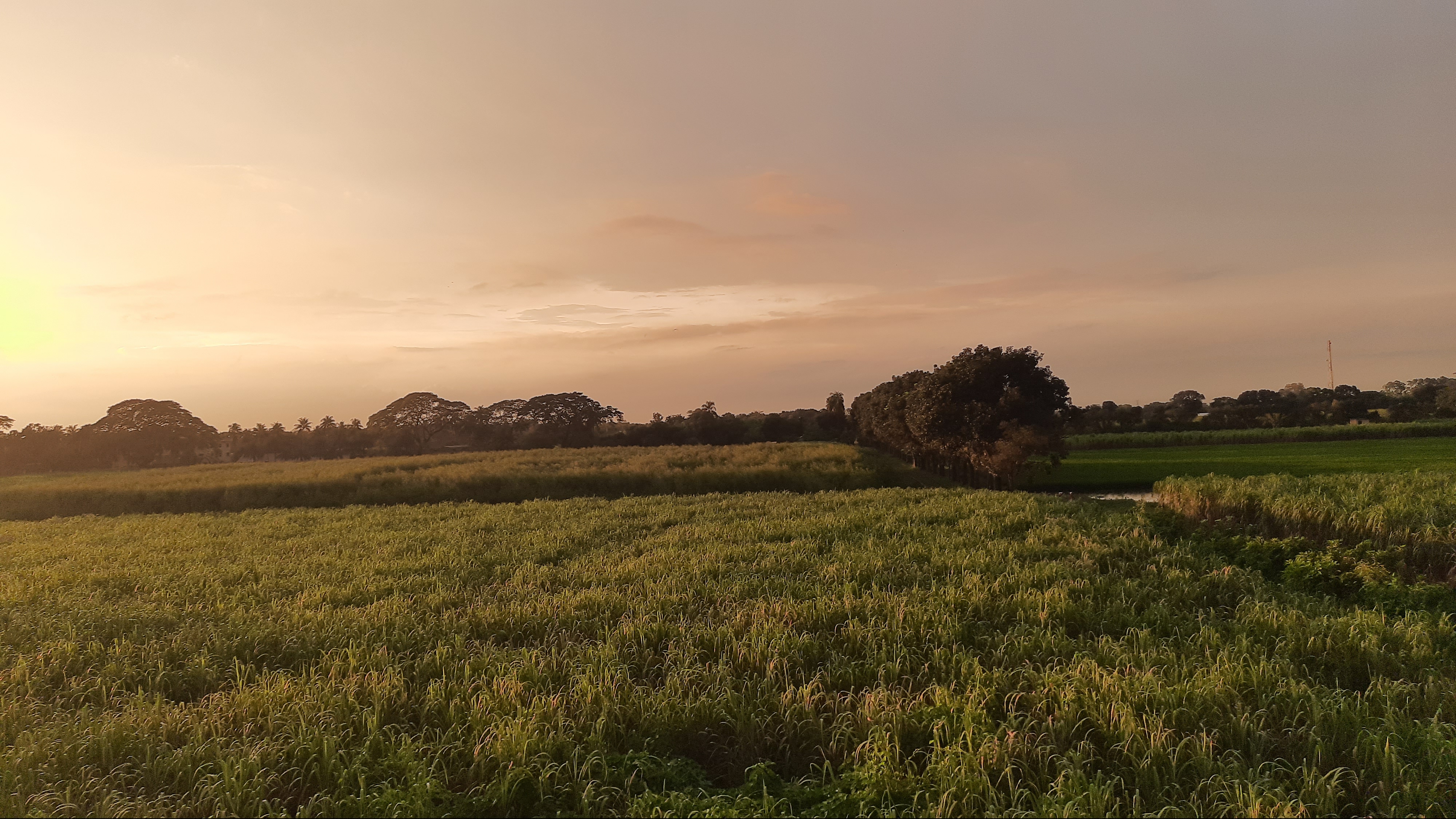
In a field at Dinnathpur, a village in Shankarchandra union of Chuadanga Sadar upazila, the canes stood dark and tall in October 2021. They were not the pale cane that farmers in this part of south-western Bangladesh have long grown for the sugar mills. They were a dark-skinned chewing cane that local growers call Philippine black sugarcane, and by then it was being grown in the area on a commercial scale.
The farmers who spoke to The Agro News said the crop paid better than the other crops they grew, and that interest was spreading from one field to the next. By their account, growing this cane cost about Tk 1 lakh a bigha, and the profit after costs came to about Tk 1.5 lakh a bigha. If farmers kept making money, they said, more land in the area was likely to go under the cane.
This report tells how the crop arrived in Dinnathpur, what the growers said about its costs, prices and seedlings, and what reports from other districts in the same months showed. It also explains what a chewing cane is, how sugarcane is grown in Bangladesh according to the Bangladesh Sugarcrop Research Institute (BSRI) and the national encyclopaedia Banglapedia, which pests trouble the crop, and where the sugarcane sector of Chuadanga and of the country stood in 2021.
How the black cane reached Dinnathpur
The story in Dinnathpur begins with one farmer, Haris Chowdhury. According to the original report, he was the first in the area to grow the Philippine black variety, in 2018. He obtained the seedlings through the Chuadanga Sadar upazila agriculture office, the local office of the Department of Agricultural Extension (DAE).
He started small. In the first year he planted the cane on three kathas of land as a trial. The yield was good, the quality of the cane was good, there was demand in the market and the crop made money, so in the following year he expanded to four and a half bighas.
Haris Chowdhury told the reporter that he had first grown the variety on a small plot and became keen on it because the yield was good. To grow it on a larger scale, he said, he raised the seedlings himself and planted four and a half bighas in the 2021 season. He said that he could make a profit of Tk 6 lakh from that land. He also said he was producing seedlings because he wanted sugarcane farming to spread across the country.
Seedlings had become a second business for him. The report said he raised seedlings from his canes and sold them to other farmers in the district. That trade mattered, because a farmer who wants to start with a new cane variety needs planting material, and in 2021 the black cane was not something a farmer could simply buy from a seed dealer.
Neighbours follow, and seedlings sell
Other farmers in the village had followed his lead. Sohan Ali, another cane grower, said he was growing the Philippine black variety on two bighas. He said other farmers wanted the seedlings badly, that sugarcane farming was profitable, and that new entrepreneurs could become self-reliant by growing it.
Mofiz Joarder, a farmer in the same village, was about to start. He said he would grow the cane on one bigha that year. To raise his own seedlings, he had bought 130 Philippine black canes from Dinnathpur at Tk 50 a piece. He said he was turning to sugarcane because his other crops were not profitable.
The figures in this report are the growers' own. The cost of about Tk 1 lakh a bigha, the profit of about Tk 1.5 lakh a bigha, the expected Tk 6 lakh from four and a half bighas and the price of Tk 50 a cane are what the farmers said in October 2021. They were not figures from the DAE or from a market survey, and a farmer's profit depends on the season, the price at harvest and how many canes survive to be sold.
What other districts reported in 2021
Dinnathpur was not the only place where farmers were trying the black cane that year, and newspapers in other districts told a similar story in the weeks before this report. Their accounts help show where the seedlings came from and how prices were moving.
On 9 September 2021 the daily Bhorer Kagoj reported from Kaliganj in Jhenaidah, the district next to Chuadanga, that a union parishad chairman there was growing what the paper called a Philippine gandari cane on six bighas, about two acres. He told the paper he had bought 100 seedlings in 2019 from a farmer in a village in Chuadanga Sadar upazila, paying Tk 100 a seedling, Tk 20,000 in all. In 2020 he multiplied them on a seedbed of just three decimals, getting 20 to 25 seedlings from each cane, and in early 2021 he planted his fields.
The Kaliganj grower gave his own figures. He said a 33-decimal bigha took about 2,500 to 2,800 seedlings, that fencing, fertiliser, irrigation and wire supports cost Tk 50,000 to 60,000 a bigha, and that a bigha could yield cane worth about Tk 2.5 to 3 lakh. He expected to sell the canes wholesale at Tk 70 to 80 a piece, and said he had already sold spare seedlings at Tk 50 each. The Kaliganj upazila agriculture officer told the paper that sugarcane was a very profitable crop and that the sugar mill's agriculture department could say more about how to grow it.
On 29 September 2021 the daily Shomoyer Alo reported from Chapainawabganj Sadar upazila, in the north-west, that a young farm owner was growing what it called a red-coloured Philippine cane commercially and selling hundreds of seedlings across the country. He told the paper he had sold a seedling for Tk 50 to 80 the year before, but that in 2021, with more people growing the cane, he was selling them at Tk 30 to 40. The Chapainawabganj deputy director of the DAE told the paper that the variety was yielding well in the district's soil.
Those two reports, both published before this one, show two things that matter to a farmer in Dinnathpur. Chuadanga Sadar was already a source of seedlings for neighbouring districts by 2019. And as more farmers began to raise seedlings, the price of a seedling was already falling in at least one district by 2021.
What a chewing cane is
Sugarcane is a tall perennial grass of the genus Saccharum. Banglapedia, the national encyclopaedia of Bangladesh, describes Saccharum officinarum as the most widely used of the cultivated species and says it has probably been grown in Asia since prehistoric times. The stalks are jointed and solid, and roots emerge from each node.
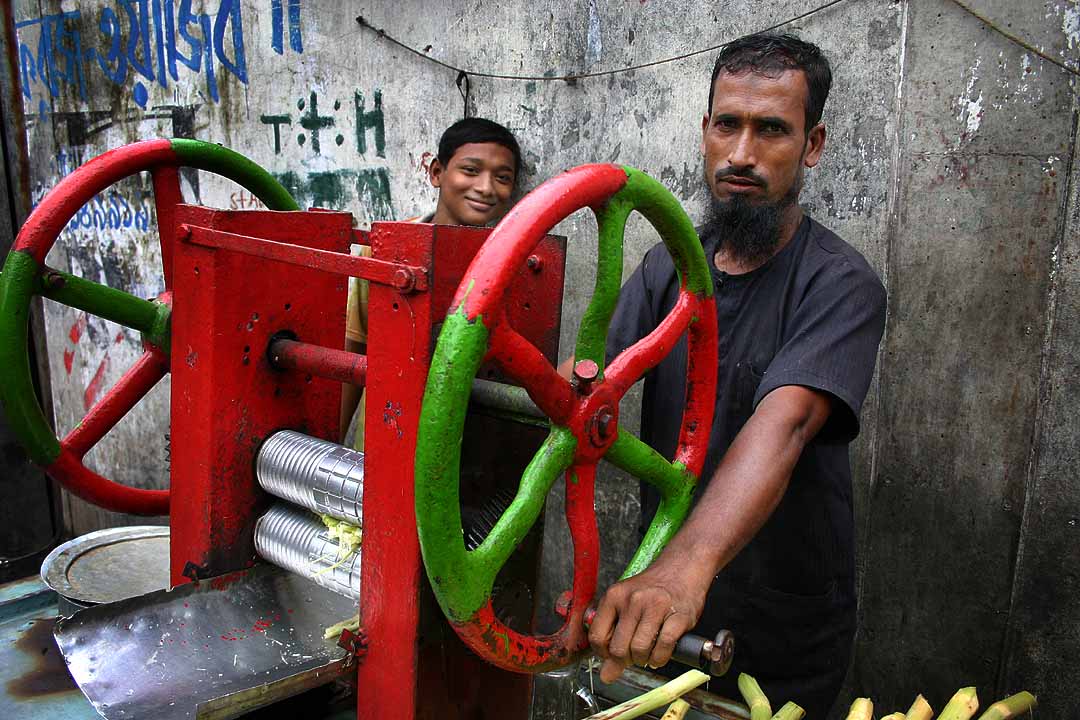
Most cane in Bangladesh is grown for sugar and for gur, the traditional unrefined sugar. A smaller share is grown to be eaten. Banglapedia says that among the local varieties, Mishrimala and Gendari are the ones mostly grown for chewing. It also notes that the canes grown in the southern and eastern parts of the country usually have stalks up to 5 cm thick with relatively soft stems, while most varieties in North Bengal have narrow, hard stems about 3 cm across.
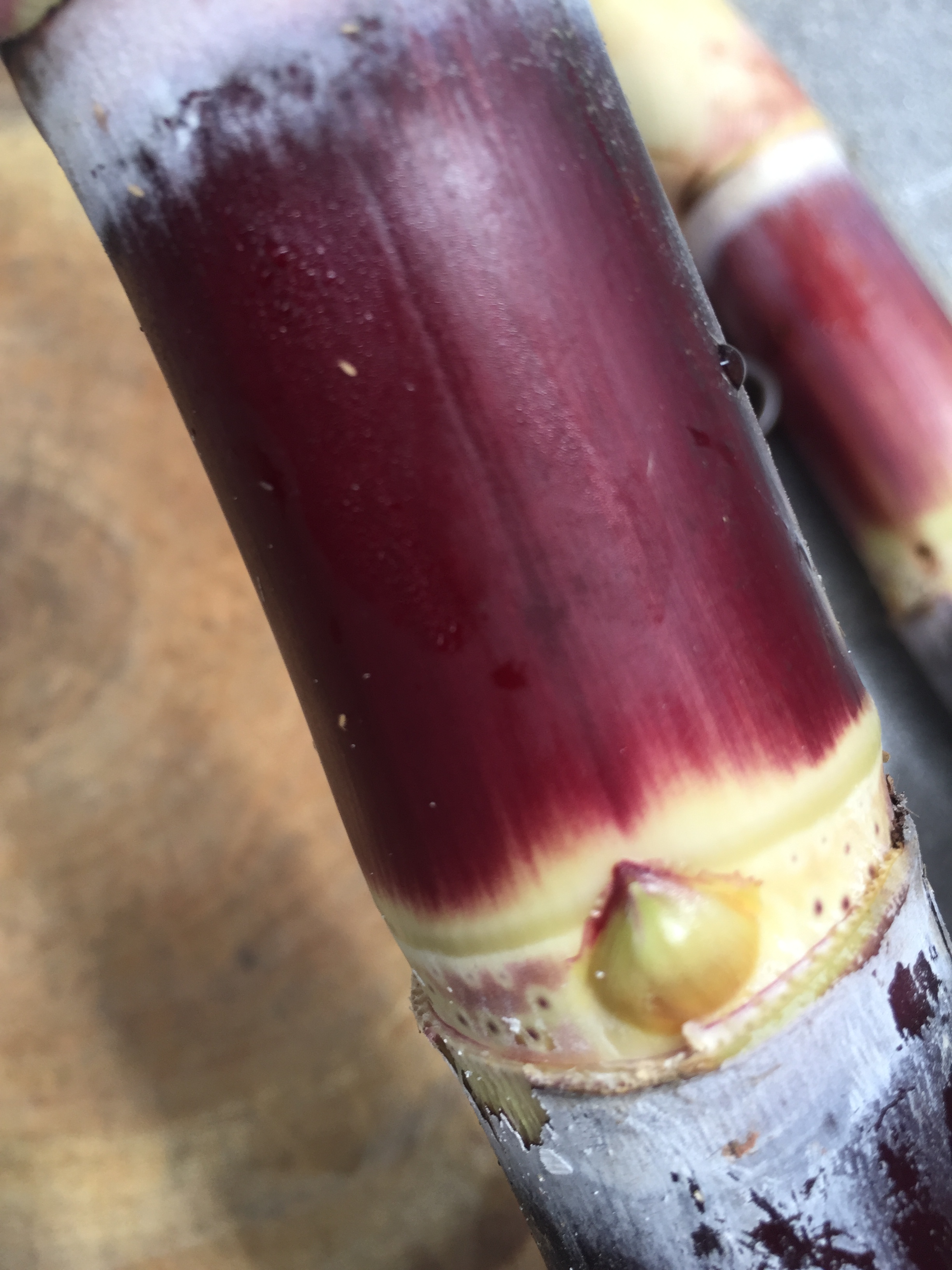
The black cane in this story belongs to the chewing group. The reports from 2021 describe its stalks as brown or dark red, and the Kaliganj grower told Bhorer Kagoj that the canes were very sweet and grew 18 to 20 feet tall. None of the reports, however, gave a registered variety name for the cane; Philippine black was the name growers and traders used for it.
BSRI had its own chewing canes. In September 2021 the national news agency BSS reported, from a BSRI training course in Tangail, that the institute had released 48 sugarcane varieties. Of these, 3 were suited to chewing and to drinking as juice, 9 tolerated floods, 10 tolerated waterlogging, 7 tolerated drought and 6 tolerated salinity. BSRI's director general said at the same event that interest in chewing and juice canes was growing among farmers because they were profitable.
How sugarcane is grown
Banglapedia describes the conditions sugarcane likes. It grows best on rich, moist soil under sunny skies, and clay-loam soil with some sand, silt and humus is among the best. A soil pH between 6 and 7.5 suits the plant, irrigation is not needed where annual rainfall is 1,250 to 1,500 mm, and the crop does well with high humidity while it grows and dry weather when it ripens.
Sugarcane is grown from pieces of the stalk rather than from seed. Banglapedia explains that farmers plant setts, the cut pieces of cane, and that in some areas the stumps left in the field after harvest are allowed to sprout again, a practice called ratoon cropping. Each cutting must carry at least one bud, and after each harvest a stand of cane sends up new stalks.
This is why the black cane spread through seedlings. A single cane can be cut into pieces that each carry a bud, so one stalk can start many plants. The Kaliganj grower's figure of 20 to 25 seedlings from one cane, given to Bhorer Kagoj, reflects this, as does Mofiz Joarder's purchase of 130 canes to raise his own planting material.
Sugarcane holds its land for a long time. Banglapedia notes that because it occupies the field through the year, some farmers prefer other crops, and that the harvest season in Bangladesh runs from October to March. BSRI has developed ways to make better use of the land between the rows. At the September 2021 event, the institute said it had developed methods for growing potatoes, onions, garlic, cauliflower, cabbage, pulses, oilseeds and spices as companion crops with sugarcane.
Tall chewing canes also need support. Bhorer Kagoj described rows of canes in the Kaliganj field tied to strong bamboo posts with thick GI wire to stop them falling over, with enough space between the lines to walk through.
Pests, jackals and other threats
Sugarcane has many enemies. Banglapedia lists about 15 insect species as major pests in Bangladesh, along with nematodes, mites, rats, jackals and some birds. Among the insects are the top shoot borer, stem borers, termites, leafhoppers and mealybugs.
The top shoot borer is the most widespread and the hardest to control, according to Banglapedia. Its larvae bore into the young top of the plant and kill the growing shoot, a symptom known as dead heart, and the damage is worst while the cane is less than a metre tall. The stem borer bores into the stalk through small round holes and can tunnel through a whole cane.
For a chewing cane, animals can be as big a worry as insects. The Kaliganj grower told Bhorer Kagoj that jackals were the main enemy of his cane, along with cattle, and that the biggest early cost was a strong fence around the field.
Farmers who see borer damage or other problems should take a sample to the upazila agriculture office or contact BSRI, which works on sugarcane pests and diseases. Neither the original report nor the other 2021 reports gave any pesticide or dose, and none is given here.
Chuadanga and the cane sector in 2021
Chuadanga is a district of Khulna division with an area of 1,174.10 sq km, bordered by Kushtia and Meherpur to the north, Jhenaidah to the south and east, and India's West Bengal to the west. According to the 2011 census, as Banglapedia gives it, the district had four upazilas and a population of 1,129,015, and agriculture was the main source of income for 65.14 percent of households.
Chuadanga Sadar upazila covers 298.27 sq km and had a population of 313,935 in 2011. Banglapedia lists sugarcane among its main crops, alongside paddy, jute, wheat, betel leaf, cotton, maize, oilseeds and vegetables.
The district has a long link with cane. The state-owned Carew & Co (Bangladesh) Ltd. stands inside the Darsana sugar mill compound in the district and is the country's first licensed distillery making alcohol from sugar molasses.
Nationally, the sugar mills were under strain. Prothom Alo reported on 4 July 2021 that the Bangladesh Sugar and Food Industries Corporation had declared 6 of the 15 state-owned sugar mills closed, and that farmers were losing interest in growing cane for the mills. In the same report BSRI announced a new high-yielding variety, BSRI Akh-48, approved by the National Seed Board.
BSRI's own figures, on its website in October 2021, put the country's sugarcane area at about 1.8 lakh hectares, with about 1 lakh hectares in sugar mill zones and 0.8 lakh hectares in gur areas outside them. Total cane output was about 73 lakh tonnes, an average yield of 40.52 tonnes a hectare. According to BSRI's figures reported by BSS in September 2021, the country needed about 20 lakh tonnes of sugar and gur a year but produced about 6 lakh tonnes, a shortfall of 14 lakh tonnes.
Against that background, a chewing cane sold by the piece in local markets offered farmers a different route from selling cane to a mill. The growers in Dinnathpur said they were choosing it because it paid better than their other crops.
BSRI and where to get help
The Bangladesh Sugarcrop Research Institute is the national body for research on sugarcane and other sugar crops. It is based at Ishwardi in Pabna, about 190 km north-west of Dhaka. Banglapedia traces its origin to the Sugarcane Seedling Testing Station set up in Dhaka in 1931; it later became a research station and institute, moved to the Ministry of Agriculture in 1989, and became an autonomous institute under an act of parliament in 1996.
On its website in 2021, BSRI described its work as research on sugarcane, palmyra palm, date palm, golpata and sugar beet, and on the many uses of cane, including sugar, gur and chewing. It said that cane was the only reliable cash crop of the low-rainfall areas of the north-west and south-west of the country. Its technology transfer wing trains cane growers and extension workers, sets up demonstrations of new methods on farmers' fields and publishes guidance.
For a farmer thinking about the black cane, the Dinnathpur story offers practical starting points:
- Haris Chowdhury began through the upazila agriculture office, the first place to ask about planting material, soil and pest problems.
- BSRI and its regional stations and sub-stations can advise on cane varieties, including the three it had released for chewing and juice by 2021.
- The growers started small, on three kathas in Haris Chowdhury's case, before planting whole bighas.
- Seedling prices were falling in at least one district in 2021 as more farmers raised them, so a seedling business could not count on the earlier prices.
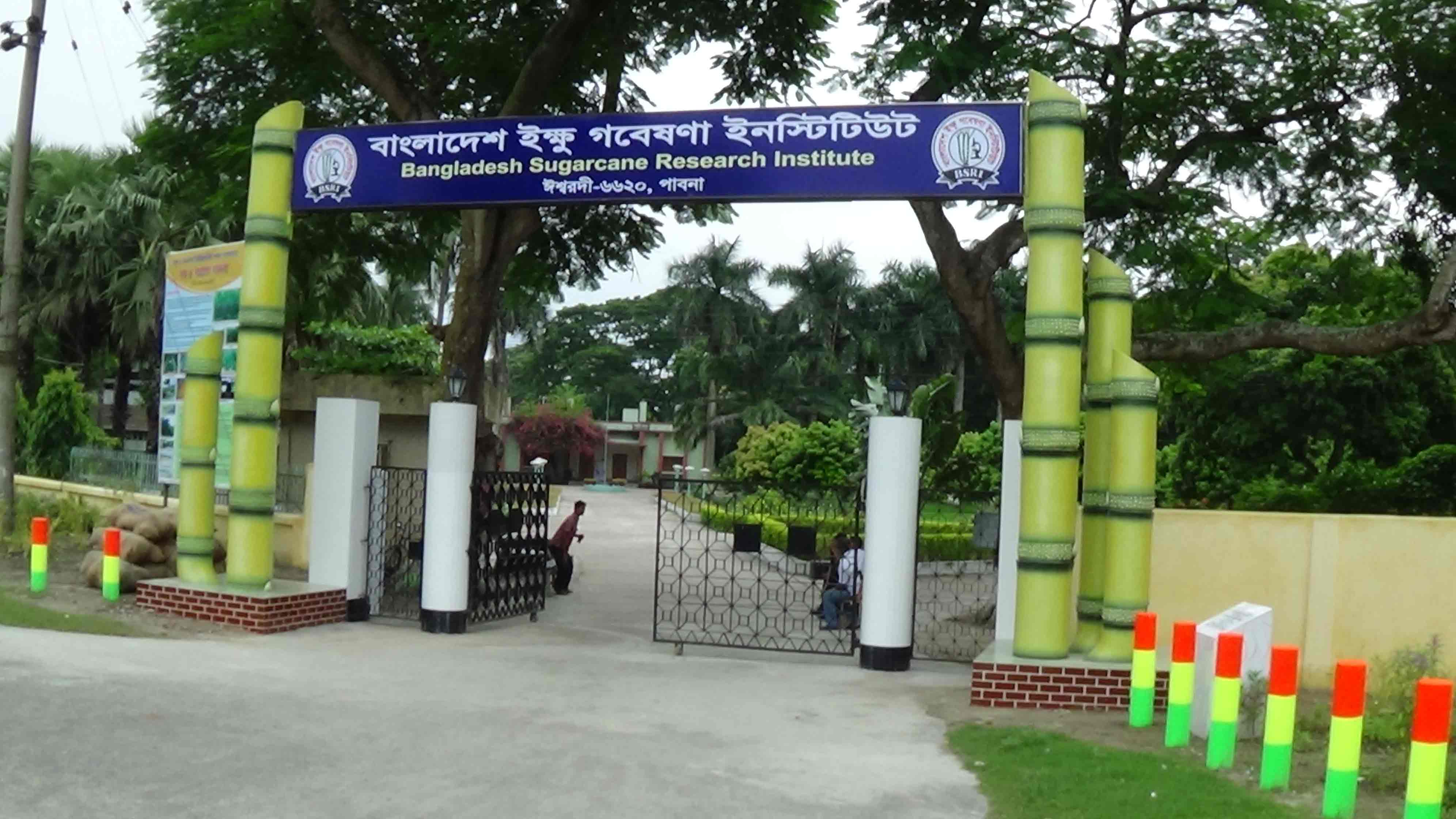
Photo: Plague / Wikimedia Commons (CC BY-SA 4.0)
Sources: The Agro News (Staff Correspondent), Bhorer Kagoj, Shomoyer Alo, BSS, Prothom Alo, Bangladesh Sugarcrop Research Institute, Banglapedia, Wikipedia
Comments
(0)