
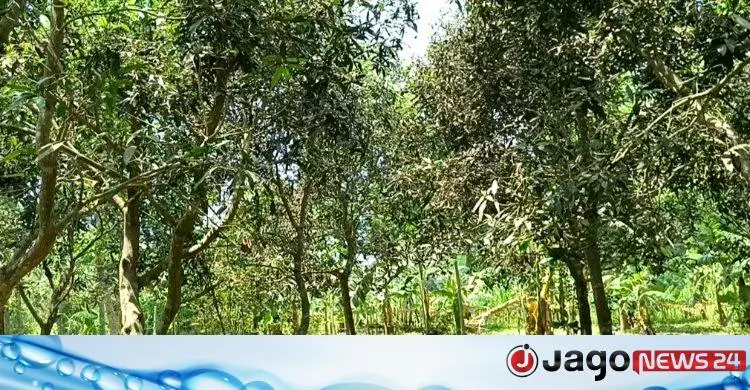
Young mango fruitlets are falling in orchards across Chuadanga because of an attack of hopper insects. Most orchards are in the same state: the trees carry stalks instead of mangoes, and the fruitlets lie scattered beneath them. In a handful of orchards a few mangoes remain, but owners fear these too will drop in the heat. Orchard owners face losses of lakhs of taka this season, and mango production will be hit.
Chuadanga mangoes are in great demand in the country's markets, but this year ripe mangoes will be hard to find even at high prices. Spraying insecticide and tending the orchards on the advice of the agriculture department has brought no result. Production is now likely to be less than half the season's target. The crop was valued at Tk 122 crore, but not even half of that is expected to be sold, leaving owners facing financial damage and consumers paying more for mangoes.
Orchard owners said they start clearing their orchards and tending the trees regularly from the beginning of December. This year the trees of different varieties began to flower towards the end of February. The trees filled with blossom, which turned into small fruitlets hanging in clusters. After the fruitlets appeared, the orchards filled with hoppers. The insects bore into the fruitlets from below, and they start to fall from the stalk. The insects have gone out of control.
Target of 30,657 tonnes
According to the Department of Agricultural Extension (DAE), the district has mango orchards on 2,203 hectares this season. The production target was set at 30,657 tonnes, with a market value of Tk 122 crore. The orchards grow varieties including Amrapali, Himsagar, Bombai, Langra, BARI-4 and Katimon. There are about 550 small and large orchards in the district's four upazilas.
Hasan, who has taken an orchard on lease, said: "I was hopeful about the orchard this year. After the fruitlets grew, they were burnt by fog and dropped. So far 80 per cent of the fruitlets in the orchard have been lost. I had to pay for the lease in advance. There is nothing left in the orchards but stalks."
Abdul Kuddus Mahaldar, president of the district mango traders' and owners' association, said: "There was plenty of blossom in the orchards this year and we were hopeful. There were so many fruitlets that the branches were about to break. We thought we would make a profit. Suddenly, with the sky turning foggy in the heat and a heavy hopper attack, the fruitlets dropped. Even spraying insecticide could not control the insects. I set up the orchard with borrowed money and a bank loan, so I am working day and night to save the remaining mangoes."
DAE deputy director Masudur Rahman Sarkar said: "To prevent hopper attacks, orchards and the bases of trees must be kept clean, and orchards must be irrigated regularly. The insects can be controlled with regular use of pesticides and fungicides. The fruitlets are growing. But heavy use of hormone sprays will harm the mangoes."
Source: Jagonews24. First published in Bengali on The Agro News.

Comments
(0)