
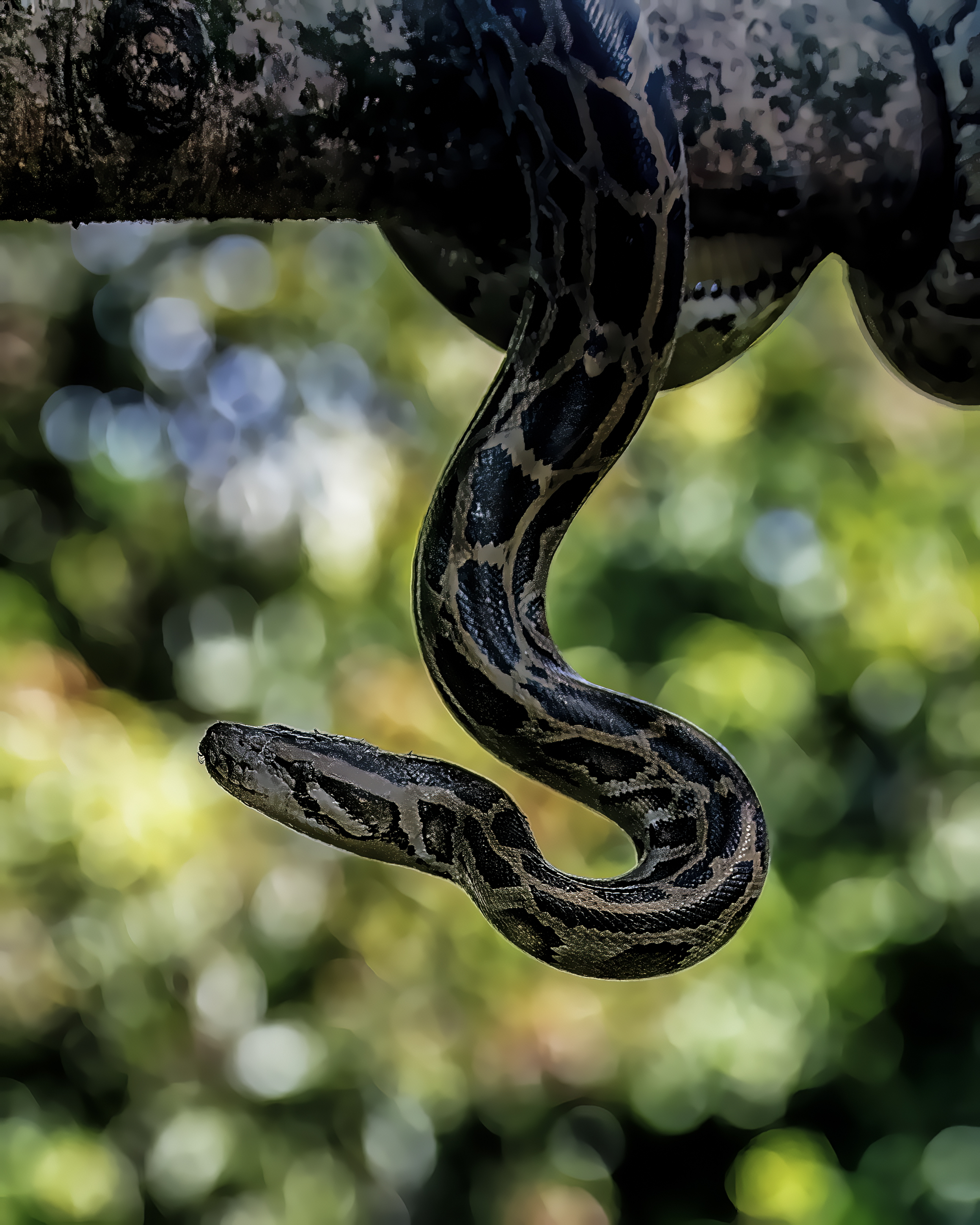
A Burmese python about 15 feet long was rescued from a pond on the campus of the University of Chittagong (CU) in Hathazari, Chattogram, at around noon on Thursday, 30 July 2026. Members of the Society for Snake and Snakebite Awareness (3SA), a snake rescue and awareness group on the campus, took the snake from a pond in the area of the university's gate 2 and later released it safely in the university's deep forest. The python weighed an estimated 14 to 15 kilograms, Jagonews24 reported that day; The Daily Ittefaq and Desh Rupantor carried the same account.
How the python was found and released
According to the reports, a student, Simon Sakib, was the first to see the snake in the pond near gate 2. He did not try to deal with it himself but informed members of 3SA. Two members of the group, Mohammad Imran and Mohammad Mobarak Mia, then went to the spot and rescued the python. Once it was out of the water it was measured at about 15 feet and its weight was estimated at 14 to 15 kg. The reports identified it as a Burmese python.
3SA member Mohammad Imran told Jagonews24 that the team had gone to the spot as soon as they received the news and rescued the python, and that it was later released safely in the university's deep forest. The reports did not say that anyone had been hurt, and they did not describe any injury to the snake.
Speaking to The Daily Ittefaq, Imran also gave his explanation for why such large snakes turn up near people. Food shortage, the destruction of natural habitat through hill cutting, and environmental change, he said, often drive snakes of this kind into inhabited areas. Desh Rupantor carried the same explanation from him, naming food shortage and the loss of natural habitat, including hill cutting.
The rescue followed the practice the group had described in earlier reports: a person who sees a snake calls 3SA rather than attacking it, a trained team comes to catch it, and the snake is returned to forest away from people instead of being killed.
A rescue group formed by students
The Society for Snake and Snakebite Awareness is a group formed by students of the University of Chittagong. In a report of 31 May 2025, The Daily Star described it as an organisation set up by CU students to reduce the risk of snakebite and to raise public awareness about snakes. When people contact the group, its members go to the scene quickly, rescue the snake and release it in a safe place, the paper wrote. One member told the paper then that snakebites harm many people every year.
The group runs a helpline. In April 2026, bdnews24.com and The Daily Star reported that students who had seen a king cobra beside the university's Department of Drama called the society's helpline, and that the rescue team caught the snake safely after about 30 minutes of work. According to bdnews24.com, the society was founded by a former student of zoology at the university, and an assistant professor of zoology serves as its adviser.
The 30 July rescue was one of several by the group on and around the campus. In May 2025 The Daily Star quoted the organisation's director as saying that pythons often come into inhabited areas in search of food, the same point that Mohammad Imran made after the July 2026 rescue.
Pythons and king cobras on the campus before
Large snakes had been found on the CU campus and in the villages around it several times in the months before this rescue. On 23 May 2025, The Daily Star reported that a Burmese python about 12 feet long and weighing 19 kg had been rescued from in front of a house in Shova Colony, beside the university's central playing field. The family living there saw the snake and contacted the Society for Snake and Snakebite Awareness, whose volunteers took the python and released it in the university forest. The paper described the snake as non-venomous.
A week later, on 31 May 2025, the same paper reported a second rescue: a Burmese python about 10 feet long and weighing 18 kg was taken from in front of a house at Jamtala Dolaipara, an area next to the university, at about 1:30 pm on a Saturday. 3SA members released it in the deep forest beside the university's Faculty of Biological Sciences.
Venomous snakes have been found too. On Friday 10 April 2026, a king cobra about 8 feet long was rescued from the area of the university's waterfall, known as the jharna. Two days later, on Sunday 12 April, at about 4:30 pm, a second king cobra about 12 feet long and weighing about 6 kg was caught in an area beside the Department of Drama by 3SA, The Daily Star and bdnews24.com reported. bdnews24.com noted that king cobras had also been found on the campus in 2016 and 2021.
The group's adviser, an assistant professor of zoology, told both papers in April 2026 that the repeated sightings had environmental causes. In the hilly areas on the western side of the university, he said, the Forest Department and local people were carrying out farming and other activities, which were destroying the snakes' natural habitat, and the snakes were coming into inhabited areas in search of shelter. His explanation and Mohammad Imran's in July pointed to the same pressures on the hills around the campus.
A hilly campus in Hathazari
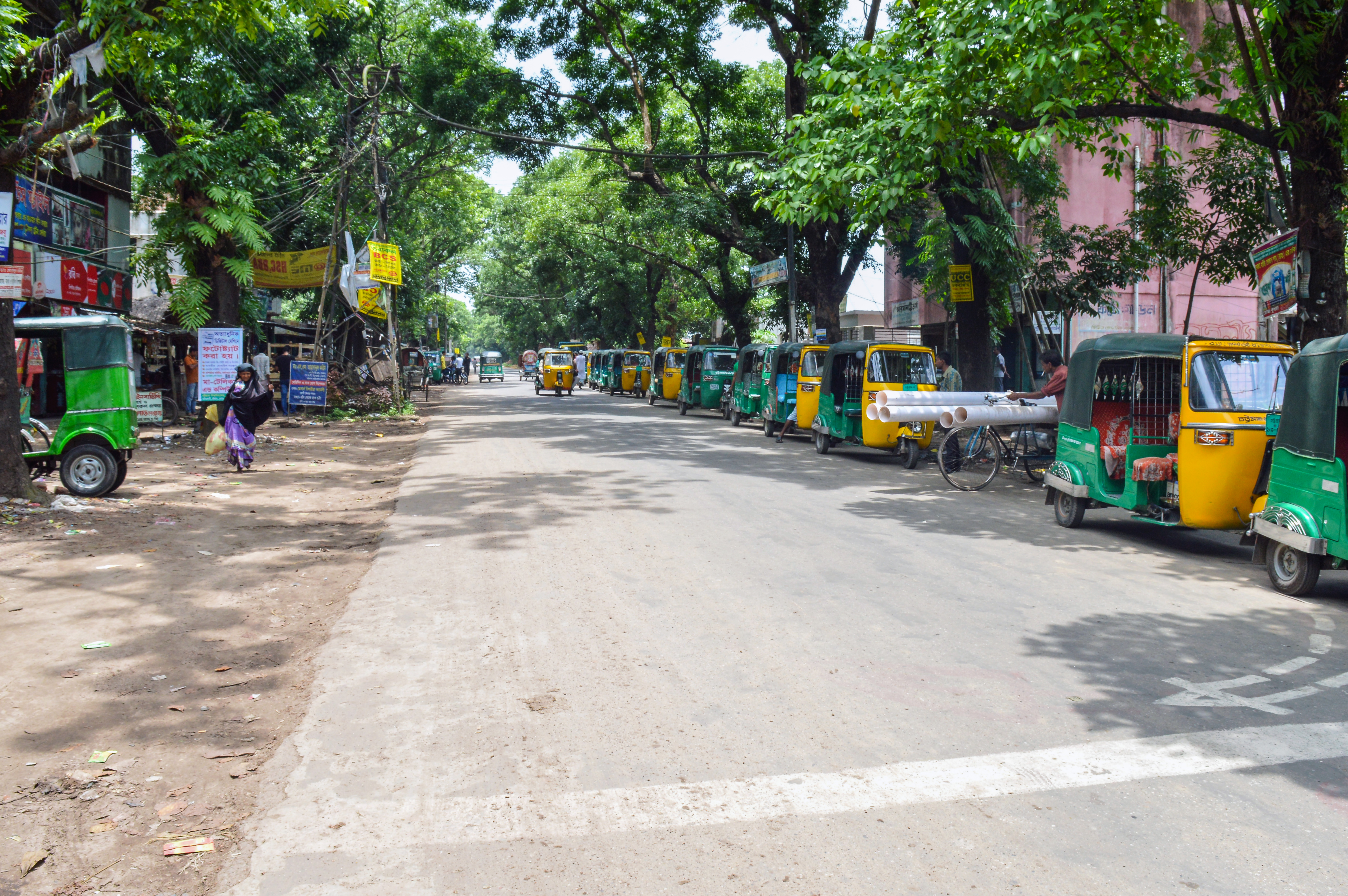
The University of Chittagong lies in Jangal Paschim-Patty mouza of Fatehpur union in Hathazari upazila, about 22 kilometres north of Chattogram city, according to Banglapedia, the national encyclopedia published by the Asiatic Society of Bangladesh. The campus covers about 1,754 acres of hilly land; the site was chosen as a solitary hilly area. The foundation stone was laid on 29 August 1964 and classes formally began on 18 November 1966, with about 200 students and seven teachers in the first MA classes.
Banglapedia describes CU as the country's third largest public university. As of 2021 it had nine faculties, 54 departments and four institutes, among them the Institute of Forestry and Environmental Sciences, more than 27,000 students and 14 residential halls. The university also conducts the coursework and examinations of the Bangladesh College of Forestry.
Hathazari upazila covers 246.32 square kilometres of Chattogram district. It is bounded by Fatikchhari upazila to the north, Raozan to the east, Sitakunda to the west and the Panchlaish and Chandgaon areas of the city to the south. Its main river is the Halda, and it has notable beels, or wetlands, at Alaul and Mohosinia. Paddy, potato, brinjal, tomato, mustard, sweet potato and other vegetables are its main crops, and CU, set up in 1966, is the upazila's only university, Banglapedia records.
The Burmese python
The Burmese python, Python bivittatus, is one of the six largest snakes in the world, according to the Smithsonian's National Zoo and Conservation Biology Institute. The species was described by the German naturalist Heinrich Kuhl in 1820. For a long time it was treated as a subspecies of the Indian python, Python molurus; it was recognised as a separate species in 2009, and most authorities now treat it as one. Banglapedia, which lists the python as ajagar in Bengali, still uses the older name Python molurus for Bangladesh's rock python.
A note published in 2024 in the journal Reptiles & Amphibians by researchers of the Deep Ecology and Snake Conservation Foundation states that the Burmese python and the reticulated python are the only two pythons found in Bangladesh. Citing a 2018 photographic guide to the country's wildlife, it says Burmese pythons exist in all divisions of the country, whereas reticulated pythons have been recorded only in Sylhet and Chittagong divisions. Citing the IUCN Bangladesh Red List of 2015, it adds that both pythons are seen occasionally in forests but also in gardens, farms and other habitats modified by people. Banglapedia places Bangladesh's pythons in the mixed evergreen forests of the north-east and south-east of the country.
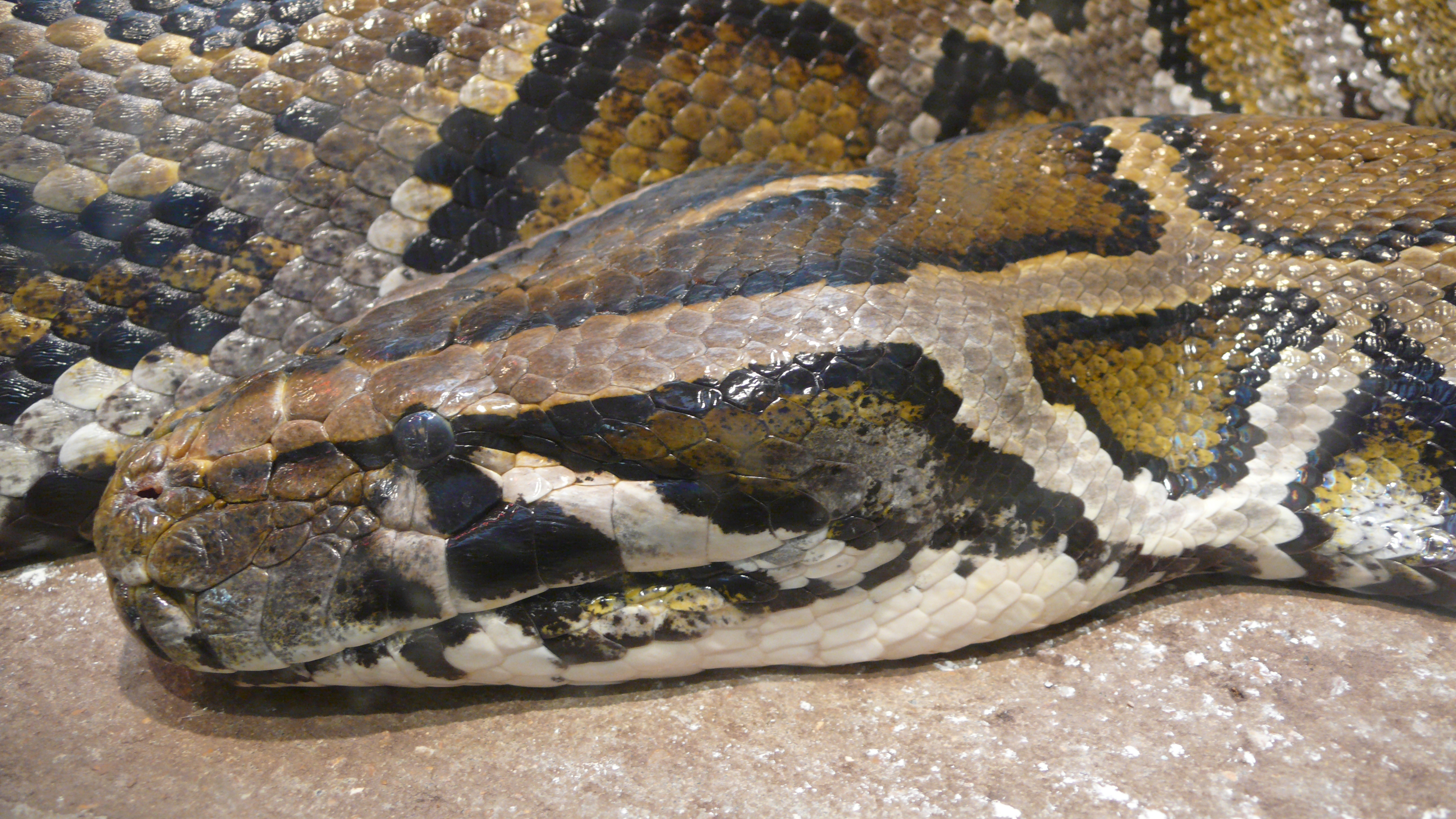
The Smithsonian describes the Burmese python as a long, stout snake with a pale tan, yellowish-brown or grey base colour, marked with large dark brown or olive blotches outlined in cream or gold. It has no fangs; instead, many back-curving teeth grip its prey and stop it escaping. It has no eyelids: a thin, clear scale covers each eye and is shed with the rest of the skin. Lengths over 15 feet (4.6 metres) are common, the average range is 10 to 16 feet (3 to 4.9 metres), and females are typically larger than males. A snake of about 15 feet, like the one found at CU, is therefore large but well within the normal size of the species.
Like all pythons, the Burmese python is not venomous. Banglapedia notes that pythons have powerful teeth but no venom apparatus, and that they kill their prey by constriction, which leads to suffocation.
How the python lives and breeds
Burmese pythons eat mammals, birds and reptiles of a suitable size. They are constrictors and swallow their prey whole; the jaw bones are joined by stretchy tissue that lets the jaws open wide enough to take prey several times wider than the head, the Smithsonian explains. They do not eat every day, and after a successful meal a python may spend days or weeks staying warm enough to digest it. Mornings are often spent basking in the sun to warm up before the snake moves around to hunt. Domestic fowl and pigs draw them into farming areas.
Banglapedia records that pythons prefer mammals; common prey includes rats, hares, goats, sheep, jackals and deer. The Bengali name ajagar, it says, comes from the python's habit of preying on goats and similar animals. The 2024 Reptiles & Amphibians note adds that prey of Bangladesh's two pythons includes lizards, birds and mammals such as rodents, monkeys, small carnivores, deer, wild boar and domestic animals. Its authors recorded, on 3 October 2020 at a wildlife farm in Bandarban district, a Burmese python of about three metres catching a reticulated python by the tail and swallowing it tail-first over about two hours; to their knowledge it was the first documented case of one species eating the other.
A pond is not an unusual place to find a python. Banglapedia describes them as mostly semi-arboreal snakes of forest regions that are also found in rivers, haors and jheels; they swim strongly and usually stay near the bank, partly or wholly under water with only the tip of the snout showing. Encyclopedic references note that Burmese pythons can stay submerged for up to half an hour, and that young snakes climb trees while large adults spend most of their time on the ground.
Snakes also matter to farmers. Banglapedia notes that snakes eat large numbers of animals that are often considered crop pests, and that several species help control rats and mice. The Smithsonian makes the same point for pythons: snakes help control rodents, and losing them can lead to crop damage from mice.
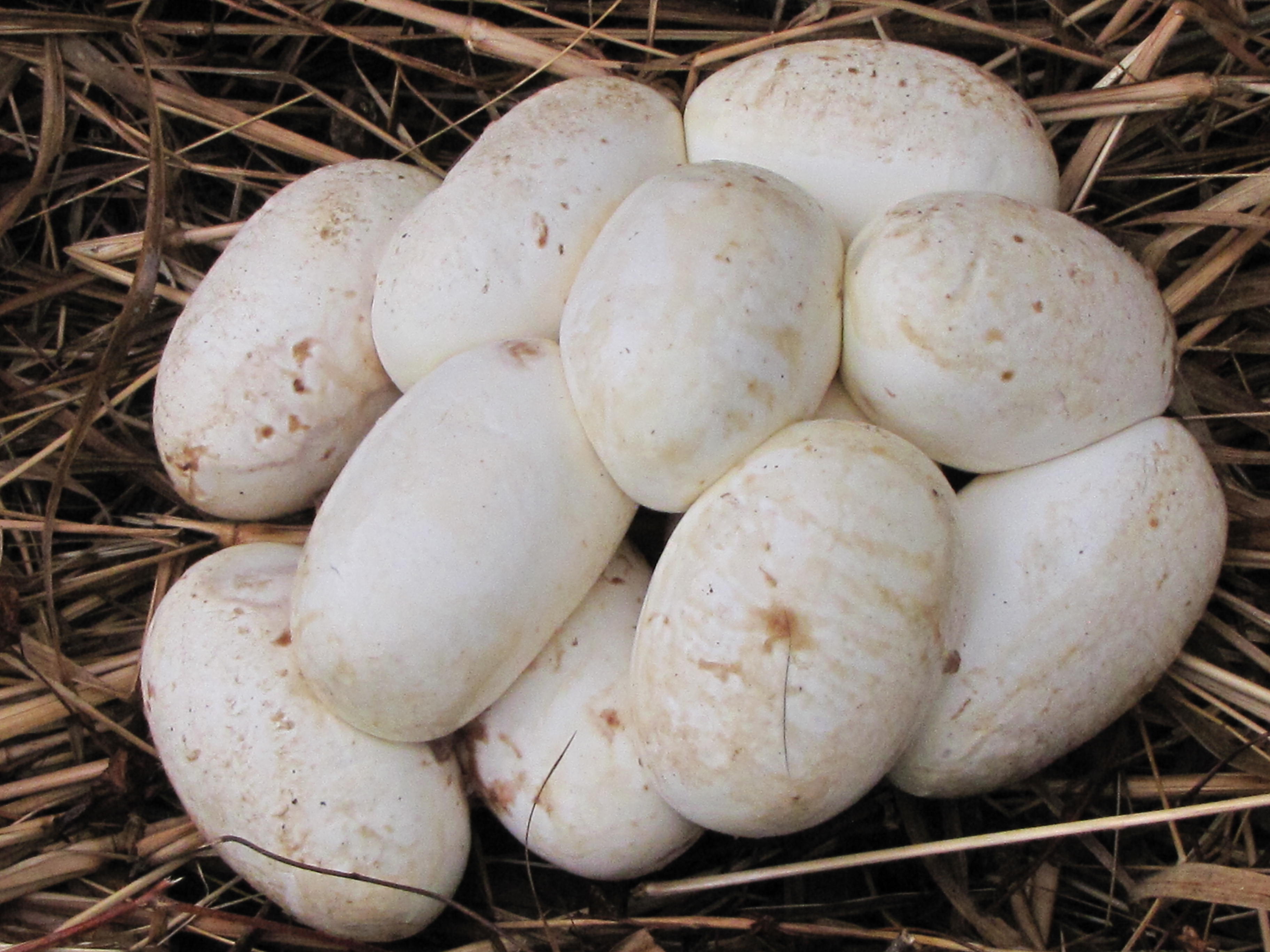
In Bangladesh, Banglapedia records, python breeding starts between December and February and the eggs are laid three to four months later. The female broods the eggs by coiling around them, and the mother takes no care of the young once they hatch. The Smithsonian gives the average Burmese python clutch as 30 to 60 eggs, with up to 100 possible. Unlike most snakes, the female stays coiled around her clutch until the eggs hatch, which may take two months or more, and she does not feed during this time. She warms the eggs by twitching her muscles, raising the temperature inside her coils several degrees above the air. Hatchlings measure 31 to 46 centimetres and are independent at once. Burmese pythons become sexually mature at four to five years and live about 20 to 25 years in human care; their lifespan in the wild is not known.
A threatened snake
Globally, the Burmese python is listed as Vulnerable on the IUCN Red List of Threatened Species, in an assessment of 2012. Its wild population is estimated to have declined by at least 30 percent in the first decade of the 21st century because of habitat loss and over-harvesting. International trade in the species is controlled under Appendix II of CITES, the Convention on International Trade in Endangered Species of Wild Fauna and Flora.
The Smithsonian notes that numbers of Burmese pythons are declining across their native range. Snakes found in the wild are often killed for their skin or meat, or simply because they are snakes, and hundreds of thousands are killed each year for skins that are made into shoes, belts and other goods. Banglapedia also notes that python skin has commercial value and that both of Bangladesh's pythons have become rare; it lists the rock python as critically endangered and the reticulated python as endangered in the country.
In contrast to its decline in Asia, the species has become invasive in parts of southern Florida in the United States, where it threatens native wildlife and ecosystems, the Smithsonian notes. The contrast shows why the snake is protected in its home range: it is a native predator in the forests of Bangladesh, not a pest.
What the law said in July 2026
On the date of the CU rescue, wild animals in Bangladesh were protected by the Wildlife (Conservation and Security) Act 2026, Act No. 86 of 2026, dated 10 April 2026. Section 1 of the Act says it is deemed to have taken effect on 7 January 2026, and section 54 repealed the Wildlife (Conservation and Security) Act 2012, while keeping cases already filed under the old law.
The Act defines a wild animal as an animal of any kind or breed, at any stage of its life cycle, whose origin is considered wild. Its main provisions on wild animals, as set out in the official text, are these:
- Section 10(1): no one may rear, keep in captivity, possess, buy, sell or transport a wild animal without a licence, possession certificate or permit, as the case may be.
- Section 10(2): wild animals may not be bought or sold through advertisements on social media, in markets or by any other means.
- Section 10(3): all wild animals, their body parts, meat and trophies are considered the property of the government.
- Section 10(4): cruelty to a wild animal is an offence punishable under the Act; the explanation includes beating, teasing, blindfolding, needless confinement, frightening, causing suffering in transport and publishing cruelty to wild animals on social media.
- Section 11: the chief wildlife warden, in consultation with the Act's scientific committee and on scientific data and internationally accepted practice, decides which species in the schedules are threatened, near threatened or of least concern.
- Section 12: where a wild animal becomes a threat to human life, or is disabled or has a contagious or incurable disease, a wildlife warden, with the approval of the chief wildlife warden or an empowered officer and stating the reasons, is to take effective measures to remove or, as the case may be, rehabilitate it, and must report the matter to the advisory board and scientific committee within 15 days.
Under these rules a python found on a campus belongs to the state, and harming it, tormenting it or keeping it is not allowed. The reports of the 30 July rescue did not say whether the Forest Department was informed.
Leaving the snake to those trained to move it
The Smithsonian's guidance on snakes is to leave a snake seen in the wild alone and to encourage others to do the same, not to assume that every snake is venomous, and not to attack one unless it poses a threat to one's safety. It also urges people to avoid animal-skin products, which support illegal hunting, and to share information about the benefits snakes provide, such as rodent control.
On 30 July the student who found the python did what that guidance describes: he kept his distance and called the trained rescue group, and the snake was moved by its members and released in the forest. Catching a large python is not a task for untrained people, and nothing in this report is advice to handle one.
Photo: MD sajjad hossain photography / Wikimedia Commons (CC BY-SA 4.0). The top picture shows a Burmese python in a protected area of Bangladesh, as background; it is not the snake rescued at CU.
Sources: Jagonews24, The Daily Ittefaq, Desh Rupantor, The Daily Star, bdnews24.com, Banglapedia (Asiatic Society of Bangladesh), Smithsonian's National Zoo and Conservation Biology Institute, Reptiles & Amphibians (Mahamud et al., 2024), IUCN Red List, CITES, Wildlife (Conservation and Security) Act 2026 (Laws of Bangladesh, bdlaws.minlaw.gov.bd)
Comments
(0)