
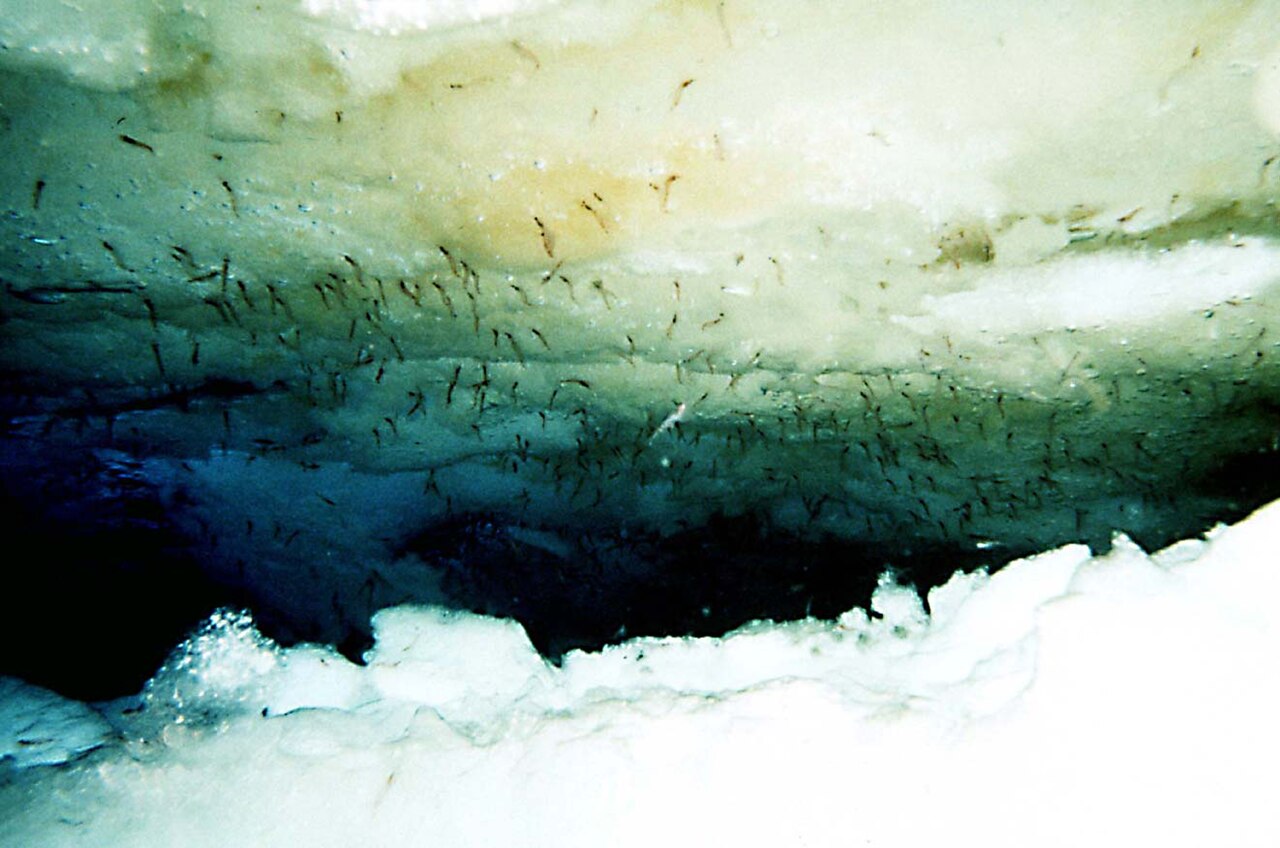
China is rapidly expanding its fishing of Antarctic krill, the small crustacean at the base of the Southern Ocean food web, and conservationists fear the catch could damage an ecosystem already stressed by warming, Dialogue Earth reported on 5 October. The annual catch limit of 620,000 tonnes was reached in August, closing the fishery months early, and the Commission for the Conservation of Antarctic Marine Living Resources (CCAMLR) meets in Hobart from 20 to 31 October to decide next year's rules.
China, the second-largest krill-fishing country after Norway, has six of the 15 vessels registered with CCAMLR. Its ships almost doubled their catch last year to a record 231,083 tonnes. The newest, the Fu Yuan Yu 9199, uses suction pumps that can take in 1,000 tonnes a day; Fujian provincial documents show the state subsidised 25% of its CNY 601 million (USD 89 million) building cost, and local governments pay companies per tonne of krill landed in China.
On shore, a Fujian krill industrial park will be able to process 150,000 tonnes a year once its second phase is finished next year, and another is under construction in Liaoning. Most of the catch becomes krill meal for aquaculture and pig farming, used especially as an appetite stimulant in feed. A Chinese researcher estimates the fleet produces about 25,000 tonnes of krill meal a year, against national fishmeal demand of around two million tonnes; China farmed nearly 32 million tonnes of fish in 2025 and imports at least half of its fishmeal and fish oil. Peru's El Nino-driven anchovy ban in May pushed fishmeal prices to their highest since records began in 1992.
Scientists warn the stock is under pressure. Yang Guang of the Chinese Academy of Sciences' Institute of Oceanology cites research showing krill density in the southwest Atlantic sector, which holds about 70% of the stock, fell by 70% between the 1970s and 2000s, and says the krill have shifted towards coastal polar waters where penguins, seals and fishing ships meet. At least six humpback whales died as bycatch between 2021 and 2024. Krill lock away at least 20 million tonnes of carbon a year, according to Plymouth Marine Laboratory.
Norway has proposed raising the catch limit to nearly 1.2 million tonnes with spatial rules and monitoring, while China and Russia have resisted new marine protected areas since 2016. Chen Jiliang of the University of Tasmania said China's early investment in ships narrows its room to compromise, and that any higher limit should come with protected areas and catch-spreading rules. "If we overfish, the risks are significant," Yang said.
Photo: Uwe Kils / Wikimedia Commons (CC BY-SA 3.0)
Source: Dialogue Earth

Comments
(0)