
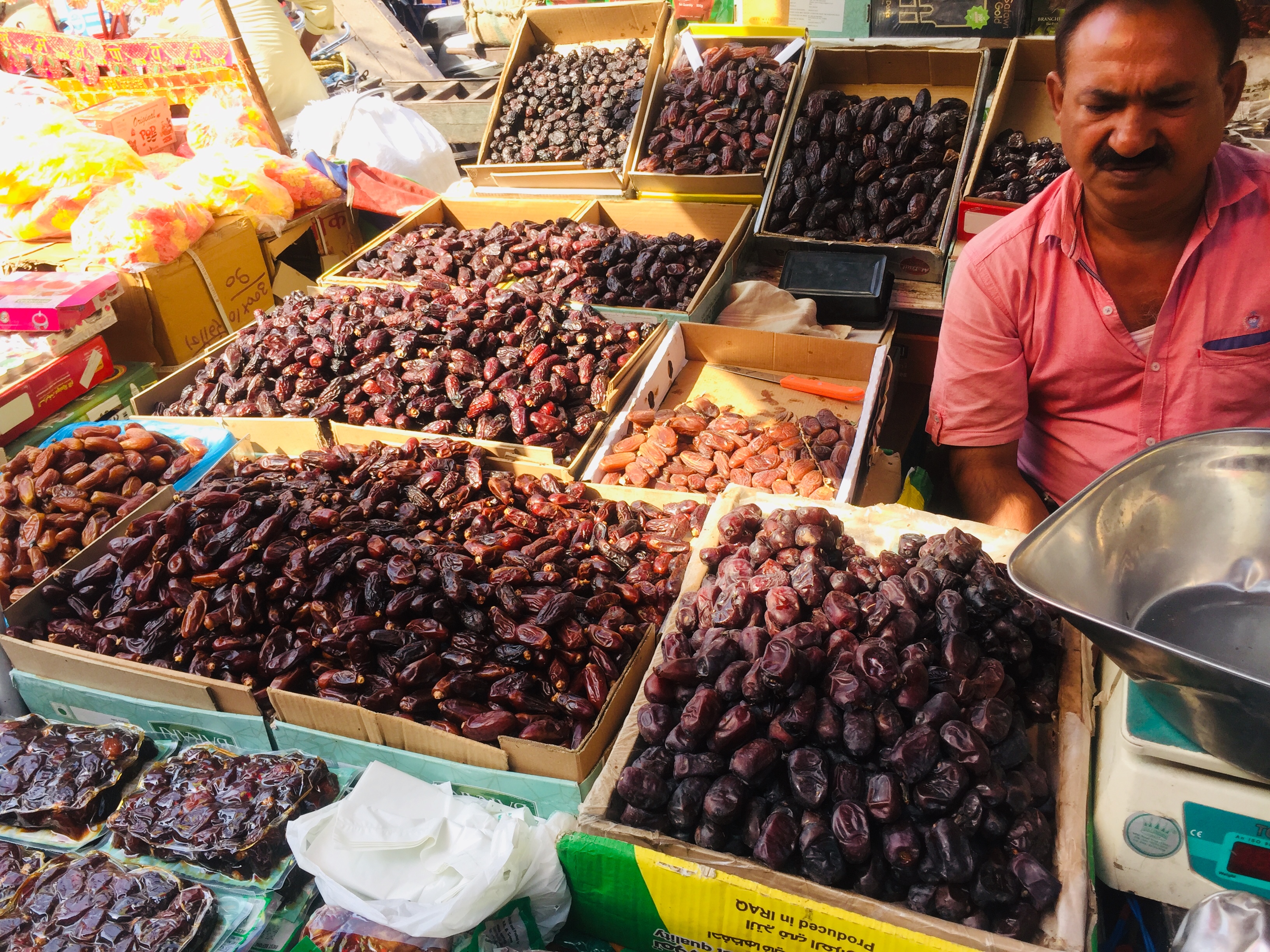
The price of Zahedi dates, the variety Bangladeshi traders call the "cheap" date, rose sharply at Chattogram's best-known date market in the days before Ramadan 2026, Jagonews24 reported on 19 February 2026. Traders at the Fruitmandi Railway Men's Market in Chattogram city blamed the loss of a Bangladesh-bound container ship that sank in the Andaman Sea off Phuket, Thailand, on 7 February, saying it had been carrying a large consignment of dates. Almost every other kind of date, they said, was cheaper than a year earlier, and supply on the market was normal.
Dates were selling at Fruitmandi for anything from Tk 200 to Tk 1,600 a kilogram, depending on quality, and more than 50 varieties and grades were on offer in the market's wholesale fruit section. Of all of them, Zahedi had gone up the most.
Zahedi climbs while other dates hold steady
Fifteen days before the report, a 10 kg pack of Zahedi dates had sold for Tk 1,900. By the evening of Wednesday 18 February, when Jagonews24 visited the market, the same pack was selling for up to Tk 2,600. Zahedi is called the "cheap" date because it costs less than other dates, and its buyers are mostly people on low and lower-middle incomes.
Traders said the ship that sank off Thailand had been carrying dates, and that the containers of dates went down with it, most of them the cheaper kind. Prices of all other kinds of dates, they said, were lower than in the previous year.
Mayeda Fruits, a firm in Fruitmandi that imports dates directly and also sells them wholesale and retail through its own shop, described the same pattern. Its owner, Md Jahed, told Jago News: "There are plenty of dates on the market, and imports have been good. The prices of almost all kinds of dates are lower than last year. But the price of Zahedi dates in sacks has gone up."
"A lot of Zahedi dates were on the ship that sank in the Andaman," Jahed said. "Because they come packed sticky in sacks, they are imported at the last moment to be brought to market and sold quickly. But as they did not reach the market at the peak time before Ramadan, their price has risen abnormally. Zahedi dates that were Tk 190 last week are now Tk 260, meaning a 10 kg pack has gone up by as much as Tk 700. Likewise, Zahedi dates in sacks were Tk 145 a kg and are now selling at Tk 200."
Haji Tauhidul Alam, organising secretary of the Bangladesh Fresh Fruits Importers Association and general secretary of the Chattogram Fruit Traders' Association, gave the same explanation. "Date imports have risen this time, which is why date prices are lower than last year in both wholesale and retail markets," he told Jago News. "But last week a ship that sank at sea off Thailand was bringing 150 containers of dates to Bangladesh. Because it happened right at the start of Ramadan and those dates did not reach the market, there has been some effect: the price of cheap dates has risen a little. But other kinds of dates have not gone up."
"Almost all dates are cheaper this year than last year," he added. "Dates that sold for Tk 3,000 last year are selling for Tk 2,700 to 2,800 this year. Only cheap dates have risen, because of short supply."
The ship lost off Phuket
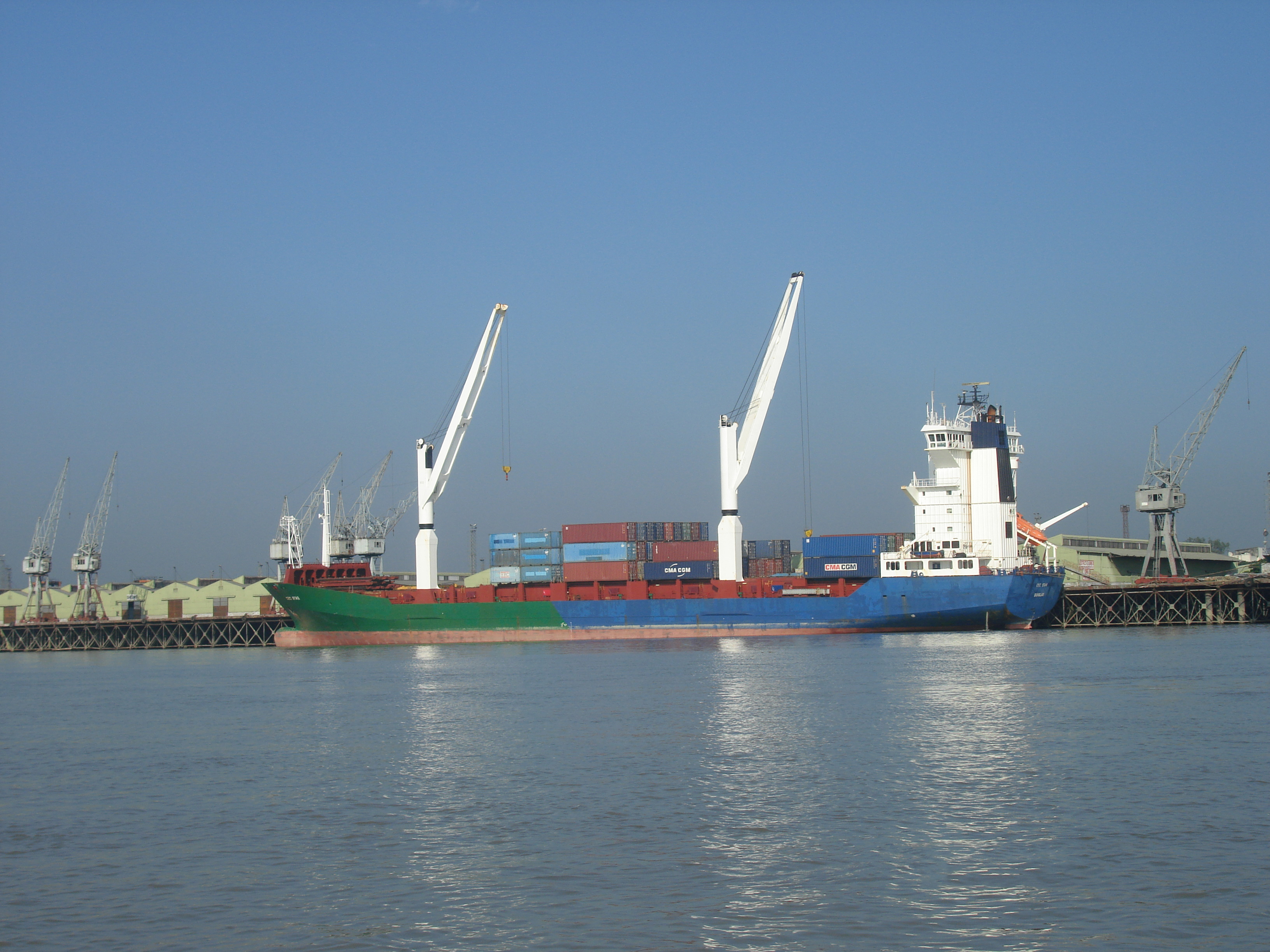
The vessel was the Panama-flagged container ship Sealloyd Arc. It sank on 7 February 2026 in the Andaman Sea off Phuket on its way from Malaysia to Chattogram port. Date traders in Chattogram claimed it had about 150 containers of dates on board; that figure is the traders' estimate as Jagonews24 reported it, and the shipping reports of the time did not break the cargo down by commodity.
The Nation, a Thai newspaper, reported on 8 February that the ship capsized in waters west of Ko Kaeo Yai, near Promthep Cape in Phuket, that more than 200 containers were scattered across the sea and that an oil leak had been detected. The Royal Thai Navy's Third Naval Area Command said it had been alerted that the ship had taken on water and was listing with 16 crew stranded on board; it sent boats to rescue them and began coordinating with other agencies on plans to salvage the vessel. Phuket's disaster authorities, the marine police and the regional marine and coastal resources office joined in recovering containers and removing oil, and seafarers were warned to take care in the area.
In Chattogram, Prothom Alo reported on 8 February that the ship was 115 metres long and, according to its local representative and Thai news portals, carried 297 TEU (twenty-foot equivalent units) of goods for Bangladeshi importers, 14 of them holding hazardous cargo. It had left Malaysia's Port Klang on 5 February, and the accident happened within two days of departure. The manager of Alvi Lines Bangladesh, the ship's local agent, told the paper it heeled over and sank about four nautical miles off the Phuket coast, that the captain declared the ship abandoned, and that the rescued sailors had been taken to a hotel in Phuket and were well.
The Business Standard's Bangla edition quoted Bangladesh's Joint Maritime Rescue Coordination Centre (JMRCC) as saying the ship had been carrying 229 containers from Port Klang when it suddenly listed heavily at about 3 pm Thai time, roughly four nautical miles off the coast. The ship's master declared "abandon ship" and sent a distress signal, and the Thai Maritime Rescue Sub-Centre evacuated all 16 crew, all of them Bangladeshi citizens, by 3:50 pm without casualties. The ship was owned by a Singapore-based shipping line and operated through Bangladesh's Naf Marine Services, and was due to call next at Chattogram.
Chattogram port, the ship's destination, is Bangladesh's principal seaport. Banglapedia describes it as lying in the estuary of the Karnaphuli River, with a deep-water anchorage a few miles inland from the Bay of Bengal, and as a trading centre since at least the ninth century, when Arab merchants used it. It has been run since 1986 by the Chittagong Port Authority, which comes under the Ministry of Shipping.
Imports up on the year, NBR figures show
According to the National Board of Revenue (NBR), Bangladesh imports dates from several countries including the United Arab Emirates, Saudi Arabia, Iraq, Egypt, Jordan, Algeria, Tunisia, Afghanistan, Pakistan, India and China. Small quantities are also brought in from the United Kingdom, Singapore, Hong Kong and Malaysia by enthusiasts.
NBR data cited by Jagonews24 showed that from 1 July of the 2025-26 fiscal year to 16 February 2026, 51,584 tonnes of fresh dates were imported, against 44,028 tonnes in the same period of the previous fiscal year, or 7,556 tonnes more. In the month from 17 January to 16 February 2026 alone, 25,744 tonnes of fresh dates arrived.
The Bangladesh Fresh Fruits Importers Association put the country's annual demand for dates at about 90,000 tonnes, Bonik Barta reported on 8 February 2026. Demand and sales rise in Ramadan, and two-thirds of the year's demand is sold in that month, according to the association.
Imports have grown steadily over the decades. Prothom Alo, drawing on data from the Food and Agriculture Organization of the United Nations (FAO), reported in March 2025 that formal records of date imports into Bangladesh go back to 1977, when only small quantities came in. In the first decade of this century an average of 24,000 tonnes a year was imported; in the second decade, 45,000 tonnes; and over the four years before 2025, an average of 86,000 tonnes a year. In January and February 2025, ahead of that year's Ramadan, traders brought in 61,000 tonnes of 37 varieties from 16 countries, NBR data showed, of which expensive dates made up only about 3,000 tonnes, the paper reported.
A duty cut in December, and prices that still moved
The government had cut the import duty on dates ahead of Ramadan. In a notification issued on 23 December 2025 and announced in a news release the next day, the NBR lowered the customs duty on date imports from 25 per cent to 15 per cent, a concession valid until 31 March 2026. The state news agency BSS reported that the NBR took the decision to keep dates, an essential iftar food in Ramadan, within reach of people of all classes and out of respect for the religious sentiment of the people.
The NBR also noted that in the previous national budget the advance income tax on imports of all fruit, including dates, had been cut from 10 per cent to 5 per cent, and that the 50 per cent rebate on advance income tax for imports of dates and other fruit was being kept for another year. Officials said the lower duty and tax would reduce import costs considerably, help keep supply adequate in Ramadan and prevent abnormal price rises.
Even so, prices moved in the weeks before the fast. Bonik Barta reported on 8 February 2026 that, instead of falling after the duty cut, date prices had risen by Tk 20 to Tk 50 a kilogram in Dhaka's markets in the preceding days, depending on quality, and by up to Tk 20 to Tk 25 in Chattogram's wholesale market. Retailers told the paper they had not raised prices themselves but were buying at higher prices. Traders involved in imports said at least five ships carrying dates were delayed in reaching the country, and that a continuing labour strike at Chattogram port had held up unloading, creating a supply shortage.
The paper's survey of Dhaka's Karwan Bazar, Badda and Notun Bazar on Friday 6 February found Zahidi dates at Tk 260 to Tk 280 a kilogram, against Tk 250 a week earlier. Dabbas and boroi dates were Tk 520, up from Tk 480 to Tk 500 the week before. Mashrur and Algerian dates were Tk 600, Mabrum Tk 1,200, Ajwa Tk 1,000 to Tk 1,200 by grade, Kalmi Tk 850, Mariam Tk 1,100, Khurma Tk 360, Medjool Tk 1,300, Sukkari Tk 800 and jumbo Medjool Tk 1,600.
In Khatunganj, Chattogram's largest wholesale market for consumer goods, low-priced dates, mainly imported from Saudi Arabia, had gone up by Tk 20 to Tk 25 a kilogram in a week to Tk 155, while dates imported from Dubai had fallen by Tk 40 to Tk 50 over two weeks to between Tk 450 and Tk 500 a kilogram wholesale, Bonik Barta reported. The owner of a Khatunganj importing firm told the paper that the duty cut had allowed enough dates to be imported at lower cost, but that the standstill at the port and extra demand in the days before Shab-e-Barat had pushed prices up somewhat.
Buyers crowd Fruitmandi before the first fast
Chattogram's Fruitmandi Railway Men's Market, on Station Road, is famous for dates, which are sold there both wholesale and retail. Many of its traders import dates directly; others buy from importers and sell in their shops. Large traders from distant districts also source dates from the importers there.
On the evening of 18 February, every shop in the market, from the upper floor to the ground, was packed with dates, Jagonews24 found. With Ramadan about to begin, many people had come to Fruitmandi to buy dates to eat at iftar at home.
Ashraf Hossain of the Halishahar area, who had come to buy dates, told Jago News: "Dates are selling in retail shops at Tk 1,200, Tk 1,500 and Tk 1,700 a kg. Dates that cost Tk 1,700 in a retail shop can be bought at Fruitmandi for Tk 1,000 to Tk 1,200 a kg. So I buy dates from Fruitmandi every year."
Maulana Alauddin had come from Rangunia. "I have come to buy dates for our madrasa's orphanage," he said. "A lot of dates are needed during the fasting month. Dates can be bought here much more cheaply than in our local market."
Md Arman of Tuhin Enterprise said: "We have plenty of dates and are selling retail as well as wholesale. Ramadan has begun in the Arab countries. Many people here buy dates from Fruitmandi to eat at home, and others are buying in larger quantities for mosques, madrasas and orphanages. People can buy good-quality dates at Fruitmandi more cheaply than at retail prices, so sales are much higher."
Jalal Uddin of Umaiya Enterprise said: "There are various varieties of dates on the market: Mabrum, Mashruk, Mariam, Medjool, Safawi, and VIP-grade Mabrum and Medjool too. Dates come in 2 kg, 3 kg and 5 kg packs, and prices vary by quality."
What Fruitmandi charged, variety by variety
Traders said the same date comes in several qualities, and prices vary with quality. The varieties and trade names on the market included Ajwa, Mariam, Masdul, Safawi, Sufri, Mashruk, Mabrur, Zahedi, Dabbas, Nagal, Lulu, Saiyidi, Faridi, Rashidi, Kudri, Medjool and Sukkari. Prices at Fruitmandi on 18 February were as follows:
- Saudi Ajwa: Tk 2,400 to Tk 4,000 for a 5 kg pack.
- Mashruk: Tk 1,400 to Tk 1,800 for a 3 kg pack.
- Mabrum: Tk 3,200 to Tk 6,500 for a 5 kg pack.
- Iranian Mariam: Tk 3,400 to Tk 3,800 for a 5 kg pack.
- Egyptian Medjool: Tk 7,100 to Tk 8,000 for a 5 kg pack; Dubai Medjool: Tk 6,300 to Tk 6,500.
- Saudi Safawi, also called Kalmi: large, good-quality fruit at Tk 2,300 to Tk 2,500 for 3 kg; smaller fruit at Tk 2,800 to Tk 3,300 for 5 kg.
- Sukkari Mufattal: Tk 1,700 to Tk 1,800 for a 3 kg pack; Sukkari Rutab: Tk 1,500 for 3 kg.
- Nagal (wholesale): Tk 2,600 to Tk 2,800 for a 10 kg pack.
- Dabbas (wholesale): Tk 4,200 to Tk 4,300 for a 10 kg pack.
- Lulu (wholesale): Tk 3,400 to Tk 3,500 for 10 kg.
- Rizis from Iraq, which many call boroi (jujube) dates: Tk 2,200 for 10 kg.
- Algerian bunch dates: Tk 950 for 2 kg and Tk 2,250 for 5 kg.
Zahedi, Medjool, Ajwa: the fruit behind the names
All these dates are the fruit of the date palm, Phoenix dactylifera. The FAO's reference manual Date Palm Cultivation (2002) calls it probably the most ancient cultivated tree in the world: it was being grown by 4000 BC, when its wood was used to build the temple of the moon god near Ur in southern Iraq. The manual counts about 100 million date palms in some 30 countries. World production rose from about 1.8 million tonnes in 1961 to 5.4 million tonnes in 2001, when the top five producers were Egypt, Iran, Saudi Arabia, Pakistan and Iraq, and about 93 per cent of the harvest was consumed in the countries that grew it. Of the dozen Phoenix species the manual lists, two, P. acaulis and P. paludosa, are recorded in Bangladesh, but the dates on the country's market come from P. dactylifera grown abroad.
The manual describes five stages in the growth of the fruit, known by their Arabic names: hababouk, kimri, khalal, rutab and tamar. Dates are sold at three of them. At khalal they are hard and crisp, bright yellow or red, with 50 to 85 per cent moisture; at rutab they are partly browned and soft, with 30 to 45 per cent moisture; and at tamar they are amber to dark brown with less than 25 per cent moisture, and keep for long periods if protected from insects. The FAO puts the date's flesh at about 70 per cent carbohydrate, mostly sugars, with 15 to 30 per cent water depending on variety and ripeness. The names on Fruitmandi's price list echo these stages: "Sukkari Rutab" is Sukkari sold at the soft rutab stage.
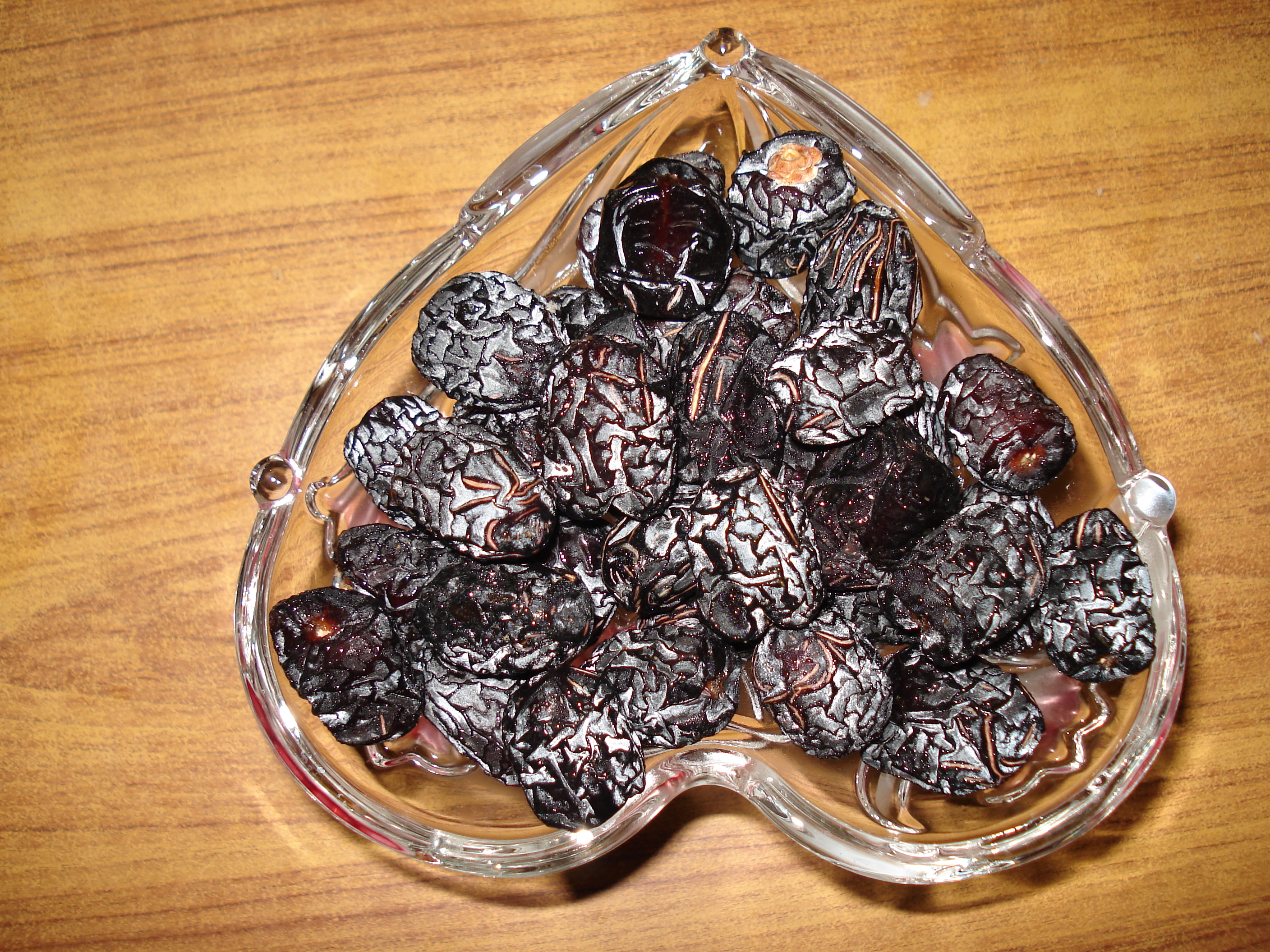
Zahidi, the variety sold in Bangladesh as Zahedi, is an Iraqi date. The FAO manual lists it among the varieties, along with Dayri, Halawy, Khadrawy, Thoori and Sayer, whose fruit is mostly harvested after it has ripened and dried on the palm, the tamar stage that is marketed as "dried" dates and used for year-round eating and for products such as date paste and date honey. The manual also records Zahidi as the Iraqi variety least damaged by frost.
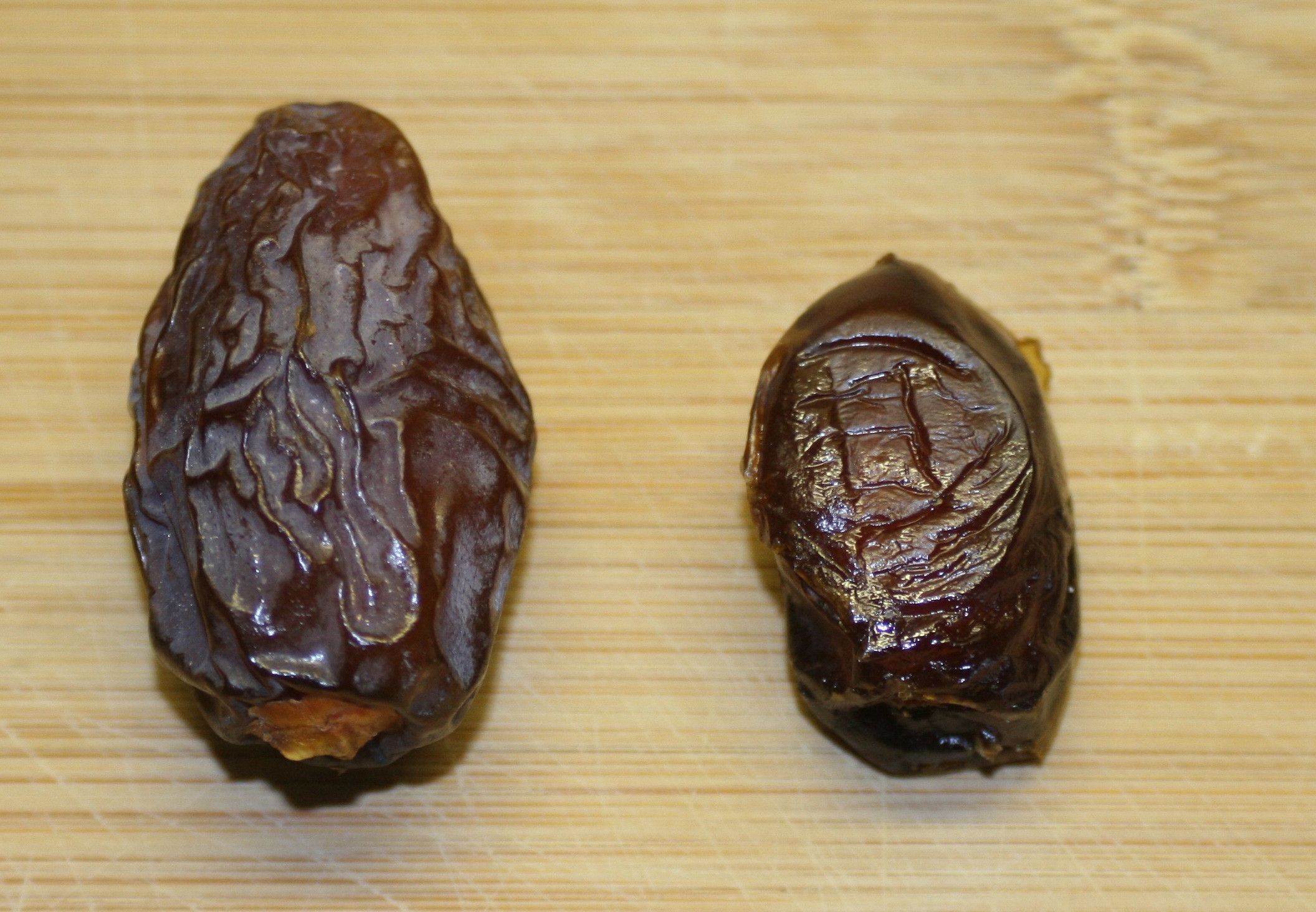
Medjool sits at the other end of the price scale. The manual traces it to the Tafilalet area of Morocco, where it was the principal export date from the 17th century; it was introduced to the United States in 1927 and to Israel in 1934. The FAO describes its fruit as very large, 20 to 40 grams, and calls it "date No. 1 for export market", while noting that its production is limited, less than 5,000 tonnes a year when the manual was written, mostly in California, Morocco and Israel.
Chattogram's own traders ranked the costliest dates the year before. Prothom Alo reported from the city's wholesale and retail markets in March 2025 that the four most expensive were Medjool, sometimes called the "queen" of dates, followed by Ajwa, which is grown in Madinah in Saudi Arabia, then Mabrum, and then Mariam, which is imported from Saudi Arabia, Iran, Tunisia, Algeria and Egypt. Traders told the paper that Mabrum had taken third place from Mariam in recent years, and that Ajwa, once found only in supershops, had become cheaper and more widely sold since 2020.
TCB's Ramadan sales and the start of the fast
The state-run Trading Corporation of Bangladesh (TCB) also put dates on sale for Ramadan. In a news release on 16 February 2026, it said it would sell essential goods from mobile trucks across the country for 20 days, from 17 February to 12 March, except Fridays and public holidays, through 450 trucks: 50 in Dhaka city, 20 in Chattogram city, 15 in each of the seven other divisional cities and five in each of the remaining 55 district towns. Each truck would serve 400 consumers a day, and about 3.5 million people would receive a total of 23,000 tonnes of goods. Any consumer could buy from the trucks.
A buyer at a TCB truck could take at most 2 litres of edible oil at Tk 115 a litre, 1 kg of sugar at Tk 80, 2 kg of lentils at Tk 70 a kilogram, 1 kg of chickpeas at Tk 60 and half a kilogram of dates, BSS reported. About 6.6 million families holding TCB's smart family cards could also buy chickpeas at Tk 60 a kilogram and dates at Tk 160 a kilogram as extra items, with 40,300 tonnes of goods allocated to them for February and 33,000 tonnes for March.
Banglapedia describes the TCB as an autonomous state trading enterprise under the Ministry of Commerce, set up in 1972 by Presidential Order No 68 to import essential goods and sell them at fair prices to keep markets stable. Its imports have since narrowed to a handful of commodities, among them dates, and in 2018-19 it sold 100 tonnes of dates to low-income people under its open market sales programme.
The fasting month itself began in Bangladesh on Thursday 19 February 2026, the day of the Jagonews24 report. The national moon-sighting committee met at Baitul Mukarram in Dhaka on the evening of 18 February and announced that the new moon of Ramadan had been seen, so Ramadan would be counted from 19 February, Prothom Alo reported; the Islamic Foundation's provisional calendar had already marked 19 February as the likely first day. In Saudi Arabia and several other Middle Eastern countries the fast had begun a day earlier, on Wednesday 18 February, as the Fruitmandi trader noted when he said Ramadan had begun in the Arab countries.
Photo: Manjit Singh / Wikimedia Commons (CC BY-SA 4.0). The top picture shows a shop selling dates in Khari Baoli market, Delhi, India, as background.
Sources: Jagonews24 (19 February 2026), The Nation, Thailand (8 February 2026), Prothom Alo (8 February 2026, 16 February 2026, 18 February 2026 and 11 March 2025), The Business Standard Bangla (8 February 2026), Bonik Barta (8 February 2026), Bangladesh Sangbad Sangstha (24 December 2025 and 16 February 2026), BBC Bangla (17 February 2026), Food and Agriculture Organization of the United Nations (Date Palm Cultivation, 2002), Banglapedia
Comments
(0)