
By Mamunur Rahman Hridoy
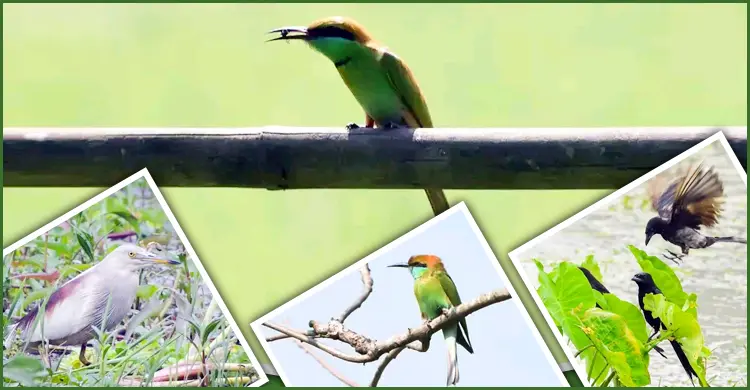
Migratory birds have begun arriving in flocks from cold countries. When winter bites in countries such as Cyprus, birds there travel thousands of miles to accept Bangladesh's hospitality, and the country's canals and beels fill with the calls of migrants of every colour and species.
Winter has reached Bangladesh too. Bone-chilling mornings wrapped in fog, and the chirping carried on the icy wind, tell the story of a small wetland called Chatal Beel. In winter it comes alive with flocks of migratory birds that have flown thousands of miles just for a little warmth.
A winter attraction in Monohardi
Chatal Beel lies alongside Monohardi in Narsingdi. In this season it takes on another look, each moment new, the beel loud with birdsong. It becomes one of the main places for people to enjoy themselves, and curious visitors began arriving to see the birds at the very start of Poush.
The birds come from the north. When the cold in North Hampshire in England, Siberia or Antarctica drops below zero, food runs short and the birds' feathers fall out in the extreme cold. With no suitable conditions to survive, they come as guests to less cold countries with a kinder climate. Bangladesh, a temperate country, welcomes them every year and becomes a safe home where they can feed and live.
The birds are strongly built by nature. They can usually fly at heights of 600 to 1,300 metres. Small birds fly at 30 kilometres an hour and can cover about 250 kilometres in a day and night; large birds easily manage 80 kilometres an hour. Remarkably, they never mistake their destination.
Species and where to see them
Bangladesh has 744 species of birds. Of these, 301 live in the country permanently and are called resident birds. More than 244 species come regularly for part of the year and are considered Bangladesh's migratory birds. They arrive from September to October, though most come in December and January. They can be seen across the country, and the haor regions take on an enchanting look.
Birds that come to Bangladesh to escape the severe winter include the sonajongo, khurule, kunchushi, bataron, shabaj, jolpipi, lanja, horial, durga, rajshokun, lalbon morog, tile moyna, ramghughu, jongi boter, dhushor boter, holde khonjona, kulau, chinahash, rajhash, giria hash, boikal hash, balihash, chiti hash, bhuti hash and gangkobutor.
As soon as the air turns cold, thousands of migratory birds appear in the haors, beels and chars. They have been seen on the lake at the Mirpur zoo since 1980, and also at Nilsagar in Nilphamari, Nijhum Dwip, Hakaluki Haor, Durgasagar in Barishal, Hura in Sirajganj, Tanguar Haor, Hatal Haor and Sonadia. Jahangirnagar University is also one of the main sanctuaries for them.
Hunting is thinning the flocks
When the cold eases, the birds fly thousands of miles back to their homelands. Sadly, though they come here for safety, some greedy people hunt them. Hunters get their traps and nets ready before winter and catch the birds in many ways; on various chars they are killed with poison mixed into paddy and with current nets.
Their numbers fall every year because of hunters' traps. If the killing goes on, nature will lose its character and many species will disappear. Everyone should be humane in keeping these birds safe; above all, offering "hospitality to our guests" is essential to keep the balance of nature and protect biodiversity.
The writer is a student and media worker. Photos: T R Tanvir Rahman.
Source: Jagonews24. First published in Bengali on The Agro News.

Comments
(0)