
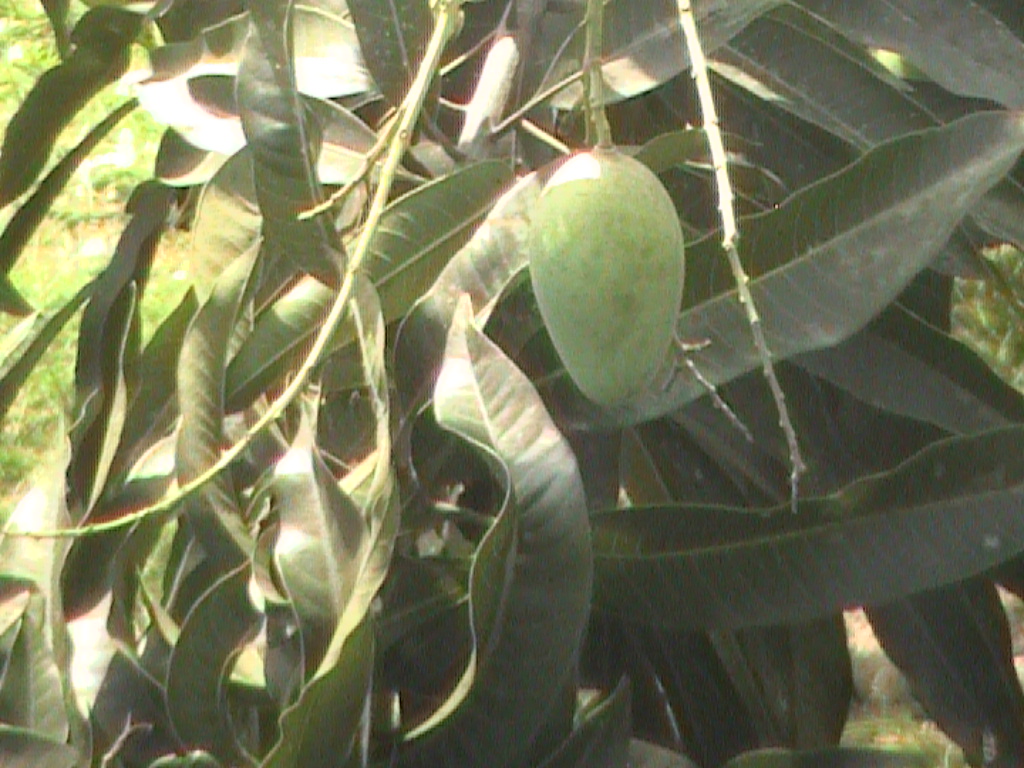
On 29 April 2025, Jago News reported from Chapainawabganj on Rafiqul Islam of Rajarampur village in Gomastapur upazila, a farmer who had turned the mango, long a fruit of a few summer months, into a crop he could pick throughout the year. After graduating from Rajshahi College, he began growing year-round mangoes in 2012. By the time of the report he was growing mangoes on about 800 bighas of land, and he had received the AIP honour, the agriculture ministry's recognition for people who make an important contribution to farming.
The report began with a change that people in the district had noticed. A few years earlier, the scent of mangoes came only in season; by 2025, Chapainawabganj mangoes were being sold across the country all year round, grown by farmers who had chosen an unusual path. According to the Department of Agricultural Extension (DAE), as cited in the report, the district then had seasonal mango orchards on 37,604 hectares and, in addition, orchards of the year-round Katimon mango on 1,792 hectares.
From a plum farm to 800 bighas of mango
Rafiqul Islam told Jago News how the business grew. "After graduating in 2008, I leased 5 bighas and started growing plums. In 2012 I thought of mango farming and leased 27 bighas to start. At one point, with the agriculture department's help, mangoes were exported to Sweden and other countries. That encouraged me further and I kept expanding the orchards. Now I have about 800 bighas of mango orchards," he said.
His account describes a slow build rather than a single leap: a small leased plot of plums first, then a larger leased area for mango four years later, and then steady expansion once his fruit had found buyers abroad. He credited the agriculture department with the help that opened the export route. In the same conversation he made clear that his aim from the start was a supply of fruit that did not stop when the summer season ended.
Mangoes in winter, and an AIP honour
"Instead of seasonal mangoes, I wanted people to eat mangoes all year. There is also a chance of greater profit. So after many trials I succeeded in growing mangoes in the winter season. Now mangoes are available in my orchard all year round. Even now I have picked ripe mangoes from the trees. In 2024 I also received the AIP honour," he told the paper.
The honour he mentioned is the Agriculturally Important Person (AIP) title. The Ministry of Agriculture drew up a policy for it in 2019 and has given it since 2020, in five categories each year. On Sunday, 7 July 2024, the AIP honours for 2021 were handed to 22 people at the Osmani Memorial Auditorium in Dhaka, bdnews24.com reported. It was the second time the honour had been given; 13 people had been named for 2020. In the 2021 list, four people were chosen in the innovation category for a variety or technology, and ten in the category covering crop production, commercial farms and agro-processing.
Two people were chosen in the category for producing exportable farm products, and one of them was Moha. Rafiqul Islam, described in the list as a year-round mango grower and agricultural entrepreneur of Gomastapur in Chapainawabganj. According to the same report, the AIP card is valid for one year and gives its holders some of the facilities that Commercially Important Persons (CIPs) receive: a ministry certificate, a pass to enter the Secretariat, invitations to civic receptions on national occasions, priority in reserving seats on government transport, priority for cabins in government hospitals for themselves and their families, and the use of VIP lounges at airports.
What a year-round mango is
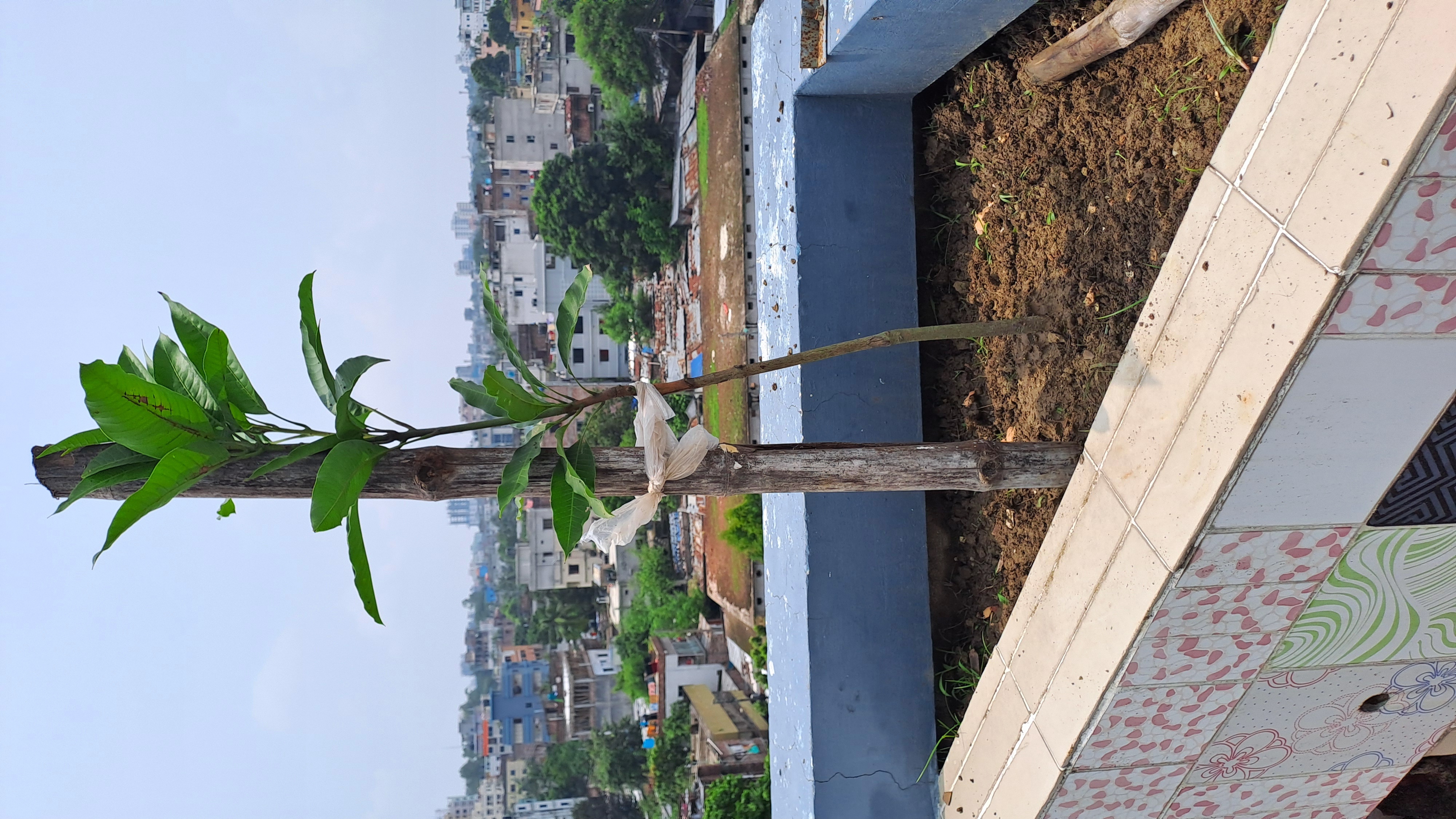
A report by the national news agency BSS, published by The Business Standard on 16 September 2023, said that conventional mangoes in the Rajshahi region are harvested from mid-May to about mid-August. Year-round varieties break that pattern. The best known is Katimon, which the same report described as a variety from Thailand that local entrepreneurs had brought to Bangladesh about six years earlier and which had quickly adapted to the local climate.
Unlike conventional varieties, the report said, a Katimon tree carries fruit and flowers or buds at the same time, and it yields three to four times a year where conventional varieties yield once, so its fruit is still on sale after the main season ends. In September 2023 around 15 hectares were under Katimon in Rajshahi district, and about 250 farmers in Rajshahi and neighbouring districts grew it, according to the DAE's district training officer there. Growers were then selling the fruit at Tk 8,000 per maund, about Tk 200 per kg, with four to five mangoes to a kilogram. The trees rarely grow taller than six feet, unlike traditional mango trees, and one grower in the report had planted 1,100 saplings, bought from Dinajpur at Tk 180 each, in rows alongside bananas on 25 bighas of pond embankments; the trees flowered the following year and had yielded an average of 3 to 5 kg per tree over three seasons. Another grower in the report had orchards on at least 14 ponds across 200 bighas of leased land. A principal scientific officer of the Regional Fruit Research Station told the agency that research was under way on the Thai variety to assess disease infestation.
The Katimon area in Chapainawabganj was far larger by 2025. In a report of 9 March 2025, the news agency UNB cited the same DAE figure of 1,792 hectares under Katimon in the district, and said the variety bears fruit three times a year and that farmers can control the timing of the harvest. The agency described another young entrepreneur from Gomastapur who had planted Katimon on 20 bighas at Elipur in Nachole upazila about six years earlier, after watching videos online, and who told UNB he was selling fruit from his orchard at Tk 300 per kg.
Katimon is not the only year-round mango grown in the country. The Bangladesh Agricultural Research Institute (BARI) has released one year-round variety of its own, BARI Aam-11, which The Business Standard described in September 2022 as the only all-year-round mango released by the institute. The paper said it is a selection, not a hybrid, and that its cultivation was spreading across the country, including in Feni, Chapainawabganj and Naogaon, with some orchards trying Katimon alongside it.
Chapainawabganj, a district of mango orchards
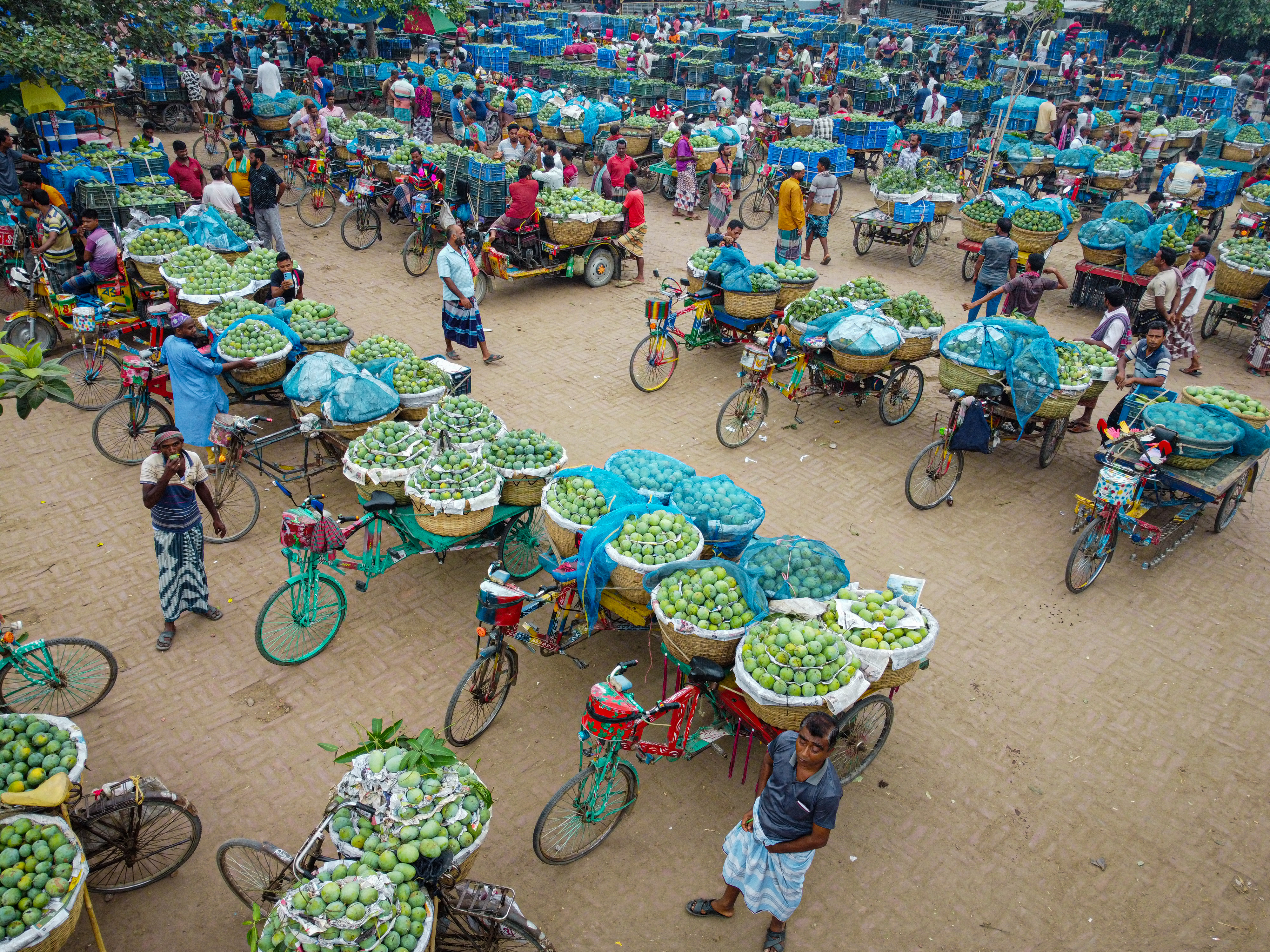
Chapainawabganj is one of the country's main mango districts. For the 2024 season, about 37,604 hectares were under mango cultivation there, and the production target was 450,000 tonnes, the district's agriculture extension office told bdnews24.com in a report of 29 May 2024. That year the district adopted no fixed mango calendar; instead, farmers began picking when they saw the flesh near the stone turning slightly yellow and one or two ripe fruits on a tree, after consultation among farmers, traders, the agriculture department and fruit researchers. The district administration said it would watch the markets so that only ripe, safe mangoes were sold, and a "Mango Special Train" was to run from Chapainawabganj from 10 June 2024 to carry the fruit. A grower from Bholahat told the site that production costs had risen compared with the previous year, which made market prices hard to predict.
The varieties reach the market in a sequence. Guti and Gopalbhog ripen first and come to market in late May; Khirsapat comes in the first week of June; and Langra and Fazli follow in mid-June, about ten days after Khirsapat, bdnews24.com reported in 2024. The same report gave advice from the chief scientific officer of the Chapainawabganj Regional Horticulture Research Centre, a BARI station: pick fruit with a pole rather than shaking the tree, never let fruit drop to the ground, pick in the morning or evening rather than in the midday heat, and leave a stalk of one to two inches so that sap does not run onto the fruit and cause rot.
Several of the district's mangoes carry geographical indication (GI) status. On 27 January 2019 the Khirsapat mango of Chapainawabganj, also called Himsagar, received a GI certificate at a programme at the industries ministry, The Daily Star reported. BARI had applied to the Department of Patents, Designs and Trademarks in February 2017 on behalf of the district's growers, and Khirsapat became the third Bangladeshi product to win GI status, after hilsa fish and jamdani. The paper said Khirsapat was the district's second most grown variety after Ashwina, and that the north-western divisions, mainly Rajshahi, accounted for 67 percent of national mango production. In its 2024 report bdnews24.com described Langra and Fazli as GI-recognised as well.
Gomastapur, where the orchards stand
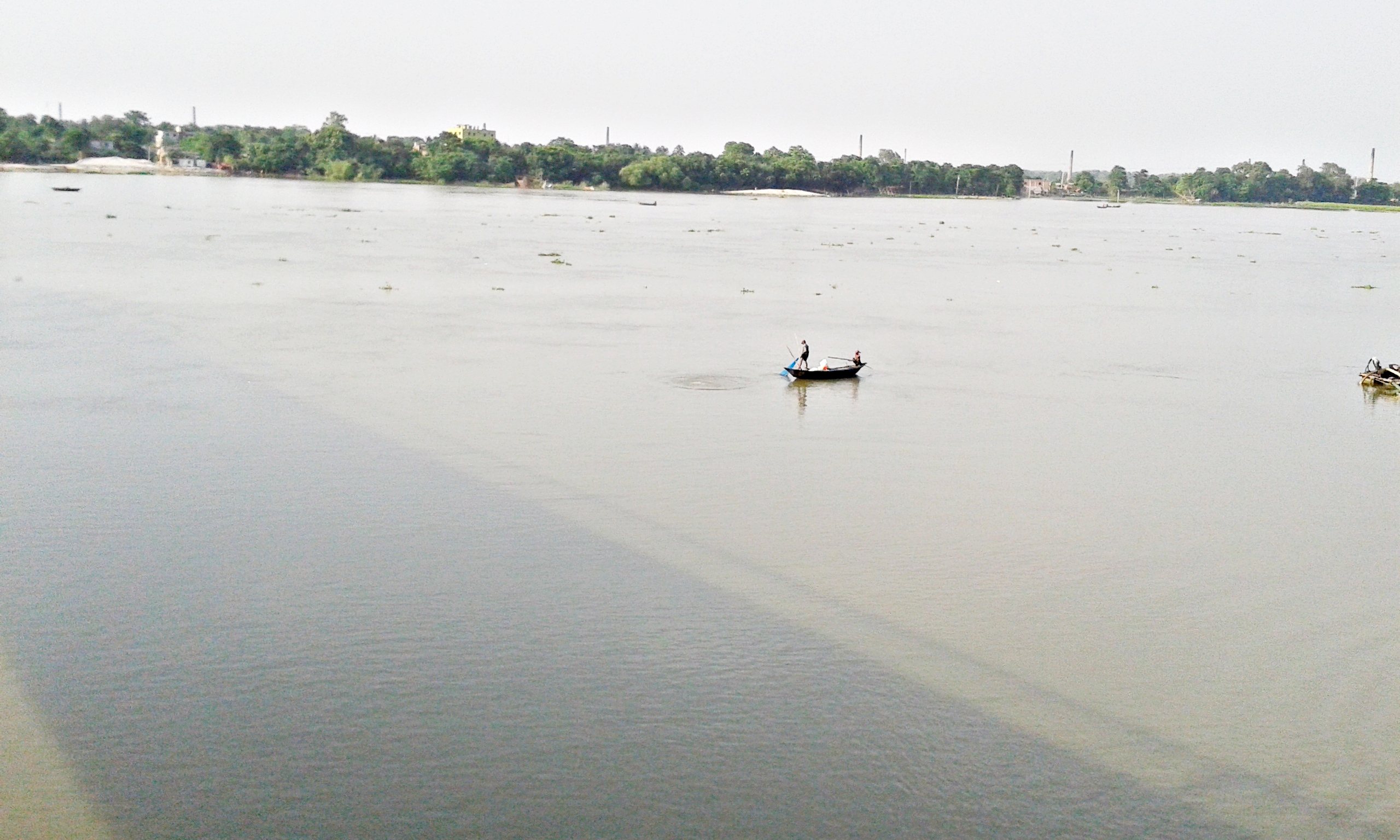
Rajarampur, Rafiqul Islam's village, is in Gomastapur, one of the upazilas of Chapainawabganj. Banglapedia, the national encyclopedia of Bangladesh, gives the upazila an area of 318.13 square kilometres, lying between 24°44' and 24°58' north latitude and 88°13' and 88°58' east longitude. It borders West Bengal in India to the north and west and Porsha upazila to the north, with Shibganj and Nachole upazilas to the south and Niamatpur and Nachole to the east. Its main rivers are the Mahananda and the Punarbhaba, and its wetlands include the Kolar, Kuaria, Bara, Baran, Koral, Damas, Jhapai and Likhria beels.
Banglapedia records a population of 275,823 for the upazila, 136,321 men and 139,502 women, of whom 256,658 are Muslim, 15,985 Hindu and 2,415 Christian, and says Santal, Oraon, Munda and Mahali communities live there alongside the majority. Its main crops are paddy, potato, wheat, maize, tomato and vegetables, and its main fruits are jackfruit, mango, banana and watermelon. Rohanpur Hat and Gomastapur Hat are its well-known markets, and the Kalupur Mela its best-known fair. The encyclopedia also lists archaeological sites, among them a stupa at Naoda village, a single-domed lookout tower at Rohanpur and Shahapur Garh.
Mango is thus one of several crops in the upazila rather than its only one, which is why the change described by people around Rajarampur stood out: in the Jago News report, a local resident said land that had lain idle and grown no crops was now under Rafiqul Islam's mango orchards. The UNB report of March 2025 showed other young growers of Gomastapur and Nachole moving into Katimon in the same years.
Prices, processing and exports
For all his success, Rafiqul Islam told Jago News that growers faced a problem of plenty. "Mango production is rising in our district every day, but prices are not keeping up, because so many mangoes are produced. To profit from mango farming, we must first focus on processing. That will create jobs for hundreds of people and growers will benefit," he said.
The national figures show why he spoke of plenty. According to DAE data cited by BSS in a report published by The Business Standard on 27 April 2025, two days before the Jago News report, Bangladesh produced 2,350,499 tonnes of mangoes on 202,968 hectares in fiscal 2020-21, 2,707,459 tonnes in 2022-23 and 2,508,973 tonnes on 205,034 hectares in 2023-24. For the 2025 season the target was a record 2.7 million tonnes on 205,034 hectares.
Exports, by contrast, were small. The same report put mango exports at 309 tonnes in 2016-17, 1,757 tonnes in 2021-22 and 1,321 tonnes in 2023-24, and gave a target of about 5,000 tonnes for the 2025 season. Prothom Alo reported in August 2023 that exports that year had passed 3,045 tonnes by 21 August, according to the DAE, against 1,757 tonnes the year before; the United Kingdom was the largest buyer at about 1,400 tonnes, ten new countries had joined the list of buyers, and more than 70 firms had exported mangoes, whereas the year before 60 firms had been registered and more than 50 of them had exported none. Exporters told the paper that air freight cost them Tk 220 to 250 per kg, against about 150 rupees for Indian exporters sending fruit to the same destinations, and they also pointed to a lack of quality packaging. The DAE had set an export target of 4,500 tonnes for the following year.
That Prothom Alo report also quoted Rafiqul Islam, a farm entrepreneur of Gomastapur upazila, who had shipped 14 tonnes of mangoes abroad that season; he had not exported the year before but had done so in the two years before that, and he said he hoped to ship more the following year. He told the paper that at least 20 percent of mangoes often rot in the orchards before they can be sold, a loss that sits behind his call, in April 2025, for more processing in the district.
Work in the orchards all year
Year-round fruiting also means year-round work. According to the Jago News report, Rafiqul Islam's orchards had given work to at least 200 people. Shamiul Haque, who had worked in his orchards for eight years, said: "Before, I could only work in mango orchards in season. Since Rafiqul Islam set up his orchards in the area, I can work in them all year, and we have benefited."
Local resident Anarul Islam told the paper: "Quite a lot of land in our area lay idle and grew no crops. Rafiqul Islam planted mango orchards on this land. He is benefiting and so are we, because many people work in his orchards and support their families."
The agriculture office in neighbouring Nachole had been following the spread of the variety. In the UNB report of March 2025, Nachole upazila agriculture officer Saleh Akram said the local agriculture department was supporting farmers who grew Katimon, and noted that imported fruit floods the market during Ramadan, which drains foreign currency.
Speaking to Jago News about Rafiqul Islam, the same officer said: "Rafiqul Islam has been growing year-round mangoes for several years, and seasonal mangoes from his orchards are also exported. This is creating jobs for local workers, and selling mangoes in various ways is boosting the district's economy."
Photo: Mahmudul Karim Farsad / Wikimedia Commons (CC BY-SA 3.0)
Sources: Jagonews24, bdnews24.com, The Business Standard (BSS), UNB, Prothom Alo, The Daily Star, Banglapedia
Comments
(0)