
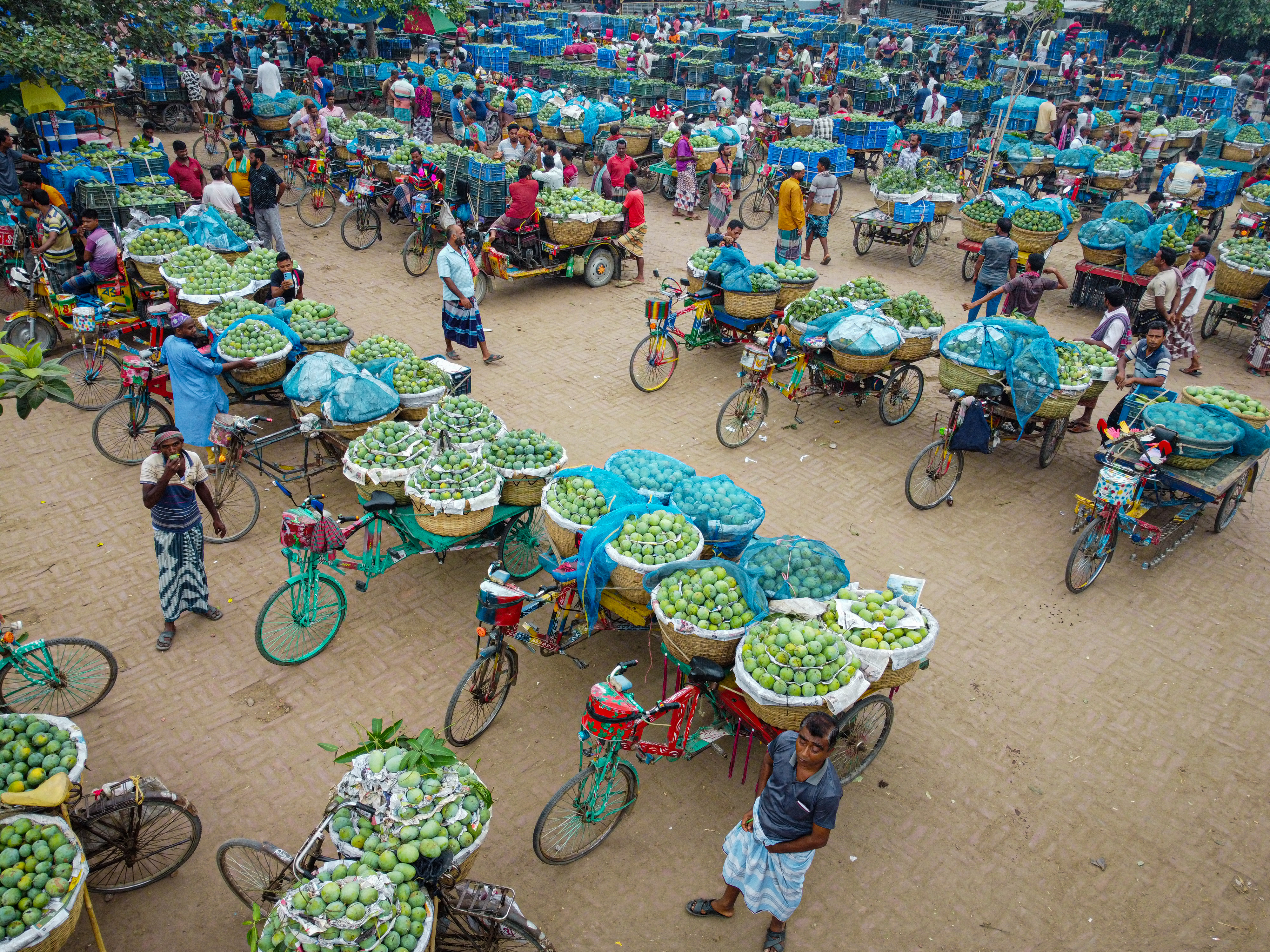
Chapainawabganj district administration decided on 11 May 2026 that, for another season, it would set no dates for picking and marketing mangoes. Growers in the district that has been branded the country's mango capital could take their fruit off the trees as soon as it was mature, Jagonews24 reported that evening. The administration warned, however, that strict action would be taken against anyone who put immature mangoes on the market.
The decision was taken with the agreement of those concerned at a meeting held on the afternoon of Monday, 11 May, in the deputy commissioner's conference room in Chapainawabganj town. The meeting had been called to discuss drawing up a mango calendar and the production, marketing, transport and sale of safe, poison-free mangoes. It ended with the conclusion that the district would again do without a calendar.
What the meeting decided
Deputy Commissioner Abu Saleh Md Musa Jangi chaired the meeting. Those present included Dr Yasin Ali, deputy director of the Department of Agricultural Extension (DAE) in the district; Dr Sharaf Uddin, chief scientific officer of the Regional Horticulture Research Station; Additional Deputy Commissioner Nakib Hasan Tarafdar; Sadar Upazila Nirbahi Officer Maruf Afzal Rajan; and mango growers and traders.
Under the decision there was no first day for any variety. Orchard owners and traders could pick and sell as soon as the fruit on a tree had matured, whether that came earlier or later than in other districts. The one condition the administration attached was that the fruit had to be mature: anyone marketing immature mangoes would face strict action.
The agriculture figures given for the season showed what was at stake. Mango orchards covered 37,487 hectares of Chapainawabganj in 2026, according to the Jagonews24 report, and the production target from them was set at about 458,000 tonnes.
The decision put Chapainawabganj on a different footing from the neighbouring mango districts. In Rajshahi, Naogaon, Chuadanga and Satkhira, the district administrations had already announced variety-by-variety calendars that fixed the first day on which each kind of mango could be brought down from the trees.
A practice several seasons old
Doing without a calendar was not new in Chapainawabganj. On 3 May 2023, the Dhaka Tribune reported that the local administration had fixed no schedule for harvesting mangoes that year. Speaking at a meeting on safe and chemical-free mango production and marketing at his office, the then deputy commissioner, AKM Galiv Khan, said that there would be no fixed time for plucking and marketing, but that mangoes could be harvested only when mature. That meeting also decided to run mobile court drives against the use of chemicals on mangoes and to keep a monitoring team in force, and said a special train would carry mangoes cheaply and quickly. The DAE then counted 37,588 hectares of orchards in the district, with a target of 440,956 tonnes.
The same course was taken in 2024. A meeting at the deputy commissioner's office on 16 May 2024, again chaired by AKM Galiv Khan, kept the district without a schedule "like the previous year", The Business Standard and Prothom Alo reported. Mangoes could be harvested only when mature, otherwise stern action would follow. The meeting decided that no chemical should be used to ripen mangoes, that mobile courts would monitor the mango market, and that a special mango train would run on the Chapainawabganj-Dhaka route from 1 June. That season 37,604 hectares were under mango, with a target of 450,000 tonnes.
Explaining the approach to bdnews24.com that season, the deputy commissioner said that growers and traders in Chapainawabganj had for a long time brought mangoes to market only once they had matured on the tree, and that the decision not to keep a calendar had been taken on the views of growers, traders, the agriculture department and fruit researchers. The administration, he said, would still monitor the market to make sure that mature and safe mangoes were sold.
At national level, the DAE's Exportable Mango Production Project drew up its own harvesting schedule for different places each year. In 2024 the dates were set at a meeting on 20 March, the Dhaka Tribune reported on 28 May 2024. Sources in the DAE's Plant Quarantine Wing told the paper that a review of harvesting data had found that 10 of 29 mango varieties were exported, and that differences in ripening time between places came from differences in temperature. The project director, Mohammad Arifur Rahman, urged growers not to pick fruit early while it was still growing, saying proper care and irrigation at that stage would add size and weight.
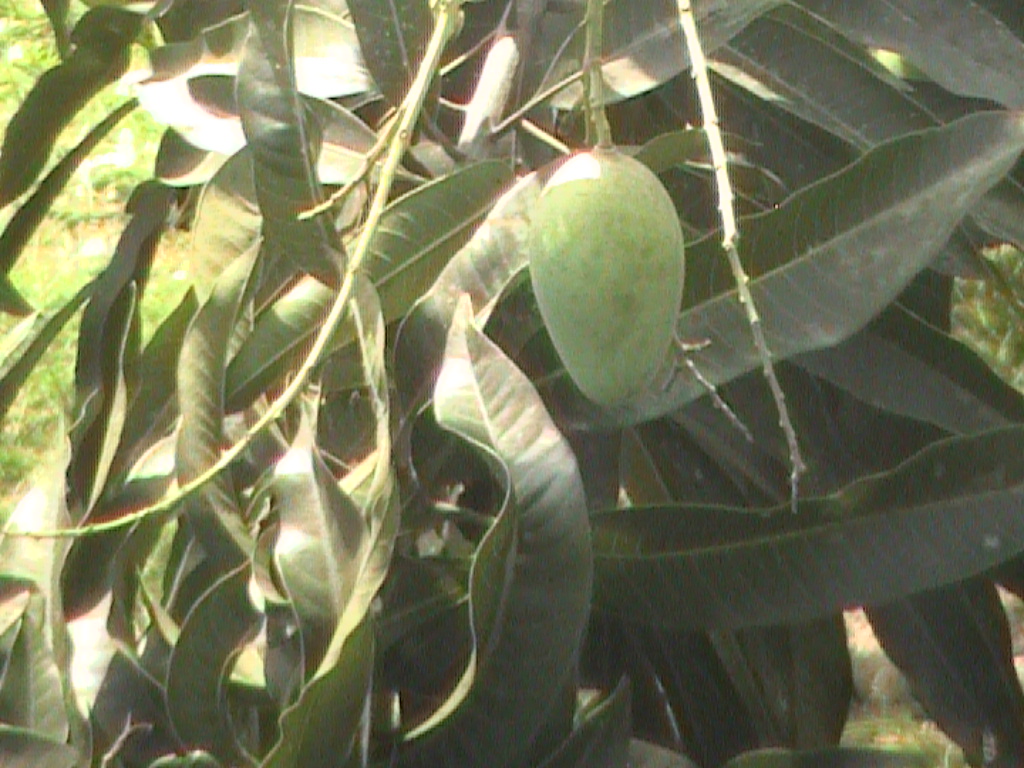
Neighbouring districts fixed their dates the day before
On Sunday, 10 May 2026, a day before the Chapainawabganj meeting, the administrations of Rajshahi, Naogaon and Chuadanga each announced a mango calendar after meetings with growers, traders and agriculture officials, Prothom Alo and The Business Standard reported. Satkhira had announced its calendar earlier, and picking there had begun on 5 May.
Rajshahi's calendar, announced by Deputy Commissioner Kazi Shahidul Islam in his conference room, set these first picking dates:
- 15 May: all guti (local seedling) mangoes
- 22 May: Gopalbhog
- 25 May: Ranipasand and Lakshmanbhog
- 30 May: Himsagar or Khirsapat
- 10 June: Banana mango and Langra
- 15 June: Amrapali and Fazli
- 5 July: BARI Aam-4; 10 July: Ashwina; 15 July: Gourmati
- Katimon and BARI Aam-11 could be picked all year
Some guti mangoes ripen as early as the month of Boishakh, and these could be picked with a certificate from the upazila agriculture officer, Prothom Alo reported. The deputy commissioner said the calendar had been prepared together with growers, traders and the agriculture office so that nobody could bring down immature mangoes, and that legal action would be taken against anyone who picked before the set dates. Rajshahi had 19,062 hectares under mango that year, with a production target of 243,993 tonnes and, at 32 taka a kilogram, possible sales of 780 crore taka.
Naogaon set 22 May for guti mangoes, 30 May for Gopalbhog, 2 June for Himsagar or Khirsapat, 5 June for its GI-registered Nak Fazli, 10 June for Langra and Haribhanga, 15 June for Amrapali, 25 June for Banana mango and Fazli, and 5 July for Ashwina, BARI Aam-4, Gourmati and Katimon. The district had 30,310 hectares of mango, a target of 387,361 tonnes at 12.78 tonnes a hectare, an expected trade of about 3,000 crore taka and an export target of 200 tonnes. Deputy Commissioner Mohammad Saiful Islam said that if the weather brought fruit to maturity before the set dates, the upazila administration and the agriculture department would reset them, and that no chemical could be used in ripening, storing or marketing mangoes.
Chuadanga set 13 May as the start for local and guti mangoes, Khirsapat, Gopalbhog and Bombai, followed by Himsagar on 22 May, Langra on 28 May, Amrapali on 5 June, Fazli on 15 June, Haribhanga on 20 June, Banana mango on 22 June, Ashwina (BARI-4) on 30 June, Katimon on 5 July and Gourmati on 31 July. The district had 2,203 hectares of mango orchards. In Satkhira, Gopalbhog, Gobindabhog, Bombai, Golapkhas and other early varieties could be picked from 5 May, Himsagar from 15 May, Langra from 27 May and Amrapali from 5 June. The district set an export target of 100 tonnes and said mobile courts, check posts and monitoring teams would stop early picking.
A season expected to be large
The decision came in a season for which a very large national crop was forecast. On 21 April 2026, the state news agency BSS reported that Bangladesh was set for a record harvest, with production likely to exceed 2.7 million tonnes (27 lakh tonnes) if the weather held, above the DAE's target of 2.666 million tonnes. Mohammad Arifur Rahman, director of the Exportable Mango Production Project, said mango was grown on about 204,000 hectares that season and that harvesting was expected to begin in May and continue until mid-October, with Chapainawabganj, Rajshahi, Satkhira and Dinajpur among the main producing districts.
According to the DAE figures quoted by BSS, production in the 2024-25 fiscal year was 2.67 million tonnes, and the country had exported a record 2,194 tonnes of mangoes to 38 countries the previous year, including the first shipments to China. Traders projected exports of up to 3,000 tonnes in 2026 as markets such as Malaysia and Japan opened. Khirsapat, Gopalbhog, Fazli, Himsagar and Amrapali were among the varieties shipped, mainly to the Middle East and Europe. A grower from Shibganj upazila in Chapainawabganj told BSS that better orchard management, quality saplings, balanced fertiliser use and extension support had improved the outlook.
Chapainawabganj has the largest area of mango orchards in the Rajshahi region. In April 2025, the daily Jugantor reported that the three districts of the Rajshahi agriculture region, Rajshahi, Chapainawabganj and Naogaon, had 98,257 hectares of mango orchards, with Chapainawabganj having the most, and that the agriculture department expected about 1.15 million tonnes from them, worth close to 10,000 crore taka. The paper noted that during the season the crop gave temporary work to several lakh people, from basket-making and packing to transport and labour.
In June 2025, BSS reported that the DAE in Chapainawabganj had set a target of about 386,000 tonnes from 37,504 hectares that year, with a market value of around 4,000 crore taka. A principal scientific officer of the district's mango research centre told the agency that 1,033 tonnes of Bangladeshi mangoes had been exported to Asia, the Middle East and Europe in 2024, and that the process of exporting to China had begun in 2025. A research report launched in Dhaka on 10 December 2025 by SAF Bangladesh and LightCastle Partners found that the country exported less than 0.05 percent of its mangoes, and listed the lack of Global GAP certification and weak quality control, post-harvest treatment and cold-chain facilities among the obstacles, The Financial Express reported.
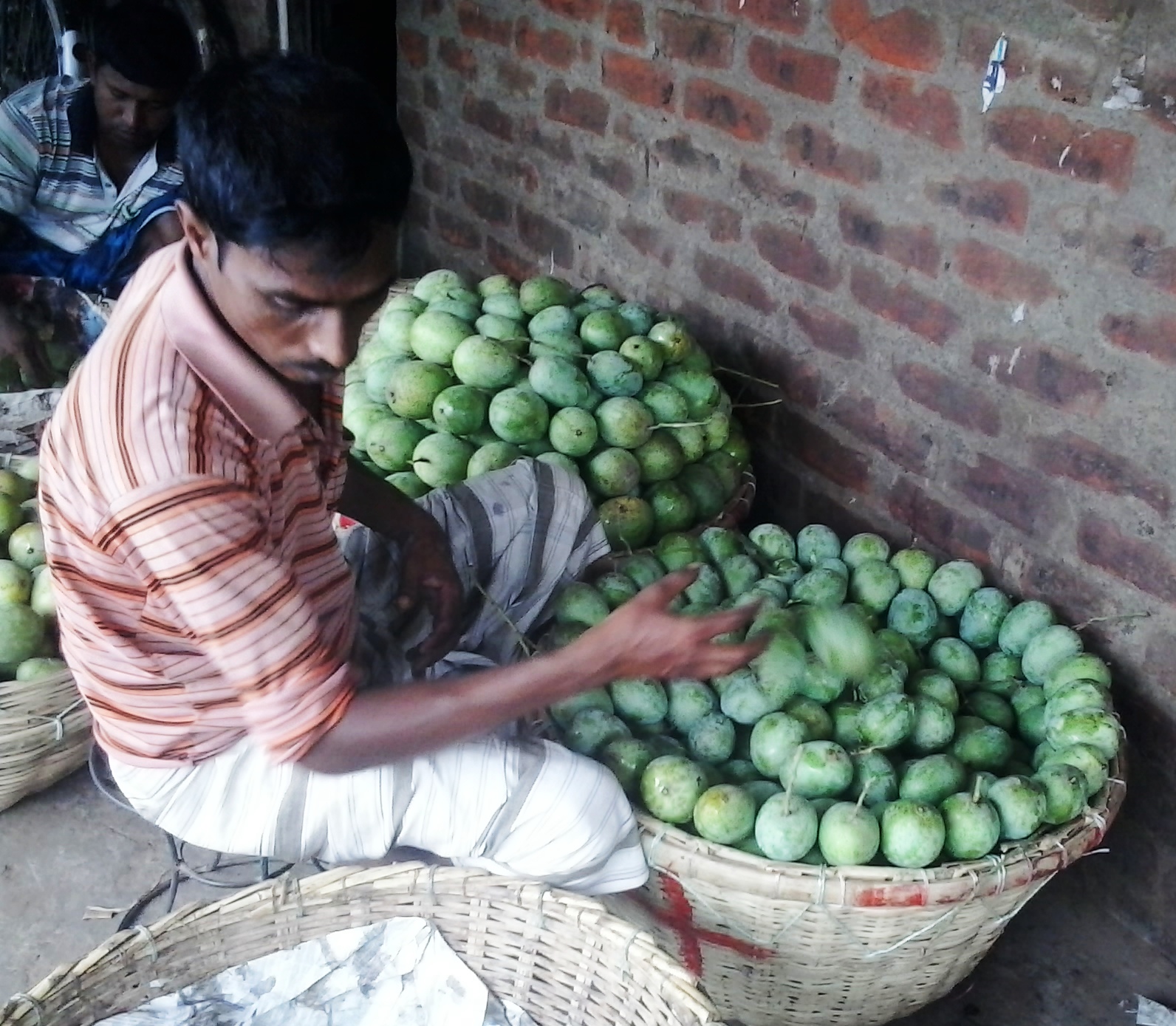
Chapainawabganj, the district behind the decision
Chapainawabganj is the north-westernmost district of Bangladesh, in Rajshahi Division. It is bounded on the north and west by the Malda and Murshidabad districts of West Bengal in India, by Naogaon to the east and by Rajshahi to the south-east. It covers 1,702.55 square kilometres and had a population of 1,835,528 in the 2022 census. Once a thana of Malda district and then a subdivision of Rajshahi district, it became a district in its own right in 1984.
The district lies where the Mahananda meets the Padma (Ganges), and its land falls into two broad kinds: the Barind area east of the Mahananda, covering Sadar, Nachole and part of Gomastapur, and the Diara lands along the rivers. Its economy depends mainly on agriculture, and the mango is the summer fruit that sustains it; Shibganj, Bholahat and Gomastapur upazilas produce the largest part of the crop. The intercity Banalata Express runs from Chapainawabganj to Dhaka.
The Barind Tract, of which the district's eastern part forms a section, is the largest Pleistocene physiographic unit in the Bengal Basin, an area of old alluvium covering about 10,000 square kilometres in north-western Bangladesh. In a June 2025 report, BSS described how mango orchards had spread over its red, undulating soil in the past decade, including in Shibganj, Nachole and Gomastapur, on land where 15 to 20 years earlier only rice could be grown and where paddy now faced shortages of irrigation water.
Moving the crop out of the district has been part of each season's planning. In May 2024, BSS reported that Bangladesh Railway's West Zone had carried 3,995,798 kilograms of mangoes since 2020 on its special mango trains, earning about 4,629,140 taka, and that the train had six luggage vans able to carry 172.98 tonnes at a cost of 1.48 taka a kilogram from Chapainawabganj to Dhaka.
Geographical indication varieties and the order of the season
Bangladesh's mangoes fall into two groups, according to Banglapedia: superior varieties propagated by grafting and other vegetative means, and local varieties raised from seed, known as deshi or guti mangoes, which have no recognised names and whose taste is not assured. There are nearly 100 cultivars in the country, and the elite varieties, among them Fazli, Langra, Gopalbhog, Himsagar, Khirsapat and Ashwina, are grown mostly in Rajshahi, Chapainawabganj and Dinajpur. Grafted trees begin to bear in their fourth year after planting.
Several of Chapainawabganj's varieties are registered as geographical indication (GI) products. Khirsapat received its GI certificate on 27 January 2019, becoming Bangladesh's third GI product after Jamdani and hilsa; the Bangladesh Agricultural Research Institute (BARI) had applied for it in February 2018 on behalf of the district's growers, The Financial Express reported. Langra and Ashwina received GI certificates from the Department of Patents, Designs and Trademarks on 25 June 2023, and Fazli mango of Rajshahi and Chapainawabganj was already on the GI list, The Business Standard reported. Fazli is a late variety that can weigh up to a kilogram and is often used in jams and pickles.
Himsagar, also known as Khirsapati, is a fibreless mango of 250 to 350 grams, about 77 percent of which is pulp, grown mainly in Chapainawabganj and in neighbouring districts of West Bengal. In Chapainawabganj the ripe season usually opens in late May with guti and Gopalbhog mangoes; Khirsapat follows in the first week of June, and Langra and Fazli come about ten days later in mid-June, bdnews24.com reported in the 2024 season.
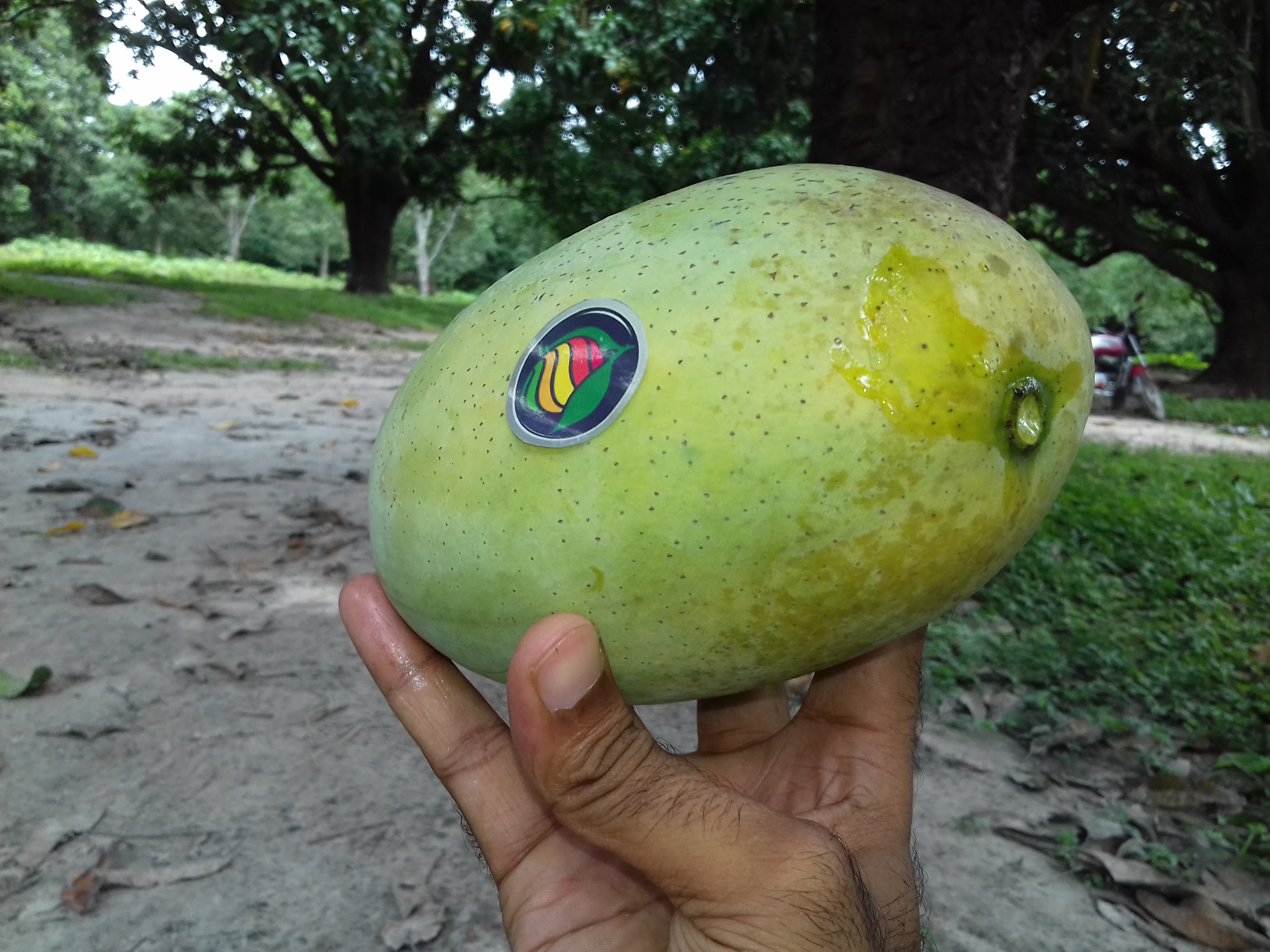
The research station at the meeting
The Regional Horticulture Research Station whose scientist sat at the meeting was set up in Chapainawabganj in 1985 by BARI and is known locally as the mango research centre, Prothom Alo reported in January 2026. According to the centre, it has a laboratory, a genetic bank, a nursery, a training centre and about 50 acres of research fields. Of the 18 mango varieties released from research stations in Bangladesh, 14 were developed by researchers at the Chapainawabganj centre, including all four varieties developed by hybridisation.
Among them, BARI Aam-4 and BARI Aam-13 had spread across the country, and the coloured BARI Aam-13 comes late in the season and is considered exportable, the report said. Varieties released through selection, Amrapali and Gourmati in particular, had become popular in Chapainawabganj and other districts. The centre trains growers in pruning, fertiliser management, disease control and post-harvest storage, works with them on Good Agricultural Practices (GAP), and studies grading, packaging and cold storage for export mangoes.
How maturity is judged without a calendar
Without a calendar, the test of when to pick is the fruit itself. The same variety can ripen a few days earlier or later depending on temperature and location, the then chief scientific officer of the Chapainawabganj research station, Mokhlesur Rahman, told bdnews24.com in the 2024 season. As a mango matures, he said, the flesh on either side of the stone turns slightly yellow, and when one or two ripe fruits are seen on a tree, the fruit on that tree is taken to be mature. Growers in the district call a mature mango "dakkar".
He advised growers not to shake trees and let mangoes fall to the ground, to pick in the morning or afternoon rather than in the midday heat, and to leave one to two inches of stalk on each fruit so that sap does not run out over the skin, which can cause the fruit to rot. The FAO's post-harvest compendium on mango gives a similar field test: when a mango is fully grown and ready for picking, the stem snaps easily with a slight pull, and if a strong pull is needed the fruit is still immature. It also notes that leaving a long stem when clipping prevents the spurt of milky sap, and that mature green mangoes keep at room temperature for about 4 to 10 days depending on the variety.
Ripening chemicals were the other concern behind the meeting's title of safe, poison-free mangoes. At a workshop organised by the Bangladesh Food Safety Authority (BFSA) in May 2018, speakers said that calcium carbide is harmful and banned under the Safe Food Act 2013, while ethephon, used in many countries, is not harmful in limited amounts, though fruit ripened with it before the right time can have lower nutritional value. Speakers urged the use of ethylene gas in closed chambers as a safer method and called for coordination among the BFSA, the Bangladesh Standards and Testing Institution, district magistrates and others when running drives, The Daily Star reported. The BFSA was formed in February 2015 under the 2013 Act, works under the Ministry of Food and has its own mobile court.
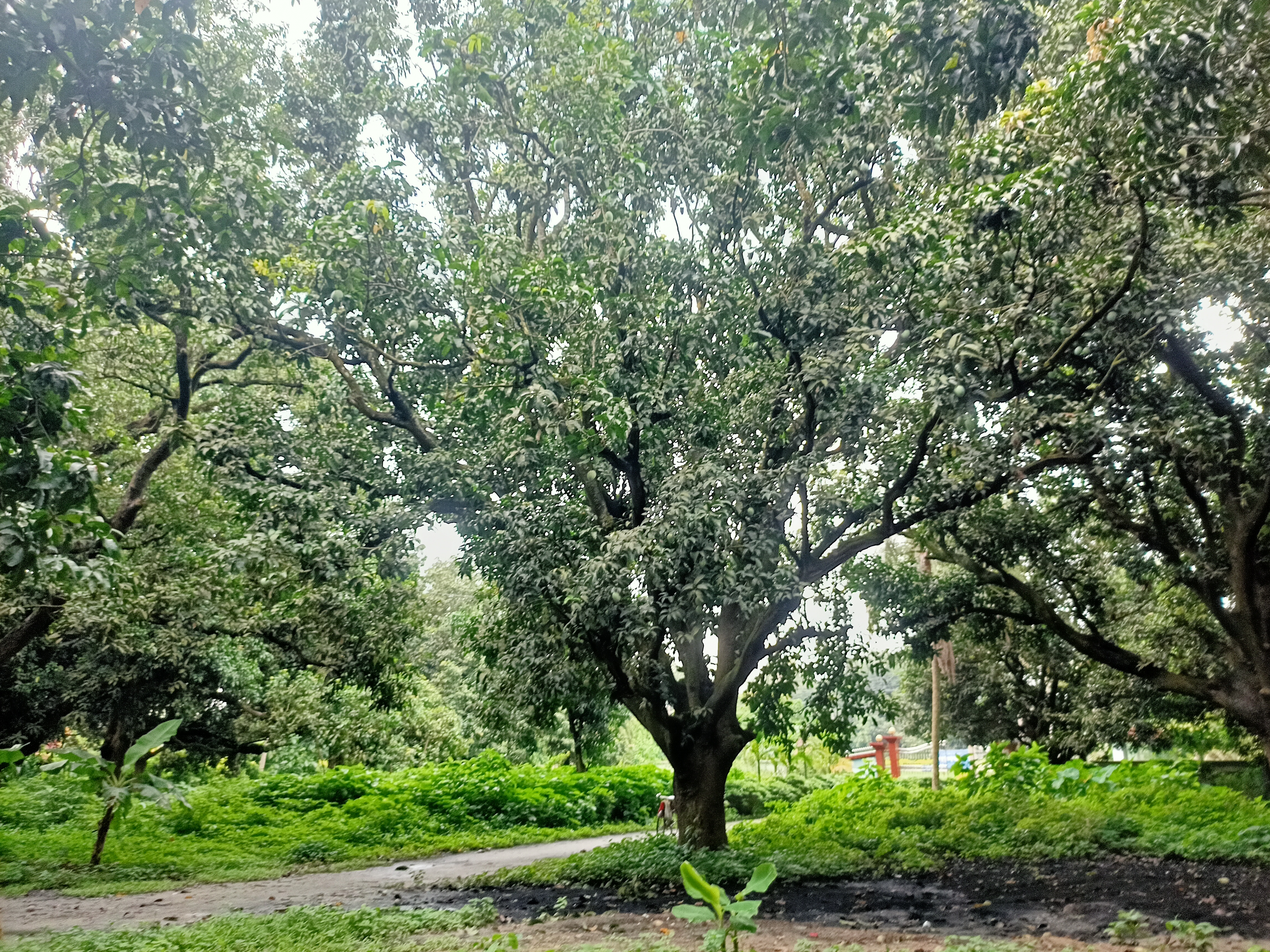
Photo: Mahinur11 / Wikimedia Commons (CC BY-SA 4.0)
Sources: Jagonews24, Prothom Alo, The Business Standard, BSS, bdnews24.com, Dhaka Tribune, Daily Jugantor, The Financial Express, The Daily Star, Banglapedia, FAO, Wikipedia
Comments
(0)