
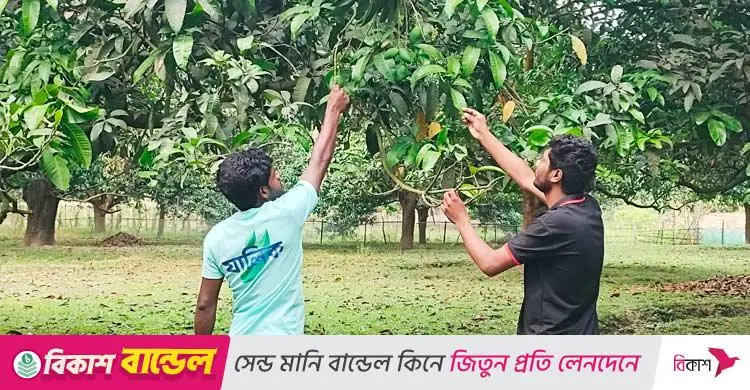
Chapainawabganj is a slice of mango kingdom in the heart of Bengal. Juicy green mangoes hang from branch after branch, as if nature had laid out the kingdom with its own hands. The district's fertile soil, favourable climate and its farmers' experience combine to produce some of the world's tastiest and most fragrant mangoes.
Chapainawabganj is not just a district. For hundreds of years the fruit that has become the symbol of its identity, in the bond between its soil and its people, is the mango. Planned mango farming began here in the British period.
The district is one of the country's leading mango-producing areas, with extensive orchards in Shibganj, Bholahat, Gomastapur, Nachole and Sadar upazilas. Every summer its growers produce Khirsapat, Himsagar, Langra, Fazli, Ashwina, Amrapali, Gopalbhog and many other varieties.
Kansat market and the growers' worries
The mangoes are sold not only at home but exported abroad as well, playing an important role in the economy. The district is home to Kansat mango market in Kansat union of Shibganj upazila, known as the largest wholesale mango market in Bangladesh and the second largest in Asia. When summer comes it takes on a festive air: in the fields, on the trees, in courtyards and at markets, there are mangoes everywhere.
Mango farming is not just an occupation. It is the rhythm of people's lives, the family's happiness, the cost of their children's education and the promise of the future. But unknown fears sometimes strike this joyful kingdom. Climate uncertainty, unseasonal storms and rain, and disease leave growers worried. Still, they do not give up.
With modern technology and government support, growers are dreaming anew. For the mango is not just a fruit but a symbol of love, history, culture and heritage. Its fragrance spreads across the country and touches everyone, reminding us that we are heirs to a golden kingdom.
Source: Jagonews24. First published in Bengali on The Agro News.

Comments
(0)