
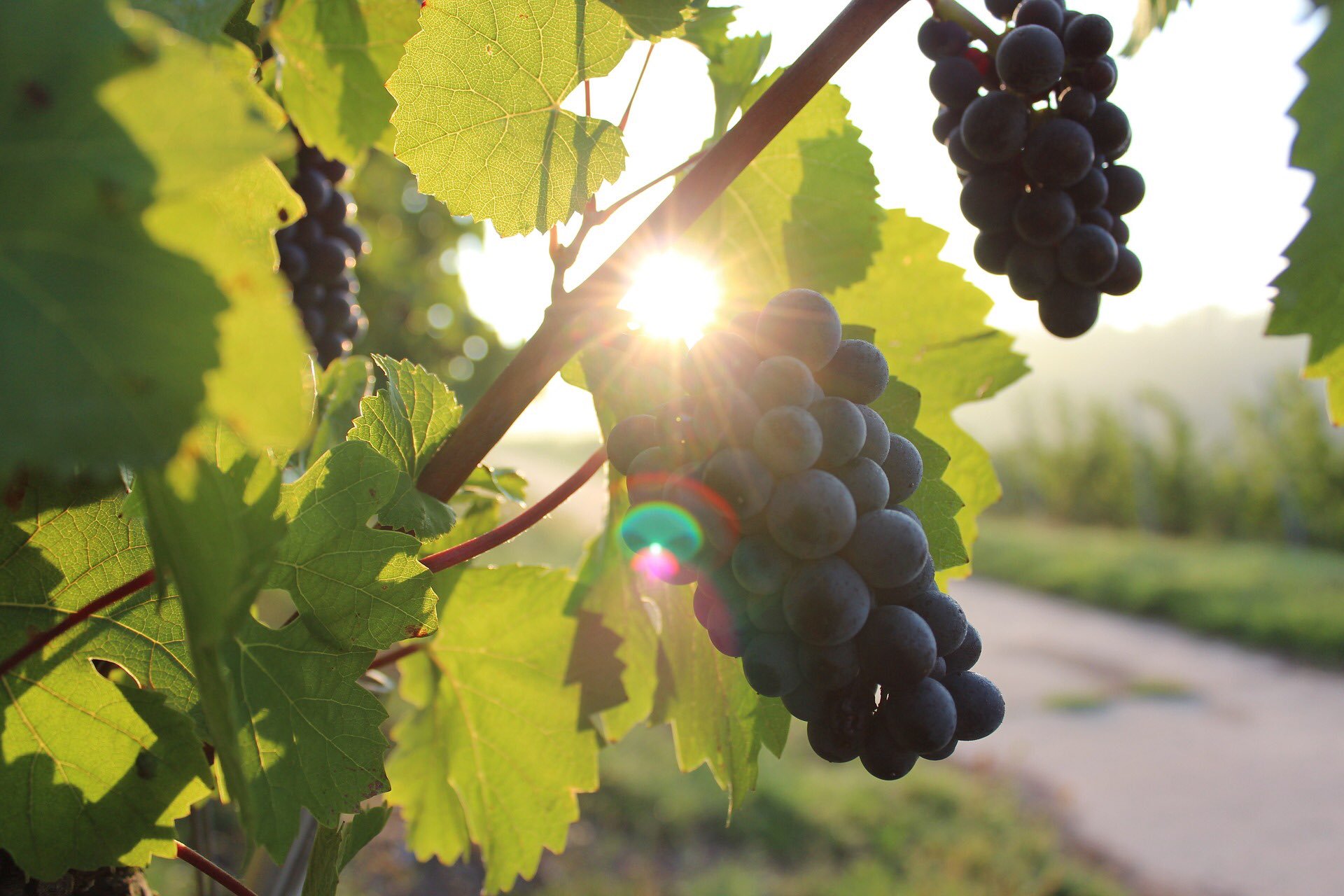
A young entrepreneur in Chandpur Sadar upazila had a crop of grapes hanging from a bamboo trellis on 20 decimals of land in April 2025, the Bengali news site Jagonews24 reported on 23 April 2025. Kamruzzaman Pradhania told the paper that his collection held 85 grape varieties from 18 countries. By the time of the report he had already sold about 50 kg of grapes from the orchard, and people were coming every day from the district, its upazilas and other parts of the country to see the vines.
A vineyard beside the Chandpur-Matlab road
The orchard belongs to Pradhania Agro in the Kalibhangti area, beside the Chandpur-Matlab Pennai road in Chandpur Sadar upazila. According to the report by Jagonews24's Chandpur correspondent, green bunches hanging from the bamboo trellis caught the eye of passers-by from a distance. The crop had been good enough for 50 kg to be marketed already, and the paper wrote that the entrepreneur was starting to see a profit from it.
Kamruzzaman gave the paper the figures for the season. He said 120 mother plants in his orchard had started to flower, that he had sold about 50 kg in the market so far, and that he expected the total harvest of the season to come to about 150 kg. The 85 varieties and the 18 countries they came from are his own account of his collection, as reported by Jagonews24; the report did not name the varieties or the countries.
From a rooftop hobby to a field
Kamruzzaman told Jagonews24 that he began growing grapes as a hobby in 2021. He started with a rooftop garden and then moved on to growing grapes commercially on land.
He described the timing he works to. "If the vines are pruned in October-November, fruit comes in March-April," he said, adding that there is another crop in the winter season. The report was published in late April, within the March-April harvest he described.
The farm also sells planting material. Kamruzzaman said many people had taken seedlings from his farm and started growing grapes to overcome unemployment, that people in different parts of the country were buying seedlings from him online, and that many came to see the vines in person. He asked for official help: "If the agriculture department supports me, I can grow grapes on a bigger scale," he told the paper.
One of the visitors the reporter met was Omar Faruk, who had come from Faridganj, another upazila of Chandpur district. He said he had been watching videos of Kamruzzaman Pradhania's grape farming for some time, had come inspired by them, and was amazed to see how well the grapes were hanging on the vines. "Anyone who sees it will be overwhelmed," he said, adding that he would buy seedlings there to plant at home.
What the district agriculture office said
The report carried the view of the Department of Agricultural Extension (DAE) in Chandpur. Its deputy director, agriculturist Mohammad Abu Taher, said: "Grapes do well in loamy red soil, gravelly soil rich in organic fertiliser and alluvial hill soil. The land must be high, where water does not stand. A place that gets plenty of sunlight must be chosen for grape cultivation. Grapes have yielded quite well in Chandpur's soil. If this kind of work is spread across the country, it will be possible to create new entrepreneurs."
The DAE is the government department responsible for agricultural extension in Bangladesh, under the Ministry of Agriculture, with its head office in Dhaka. It was formed in 1982 by merging the Agriculture Directorate (Extension and Management), the Jute Directorate, the Plant Protection Directorate, the Horticulture Board, the Tobacco Development Board and the Central Extension Resource and Development Institute. Since 1996 its work has been planned under the New Agricultural Extension Policy. Its district office in Chandpur is headed by a deputy director, the post Mohammad Abu Taher held at the time of the report.
The deputy director's point about high land without standing water is the main problem that grape growers on wet, low-lying land elsewhere in Asia have had to solve. A chapter on Thailand in a 2001 FAO volume, Grape Production in the Asia-Pacific Region, describes how vineyards in Thailand's Central Plain, many of them on clay soils that were formerly rice fields, were drained with a "ditch and dyke" system: raised beds about 6 metres wide alternating with ditches about 1 metre wide and 1 metre deep. The ditches served both for drainage and for irrigation, and the clay soils there needed lime and a large amount of manure to improve them.
Chandpur, a district of rivers
Chandpur, in Chittagong division, is a district of rivers. Banglapedia, the national encyclopedia of Bangladesh, gives the district an area of 1,645.32 square kilometres and lists the Meghna, Dakatia, Gumti and Dhanagada among its main rivers. Chandpur became a sub-division in 1878, when it was part of Tripura district, and a district in 1984. The 2011 census counted 2,416,018 people in the district, and agriculture was the main source of income for 44.42 percent of them, according to the same entry.
Chandpur Sadar, the upazila where the orchard stands, covers 308.77 square kilometres, has the lower Meghna and the Dakatia as its main rivers, and had 465,919 people in 2011. Banglapedia lists its main crops as paddy, sugarcane, jute, potato and wheat, and its main fruits as mango, jackfruit, palm, coconut, guava and papaya; grapes are not among them. The upazila's main exports are hilsa, shrimp, sugarcane, and jute and jute products, and it is home to the Riverine Station of the Bangladesh Fisheries Research Institute, which researches the management and development of river fisheries. Faridganj, the upazila the visitor came from, borders Chandpur Sadar to the south and east.
The grapevine and its many varieties
A grape is botanically a berry, the fruit of the deciduous woody vines of the flowering plant genus Vitis, and it grows in clusters. People have cultivated grapes for about 8,000 years. They are eaten fresh or dried as raisins, currants and sultanas, and are made into jam, juice, vinegar and oil.
Most cultivated grapes belong to one species, Vitis vinifera, the common grapevine, which is native to the Mediterranean region, Central Europe and south-western Asia. By one count made in 2012 there were between 5,000 and 10,000 varieties of Vitis vinifera, although only a few are commercially important. Table grapes are described by colour and by whether they have seeds: the FAO chapter on India, for example, lists Thompson Seedless (white, seedless), Flame Seedless (red, seedless), Bangalore Blue (black, seeded) and Anab-e-Shahi (white, seeded) among that country's varieties.
The size of a collection like Kamruzzaman's makes sense against what the FAO consultation of 2000 concluded about tropical grape growing. Its recommendations said that in many countries of the tropical zone only a small number of cultivars had been tried and evaluated for local conditions, and that bringing in many cultivars for field evaluation was an important step for the industry. The same recommendations warned that planting material in many countries of the region was of unknown health status or carried viruses and other organisms harmful to the vine, and that a supply of vines free of these organisms was critical to a successful grape industry, a point that applies to anyone buying seedlings.
For what a grape contains, the United States Department of Agriculture's FoodData Central gives these values for 100 grams of raw red or green grapes of the European type, such as Thompson Seedless:
- Water: 80.54 g; energy: 69 kcal
- Carbohydrate: 18.1 g, of which total sugars 15.48 g (glucose 7.2 g, fructose 8.13 g)
- Dietary fibre: 0.9 g; protein: 0.72 g; fat: 0.16 g
- Potassium: 191 mg; calcium: 10 mg; iron: 0.36 mg
- Vitamin C: 3.2 mg; vitamin K: 14.6 micrograms
How grapes are grown in the tropics: lessons from India and Thailand
For how grapes behave in a tropical climate, a useful comparison is with Asian neighbours that have grown them commercially for decades. In the FAO volume of 2001, the then director of India's National Research Centre for Grapes in Pune described three grape regions in India. In the sub-tropical north-west, vines are pruned once, in December, and give a single crop. In the hot tropical region of Maharashtra, Andhra Pradesh and northern Karnataka, which then held 70 percent of India's grape area, the vines do not go dormant. There they are pruned twice: all canes are cut back to single-node spurs in March-May to grow new canes, and those canes are "forward pruned" in October-November for fruit. The chapter says there is no scope to prune earlier than October or later than November there, and that most of the region's crop is harvested in March-April.
That is the same calendar Kamruzzaman described for his vines in Chandpur: pruning in October-November and fruit in March-April. In India's mild tropical region around Bangalore, the chapter adds, vines are pruned twice and harvested twice, and some varieties that tolerate rain, such as Gulabi and Bangalore Blue, can be pruned at any time of year, giving five crops in two years.
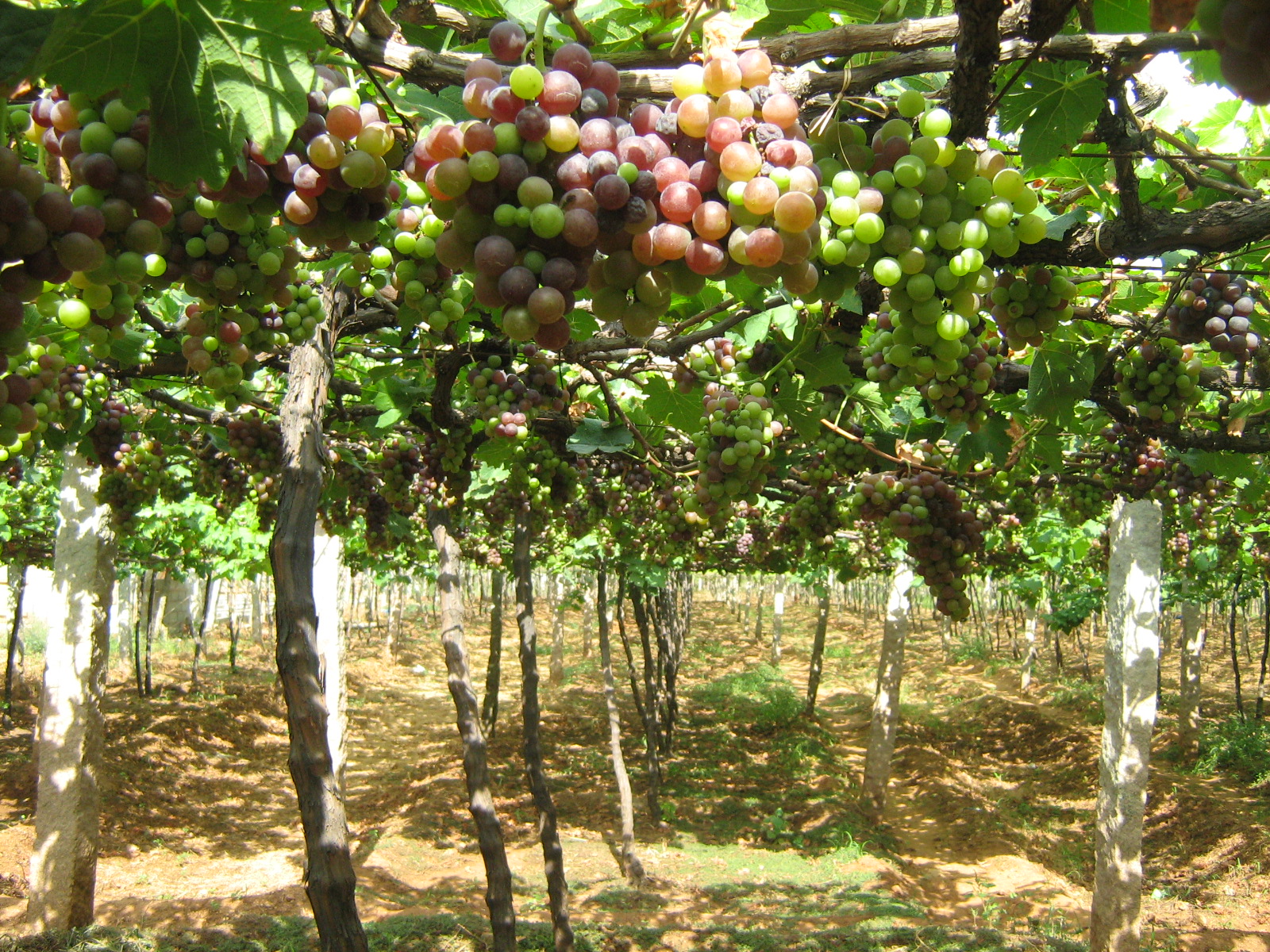
Vines need support. The Indian chapter describes three main training systems: the bower, an overhead canopy suited to vigorous varieties; the "telephone" system on T-shaped supports; and the flat roof gable. In Thailand, according to the Thai chapter by a horticulture professor at Kasetsart University, an arbor about 1.5 metres above the ground and 2 to 3 metres wide was preferred to a trellis. The Chandpur vines grow on a bamboo trellis of the overhead kind, known in Bengali as a macha.
The Thai chapter also explains how much a tropical climate changes the vine's rhythm. The first crop could be expected 14 to 16 months after planting, and because the buds can be forced to sprout by pruning at any time of year, two or three crops are possible from one vine in a year. In practice Thai growers pruned twice a year for two crops, one in the rainy season (May to October) and one in the dry season (November to April); the dry-season crop was better, with more sugar and a better appearance. In India vines were raised mainly from hardwood cuttings of four nodes, with the Dogridge rootstock used against salty soil and water; Thai nurseries used air layering (marcotting) and budding onto rooted cuttings.
The scale of those industries at the time puts a 20-decimal orchard in perspective. The chapters give India about 34,000 hectares of grapes producing about one million tonnes a year, with an average yield of 30 tonnes a hectare, and Thailand, in 1998, about 2,717 hectares producing 31,677 tonnes, an average of about 15 tonnes a hectare.
Pests and diseases in a humid climate
Rain and humidity are the grape's main enemies in South and South-East Asia. The Indian chapter names anthracnose, downy mildew, powdery mildew and bacterial leaf spot as the important diseases, and calls downy mildew the most devastating disease of grapes in the tropical part of the country: it mainly attacks the leaves, but when it reaches the flower clusters before fruit set, whole clusters can decay, dry and drop. Powdery mildew, the next most damaging, shows as a white, ash-like coating on leaves, young shoots and unripe berries. Anthracnose appears as small light brown or greyish black spots on tender shoots, young leaves, flowers and young berries.
The Thai chapter adds that downy mildew spreads most in still, cool and moist weather, that powdery mildew, unlike most grape diseases, thrives in a dry climate, and that anthracnose and several berry rots are worst in the rainy season. Among insects, the Indian chapter lists flea beetles, which eat the sprouting buds after each pruning, thrips, leafhoppers and mealy bugs, which it calls the most serious grape pest in India, able to cause yield losses of up to 50 percent. Thai growers used plastic roofs and bagged the bunches to protect them from rain and birds.
Both chapters list chemical controls used in those countries at the time. Those products and doses are not repeated here: a grower in Bangladesh should take advice on any spray from the upazila agriculture officer of the DAE.
Grape growing elsewhere in Bangladesh before 2025
Bangladeshi papers had reported several grape ventures before April 2025. In June 2020, The Daily Star wrote about a youth of the Khasi community in a village (punjee) of Sreemangal upazila, Moulvibazar, who had bought two grape saplings from a nursery in Samshernagar as a hobby three years earlier and was harvesting bunches, though the fruit was a little sour because he had not followed commercial techniques. The Sreemangal upazila agriculture officer told the paper that three productive varieties, Zakkau, Black Ruby and Black Pearl, had been selected for cultivation in the country, and that the crop takes about two years to come.
In August 2022, The Daily Star reported on a farmer in Jugihuda village of Moheshpur upazila, Jhenaidah. His first attempt, in 2003, failed after three years because the saplings he had bought at a local market were of poor quality. He tried again with plants from a supplier in India in 2016-17, grew the Indian variety Sonaka on 16 decimals, sold the fruit at Tk 200 to 240 a kilogram in 2020, and in 2022 expanded to 37 decimals with 120 plants. The DAE's deputy director in Jhenaidah told the paper that 0.15 hectares in the district were under grapes that year. A principal scientific officer of the Jashore Horticulture Centre described Sonaka as a green, very sweet grape with small seeds; the FAO chapter on India lists Sonaka as one of the clones of Thompson Seedless.
In July 2024, The Business Standard described a businessman's 1,500-square-foot rooftop vineyard in Sitakunda, Chattogram, with 55 local and foreign varieties, some from the United States, Russia, Ukraine and Japan, in 60 grow bags. He told the paper he had become interested in grapes after watching a YouTube video in 2021, that saplings had cost him Tk 800 to 2,000 each, that he harvested once between February and May and again in October-November, and that about 60 plants had given him around 200 kg that season. The Sitakunda upazila agriculture officer told the paper that the biggest obstacle to grape growing was seedlings, that seedless varieties need to be grafted, and that his office was still selecting the most suitable variety.
Imported grapes and the duty rise of early 2025
Fruit imports, grapes among them, were falling in early 2025. The Daily Star reported on 23 February 2025 that the country imported fresh fruit worth $128.51 million in the first half of fiscal year 2024-25, the lowest in three years, and that the opening of letters of credit for fruit imports fell 3.29 percent year-on-year to $140.5 million in July-December. According to a Bangladesh Trade and Tariff Commission (BTTC) document cited by the paper, the National Board of Revenue (NBR) had raised the supplementary duty on fresh fruit imports from 20 percent to 30 percent.
The same report said grape imports fell 29 percent year-on-year in fiscal 2023-24, and that after the supplementary duty increase in January 2025, grape imports fell 21 percent year-on-year. NBR data cited in the report showed $300 million spent on foreign fruit imports in fiscal 2023-24. On 17 February 2025 the BTTC wrote to the NBR recommending that the supplementary duty go back to its earlier rate and that the advance tax on fresh fruit imports be cut from 10 percent to 2 percent, to bring prices down.
Domestic growing has long been discussed as an alternative. The Sreemangal upazila agriculture officer told The Daily Star in 2020 that if grape farming proved successful, the country might not need to import grapes in future, and The Business Standard wrote in 2024 that expanding domestic grape cultivation would meet local demand and save foreign currency spent on imports. In Chandpur in April 2025, Kamruzzaman expected the season's harvest from his 20 decimals to come to about 150 kg.
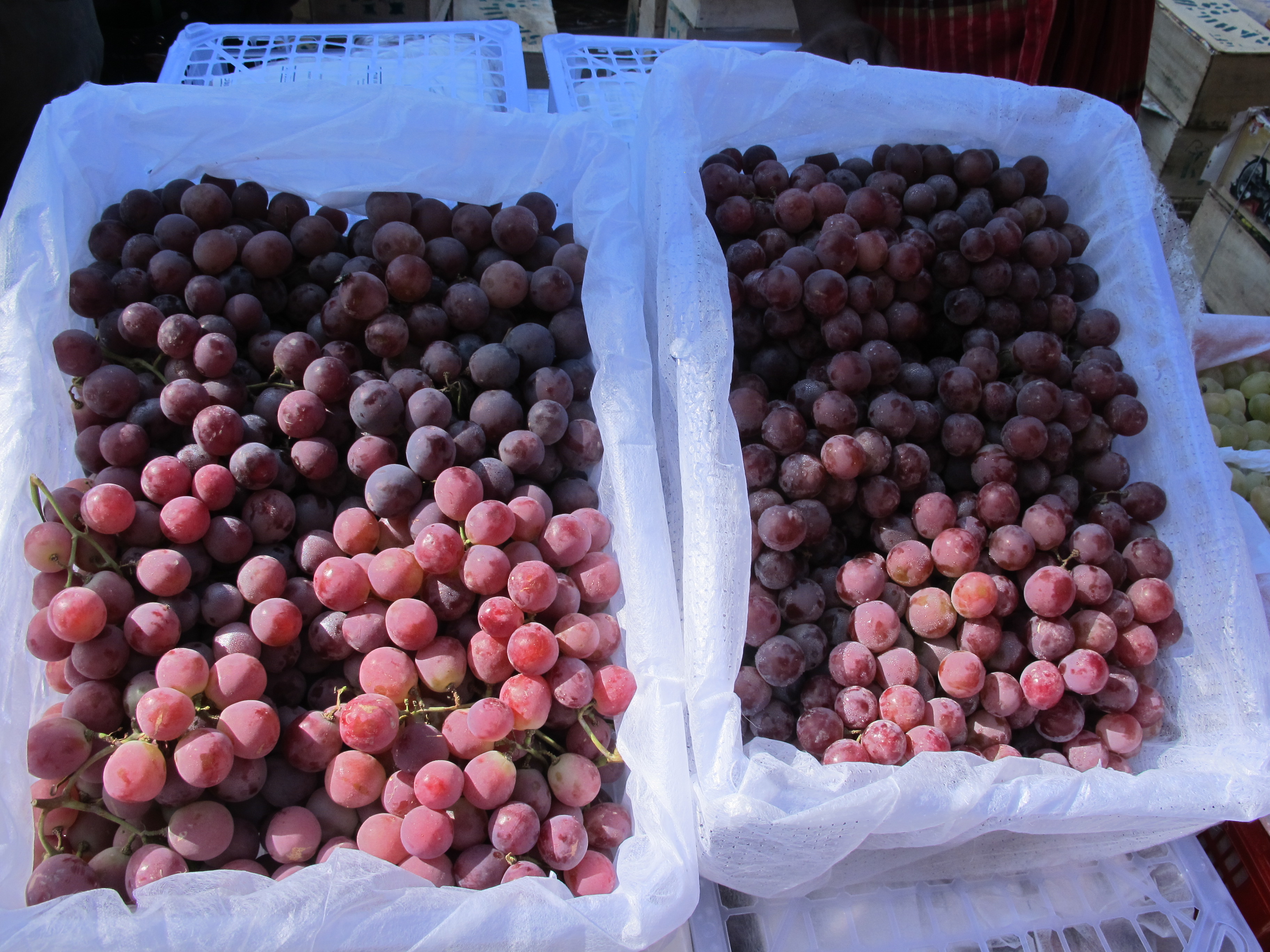
Photo: Savitr1915 / Wikimedia Commons (CC BY-SA 4.0). The top picture shows grapes at a vineyard in Nashik, Maharashtra, India, as background.
Sources: Jagonews24 (23 April 2025), Banglapedia, Food and Agriculture Organization of the United Nations (Grape Production in the Asia-Pacific Region, 2001), The Daily Star (26 June 2020, 26 August 2022, 23 February 2025), The Business Standard (5 July 2024), USDA FoodData Central, Wikipedia
Comments
(0)