
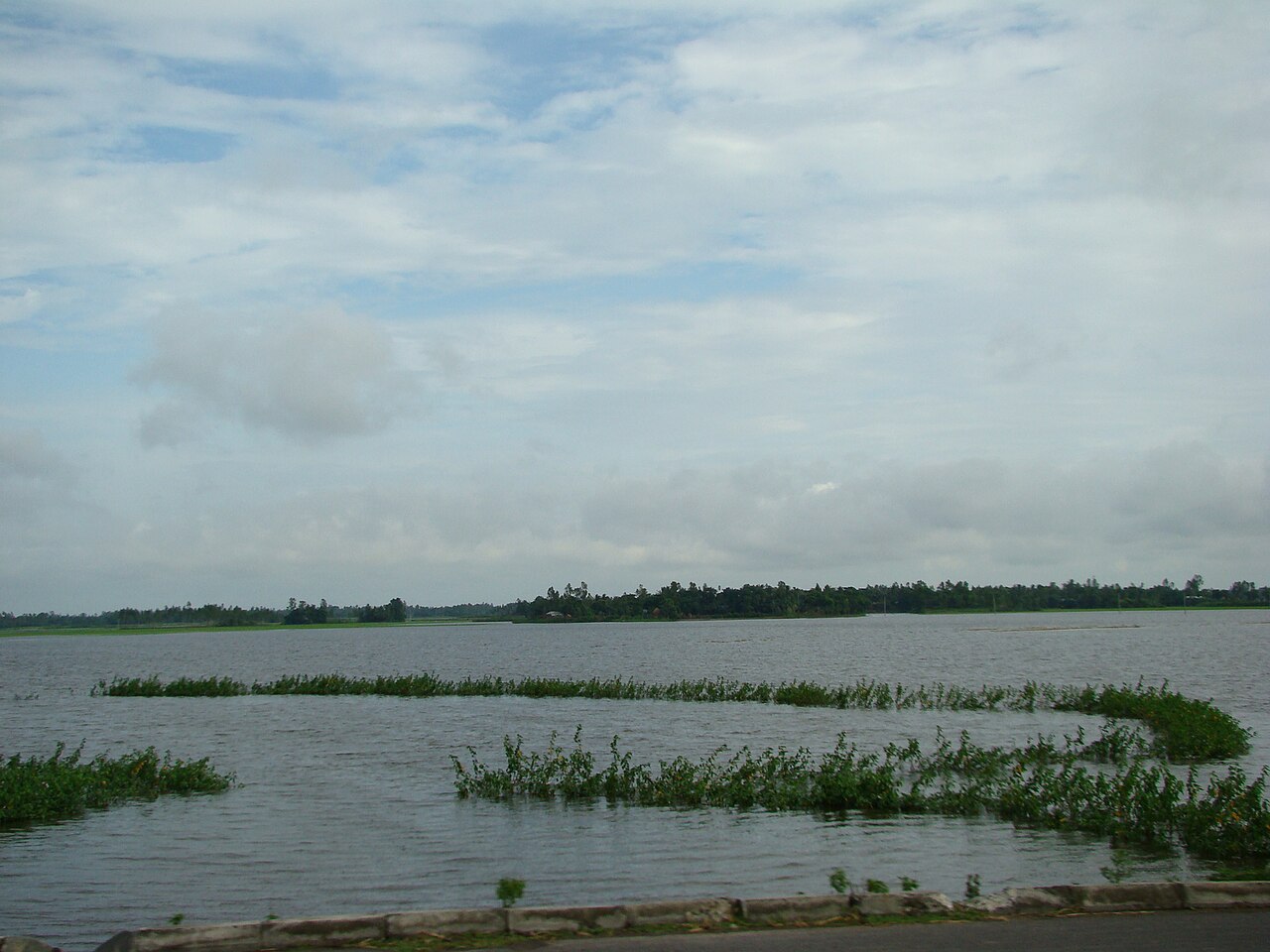
Indiscriminate snail collecting is putting at risk the biodiversity of Chalan Beel, the wetland that spans 14 upazilas of Sirajganj, Pabna and Natore. For several years groups have been gathering snails all day and selling them at high prices, while the local administration is said to look away.
Farmers once collected the beel's snails to feed ducks, keeping them in ponds after the floods receded to feed flocks all year. The abundance of snails supported hundreds of duck farms around the beel and drew migratory Asian openbill storks.
Now snail collecting and selling is booming in Tarash, Sirajganj. More than 50 depots have sprung up in Chatmohar, Bhangura and Singra, and about 200 tonnes of snails and mussels are trucked from them every day to shrimp and fish farms in Bagerhat, Khulna and Satkhira. Depot owners buy at Tk 700 to 900 a sack and sell to farm owners at Tk 1,000 to 1,200. The meat is cheap shrimp feed; the shells are ground into fishmeal, poultry feed and lime.
Snails are taken from the beel's 16 rivers, 39 beels and 22 channels from mid-Baishakh to Agrahayan, with the main season from Ashar to Kartik. Snails floating on rice, jute or water hyacinth are dragged in with net traps and loaded into dinghies at dawn, before the sun drives them underwater. With no other work in the monsoon, it is the main income for poor families: Kamal Mia of Dahia village in Tarash collects two sacks a day with his family and earns Tk 1,200 to 1,400, while Asma Begum, who supports a husband with a disability, earns Tk 400 to 450 for a sack.
Professor Nazrul Islam of Rajshahi University's zoology department said the snails taken are mainly apple snails, an important part of the wetland food chain. At the end of the monsoon they decay into the soil and naturally return calcium, phosphorus and potash; unchecked collection is cutting soil fertility and upsetting the ecological balance. Without prompt monitoring and awareness, people in the area fear the beel's biodiversity could be lost for good.
The report is by Krishi Shomoy's Sirajganj correspondent.
Photo: Shahnoor Habib Munmun / Wikimedia Commons (CC BY 3.0)
Source: Krishi Shomoy


Comments
(0)