
Food loss and waste should be seen as an opportunity to strengthen food security, nutrition and farm incomes rather than only as an environmental problem, Dr Mukani Moyo, lead for urban food systems in CGIAR's Food Frontiers and Security programme, writes for the International Day of Awareness of Food Loss and Waste on 29 September. The views are the writer's own.
Moyo notes that around 13 percent of food is lost between harvest and retail and an estimated 19 percent of food available to consumers is wasted. Losses begin well before the plate: on farms, in harvesting and handling, in storage and transport, and in the markets that link rural producers with growing cities, and each loss cuts farmer incomes and wastes the land, water, energy and labour behind the food.
Perishables are most at risk. Citing FAO, she writes that fruits, vegetables, roots and tubers are among the most vulnerable, and that for potatoes and sweetpotatoes poor handling, storage, processing and market links all add to losses. Answers include better-suited varieties, improved handling, storage and processing, value addition and stronger links to markets, while solar-powered cold chains can keep produce fresh where electricity is scarce.
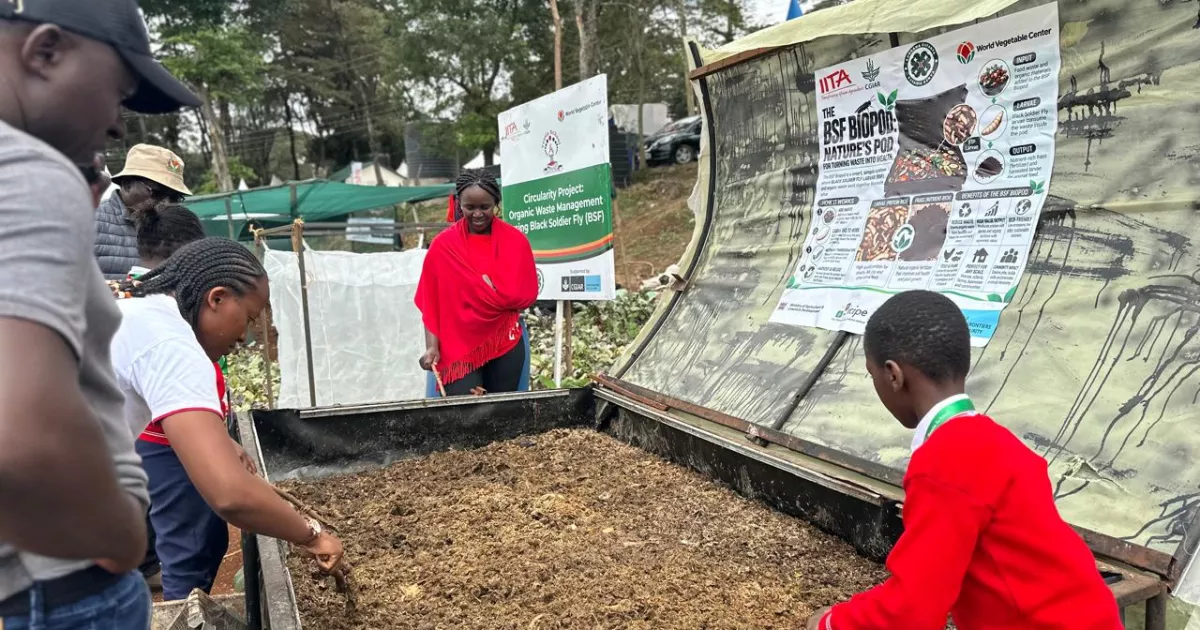
She gives examples of circular approaches. In Vietnam, farmers combine crops and livestock by composting manure and returning it to fields. In Ghana, researchers are looking at how to recover value from urban organic waste for farming. In Nairobi, schoolchildren feed lunch leftovers to Black Soldier Fly larvae, which become protein-rich feed for poultry and pigs, while the remaining frass fertilises vegetable gardens. In Lima, food rescue schemes link local producers with community soup kitchens, and in Quezon City a Vendor Business School trains market vendors in food safety, handling and storage.
Technology alone will not deliver the change, Moyo argues: scaling solutions needs finance, infrastructure, skills and research into where and why losses happen, and dialogue among farmers, traders, businesses, local governments and consumers. City action, she adds, must connect with the wider food systems that supply urban markets, so that more of what is grown becomes food, income and opportunity rather than waste.
Source: CGIAR
Comments
(0)