
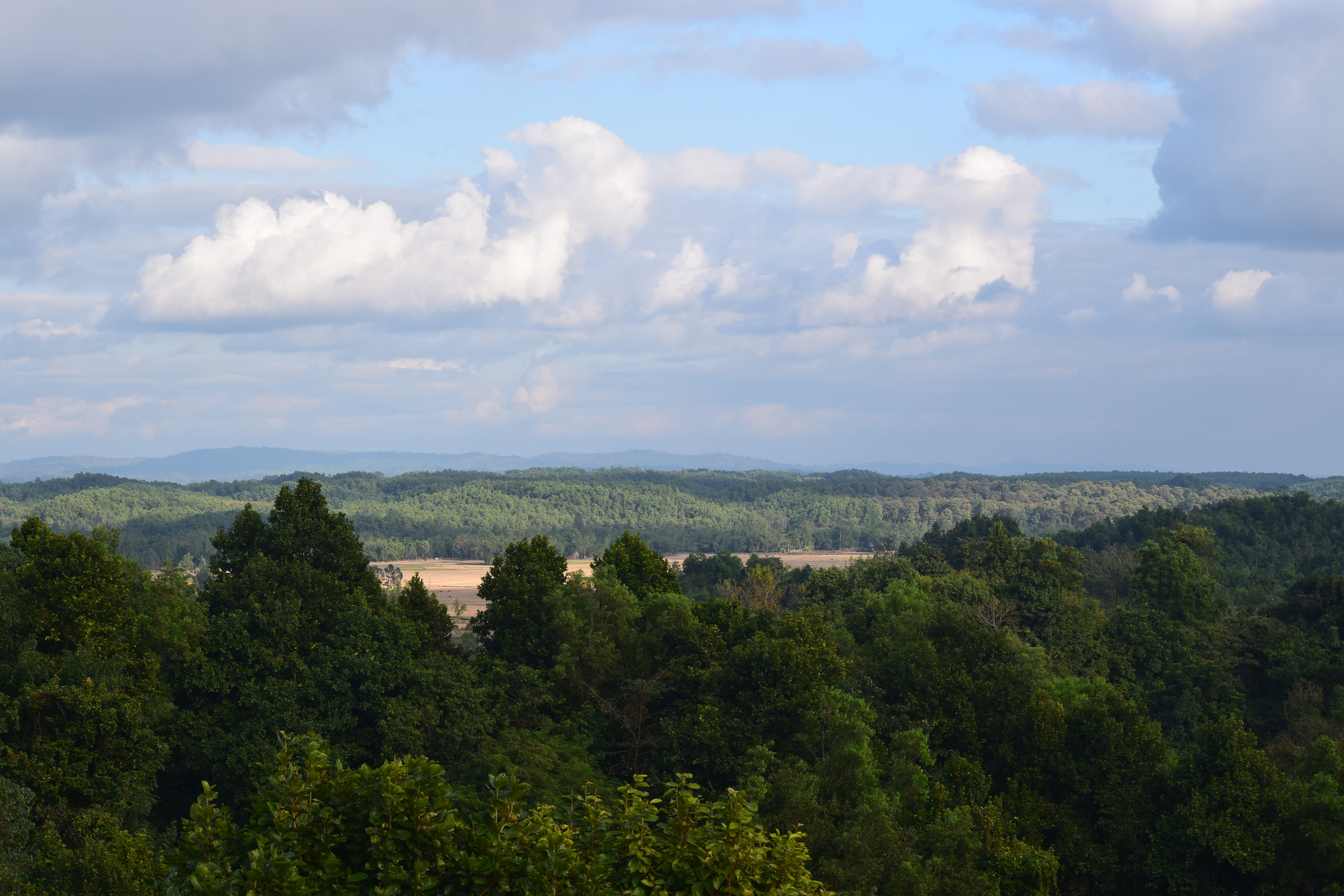
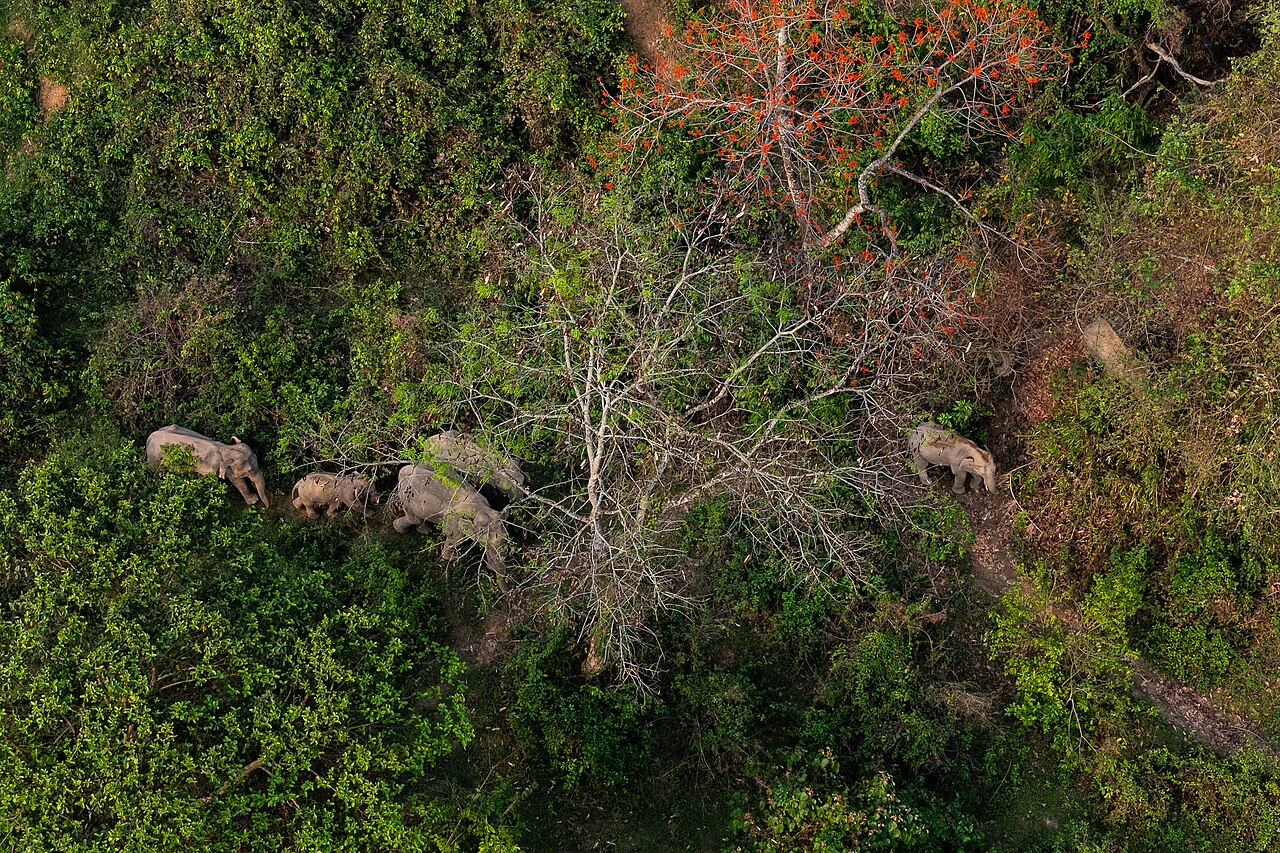
In the Garo Hills of Nalitabari upazila in Sherpur district, two local Union Parishad (UP) members were accused in March 2026 of running a factory that made cement concrete (CC) blocks deep inside a forest known locally as a refuge for wild elephants. According to a report published by Jagonews24 on 14 March 2026, the blocks were being made with sand, gravel and stone that locals said had been lifted illegally from a hill stream, and were being sold to contractors in Sherpur and other districts. A Forest Department beat officer told the reporter that all block-making had been stopped and the equipment seized after his staff visited the site, and that legal action was under way. Nalitabari's Upazila Nirbahi Officer (UNO) said the administration would examine whether the activity was lawful.
The report put the factory in a remote spot that people rarely visit because wild elephants move through it freely. A local conservation group warned that the noise of vehicles and stone-crushing machines was disturbing the animals and birds of the area. One of the two accused UP members said he had made the blocks to repair the bank of his own pond.
What the report found at Konabari Borokhol
Jagonews24's correspondent, reporting from the site, located the factory at a place called Konabari Borokhol in West Samashchura village of No. 1 Poragaon union, close to the border with India. Because wild elephants roam the area, the report said, people do not normally go there. According to the report, the two UP members, named in it as Omar (also written Umar) Faruk and Nabi Hossain, were lifting sand, gravel and stone from the Ranjana waterfall stream and using it to make CC blocks on a large scale.
Local people quoted in the report gave a reason for the arrangement. The sand quarries (balumahals) on the two rivers that flow through Nalitabari were closed at the time, they said, so lifting and carrying sand locally was banned outright. Making blocks deep in the hills, in their account, had become a way to sell the sand and stone in another form. They said the finished blocks were being sold to contracting firms in Sherpur and elsewhere. These are allegations made by local residents and reported by the newspaper; they had not been tested by any court or official inquiry at the time of the report.
Mehedi Hasan Lizan, joint convener in Sherpur of the group Save the Wildlife and Nature (SWAN), told the newspaper that a block factory deep in the Garo Hills meant forest land was being occupied, and that the sound of vehicles and stone-breaking machines was causing serious trouble for the animals and birds living there. If it continued, he said, the wildlife of the area would move elsewhere.
The accused member's reply and the officials' response
Md Umar Faruk, one of the two accused UP members, told the media that he had made the CC blocks to repair the bank of his own pond by lining it with blocks. If the work was now illegal, he said, there was nothing he could do about it, and whatever was going to happen would happen. According to the report, he did not answer when asked why so many blocks were needed for a pond bank, or whether they were being made for business. The report carried no comment from the second UP member, Nabi Hossain.
Md Kawsar Ahmed, forest beat officer of the Madhutila forest range under the Forest Department, told Jagonews24 that forest staff rarely went to the spot where the factory stood, which was why they had not known about it earlier. After receiving the information, he said, they visited the site, stopped all block-making and seized all the equipment used to make the blocks. Legal action was under way, he said.
Nalitabari UNO Rezwana Afrin gave a more cautious account. She said she had learned initially that the blocks were being made on the members' own land, using sand and stone that had been lifted earlier. Whether that was lawful or illegal would be looked into, she said, and the necessary action would be taken after that. The two official statements therefore left open the legal status of the land: the Forest Department treated the site as one it could act on, while the UNO said the claim of private land still had to be checked.
Local complaints and the May 2025 incident
The residents quoted by Jagonews24 also made a wider complaint. Many people, they alleged, were carrying out various misdeeds in the Garo Hills by using the name of a political party, and anyone who protested was harassed by a mob. They said the same operators had earlier gathered a mob in these hills and stopped the motorcade of the environment adviser. The Jagonews24 report gave the adviser's name as "Rezwana Chowdhury"; the environment adviser of the interim government at the time was Syeda Rizwana Hasan, and the incident the residents referred to appears to be her visit to Nalitabari on 26 May 2025.
Prothom Alo's report of that day gives a fuller account. Syeda Rizwana Hasan, adviser for the Ministry of Environment, Forest and Climate Change and the Ministry of Water Resources, visited the Daodhara-Katabari area of Nalitabari, where a government tourism centre had been planned. The Forest Department had been opposing the plan, Prothom Alo reported, because in its view the land was a route used by wild elephants and was under social forestry. After her inspection, journalists asked the adviser about illegal sand and stone extraction in the area and about electricity connections inside the forest. Some people present became angry at the questions; the adviser spoke to several locals, calmed the situation and moved on with her motorcade. Journalists were then attacked, Prothom Alo reported, and four of them were named as injured and given first aid. Nalitabari police's officer-in-charge said he had been with the adviser's car, heard a commotion behind and sent police to restore order, and that legal action would be taken if a complaint was filed.
At the same visit, according to a second Prothom Alo report of 26 May 2025, the adviser said a sanctuary for elephants would be built in the Garo Hills by resolving the conflict between people and elephants. She said that within two weeks of her taking charge, 12 elephants had died, which she called far from normal, and that the government was working out how much land was suitable for elephants and how much could be made suitable, so that the animals would not leave the forest for villages.
Nalitabari, Poragaon and Madhutila
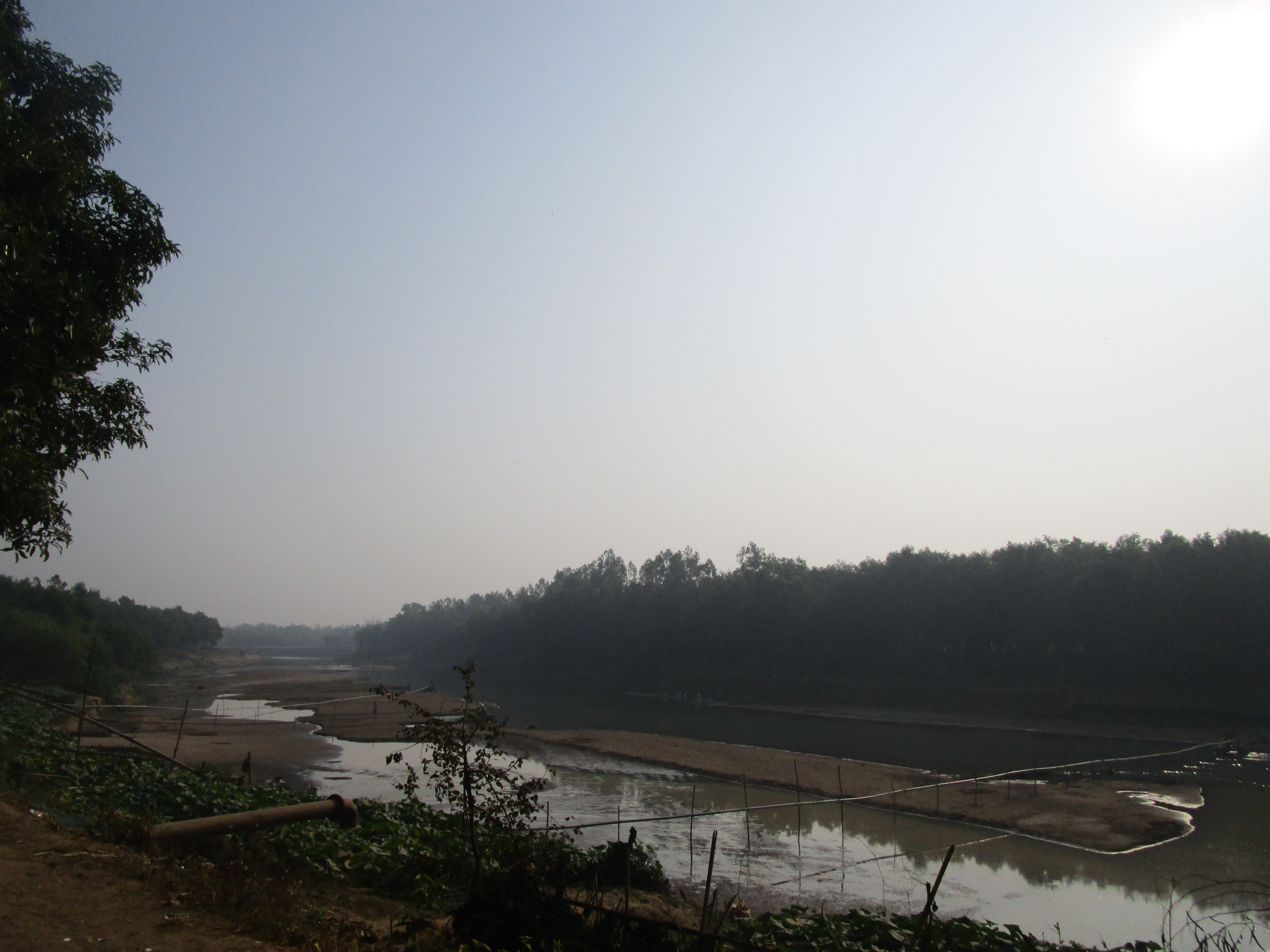
Nalitabari is one of the five upazilas of Sherpur district, which was raised from a subdivision to a district in 1984. According to Banglapedia, the upazila covers 327.60 square kilometres and has 12 unions. It is bounded by the Indian state of Meghalaya to the north, Haluaghat upazila of Mymensingh to the east, Jhenaigati upazila to the west, and Sherpur Sadar and Nakla upazilas to the south. Its rivers include the Bhogai, Kangsa, Maljhi and Thalong, and it has several beels (wetlands). The upazila's main crops are paddy, jute, wheat, potato, mustard and vegetables, and its people include Garo, Hajong, Hodi, Mandai and Koch communities as well as Bengalis. Banglapedia lists Madhutila Ecopark and the rubber dam on the Bhogai among its notable places.
Sherpur district as a whole covers 1,364.67 square kilometres and recorded a population of 1,358,325 in the 2011 census, according to Banglapedia, which also lists the Chellakhali, Bhogai, Someshwari, Kangsa and Old Brahmaputra among its rivers. The hills along the district's northern border are the edge of the Garo Hills, a range that rises in Meghalaya, India, and whose highest peak, Nokrek, stands at 1,412 metres.
Madhutila Eco Park, which gives its name to the forest range whose officer spoke to Jagonews24, lies in Poragaon union, the same union as West Samashchura. Encyclopedic references describe it as an eco park of about 380 acres close to the border, set up in 1999. In May 2024, the Dhaka Tribune reported that a herd of 50 to 60 elephants had been staying for nearly two weeks on Betkuchi hill inside Madhutila Ecopark, a sign of how closely the park's forest and the elephants' movements are linked.
The elephants of the border hills
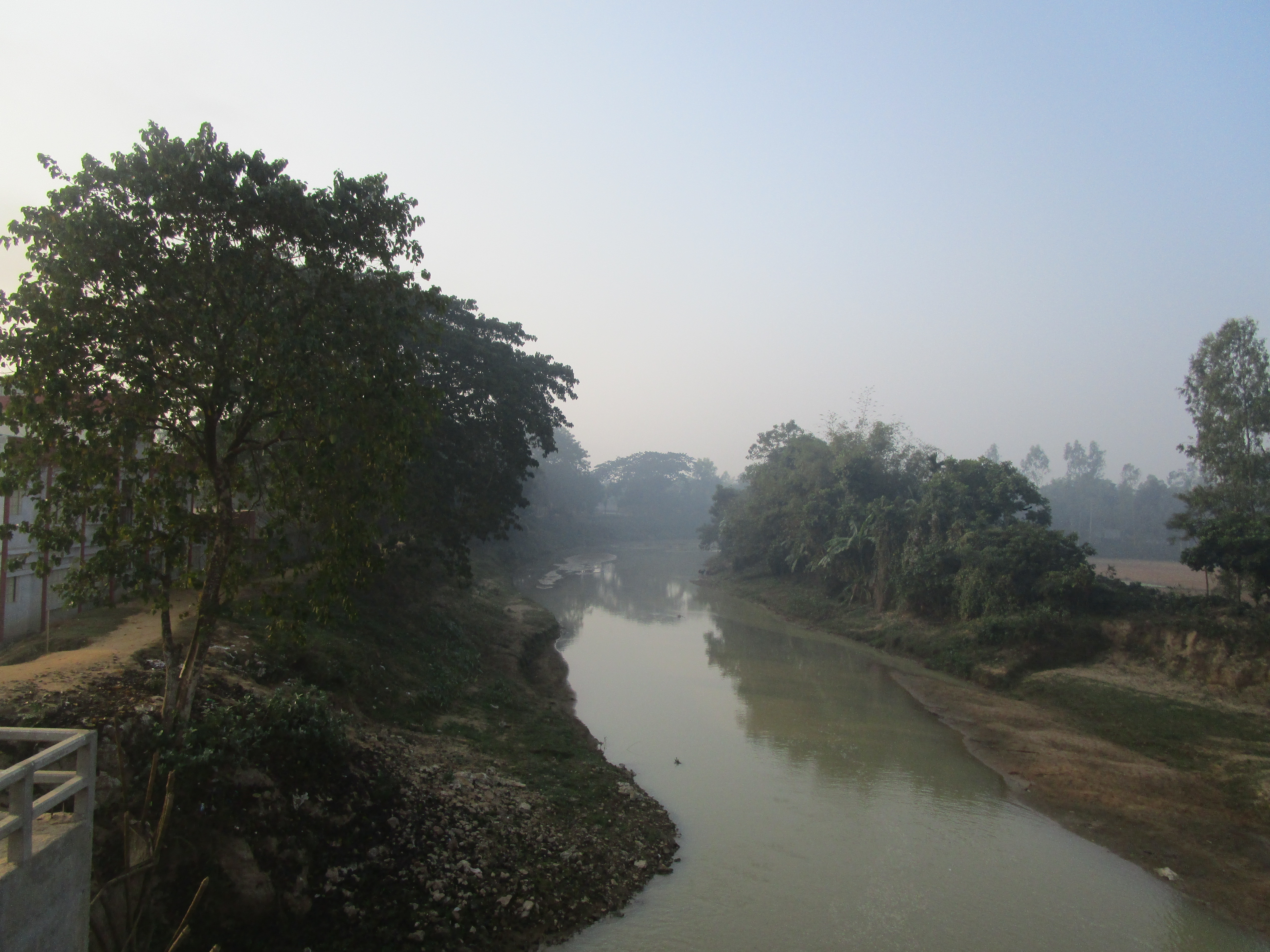
The Asian elephant (Elephas maximus) is listed by IUCN as critically endangered in Bangladesh. A 2016 count cited by the Forest Department and IUCN Bangladesh put the country's resident wild population at 268 animals, all in the southeastern forests. Elephants were recorded in 44 forest ranges covering 1,518 square kilometres, and the country has 12 declared elephant corridors along its borders with India and Myanmar. According to the Forest Department, at least 50 elephants were killed in human-elephant conflict and by electrocution between 2017 and 2021, 34 of them in 2021 alone.
The elephants of the Sherpur, Mymensingh and Netrokona borderlands are a different group. Mongabay, reporting in March and June 2025, described them as non-resident herds from India's Meghalaya hills that traditionally came down during the rice harvest, between December and May, and then returned. Since 2019, Mohammed Mostafa Feeroz, a zoology professor at Jahangirnagar University, told Mongabay, gates in the border fence had remained closed, so herds that crossed could not go back and roamed the cropland in search of food. The chief conservator of forests said in March 2025 that a standard operating procedure drafted under a 2020 Bangladesh-India protocol on transboundary elephants would be shared with India once the ministry approved it.
The cost on both sides has been heavy. The Dhaka Tribune reported in May 2024, citing the Forest Department and media reports, that 34 people had died in elephant attacks in the Garo Hills of Sherpur over the previous decade and more than 100 had been injured, while 30 elephants had died over the same period from human attacks and other causes. Mongabay recorded three human deaths in Sherpur in April and May 2023, and an elephant found dead in a paddy field in Jhenaigati on 6 May 2023 where electric cables had been laid to keep it out. In June 2025, Mongabay reported that the government planned to declare a protected area along a stretch of about 41 kilometres of the border in Sherpur, Mymensingh and Netrokona; Professor Feeroz estimated the area at about 200 square kilometres if five kilometres inland were counted, and warned that most of it was already settlement and farmland.
Banglapedia notes that elephants live in herds of usually 5 to 20 animals, feed on grasses, banana plants, bamboo, bark, leaves, fruits and flowers, carry a single calf for 20 to 22 months and live 60 to 70 years. That slow breeding is one reason conservationists treat every lost animal and every disturbed patch of forest as significant. The government developed a ten-year Elephant Conservation Action Plan in 2018, and a compensation scheme for losses caused by wildlife, introduced in 2010, was updated in 2021, according to Mongabay. Under the SUFAL project, the Forest Department and organisations such as IUCN Bangladesh formed Elephant Response Teams of local volunteers in conflict-prone areas.
A long history of stone extraction in the Sherpur hills
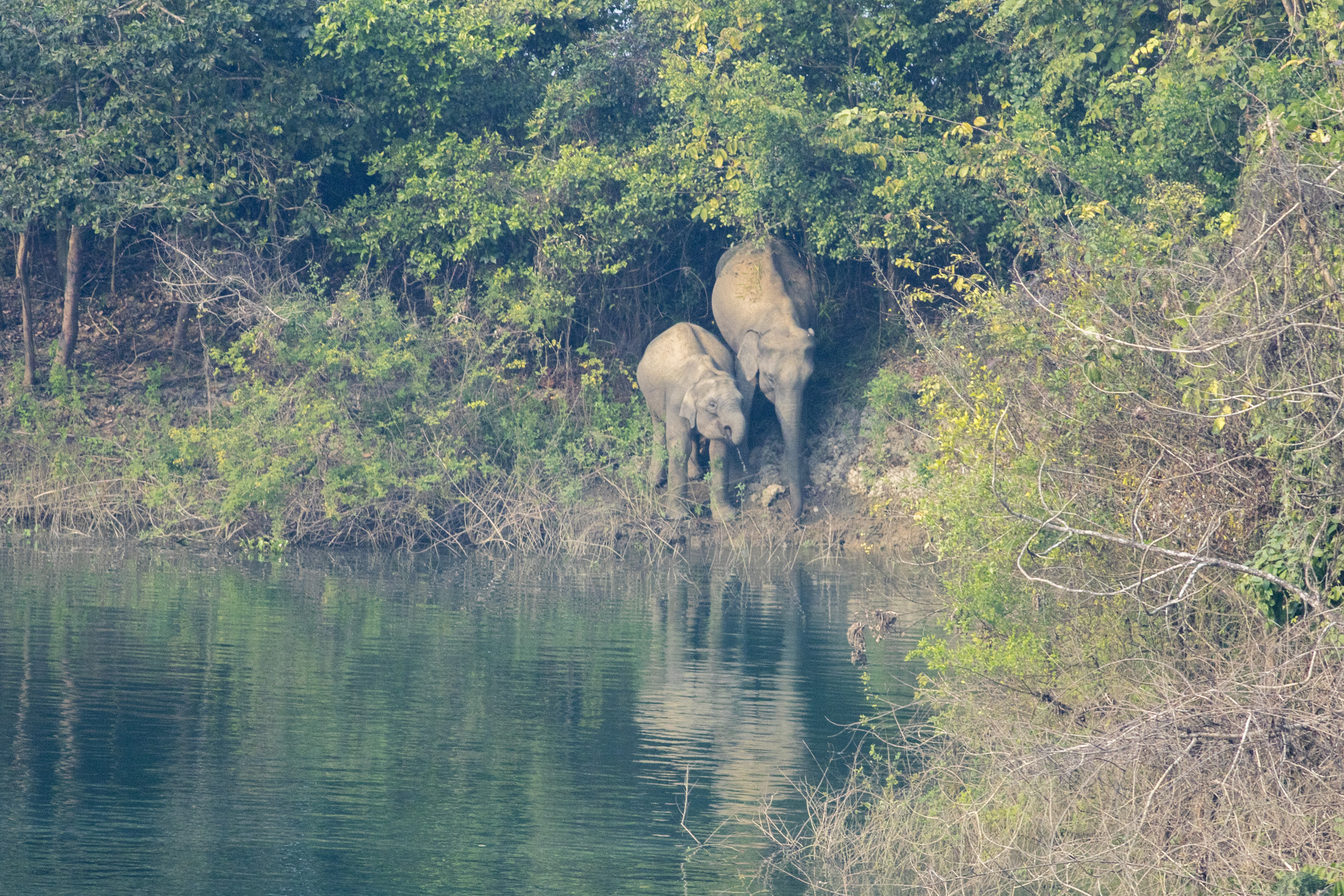
Taking stone and sand out of the Sherpur hills is not new. On 15 June 2005, The Daily Star reported that illegal stone extraction by organised syndicates had started again in the Garo Hills of Jhenaigati and Nalitabari upazilas after a pause of about two years, and counted at least 35 illegal quarries in the two upazilas. Collectors dug 20 to 30 feet into the earth for good stone and were paid Tk 25 to Tk 30 per cubic foot, local people told the paper, and a sub-contractor named Baromary and Laochapra in Nalitabari among the big quarry sites.
The Divisional Forest Officer of the Mymensingh Forest Division told The Daily Star at the time that hill cutting was strictly prohibited, so collecting stone from the hills was illegal. He said the extraction threatened the ecological balance and could trigger landslides in the monsoon, and that it affected the flow of water under the soil, which could in the end turn the hills barren. Local people alleged then, as residents did again in 2026, that the trade enjoyed the blessing of influential people.
What CC blocks are and why they need sand and stone
CC (cement concrete) blocks are concrete blocks cast in moulds; the ones at Nalitabari, according to Jagonews24, were made with sand, gravel and stone from the hill stream. In Bangladesh such blocks are a standard material for protecting riverbanks, and the accused member said he meant to use his to line a pond bank. A 2016 paper by K. Oberhagemann and A. Aminul Haque, presented at the International Conference on Scour and Erosion, describes the riverbank revetment that the Bangladesh Water Development Board developed over two decades: several layers of sand-filled geotextile bags below the low-water line, topped by a single layer of concrete blocks above it. Bank protection work of this kind is carried out by contractors, and contracting firms were the buyers the residents said the Nalitabari factory was supplying.
That demand is what links a block factory to the hills. Sand and stone are bulky and cheap to sell loose but easy to trace on the road; turned into blocks, they leave the site as a finished product. The residents quoted by Jagonews24 said this was exactly why blocks were being made in the forest while the river sand quarries were closed.
What the law said in March 2026
On the date of the report, wildlife and protected areas were governed by the Wildlife (Conservation and Security) Ordinance 2026, in force from 7 January 2026, which repealed the 2012 Act. Its provisions on protected areas allow the government, by gazette notification and after taking the views of communities who depend on an area, to declare a sanctuary, including one designated as an elephant sanctuary. Inside a declared sanctuary or national park the Ordinance bars, among other things:
- setting up or running any industrial factory;
- hunting, harassing or frightening wildlife, or using anything that destroys or may destroy wildlife habitat;
- dumping or stacking rubbish or any mineral material;
- searching for or digging pits to extract any mineral;
- cutting plants, except for silvicultural operations that help natural regeneration.
The Ordinance also bars building or running a factory, commercial establishment or brick kiln within two kilometres of a sanctuary's boundary, and lets the government declare core zones, buffer zones, corridors and landscape zones for wildlife. A breach of the sanctuary restrictions is punishable with up to three years in prison, a fine of up to Tk 3 lakh, or both. The Dhaka Times, reporting the new Ordinance on 9 January 2026, summarised the same points: no commercial establishment or brick kiln within two kilometres of a protected area, and no farming, mineral extraction or fire-setting inside sanctuaries. Jagonews24 described the area as one known as an elephant sanctuary; the report did not say whether the site lay inside a gazetted sanctuary, and in June 2025 Mongabay had reported the protected area for the northeastern elephants as a plan.
Two older laws also bear on such a case. Under the Forest Act 1927, as amended in 1990, quarrying stone or removing forest produce from a reserved forest is punishable with up to six months in prison and a fine of up to Tk 2,000, and the Act counts rock, surface soil and minerals found in a forest as forest produce. Under the Sand Quarry and Soil Management Act 2010 (Act No. 62 of 2010), as amended in 2023, sand or soil may not be lifted for sale from government-owned open land, tea-garden streams or riverbeds within one kilometre of a forest or other important structure, or where hills or hillocks may be harmed or where wildlife, plants and biodiversity may be damaged. Breaking that law carries up to two years in prison or a fine of Tk 50,000 to Tk 10 lakh, or both, and the vehicles and equipment used can be confiscated; offences are tried by mobile courts or magistrates. Which of these provisions applied in Konabari Borokhol depended on the legal status of the land and the source of the sand and stone, the very questions the UNO said would be examined.
Photo: Shariful Islam Masum / Wikimedia Commons (CC BY-SA 4.0)
Sources: Jagonews24, Prothom Alo, Mongabay, The Daily Star, Dhaka Tribune, Dhaka Times, Banglapedia, Bangladesh Laws (Legislative and Parliamentary Affairs Division), HR Wallingford (ICSE 2016)
Comments
(0)