
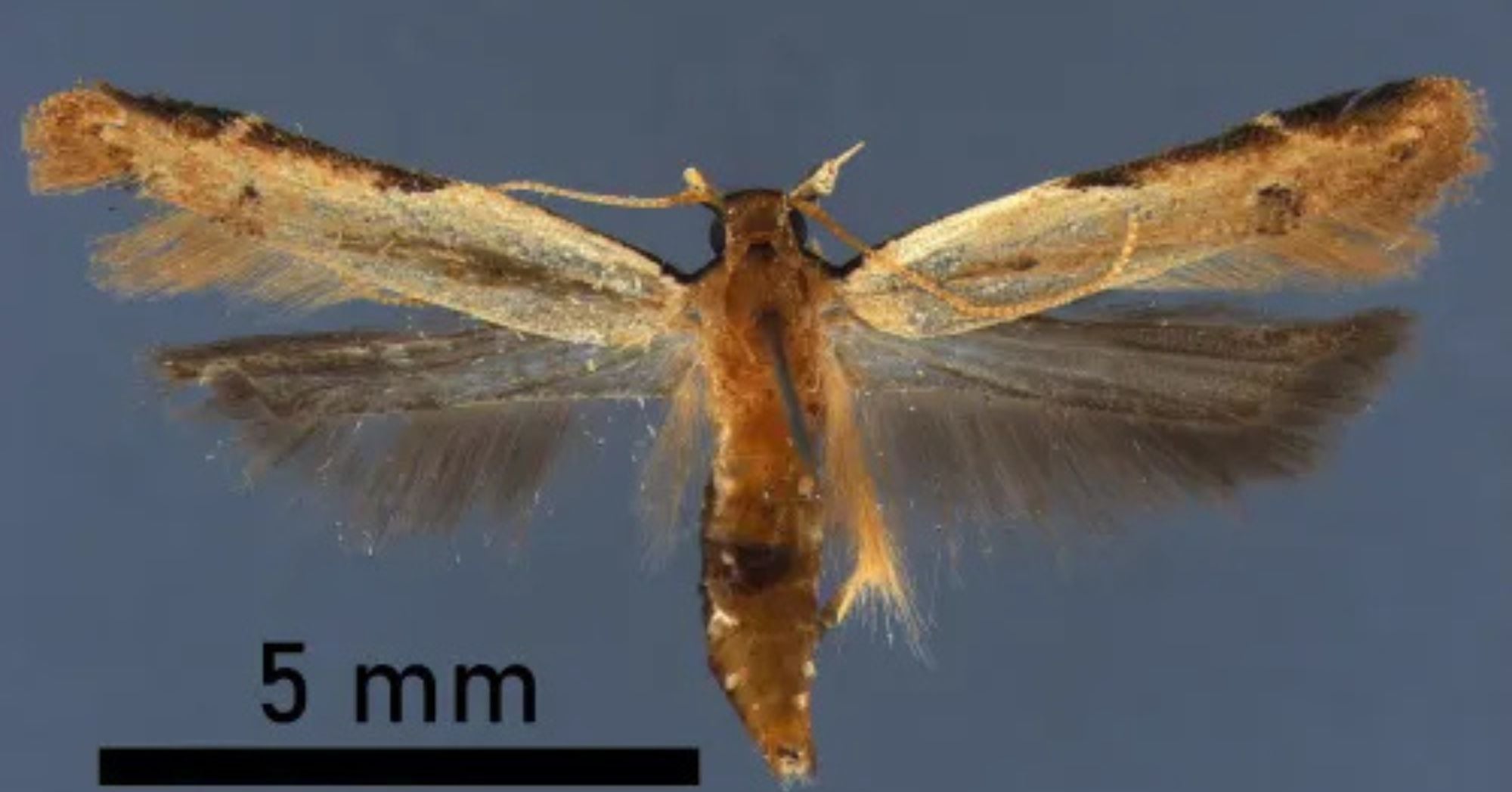
US Customs and Border Protection agriculture specialists at Detroit Metropolitan Airport have made the first interception at any US port of entry of the straw crest moth (Mesophleps silacella), a non-native insect.
The find dates to January, when an agriculture detector dog alerted staff to luggage from Ghana during a routine inspection. Corn and seeds inside the bags held a small winged insect that US Department of Agriculture specialists later identified. Local CBP officials confirmed the identification with USDA on 12 August, and records show it was the first time the species had been encountered at a US port of entry.
The straw crest moth occurs in Europe and parts of Africa and is known to feed on plants of the rockrose family. It belongs to the gelechiid family, which has about 4,700 known species worldwide, including several invasive and destructive pests. In their native ranges, predators and plant resistance often keep such pests in check — a balance that can break down when they reach new places.
"This first-in-the-nation interception demonstrates how thoroughly our agriculture specialists search items entering the United States to identify and stop potential pests," said Port Director Fadia Pastilong, adding that the Detroit team intercepts hundreds of pests every year.
The traveller, a citizen of Ghana, was advised of US agricultural import requirements and released without further action. "Declaring food and agricultural items isn't just a formality — it's our first line of defense," said Marty Raybon, director of field operations.
The case is a reminder of how seeds and grain carried in personal luggage can move insects across continents, and why travellers are asked to declare plant material at the border.
Source: AGDAILY



Comments
(0)