
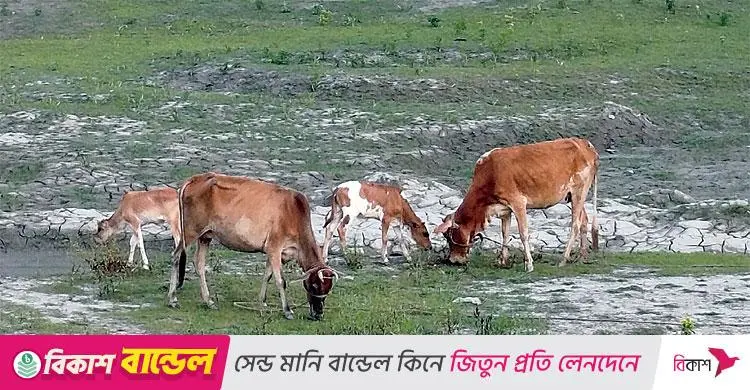
Agriculture is one of the main foundations of Bangladesh's rural economy, and in this farm-based village life, rearing cattle has long been regarded as an important part. Cattle were once mainly a source of ploughing power, dung and milk. Now they have become a symbol of opportunity, a source of income, a provider of nutrition and a path to self-reliance.
Having one or more cattle in every village home now seems a common sight. Some keep them to sell milk, others to sell in the sacrificial animal season. Many have set up commercial farms. On these farms, native and improved breeds produce milk, meat and dung, each of them economically important.
Cheap feed, daily income
Another important aspect of rearing cattle in the village is readily available feed. Soft grass that grows naturally in the fields, green creepers and shrubs along roadsides and weeds from the fields are all ideal feed. Rice starch from the kitchen, discarded vegetable peel and other leftovers also go into the cattle's diet, so there is no need to buy separate concentrate or feed, which cuts feeding costs.
Milk is the most immediate source of income. Many families get cash by selling two to five litres of milk a day. The milk is made into yoghurt, ghee and chhana, which have become popular in local markets. Village women are directly involved and have the chance to earn at home, bringing them not only nutrition but also financial comfort.
Dung is not waste either. It is used as fuel and organic fertiliser, and many people make vermicompost from it and sell it to farmers. This reduces dependence on chemical fertiliser and increases sustainable farming.
The Eid-ul-Azha sacrifice creates a huge market too. After a year of care, selling one animal earns thousands of taka, and beyond local markets many farmers are selling cattle to the cities through online platforms.
Support and challenges
There are now various public and private initiatives for cattle rearing. The Department of Livestock Services provides free vaccination, training and artificial insemination services, and various NGOs help farmers with loans on easy terms. With this support, farms are expanding and production is improving.
The sector does face challenges, however, such as a shortage of improved breeds, a lack of balanced feed, a shortage of skilled veterinary services and weak disease prevention. Cattle theft and epidemics are also risks at times. Tackling these problems requires modern technology and regular training.
Still, the opportunities are wide open. Planned cattle rearing brings not only personal income but also momentum to local markets. Nutrition, jobs and economic development are all possible around this one sector. That is why cattle can be called a unique name in rural livelihoods and economic self-reliance: an animal cared for since ancient times, now a reliable companion for a promising future in rural Bangladesh.
Source: Jagonews24. First published in Bengali on The Agro News.
Comments
(0)