
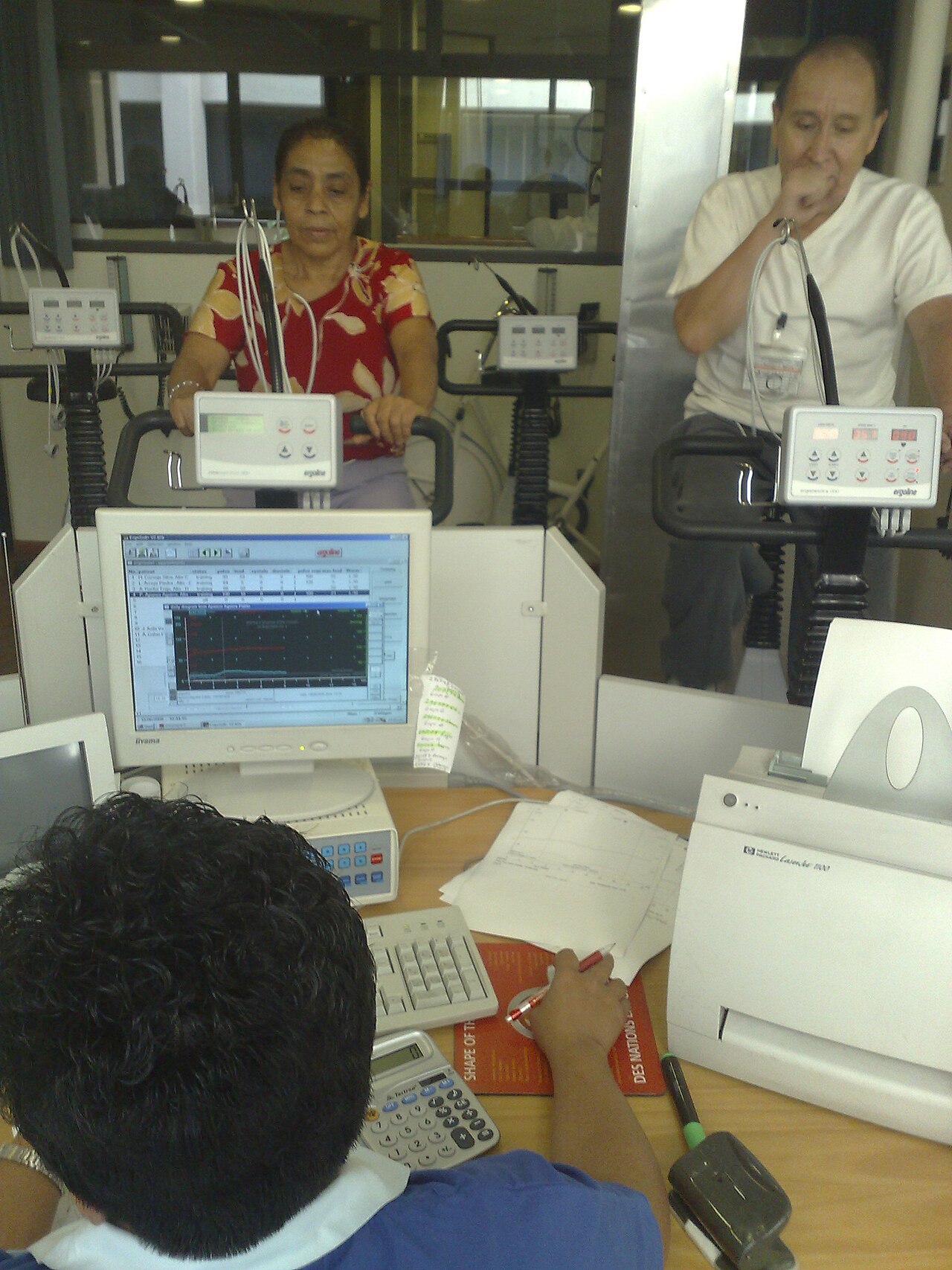
After a heart attack, a stent, bypass surgery or heart failure, many patients lose fitness and get out of breath with little effort. People with COPD, asthma or other lung disease often cut down on walking for fear of breathlessness. Writing in Prothom Alo, Dr Sakib Al Nahiyan, assistant professor of physical medicine and rehabilitation at Green Life Medical College, says the way to break this cycle of breathlessness, fear, less walking and weaker muscles is cardiopulmonary rehabilitation.
Rehabilitation, he explains, is more than a few exercises. It is a medically supervised programme planned around the patient's heart, lungs, muscles and capacity, so it differs from one person to the next.
It starts by measuring how much exertion the patient can tolerate. Where needed, a six-minute walk test is done and heart rate, blood pressure, oxygen saturation, breathlessness and the rating of perceived exertion are monitored. Then, step by step and within the patient's ability, come walking or the treadmill, cycling, aerobic conditioning, strength training and breathing exercises.
The aim is for patients to walk again, climb stairs, do their own shopping and look after themselves. Most patients lose heart after an attack and fear another one, the doctor writes, so health education, counselling, lifestyle change and psychological support are a key part of the process, along with stopping smoking, healthy eating, weight control and taking medicines regularly.
Cardiac rehabilitation is considered after a heart attack, after PCI or stenting, after bypass surgery, and for some patients with coronary artery disease or heart failure. One programme does not fit all: it is planned around each patient's physical and mental condition, functional capacity and risk, which is why he advises seeing a specialist.
Photo: Hermes Ilarraza / Wikimedia Commons (CC BY 3.0)
Source: Prothom Alo

Comments
(0)