
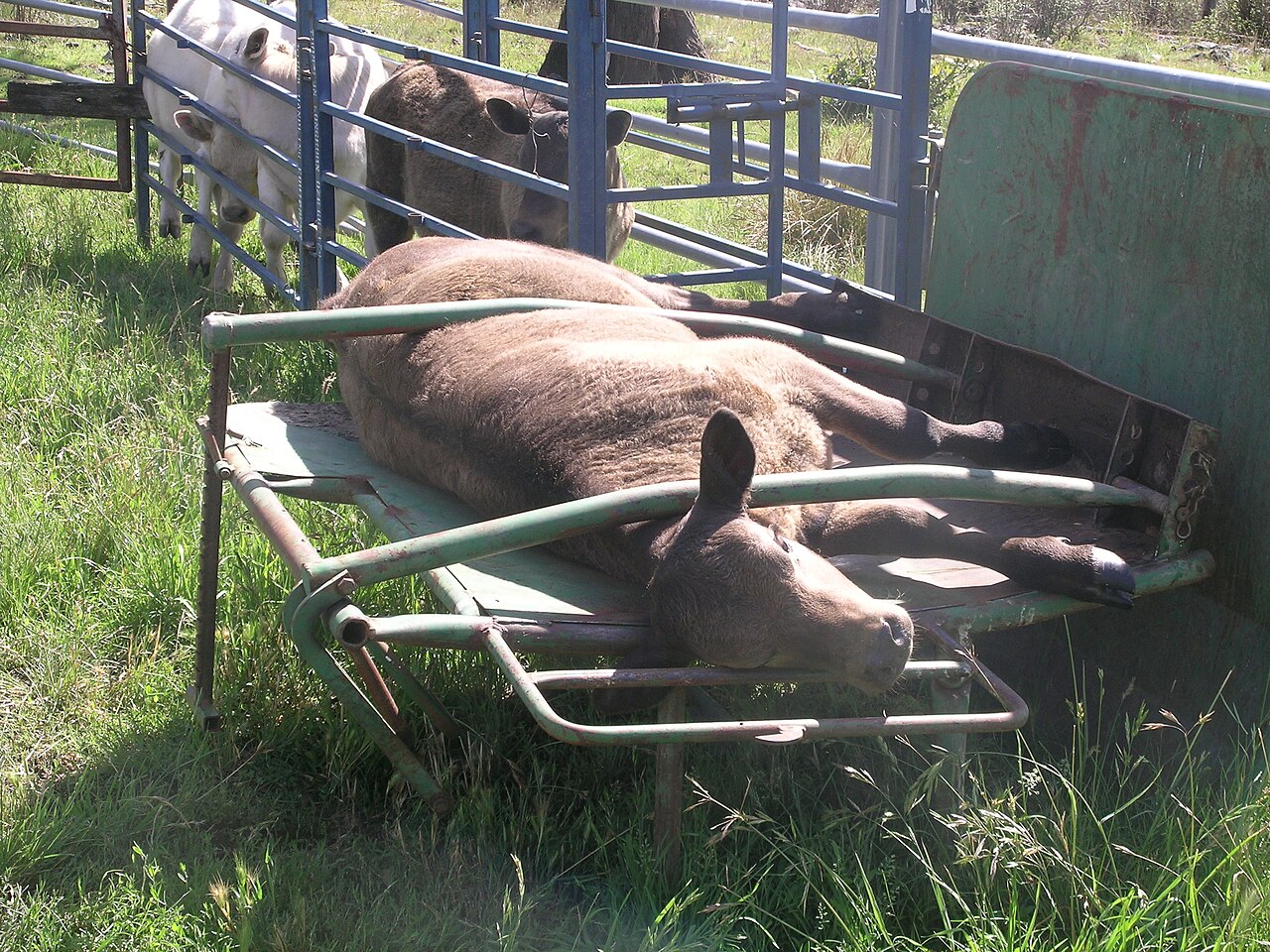
Calves given an intranasal vaccine within a day of birth and a conventional injected booster at turnout withstood a respiratory virus challenge far better than calves that received only the injection, according to a trial by Dr. Nathan Erickson of the Western College of Veterinary Medicine.
Erickson presented the work at a field day of the Livestock and Forage Centre of Excellence near Clavet, Saskatchewan. He said much of what the cattle industry calls "vaccine failure" is a misunderstanding of what vaccines do: "Our expectation should be not to prevent all disease — we can't do that," but to reduce the severity of clinical signs.
The difficulty with young calves is colostrum. Maternal antibodies, highest at birth and nearly gone by weaning, treat an injected vaccine as a foreign invader and neutralise part of it, so a calf vaccinated at about two months mounts a response but not one that builds strong immune memory. That weakness can show up later, when calves are weaned and mixed at the feedlot, which Erickson likened to a first day at kindergarten.
Intranasal, or mucosal, vaccines partly bypass maternal antibodies and act quickly, but protect for only three to four months and do not by themselves build strong memory. Erickson therefore tested a "prime boost": one group received the intranasal vaccine at 24 hours of age or earlier and a systemic shot at turnout; the other received only the systemic vaccination at turnout.
At weaning both groups were loaded onto a trailer and fogged with a respiratory virus. By day seven or eight most calves were so sick the trial was stopped early. The systemic-only group had more severe lung lesions, shed virus from the nose for longer, ran higher fevers and showed more severe clinical signs.
"The data overall would show that there is some benefit to using a prime boost mechanism in these calves," Erickson said, adding that field trials on other viruses had produced similar results. For cow-calf producers, the message is that the timing and route of each dose matter as much as the vaccine itself.
The report was written by Janelle Rudolph.
Photo: Cgoodwin / Wikimedia Commons (CC BY-SA 3.0)
Source: Manitoba Co-operator


Comments
(0)