
In Vietnam's Mekong Delta, farmers who grow rice and shrimp on the same land are being shown machines and digital tools meant to cut costs and cope with shifting fresh and salt water. The International Rice Research Institute (IRRI), with the Ca Mau Department of Agriculture and Environment and the Vietnam Rice Sector Association (VIETRISA), held a field demonstration and workshop on 29 September in Hong Dan commune, Ca Mau, the country's largest shrimp-producing province.
At the Hoa Phat Agricultural Services Cooperative, participants watched mechanised row seeding combined with deep placement of fertiliser, and agricultural drones at work. IRRI says the row-seeding method can cut labour, improve crop establishment and use inputs more efficiently in rice-shrimp fields, but only if it is adapted to their conditions and paired with suitable crop and resource management.
"Rice-shrimp systems offer coastal Mekong Delta farmers an opportunity to diversify income and adapt to changing water conditions amid growing climate risks and rising production costs," said Dr Madonna Casimero, a senior scientist at IRRI. Because rice and shrimp depend on each other's water quality and soil health, she said, the whole system has to be improved together. The work supports Vietnam's plan for one million hectares of high-quality, low-emission rice by 2030.
IRRI and its partners are also building data tools: rice-shrimp suitability maps, remote sensing, water forecasts, saltwater intrusion alerts and WebGIS maps. Machine learning combines soil, land-use, terrain and climate data into soil and nutrient maps, while Rice Crop Manager, real-time water sensors, AI assistants and digital extension advise on each field. IRRI project leader Nguyen Van Hung said nutrients and sowing time together account for about 66 percent of the importance of the technical factors behind yield gaps, 37 and 29 percent respectively.
A platform called EasyFarm links farmers with machinery services, inputs and buyers for rice, straw and other products. VIETRISA president Le Thanh Tung said the aim is to sell the advantages of the whole rice-shrimp ecosystem, under Ca Mau's "Fragrant Rice-Clean Shrimp" brand, rather than rice and shrimp as separate products, which requires consistent quality, traceability and standards.
Farmers' concerns are practical, said Vo Duc Toan, director of the Hoa Phat cooperative: whether new methods cut seed and fertiliser use, labour costs and risk. Keeping them going needs machinery services, regular technical advice and reliable buyers.
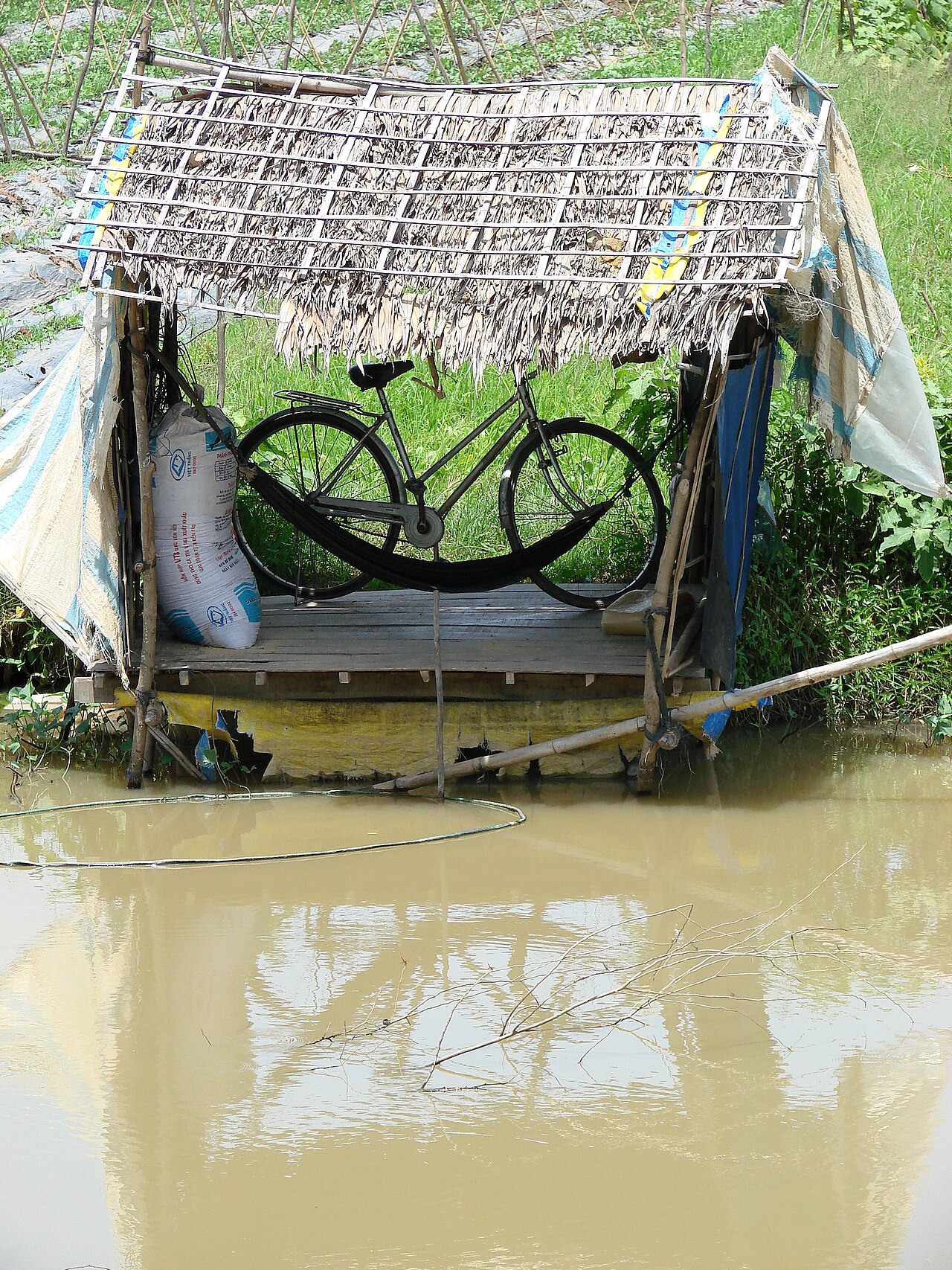
Photo: Adam Jones / Wikimedia Commons (CC BY-SA 3.0)
Source: IRRI
Comments
(0)