
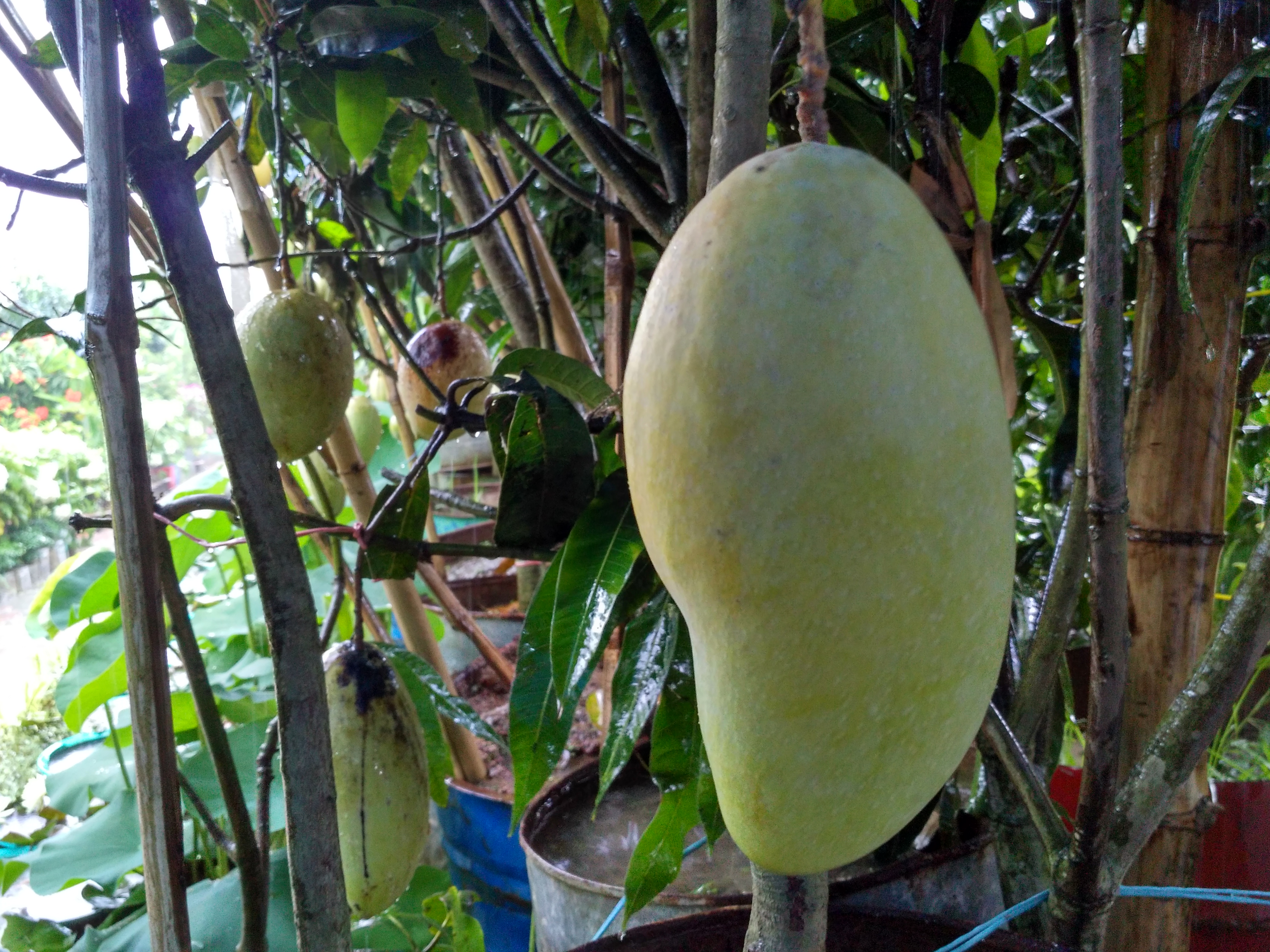
On Saturday, 20 June 2026, the last day of the three-day National Fruit Fair on the grounds of the Krishibid Institution Bangladesh (KIB) at Khamarbari in Dhaka, the biggest draw was a single mango weighing about five kilograms. The giant fruit, of a variety called 'Brunei King', sat at the stall of the Department of Agricultural Extension (DAE), and many visitors crowded round to see it. Jagonews24 reported the scene after touring the fair that afternoon.
The fair had opened on Thursday, 18 June, and was due to close with a ceremony on the afternoon of 20 June. Besides Brunei King, large and colourful foreign varieties such as Miyazaki, King of Chakapat, Kesoai, Red Palmer and Pusa Urnim were catching visitors' eyes. Jara lemon, cocoa, jackfruit varieties developed by the Bangladesh Agricultural Research Institute (BARI), black plum (jam), lychee and many other local and foreign fruits were also on display.
Brunei King at the DAE stall: a 'hill mango' suited to industry
An official at the DAE stall told Jagonews24 that the mango weighed 5kg and had been brought only for display. Fruits of this variety usually weigh 3 to 5kg, he said, and the yield is good where the soil is good.
Md Arifur Rahman, project director of the DAE's Exportable Mango Production Project, told Jagonews24: "This mango has been grown in the country for many years. It grows more in the hills; you could call it a hill mango. The fruit weighs 3 to 5kg."
Answering a question, he said the mango was good for industrial use but hard for a household to take. "How many members of a family can eat such a big mango together?" he asked. By his reckoning, even at a minimum of Tk 60 a kilogram a 5kg mango would cost Tk 300, yet in reality it could not be bought for Tk 300. Once cut, the fruit cannot be kept either, so in his view it is best used by the processing industry.
The DAE stall was not the only one showing the variety. According to a Prothom Alo report of 18 June, the stall of Master Agro Farm from Godagari in Rajshahi displayed Brunei King alongside Miyazaki, Thailand's Chakapat, America's Palmer and other varieties, and sold saplings and grafts of them, entrepreneur Rayhan Kabir told the paper. A Prothom Alo photo report on 19 June also named the 5kg Brunei King mango and various hill fruits as the fair's special attractions.
How Brunei King spread from Shalikha in Magura
The variety first drew wide attention in Bangladesh from Magura. On 17 June 2017, Bangla Tribune reported that Atiar Rahman of Shatkhali village in Shalikha upazila had planted scions brought from an orchard of Brunei's royal family four years earlier. His tree bore 2 fruits in the first year, 6 in the next and 11 fruits of four and a half kilograms in the year before the report. Two of his Brunei King mangoes, weighing 4kg each, were sent to that year's National Fruit Fair in Dhaka, and Aminul Islam, chief horticulturist at the Magura Horticulture Centre, said he expected them to be the main attraction.
A Daily Ittefaq report of 30 June 2019 gave a slightly different account of the origin. It said a man named Ibrahim Hossain from Shatkhali had worked in the garden of the Sultan of Brunei; seeing mangoes of four kilograms there, he brought a graft cutting home eight years earlier, and local nursery owner Atiar Rahman raised trees from it by grafting. That year one of Atiar's trees bore 50 mangoes, which he was selling at Tk 500 each, the paper said. Trees planted on trial at the Magura Horticulture Centre had also fruited.
In a Dhaka Post report of 6 June 2022, Imdad Hossain, superintendent of the Magura Horticulture Centre, said the seedlings had come mainly from Atiar Rahman, whose nephew, he said, had brought a branch of the variety from Brunei in 2011, from which seedlings spread across the district. The same report described the variety: the tree grows only 8 to 10 feet tall, so more plants fit in less space; the fruit is long, rather like a papaya, and dark green when unripe; it usually ripens late in the Bengali month of Srabon and tastes much like Fazli.
Md Moniruzzaman, senior scientific officer at the Magura Regional Spice Research Centre, told Dhaka Post that three trees planted in front of his office from horticulture centre seedlings three years earlier had borne 20 to 25 mangoes that year, each weighing four to five kilograms. The fruit ripens later than other mangoes, he said, though a little earlier in drought or strong sun. In his view Brunei King is mainly an ornamental mango; the small tree can be grown in front of a house or in a rooftop garden.
The variety had also drawn attention at Dhaka's tree fairs. At the National Tree Fair in Agargaon on 22 June 2024, a nursery called Beli Garden was asking Tk 13,000 for a Brunei King tree planted in a drum, Dhaka Post reported. Abdul Mannan, a sales assistant at the stall, claimed each fruit could reach about 6kg, that the stone is very small, and that the tree yields better in the ground than in a drum.
Foreign mango varieties in the hills
Arifur Rahman called Brunei King a hill mango. The spread of foreign mango varieties in the three hill districts had been reported the year before. On 8 June 2025, The Daily Star wrote that alongside local varieties, the three hill districts were now producing the Japanese 'Miyazaki', Thai 'Katimon', 'Red Palmer', 'Banana mango', 'Brunei King', 'Kyojai', 'Valencia Pride' and 'Kensington Pride'.
Citing DAE data, the paper said mango was grown on 3,620 hectares in Rangamati, 10,239 hectares in Bandarban and 4,421 hectares in Khagrachhari, and that the three hill districts had produced over 200,000 tonnes of mangoes the previous year. Md Nasim Haider, the DAE's chief agricultural officer for the three hill districts, said many hobbyist orchard owners were growing foreign varieties with good yields, but these had not yet reached full-scale commercial production.
The same report quoted DAE officials in Bandarban as saying about 60 percent of the district's yield was of the Rangwai variety, 30 percent Amrapali and 10 percent other foreign varieties. In hill markets, depending on size and variety, Rupali (Amrapali) and Rangwai were selling at Tk 60 to 100 a kilogram, while among foreign varieties Red Palmer fetched Tk 300 and Banana Tk 200 a kilogram.
An export-minded farm from Dinajpur
At a stall called Shahriar Enterprise, foreign mangoes named Miyazaki, King of Chakapat, Kesoai, Red Palmer and Pusa Urnim were on display, while local varieties including Haribhanga, Amrapali, Nag Fazli and banana mango were on sale. Jagonews24 reported that the firm produces GAP-certified, BSTI-approved mangoes, mainly for export. According to Prothom Alo, the firm is from Biral upazila in Dinajpur.
Its owner, Ansar Ali, told Jagonews24 he had brought 3 tonnes of mangoes to the fair and had sold about one and a half tonnes so far. He said his mangoes cost Tk 20 to 30 a kilogram more to produce than those of other firms or farmers because they are grown safely without any chemicals. The foreign varieties on show would take longer to ripen, he said, and all were grown on his farm, where he has 20 varieties of mango and five of lychee.
Prothom Alo reported that the stall was selling mango saplings of these varieties for Tk 300 to 500 and lychee saplings for Tk 300 to 3,000. Ansar Ali told bdnews24.com that the Miyazaki, Chiang Mai Red Palmer and Dok Mai mangoes were there only to show customers; the varieties he grows commercially are banana mango, Katimon and BARI-4.
Of the two credentials mentioned, GAP stands for good agricultural practice. The Food and Agriculture Organization of the United Nations (FAO) uses the term for a set of principles for on-farm production and post-production processes that aim at safe and healthy farm products while taking economic, social and environmental sustainability into account. The other, the Bangladesh Standards and Testing Institution (BSTI), is the country's national standards body, an autonomous government agency under the Ministry of Industries that sets standards and certifies products.
Mango, lychee and black plum prices at the fair
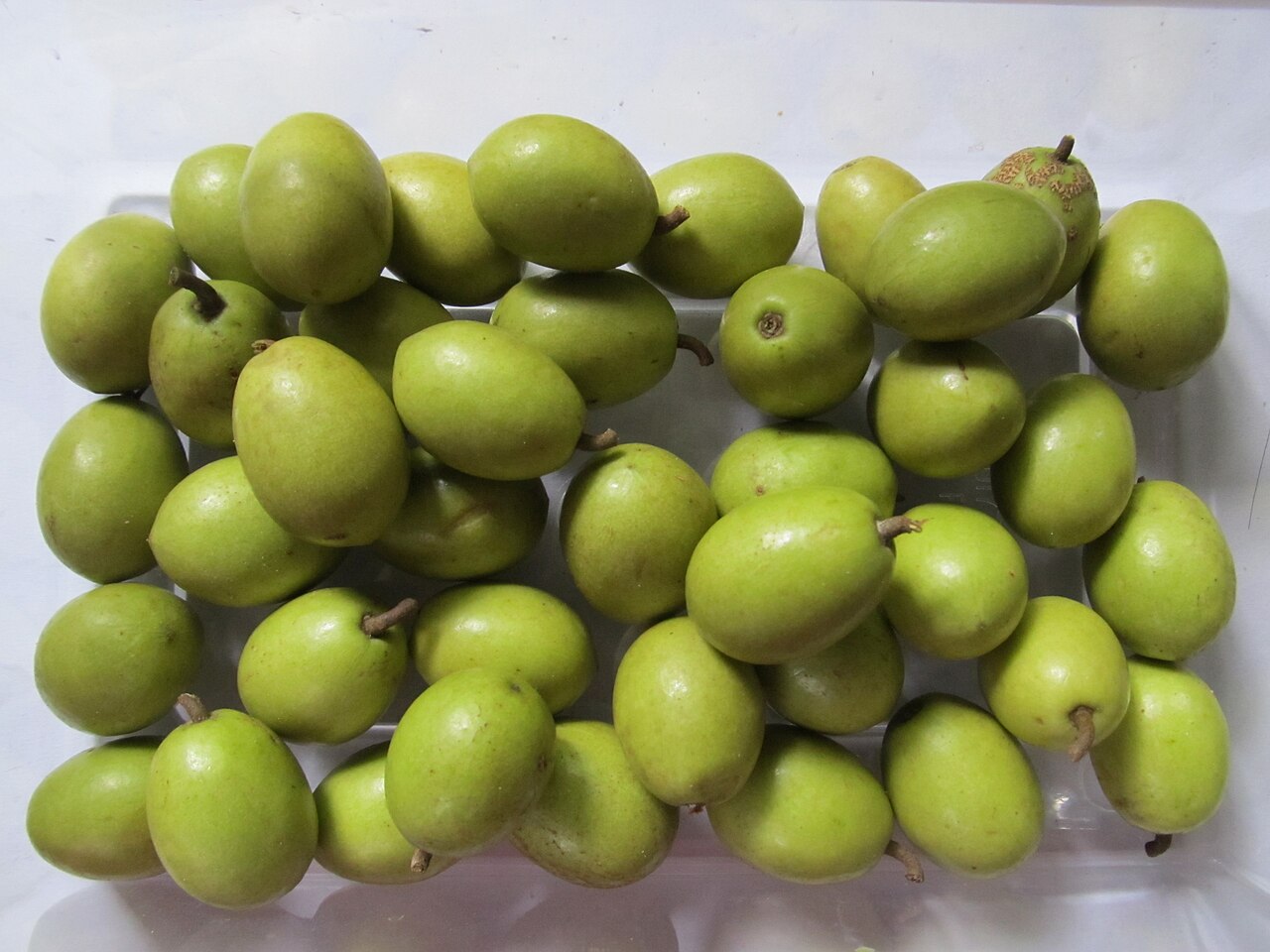
On 20 June, mangoes of various kinds were selling at Tk 80 to 140 a kilogram at the fair. Lychees went for Tk 1,000 to 1,200 per hundred and black plums for Tk 200 to 300 a kilogram. An official of Miru Fal Bhandar told Jagonews24 they were selling banana mango at Tk 140 and other mangoes at Tk 90 a kilogram, and had sold 70 to 80 crates so far. Mango, he said, was the fair's best-selling fruit.
A day earlier, on 19 June, Jagonews24 reported that Himsagar, Gopalbhog, Amrapali and Langra were selling at Tk 80 to 120 a kilogram depending on size and quality, with buyers taking 5, 10 or even 20 kilograms at a time. A salesperson at the Master Agro stall said they were selling Miyazaki mangoes grown in a Rajshahi orchard at Tk 400 a kilogram. At the Alhamdulillah Agro stall, banana mango sold for Tk 100 a kilogram; one buyer remarked that in the market it is usually not found for under Tk 150 to 200.
Habiba Umme Dilshad, a Holy Cross student visiting the fair, told Jagonews24: "I had never seen such colourful varieties of fruit before. I didn't even know there were so many kinds of mango. There should be more fairs like this. It is only for three days; with government patronage, a fair like this should run for at least 15 days."
The National Fruit Fair 2026: organisers and exhibits
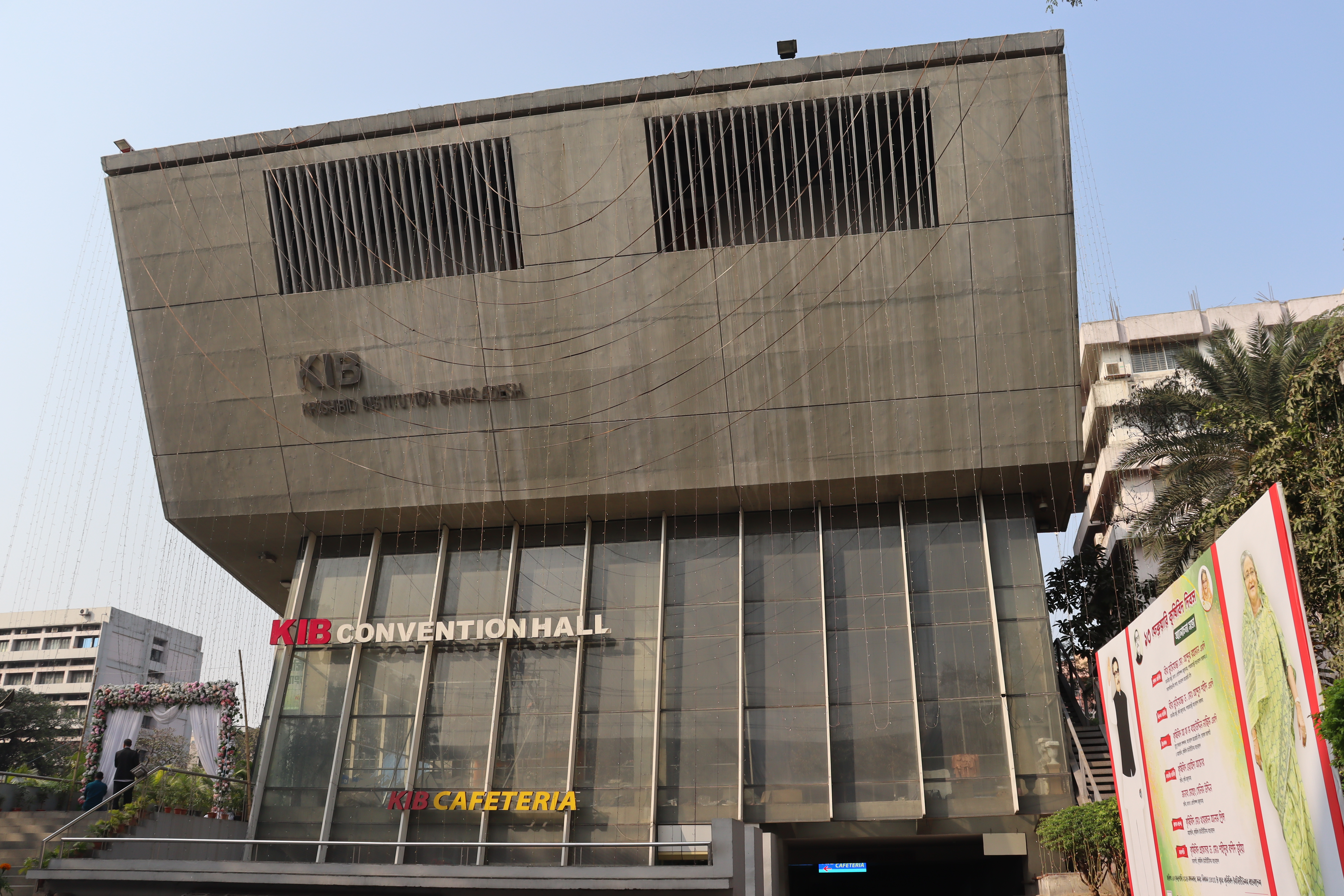
According to Samakal, the fair was an initiative of the Ministry of Agriculture, managed by the DAE. Under the slogan 'We will grow fruit and preserve it all year round', it was opened on the morning of 18 June by Mohammad Amin Ur Rashid, Minister of Agriculture and of Fisheries and Livestock. Reports differ on the number of stalls: citing the organisers, bdnews24.com reported 108 kinds of fruit at 67 stalls, while Prothom Alo counted 76 government and private stalls in all.
Government bodies taking part included the DAE, the Bangladesh Agricultural Development Corporation (BADC), BARI and the Bangladesh Institute of Nuclear Agriculture (BINA). The DAE stall displayed about 50 rare and nearly lost fruits, among them kaufal, karamcha, dewa, ashfal, gab, jaggo dumur, chambul, ata, chalta, orboroi, bilimbi, sharifa, satkara, taikar, deful, lukluki, boichi and muniya. Md Ruhid Hasan, the horticulturist in charge of the DAE stall, told bdnews24.com that 55 of the fair's 108 kinds of fruit were mango varieties, while another DAE horticulturist, Md Jamiul Islam, told Prothom Alo that their stall alone had more than 80 varieties of mango.
The Business Standard reported that, according to agriculture officials, Bangladesh has about 130 species of underutilised fruit, of which about 70 grow naturally in different regions and are cultivated on a limited scale. To conserve and popularise them, the DAE had launched a three-year programme in 2020 with a budget of about Tk 2.5 crore. The BADC stall displayed 141 kinds of fruit, including mango, black plum and jackfruit; Abu Reza Md Mahfuzur Rahman, its deputy director (export), told Prothom Alo that farmers or entrepreneurs could get saplings or grafts from the corporation's 24 offices across the country. A Department of Agricultural Marketing stall showed jackfruit biryani, burgers, chips, kebabs and other dishes.
Speaking to journalists after the opening, the minister said Bangladesh had seen a kind of revolution in fruit production and that many fruits once imported were now grown at home. According to Jagonews24, he said exports of mango, pineapple and jackfruit had begun and that talks with China on expanding jackfruit exports were continuing.
The fair's venue, the Krishibid Institution Bangladesh, is the professional body of the country's agriculturists. Its predecessor, the East Pakistan Agriculturalist Association, was formed at Rajshahi University in 1970; after independence it became the Bangladesh Agriculturalist Association and took its present name in 1981. Its auditorium is at Farmgate in Dhaka, in the Khamarbari area.
Mango output and exports as the 2026 season began
The mango, Mangifera indica, originated in the north-eastern part of South Asia, in what is now Bangladesh, north-eastern India and Myanmar. There are several hundred cultivars worldwide, and the mango tree is the national tree of Bangladesh.
DAE figures published by Sunbd24 on 21 April 2026 show that Bangladesh produced 2,143,000 tonnes of mangoes in 2016-17 and exported just 309 tonnes. Output was 2,707,459 tonnes in 2022-23, with exports of 3,100 tonnes, and 2,508,973 tonnes in 2023-24, with exports of 1,321 tonnes. In 2024-25, 2,670,000 tonnes were grown on 205,000 hectares and 2,194 tonnes exported.
For the 2026 season, project director Arifur Rahman said in that report that mangoes had been planted on 204,000 hectares and that output could reach 2.7 million tonnes if nor'westers did no damage. The main producing districts are Chapainawabganj, Rajshahi, Satkhira and Dinajpur, and harvesting runs from May to mid-October. Khirsapat, Gopalbhog, Fazli, Haribhanga and Amrapali mangoes are exported to at least 38 countries, including the United Kingdom, Italy, France, Canada, the United Arab Emirates, Qatar, Saudi Arabia, Germany and Sweden; in 2025, 3 tonnes were sent to China for the first time.
New markets were also under discussion. On 31 May 2026, Prothom Alo reported that Japan and Malaysia were interested in importing Bangladeshi mangoes. Japan's conditions include vapour heat treatment (VHT), a heat process that kills the eggs and larvae of fruit flies and other pests inside the fruit. Arifur Rahman told the paper a VHT facility had already been set up at Gabtoli in Dhaka.
The mango calendar: when each variety may be picked
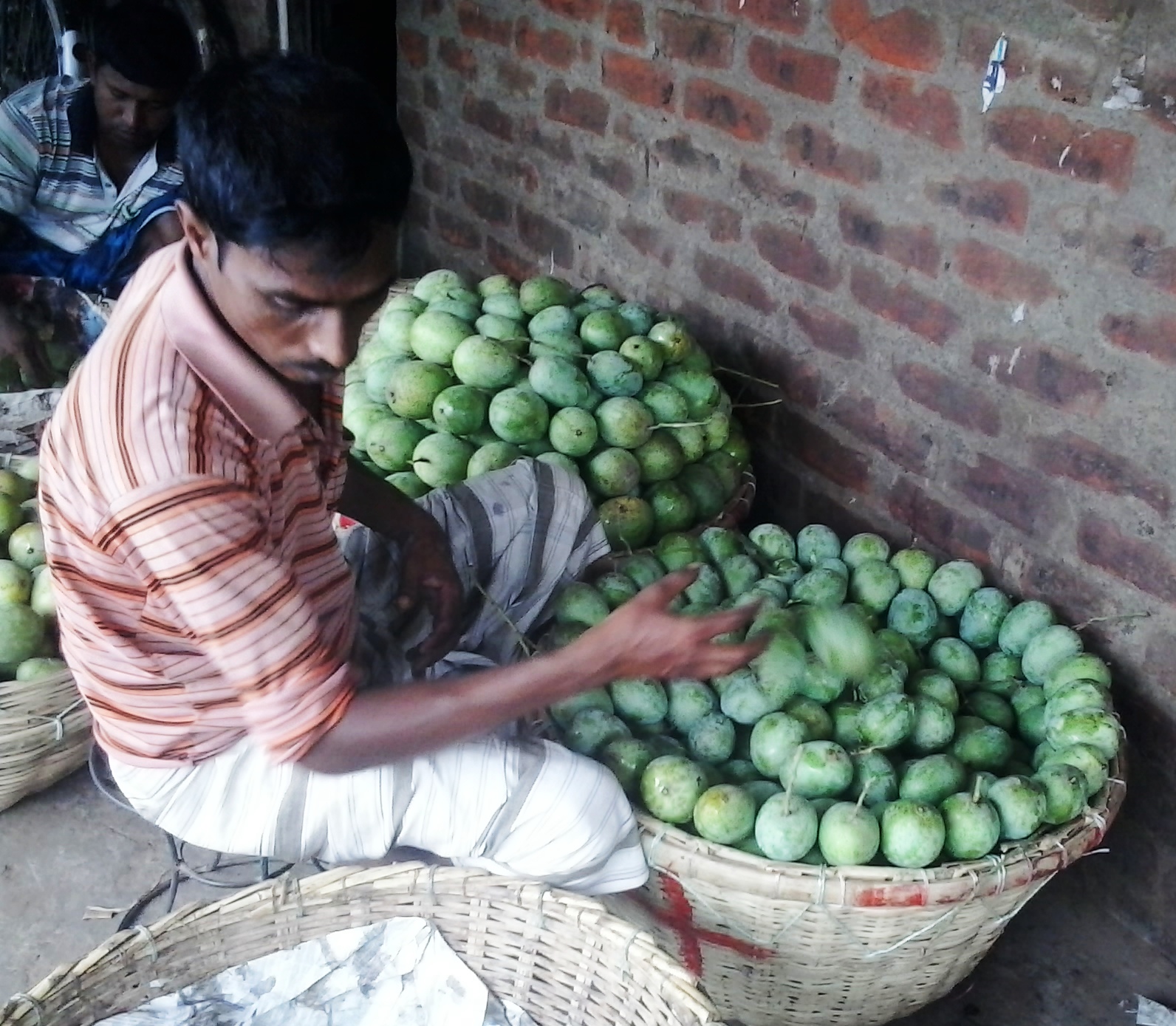
To keep immature mangoes off the market and protect export quality, the DAE draws up a 'mango calendar' each year, setting picking dates by variety and district. On 7 May 2026, Jagonews24 reported that the year's calendar had been finalised at a meeting at Khamarbari held under the Exportable Mango Production Project and chaired by the DAE director general. The meeting heard that Bangladeshi mangoes are exported to 37 countries, and that mangoes should not be picked before they are fully mature, because immature fruit does not ripen properly and tastes sour or only mildly sweet.
Under that calendar, picking of export-grade mangoes in Dinajpur was to begin on 2 June: Gopalbhog and Gobindobhog from 2 June, Himsagar and Khirsapat from 18 June, Langra from 20 June, Haribhanga from 24 June, banana mango from 28 June, BARI Aam-3 (Amrapali) from 1 July, BARI Aam-4 from 20 July and BARI Aam-12 Gourmati from 12 August. In Rangpur, Haribhanga was due from 23 June, and the last variety in the country, Gourmati, was due from 14 August.
Some of the varieties at the fair
Haribhanga was one of the local varieties on sale. According to the Bengali Wikipedia article on it, the variety originated in Khoragachh union of Mithapukur upazila in Rangpur district; the fruit is fibreless, and on average three make a kilogram. Amrapali is a dwarf, regular-bearing hybrid of Dasheri and Neelum developed at the Indian Agricultural Research Institute and introduced in 1971; the DAE calendar lists it as BARI Aam-3.
Fazli is a late variety that ripens after the others. In Bangladesh it is grown mainly in Rajshahi Division, a single fruit can weigh up to a kilogram, and it received geographical indication (GI) status in Bangladesh in 2021. Dhaka Post noted in 2022 that an ordinary mango weighs about a kilogram or a little more, whereas Brunei King reaches up to five kilograms and tastes much like Fazli.
Among the foreign varieties, banana mango looks like a sagar banana and is originally from Thailand. Bangla Tribune reported in 2017 that two grafted trees were planted at the Magura Horticulture Centre in 2014 and began fruiting the following year, the first production of the variety in the country, according to the report. Jagonews24 and The Daily Star described Miyazaki as a Japanese variety, and Prothom Alo described Red Palmer as American and Chakapat as Thai.
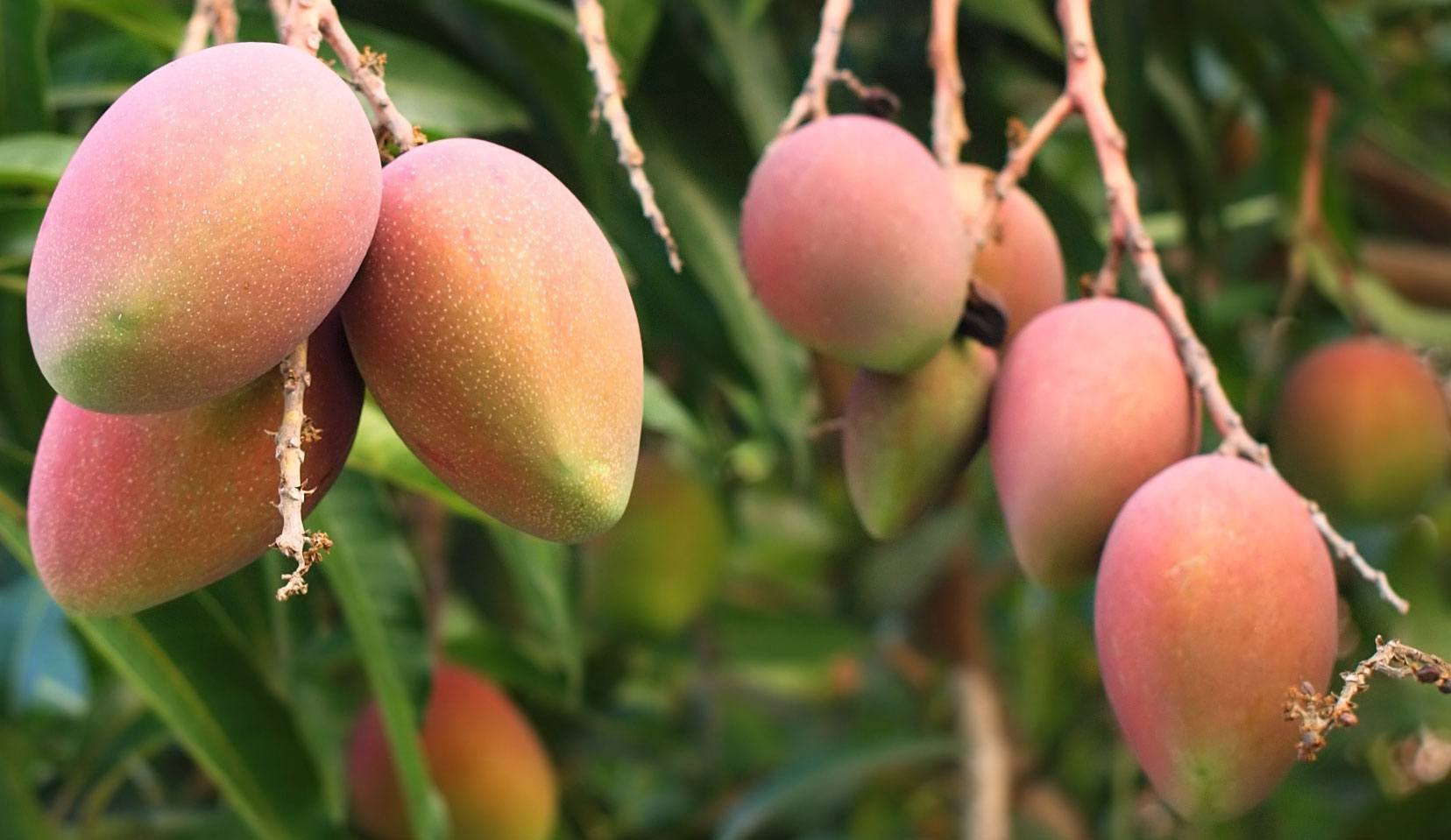
Photo: Salim_Khandoker / Wikimedia Commons (CC BY-SA 3.0)
Sources: Jagonews24, Prothom Alo, bdnews24.com, The Business Standard, Samakal, The Daily Star, Bangla Tribune, The Daily Ittefaq, Dhaka Post, Sunbd24, Wikipedia
Comments
(0)