
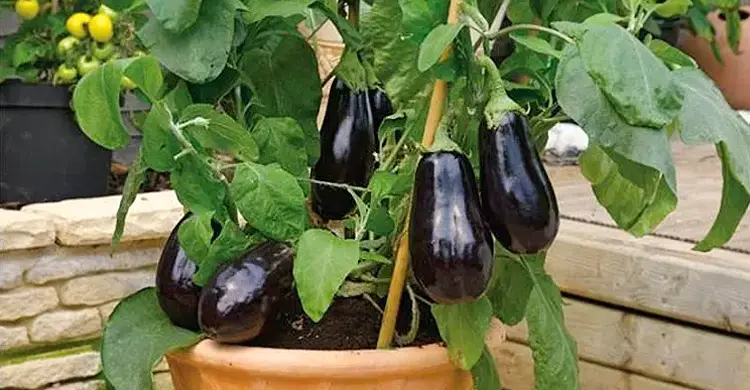
Brinjal is one of the most popular vegetables in the country and is also valued as a nutritious one. Because demand is so high, it is now being grown in pots as well. Although brinjal is a winter vegetable, it is now grown all year round in the country.
People living in cities can easily grow brinjal in pots on their rooftops if they wish. Here is how.
Soil and seedlings
First you need to know which soil gives a good brinjal yield. Silt loam and clay loam are generally suitable. Use a clay pot 10-12 inches across, a plastic tub or a plastic drum cut in half. When preparing the soil, take equal amounts of clay loam or silt loam. Organic fertiliser can be used.
Once the soil is prepared, keep it moist by sprinkling water for 10-12 days, then loosen it again until it is crumbly. Brinjal seedlings can be bought at markets around the country or at city nurseries.
Otherwise, buy seed, treat it well and dry it in the shade for about six hours. Mix sand, compost and soil in equal parts to make a suitable seedbed. Within about a month of sowing, the seedlings are ready to move into pots.
When lifting seedlings, take care not to damage the roots, and move them with some soil still around the roots.
Pests, diseases and care
Brinjal suffers badly from diseases and insect attacks, so some caution is needed. Spray insecticide and fungicide as soon as symptoms appear.
To control foot rot, wilt and little leaf disease, buy a suitable bactericide and fungicide from a nursery and spray. Insecticide is also needed against fruit and shoot borer, mealybug, beetles, whitefly, jassids and stem borer.
Brinjal plants grow fast. Because they are weak, they can be tied to a stick to keep them upright. To keep them growing, apply fertiliser and loosen the soil around the base from time to time.
As the plant ages, cutting off the top while leaving 20 centimetres from the base will make new branches grow from the cut part, and these will bear brinjal as before.
Source: Jagonews24. First published in Bengali on The Agro News.


Comments
(0)