
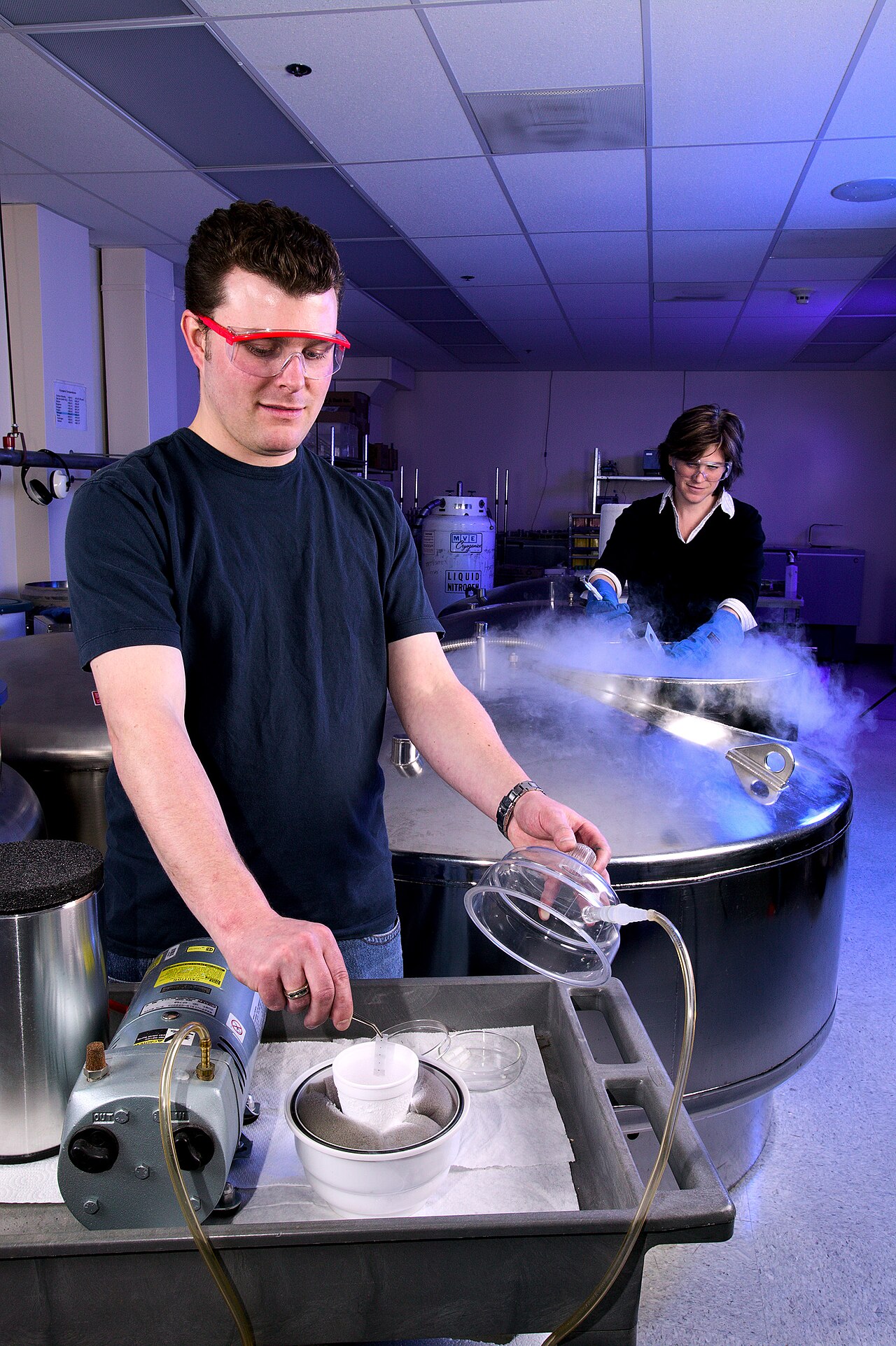
Brazil, Chile and Ecuador will deposit safety copies of their crop diversity together in the Plant Cryo Vault at the International Potato Center (CIP) in Lima, Peru, on 5 November, CIP has announced. It will be the first coordinated deposit by several countries of vegetatively propagated crops in an international vault using cryopreservation.
Nearly half of the 150 crops tracked by the United Nations, including potato, cassava, sweetpotato, banana and many tree crops, cannot be kept safely as seed. The vault, at the foothills of the Andes, instead stores tiny shoot tips or embryonic axes in liquid nitrogen at minus 196 °C as a long-term backup. "The Plant Cryo Vault complements the Svalbard Global Seed Vault by providing an innovative technology to safeguard crops that cannot be adequately conserved through conventional seed storage," said Maarten van Zonneveld, head of CIP's genebank.
Brazil's agricultural research corporation Embrapa will deposit 14 traditional pineapple varieties and 11 cassava varieties from the Amazon. Chile's Agricultural Research Institute (INIA) will store 10 potato accessions from Chile, a secondary centre of potato diversity. Both are making their first deposits. Ecuador's INIAP, on its second deposit, will add 30 groundnut and three potato accessions.
The material stays the property of each country. The vault acts as guardian only: it will not use, study or alter the samples, and returns them whenever asked, like a safety deposit box.
Embrapa's president Silvia Massruhá, Kent Nnadozie, Executive Secretary of the FAO Plant Treaty, and Fuad Gasi, coordinator of the Svalbard Global Seed Vault, are due to speak at the event. "Behind every frozen sample are years of scientific collaboration and trust between countries," said Vania Azevedo, director of the CGIAR Genebank Accelerator. CIP says crop diversity is under growing threat from land-use change and the narrowing of diets, which makes such backups part of food security.
Photo: USDA Agricultural Research Service (flash-freezing plant shoot tips) / Wikimedia Commons (public domain)
Source: International Potato Center

Comments
(0)