
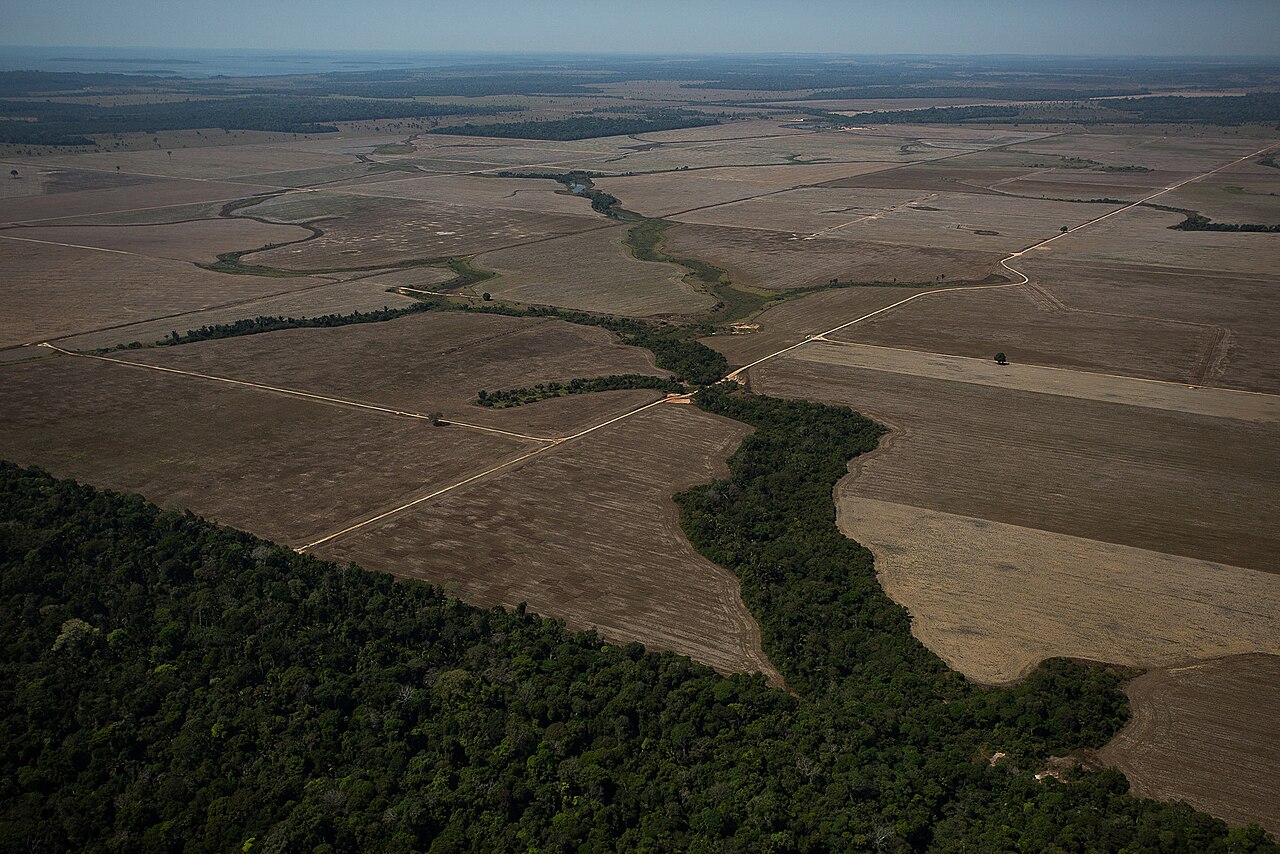
At least 20,000 square kilometres of Brazilian Amazon forest, an area about the size of Wales or the US state of New Jersey, is still standing because Brazil has enforced its forest protection law since 2022, according to an analysis by Carbon Brief.
Annual deforestation in the Amazon fell from 11,594 square kilometres in 2022 to 5,731 in 2025. Official figures for August 2025 to July 2026 are not yet out, but preliminary satellite alerts from Brazil's space research institute INPE put clearing at 2,874 square kilometres, and experts expect 2026 could be the lowest year since records began in 1988. Brazil holds nearly 60% of the Amazon rainforest.
The estimate compares what happened with a modelled scenario in which the forest code, the law that requires landowners to preserve and restore forest on their property, is not enforced. The modelling comes from a 2023 study using the GLOBIOM-Brazil model by researchers at the University of Oxford, the International Institute for Applied Systems Analysis and INPE. After 2022 the government reinstated a deforestation action plan and stepped up enforcement in the Amazon.
Dr Aline Soterroni of Oxford, who led the 2023 study, said the fall "shows how quickly deforestation can respond to political will", and called the no-enforcement scenario "relatively conservative". In that scenario, she said, clearing is held back by slower growth in demand for Brazilian beef and soy, and it does not capture illegal clearing that weak governance can encourage.
Farm commodities remain central to what comes next. Major grain traders withdrew this year from the Amazon soy moratorium, a voluntary pledge not to buy soybeans grown on Amazon land cleared after 2008. Research shows the moratorium prevented about 18,000 square kilometres of deforestation between 2005 and 2016, and a 2026 study estimated that its end could lead to 14,000 square kilometres of extra clearing by 2036.
Brazil votes for a new president, congress and state governors on 4 October, and the experts Carbon Brief spoke to said the result will shape how strictly the forest code is enforced. Deforestation is the main driver of emissions in Brazil, the world's fourth-largest emitter, according to the analysis.
Photo: Amazonia Real (Bruno Kelly) / Wikimedia Commons (CC BY 2.0)
Source: Carbon Brief

Comments
(0)