
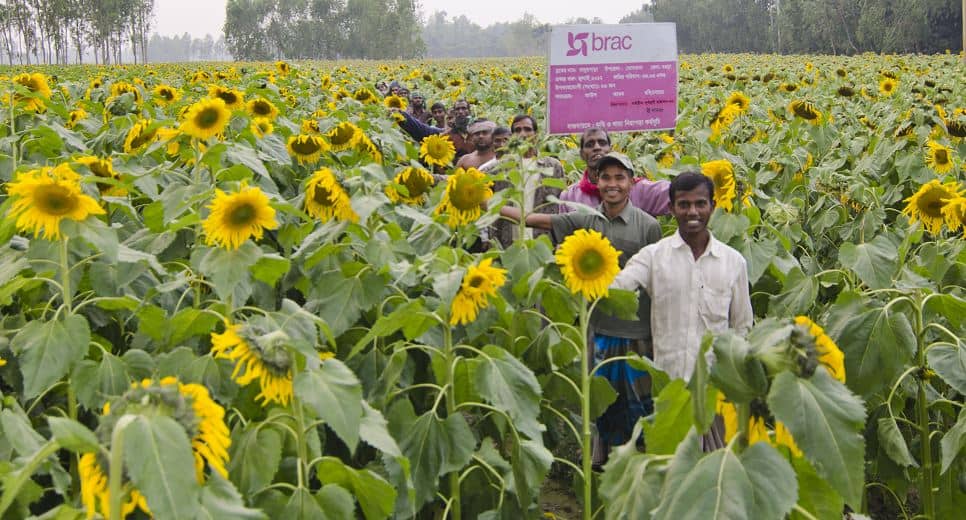
We are celebrating the golden jubilee of victory. In fifty years of independence we are bringing the country's achievements to the fore and reckoning how far Bangladesh has come. The country whose very survival many thinkers around the world doubted after independence has today become a role model of development. There is no doubt that the sacrifice, labour and dedication of many people, and ceaseless work, lie behind reaching this proud position. After independence, before government plans could be properly carried out, one unwanted event followed another and there were political changes. Each government tried to organise the country in its own way. Among those who, from the start, strove to take the country forward alongside the government with a deep vision of development, Sir Fazle Hasan Abed was one of the foremost. BRAC, the organisation of his dreams, has grown up with Bangladesh.
BRAC is also celebrating the golden jubilee of its journey. Staying above politics and party, BRAC has quietly done extraordinary work. It has made an outstanding contribution in every field in Bangladesh, including education, health and agriculture. The success of these initiatives has made BRAC the largest organisation of its kind in the world.
A school in a mud house
This was at least thirty years ago. I went very early one morning to film at Madhabdi Chirakuthipara in Dinajpur. It was a winter day, and the morning light had not yet fully broken. As I entered the village I heard the noise of a crowd of children at their lessons. Going closer, I saw children studying in a one-room mud house. In a place where people did not get two meals a day, a child from every household was going to school! It was a school of BRAC's non-formal education programme, where one teacher gave 30 children primary education in every subject. It was a revolutionary way of spreading education. For poor people at the grassroots, who for various reasons cannot send their children to school, this programme has made an outstanding contribution to raising our literacy rate. The work still goes on.
For more than four decades I have watched the results of BRAC's work spread from village to village. Working in the villages, I sensed development when I suddenly came across a different kind of building in the most remote places. All around were mud houses with straw roofs, one or two tin-roofed houses with bamboo walls, and among them a brick building. Going closer, I saw it was a BRAC building. I realised these were a different kind of beginning of development.
Meeting Sir Fazle Hasan Abed
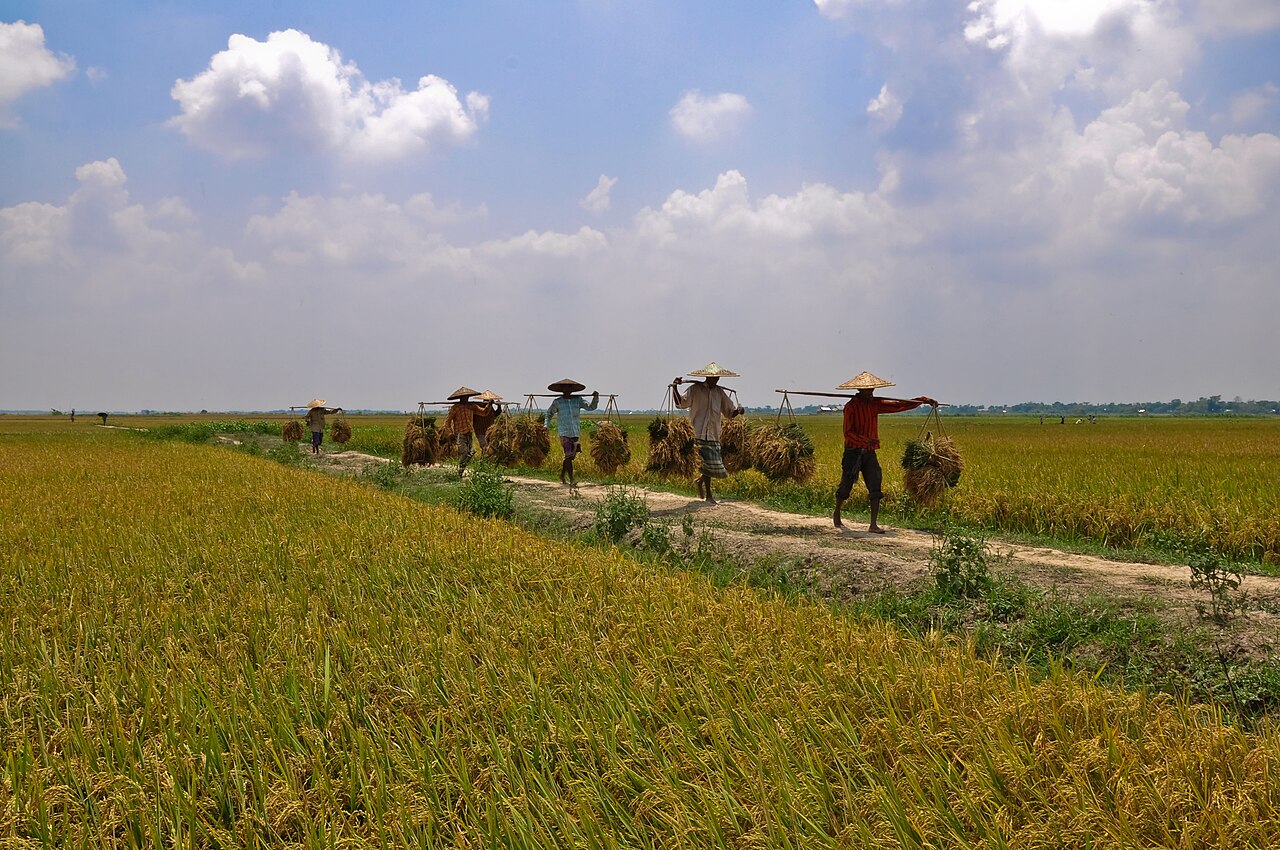
I consider myself fortunate that through my work I had the chance to see at first hand the wide-ranging activities of several development organisations in the country. Although I had no direct link with that work, we grew up together. At one point I came to know Sir Fazle Hasan Abed. That must have been in the late eighties. As far as I remember, he was then working extensively on education, and his non-formal education programme was spreading across the country. From microcredit, the work was gradually expanding into rural health, sanitation, agriculture and more. Behind the chance that poor grassroots farming families got to sharecrop land with a little capital were organisations like BRAC. In village after village I saw that farmers could not get loans from state banks because they were landless. Without capital they could not farm land either, and they could not keep up with the interest on moneylenders' loans. Then NGO loans were enormously useful to them. The farmer's wife brought in a loan, and relying on it he took land on sharecrop and farmed it. It is not that there were no setbacks, failures or negative examples. But in turning the wheel of development at the grassroots, this work was far more effective. I believe a long mission and vision of people like Sir Fazle Hasan Abed was behind it.
BRAC was born in 1972 in the newly independent country, beside the people living among the ruins of war at Shalla in Sylhet. At first it focused on relief and rehabilitation; in 1973 it emerged as an organisation devoted to all-round rural development. The poet Sufia Kamal was BRAC's first chairperson. This shows something else: BRAC's growth is deeply intertwined with our nationhood, culture, free thinking and development.
BRAC in Uganda
BRAC's work at home and abroad is now admired around the world. Bangladesh's BRAC, the largest non-governmental development organisation in the world, makes us proud outside the country too. BRAC has spread across Asia, Africa and the Caribbean. I had the chance to see BRAC's work first hand in Uganda in East Africa. Its work on agriculture, food security and nutrition in East African countries in particular is truly exemplary. Although BRAC is a Bangladesh-based development organisation, it is now deeply woven into the African country's development planning and progress. There, BRAC is regarded as the most effective and dynamic partner in implementing national development plans. I spoke to Uganda's health minister, minister of state for agriculture, chairman of the planning commission and the World Bank representative, as well as many grassroots farmers. All of them praised BRAC's development work. I have seen that Sir Fazle Hasan Abed's development thinking, which spread worldwide, now influences and inspires many people around the world. I always saw that, however busy he was, he responded to our every initiative, idea and call, came, and stood beside us in a way that impressed.
BRAC, which has spread across the world, has left no darkness beneath its own lamp. I would say that BRAC is an extraordinary development partner of the state in improving the lot and the living standards of the country's grassroots people. I value BRAC's work when I see an electric fan turning inside a marginal farmer's mud house in a village, and a fridge and TV in his home too. Saving the money needed to buy such household goods was once impossible for a marginal farmer. His wife, by joining BRAC or an organisation like it, took a one-off loan and fulfilled these family dreams. Through this, the woman of that household has been empowered within the family. In this way, BRAC is involved in, and has contributed to, many of the development indicators of Bangladesh that are now presented as great examples around the world. Bangladesh is regarded as a role model in South Asia for women's empowerment, and here too BRAC has made a unique contribution. BRAC's visionary, Sir Fazle Hasan Abed, is no longer with us physically. But he lives on in BRAC's journey of success and in its tireless way of working.
Source: Shykh Seraj. First published in Bengali on The Agro News.
Comments
(0)